

 Last updated Mar 8, 2023


Kirsten McCarthy / Cats.com
When I settle onto my sofa in the evening, and my cats jump up for a cuddle, they usually seem more intent on snoozing in my lap than on what I’m watching on Netflix.
Key Takeaways
Cat TV can be a form of visual stimulation; cats finding moving prey-like objects the most interesting to watch.
Some cats become frustrated watching prey-like animals or objects if they can't actually catch them.
To avoid injuries to your cat and damage to your television, always supervise your cat to keep them from pouncing on the TV screen.
However, many pet parents are turning to screen time to help keep their cats entertained. A wide range of television shows are made especially for cats, but is this form of visual stimulation helpful or harmful?
As with all things in life, there are advantages and disadvantages of cat TV. Screens can certainly provide some mental stimulation, but some cat owners may find that their pet’s hunting instincts get them into mischief. Read on to find out more about TV for cats.
Why Does My Cat Like TV?
Television is a very human hobby. Certainly, I don’t recall any teaching on the subject of cat videos when I was studying veterinary medicine! However, studies show that cats can identify some images, including patterns and outlines.
It is less certain how cats process these images and what they think they are seeing. Cats in real life rely highly on scent and hearing to navigate their environments, with vision being a less important sense. It might just be the stimulating nature of flashing lights and moving images that catches their attention.
What Are The Advantages Of Cat TV?
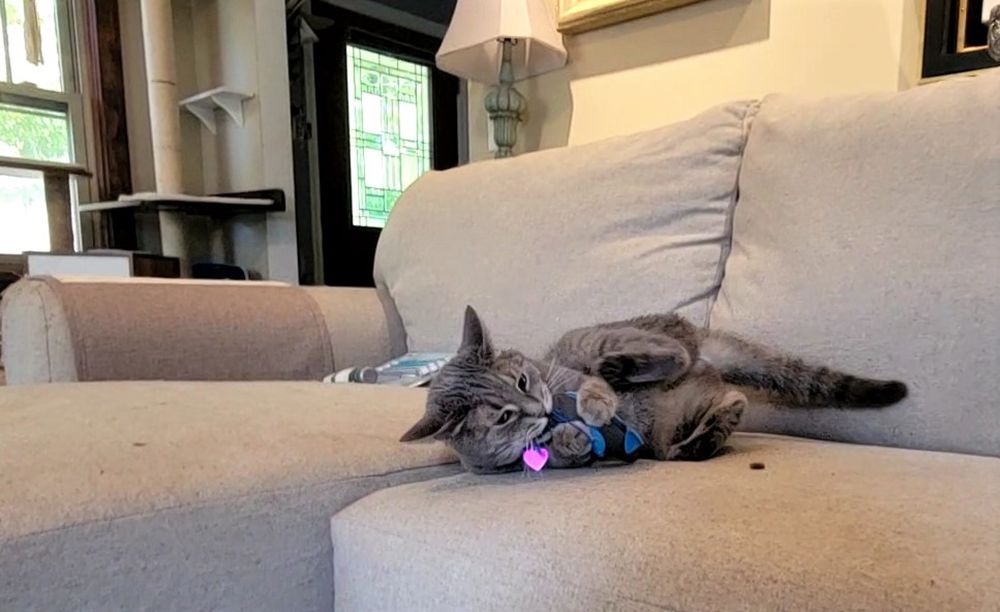
Television can stimulate cats with certain needs, such as those that are recovering from an injury. Kate Barrington / Cats.com
Television can be entertaining for cats! It can be a source of enrichment, especially for shelter cats, or a sedentary indoor cat, or perhaps a cat that is recovering from illness or injury and therefore has restrictions on their normal activities.
If you wish to provide your cat with television, there are lots of suitable playlists out there. Cats seem to like shows that involve small animals moving, such as nature shows, and they also prefer the newer TVs with a high refresh rate. A study in shelter cats found that the combination of prey-like items and movement were most likely to hold cats’ attention.
What Are The Disadvantages Of Cat TV?
There is no evidence that watching television can hurt a cat’s eyes. However, it seems to appeal most to those cats with a higher prey drive, which can then become frustrated at their inability to actually catch any of the prey they see on the screen. Some cats might actually pounce on the TV itself, which could cause injury to your pet—and damage to your TV set!
Cats that get extremely stimulated by television might need extra supervision around this new hobby. Signs of a stimulated cat include a tense, crouched body position, chattering or excited meow vocalizations, ears pricked forward, and swishing tail.
Providing a physical toy for your cat to pounce on when they get agitated can help reduce any frustration and provide the satisfaction of the catch, without any damage to your screen. If your cat does jump at the screen and falls awkwardly, or even pulls the TV on top of them, it could lead to a trip to the vet, so a secure TV screen and adequate supervision are advisable.
Is My Cat Actually Enjoying The TV?
It can be difficult to tell the difference between an excited cat and an anxious one. A cat watching TV with ears pricked, tail raised, narrow pupils, and whiskers pointing forward, is likely just very interested in what they are seeing.
If you notice your cat has dilated pupils, hunched body posture, and flattened ears, they might be finding the TV a bit frightening. It is always best to make sure your cat can leave the room and find a safe place if they wish to.
Alternatives To Cat TV?
If you think your cat needs a bit more enrichment in their life, but you don’t want them sitting in front of the TV all day, you have many alternatives. There is plenty of evidence that enrichment is hugely important to cats.
1. Playtime
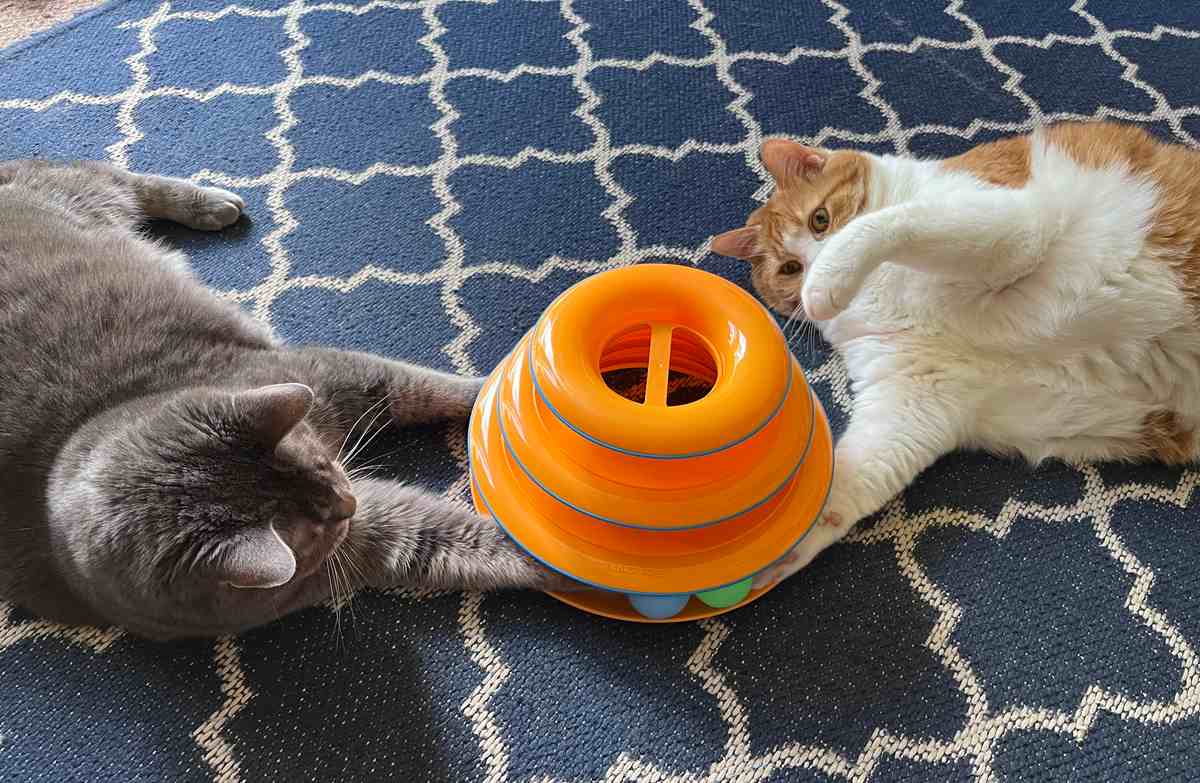
Rotate toys to keep them interesting, bringing them out for a a few days, then putting them away. Katelynn Sobus / Cats.com
Investing in some cat games and toys is a win-win for everyone. Toys provide enrichment and exercise for your cat and are a perfect way for the owner and cat to bond. Setting aside some time each day for play will reduce prey drive and frustration in those high-wired cats, as well as burn off any extra energy.
2. Food Toys
Puzzle feeders and treat balls are the perfect enrichment for cats who are left alone for periods of time and need entertainment and also for sedentary indoor cats and those prone to excess weight. Place a proportion of their daily cat food into a puzzle or toys and let them work for it.
3. Climbing And Scratching
Scratching and clambering are both very natural and normal feline activities. Scratching posts, cat trees, and accessible high places are all good for providing exercise, enrichment, and fulfilling innate behavioral needs.
4. Visual Enrichment

Many cats anjoy looking at real birds or squirrels outside. Kirsten McCarthy / Cats.com
TV is one form of visual stimulation, but an accessible window overlooking a street or garden can also be exciting for cats. As with TV, some cats might find it frustrating to see prey but not be able to catch it, so watch your cat for signs they are getting overstimulated.
5. Social Interactions
Bonding with other cats, pets, and humans is important to many cats. Grooming is an excellent way to spend time with your cat. Self-care is an important feline trait, with many cats being extremely fastidious about their grooming habits. Participating in these grooming rituals can be a form of social bonding, and relieve tensions and anxieties for cats.
Cat TV: Final Thoughts

Some cats don’t enjoy TV, preferring to get visual stimulation in other ways. Kirsten McCarthy / Cats.com
Cats need enrichment, whether that is through outdoor access, natural hunting and play behaviors, or through owner-encouraged interactions such as games, food puzzles, or grooming.
TV can be a form of visual stimulation, with cats finding moving prey-like objects the most interesting to watch. Television can be highly exciting for some felines and can result in frustration or even physical harm if they try to attack the screen. Tailoring a TV schedule to your individual cat is recommended, and providing many different types of enrichment is optimal.
Frequently Asked Questions
Does cat TV frustrate cats?
TV can be frustrating for cats if there are prey-like objects moving on screen that your cat cannot actually catch. Providing a toy that can be pounced on and physically caught can reduce this frustration.
Is cat TV stimulating for cats?
TV is a form of visual stimulation for cats. Some find it more interesting than others. Cats with a well-developed hunting instinct are more likely to be stimulated, especially by small moving objects that appear similar to prey.
Should I leave the TV on for cats?
Cats do need enrichment in their lives, especially indoor cats. TV is a form of visual enrichment, but there are plenty of other ways to keep cats entertained, such as toys, puzzle feeders, cat trees, and social interaction.
What should I put on TV for my cat?
Cats appear more stimulated by small moving objects on TV than anything else, presumably as they resemble prey. Nature programs are therefore most likely to be attractive to cats, or there are dedicated TV playlists for cats.
-
Clark, D. L., & Clark, R. A. (2013). Optotype recognition visual acuity in the domestic cat. Research and Reviews in Biosciences, 8(11).
-
Ellis, S. L., & Wells, D. L. (2008). The influence of visual stimulation on the behaviour of cats housed in a rescue shelter. Applied Animal Behaviour Science, 113(1–3), 166–174. https://doi.org/10.1016/j.applanim.2007.11.002
-
Ellis, S. L. H. (2009). Environmental enrichment: Practical strategies for improving feline welfare. Journal of Feline Medicine and Surgery, 11(11), 901–912. https://doi.org/10.1016/j.jfms.2009.09.011






I did not see nothing mentioned about if it can affect their vision. I would like to know more about this subject. Thanks!