 Published Jan 21, 2026


@sfanimalcareandcontrol / Instagram.com
As much as our cats amaze us on a daily basis, we periodically see a story circulating in the news that shows a cat truly pushing the bounds of what seems physically possible – like somehow showing up more than 600 miles from home about a month after going missing!
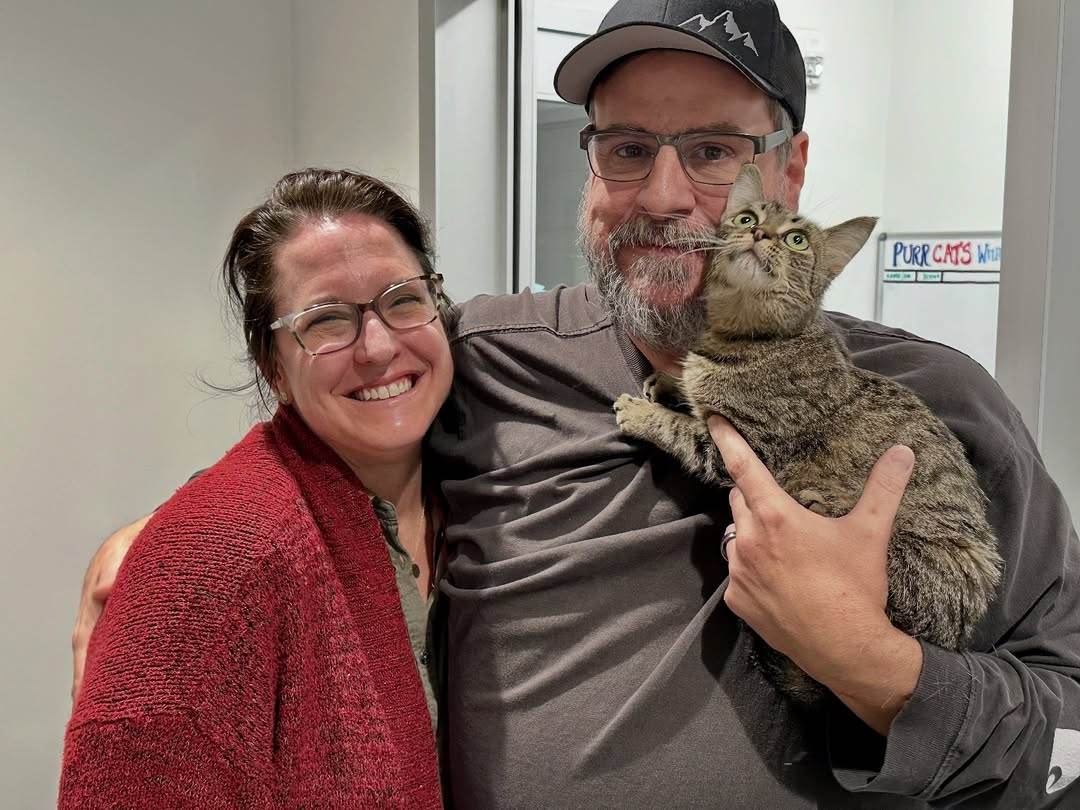
In early October, a brown tabby female cat named Pepper bolted out of her family’s house in Boise, Idaho. Her human parents, Lindsay and Jeffery Lang, were heartbroken and thought they had likely lost Pepper forever.
Then, about a month later, a caring human found the cat wandering in San Francisco’s Mission Bay neighborhood – some 645 miles from Boise – and brought her to an animal shelter. Workers at San Francisco Animal Care & Control (SFACC) scanned the seemingly stray cat for a microchip, and were amazed to discover that this tabby was the pet of a home all the way in Idaho!
Imagine the emotions of the Langs when they got the call from faraway California with the wonderful news that their Pepper – though emaciated – was alive and safe. The couple drove through the night to claim their beloved family member, and the shelter reunion was beautiful.
“She let out this huge meow – ‘You came and got me!’,” Lindsay Lang told CBS News Bay Area. “It was so great.
“And then she talked to us all the way home, all about her adventures,” Lindsay told the news station. “I wish we could understand, but it was great.”
Since her dramatic homecoming, Pepper has regained some of the weight she lost while hungry and roaming a very long distance, and she has been extra lovey-dovey, Lindsay told CBS.
“She just sticks real close to us now,” she said. “She was a wild, crazy, run-around-the-house-type kitten, and I think this traumatized her a little bit. She’s just been sticking close to my husband and I.”
How did Pepper pull off this long-distance escapade? Can a lone cat walk more than 600 miles in a month, and if she did, how did Pepper nourish herself by eating just enough and finding safe places to rest outside? Nobody knows. It’s possible she climbed into a truck undetected and hitched a ride to Northern California. Pepper’s methods remain a mystery.
We know that cats do possess a special homing instinct that enables them to find their way home, even if they wandered far away. We don’t really understand how they do this, though; it’s one of the fabulous mysteries of the feline.
What we do know is this: Pepper’s remarkable story illustrates how crucial it is for cat parents to utilize modern technology and get their pets microchipped. As the San Francisco shelter put it in an Instagram post: “All’s well that ends well because of a microchip! Microchip your pets! This announcement brought to you by Pepper.”
In the same post, SFACC described this remarkable situation like this: “Nothing surprising in finding an animal microchipped in another state. People move, pets could be from a shelter or rescue group in another state, etc. But … when our staff called the information from Pepper’s microchip, they got a big surprise. Pepper’s owners … don’t know how on earth Pepper made it to San Francisco. It’s a mystery.”
It’s a mystery, indeed. And the mysterious nature of the feline is part of why we love cats!
Pepper’s escape could happen to your cat, too, so be sure to microchip. Your cat may have gotten a microchip as part of a spay and neuter package, but check to make sure, and get a microchip – about the size of a grain of rice – implanted into your cat’s skin soon.
I wish the United States would implement a law like England did. English officials mandated that all cats be microchipped by age 20 weeks old. Owners had to comply by June of 2024. That is a great idea, and will result in far fewer felines going missing and separating from their families permanently.
We have run other stories in the past few years about cats who have wandered far from home – or wandered away for a long time but didn’t go too far – and miraculously are reunited with their families, thanks to microchips. These amazing stories include that of Marley, an orange tabby who returned to his grateful Colorado Springs family after going missing for two and a half years. The Humane Society of the Pikes Peak Region learned the cat’s and family’s identity after scanning him and reading his microchip information.
In 2025, a beloved cat named Artie – who had a family and home, but also visited with other families in his Philadelphia neighborhood – was catnapped! Because of his microchip and tracking device, his family got him back from a shelter, where the thieves apparently returned Artie after a social media campaign.
We hope to share many more stories about cats who are reunited with their families due to microchips and other tracking devices. Let’s utilize the technology available!