

 Last updated Aug 25, 2026


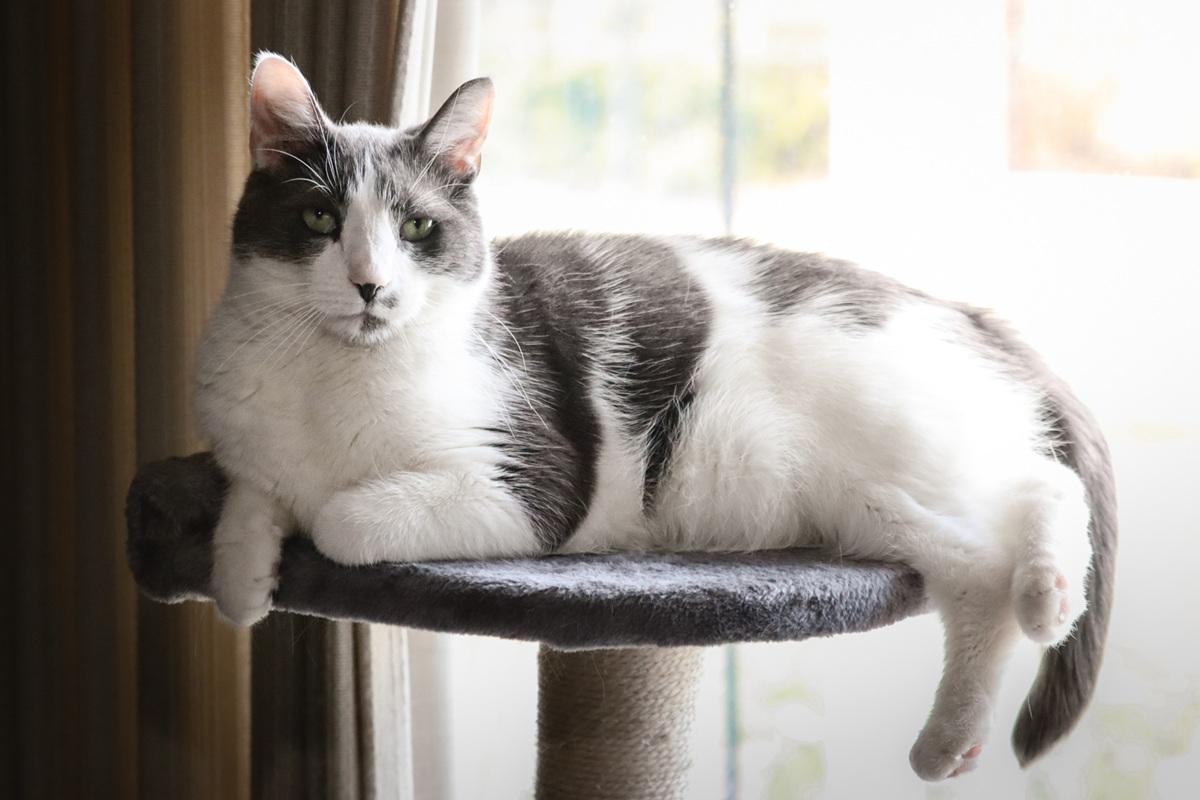
Kirsten McCarthy / Cats.com
Just like people, cats can get colds. The name “cat cold” is another way of describing an upper respiratory infection or URI. Cat colds are usually caused by a virus. Common signs that your cat may have a kitty cold can include sneezing, a runny nose, red and irritated eyes, watery or goopy eyes, and congestion.
Quick Overview: Cat Cold
 Urgency: Moderate, depending on energy level and appetite.
 Requires Vet Visit: Yes
 May be Linked to: Feline herpesvirus, feline calicivirus.
Treatment Options: Relieve nasal congestion at home with a humidifier or keeping kitty in the bathroom with the shower running for 20-30 min., warm up food to release aroma and help with eating, feline pheromone products to reduce stress, providing quiet places for kitty to rest. Antibiotics or other therapy may be needed if kitty stops eating, heavy nasal discharge develops, or fever is suspected.
May be Linked to: Feline herpesvirus, feline calicivirus.
Treatment Options: Relieve nasal congestion at home with a humidifier or keeping kitty in the bathroom with the shower running for 20-30 min., warm up food to release aroma and help with eating, feline pheromone products to reduce stress, providing quiet places for kitty to rest. Antibiotics or other therapy may be needed if kitty stops eating, heavy nasal discharge develops, or fever is suspected.
Causes of Cat Cold
The most common virus that causes colds in cats is feline herpesvirus (FHV). Another virus, feline calicivirus (FCV) may cause a cold too. These two viruses are the cause of almost all cat colds.
Feline herpesvirus type 1 (FHV-1) is believed to cause upward of 80% to 90% of all infectious feline upper respiratory infections.
Although vaccines are available for feline herpesvirus and feline calicivirus (both are part of the combo vaccine cats typically receive as kittens and every couple years as adults), these vaccines don’t provide complete immunity. However, cats that are vaccinated tend to have milder symptoms than cats that are not vaccinated against these viruses.
For feline herpesvirus once they’re infected (usually as a very young kitten before you even get them) they have herpes for life. Usually the immune system keeps it under control and there are no symptoms but it can pop up again and cause a cold if the immune system isn’t as strong due to stress, other illness, or old age.
Similar to what happens in people, a cold usually starts with a virus as the cause. But sometimes a bacterial infection can develop because of the damage the virus does to the normal protections that keep bacteria out. Many different kinds of bacteria can take advantage in these situations and contribute to symptoms like irritated eyes, runny, goopy, crusted eyes and nose as well as sneezing and congestion.
Are Cat Colds Contagious to Humans?
Although people come down with colds and cats come down with colds, the viruses and bacteria that cause them are different. Whether you are sick with a human cold or your cat is sick with a feline cold, feel confident that you can cuddle your cat and not pass the colds between you.
Although the common cat cold is not contagious to humans, it is contagious to other cats. Sick cats can pass colds to other cats if they share a water or food bowl or groom each other. Cats may transmit the common cold viruses for several weeks to months after recovering.
A Couple Exceptions
Although it is not considered a “cold,” it should be noted that the novel coronavirus that first appeared in late 2019 (COVID-19) and quickly spread throughout the world has been shown to pass from humans to cats.
As of the date of this posting, there has been no evidence to suggest that cats can transmit COVID-19 to humans. Additionally, in one study of cats living in Wuhan, China, none of the cats that contracted COVID-19 had any serious symptoms of disease.
However, the study’s lead researcher, Meilin Jin, states that “measures should be considered to maintain a suitable distance between COVID-19 patients and companion animals such as cats and dogs.” If you or someone in your household is diagnosed with COVID-19 talk to your veterinarian about any measures you should take to protect the pets in the home.
Another rare exception can occur not with a virus, but with the common bacteria Steptococcus A, or “strep”, the bacteria that causes strep throat. In 2020 the Washington Post reported the story of a family that recurrently tested positive for strep throat for months despite no one else at school or daycare testing positive.
Four months earlier, the family had adopted a new cat from a friend. While considered very unlikely at the time, their cat (who had no signs of illness) tested positive for Strep A. Once he was also treated with antibiotics, the recurrent illness in the human family members also ended.
While this is a very rare circumstance, as Strep A is not thought to thrive well in animal species, this well documented case shows that a cat carrying Strep A can transmit it to people. Fortunately, Strep A is comparatively easy to treat with antibiotics.
Symptoms of a Cat Cold
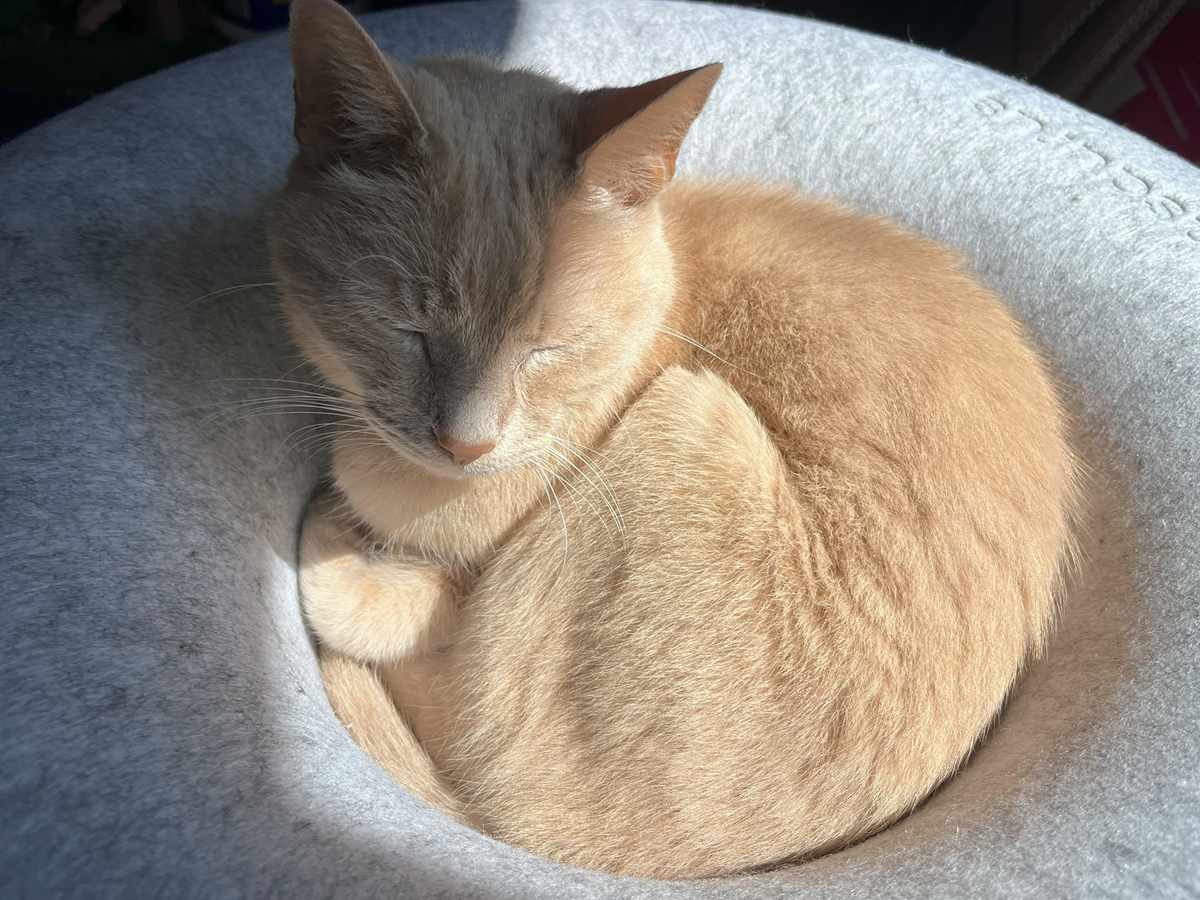
With plenty of rest and possibly medication from your vet, most cats will recover from a cold in a week or two. Katelynn Sobus / Cats.com
The symptoms of a cat cold are very similar to the symptoms of a human cold.
Signs your cat might have a cold:
- Runny or crusted nose
- Runny or crusted eyes
- Red eyes
- Swollen eyes
- Squinting or unable to open eye(s)
- Congestion
- Sneezing
In more severe colds you may also see:
- Fever (greater than 102.5 oF)
- Loss of appetite
- Lethargy
- Cough
- Difficulty breathing
Diagnosing a Cat Cold
If you think your cat has a cold, contact your veterinarian. Especially if they have more severe symptoms but even if they seem mild as even eye irritation can be painful. Many other things can cause the same symptoms as a cat cold so your vet will perform a complete physical exam to help figure out a diagnosis. In some severe cases they may recommend bloodwork and x-rays as well.
Cat Colds Can Sometimes Worsen
While most cats aren’t really bothered by a cold and continue to eat, drink, groom, and play normally, colds can sometimes be more severe.
Both herpes and calicivirus can cause ulcers on the eyes or mouth which are painful. If there’s a lot of goop in the eyes the eyelids can get stuck shut and if there’s a lot of snot that can cause them to not be able to smell food and not want to eat. Rarely pneumonia, dehydration, and other severe illness can develop. Usually these more severe symptoms are seen in kittens but they can sometimes happen in immunocompromised or very elderly adult cats too.
Cat colds typically do not cause a fever, but if secondary bacterial infections develop, a fever may be a cause for signs like lethargy or poor appetite. You can check your cat’s temperature using an ear thermometer to screen for a fever. An ear temperature in a lethargic cat over 102.0 may be a potential fever. Your vet will usually double check with a rectal temperature, which is more accurate.
It’s important to get your cat checked out any time you see cold symptoms, especially if your cat is not eating or drinking normally, or if she is showing signs of breathing difficulties (fast breathing, panting, open-mouth breathing, gasping, struggling to breath or wheezing).
Cat Cold Treatment
Mild cat colds often just need some TLC and supportive care at home.
For cats who have very irritated eyes, squinting, a lot of discharge or crusting in and around the eyes or other more serious symptoms, additional treatment such as eye drops or eye ointment or even prescription antiviral medications may be used.
For more severe cases, oral antibiotics or even hospitalization for IV antibiotics, fluids, feeding, and other more intensive care might be needed.
To be clear, an antibiotic cannot be used to treat a virus. However, if a secondary bacterial infection may be present or if your vet suspects one, antibiotics are an important component of successful therapy.
If your cat’s cold is causing a runny nose, wipe it clean with a damp cloth or cotton ball several times a day.
Cat Cold Home Care

If your cat’s cold is causing a runny nose, wipe it clean with a damp cloth or cotton ball several times a day. Kirsten McCarthy / Cats.com
If your cat has a cold, there are things you can do at home to help ease your cat’s discomfort. A humidifier can help with congestion.
Alternatively, bring your cat in the bathroom with the door closed while running the shower so she can use the steam as a decongestant. If your cat has a lot of discharge from her eyes or nose, gently wipe it off with a soft, clean cloth soaked in warm water or moist cotton ball.
Encourage your cat to eat and drink by offering favorite foods and some low-sodium beef broth or tuna juice. Heating up the food a little and using extra stinky foods can help them smell it better and want to eat.
It’s always best not to treat your cat with any antibiotics you may have at home. A large majority of cat colds are caused by viruses, which cannot be treated with antibiotics. If a secondary bacterial infection may be present, it’s important for your vet to determine which antibiotic is most appropriate to use.
How Long Does a Cat Cold Last?
Most cats fully recover from a cold in about a week or two, although some cat colds may take up to three weeks to go away completely. If your cat’s cold doesn’t seem to be getting any better or is getting worse after 5-7 days, call your veterinarian.
If your cat keeps getting colds this could indicate issues with their immune function. You should talk to your vet about options to reduce stress, manage any other illness, and support your cat’s immune system to help prevent these colds.
My cat is so addicted to his treats he jumps up to you lap and we put him down he sits we’re you give him the treats I have another cat that does not do it she goes and Lay’s down
Sounds like a good opportunity to practice some intentional training!
I have used diluted Organic Apple Cider Vinegar mixed in tuna water or other wet food (tuna masks the smell best) with every cat of mine that has had a cold and even for bladder infections and symptoms are better within 24 hours and completely gone within 3-4 days! I give it twice daily for 6 days to be sure. It works every time!
1/4 tsp ACV diluted with 1/2 tsp water or tuna water mixed in wet food. If the cat has a stuffed up nose and won’t eat you can take 1/4 cup ACV and dilute with 1/2 water then dip the cats paws. The cat will lick it’s paws and get some that way