
 Published Mar 14, 2026


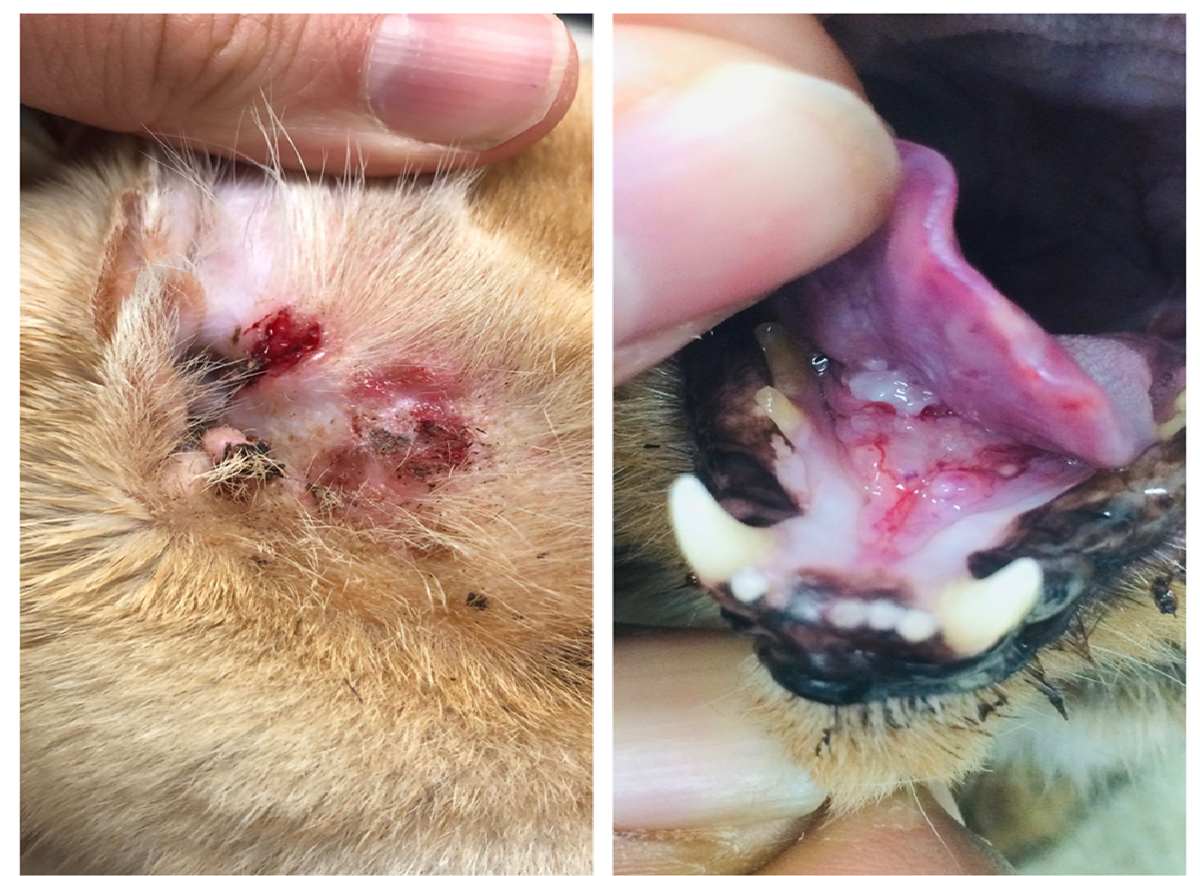
Squamous cell carcinoma (SCC) occurs most often on the skin of the head and in the mouth, especially under the tongue. Both images are of confirmed SCC lesions. Chris Vanderhoof / Cats.com
Squamous cell carcinoma (SCC) is a common type of cancer affecting the skin and mouth of cats. In this article, we’ll cover both oral and cutaneous (skin) SCC including how to recognize it as soon as possible, risk factors, and how it’s treated.
Quick Overview: Squamous Cell Carcinoma in Cats
 Other Names: SCC, “squame”
 Skin: scabbed and ulcerated areas that don’t heal, Mouth: excessive drooling, loss of interest in food, pawing at mouth; you may be able to see the tongue being pushed to one side by the tumor
 Requires Ongoing Medication: Sometimes in high risk cats following surgery or if multiple lesions cannot be removed
 Treatment Options: Surgery primarily to remove the tumors; NSAID medication may be used, though has to be used carefully in cats. Some topical options for skin SCC may be possible in some cases. For oral SCC, magic mouthwash (lidocaine, liquid Benadryl, Maalox) may temporarily help reduce pain.
 SCC of the skin is highly linked to sun exposure in fair-skinned cats with light colored coats Make sure your cat has plenty of shade locations, Limit favorite places (like perches and beds) in direct sun, Consider UV window screens that block up to 99% of UV radiation SCC of the mouth may be linked (at least in part) to some environmental factors that could be avoided: Flea collars, Tobacco smoke, Canned tuna ,Some canned foods
What is Squamous Cell Carcinoma?
Squamous cell carcinoma is a cancer of squamous cells, or surface skin cells. Squamous cells comprise the outer most layer of the epidermis. This is in contrast to basal cells that make up the deepest layer of the epidermis.
Basal cell tumors are the most common skin tumor in cats, making up a little over a quarter of skin tumors in cats. They are also fortunately benign in a majority of cases.
Squamous cell carcinoma however is never benign. It always tends to be locally aggressive and destructive to tissues, and can spread to other parts of the body.
Squamous cell carcinoma of the skin is the third most common skin tumor type of cats (behind basal cell tumors and mast cell tumors). They make up roughly 15% of skin tumors that affect cats.
In contrast a little bit, oral squamous cell carcinoma is the most common oral cancer of cats, comprising a whopping 70-80% of oral tumors in cats.
Cutaneous SCC most often affects cats on areas of their head, especially the ears and the thin-haired area just in front of it.
Oral SCC most often occurs beneath the tongue and can also affect the gums and roof of the mouth.
There is one more rare subset of cutaneous SCC called Bowenoid in situ carcinoma (BISC) which is also termed multicentric squamous cell carcinoma in situ. This form of SCC makes up about 10% of SCC of the skin. It tends to be more aggressive, appears different from most SCC lesions, and spreads to surrounding places in the skin.
Causes of Squamous Cell Carcinoma in Cats
SCC risk does increase with age, regardless of the type. Whether occurring on the skin, or in the mouth, older cats are affected with a median age of 10-12 years.
But beyond older cats being more affected, cutaneous SCC and oral SCC types have their own separate underlying causes.
Cutaneous Squamous Cell Carcinoma
Cutaneous SCC is highly linked to sun exposure. UVB radiation specifically is believed to be responsible.
An estimated ¼ to ⅓ of SCC of the skin is believed to be caused by feline papilloma viruses. Feline papilloma virus type 2 (FcaPV2) is the most common that has been detected in SCC lesions in cats. FcaPVs 3, 4, and 6 have more rarely been found.
Oral Squamous Cell Carcinoma
Oral SCC has also been linked to feline papilloma viruses, especially FcaPV2.
Cats with feline leukemia virus and/or feline immunodeficiency virus may be at a higher risk due to the immune system dysfunction they contribute to impacting the body’s natural ability to suppress cancer.
A genetic predisposition may be a factor for some cats. Specifically, a loss or mutation of the p53 tumor suppressor gene which helps repair DNA damage to cells.
There are a few environmental risks that have been associated with oral SCC:
- Cats eating canned food (3.6x higher risk)
- Cats eating canned tuna specifically (4.7x higher risk)
- Cats with flea collars (5.3x higher risk)
- Cats exposed to tobacco smoke (4.5x higher risk)
Bowenoid In Situ Carcinoma
Bowenoid in situ carcinoma (BISC) is closely linked to feline papilloma viruses. Namely, this is FcaPV2, though testing has also found FcaPV3, 4, and 5 present less often. BISC is considered rare compared to SCC and occurs most often in older cats.
There may also be a genetic predisposition risk for some cat breeds, namely the Devon Rex and Sphynx. In one study, two comparatively younger Devon Rex cats developed very severe Bowen’s disease, including spread to the lungs. Any unusual skin lesions in these breeds should always be treated with high suspicion and be tested as soon as possible.
Symptoms of Squamous Cell Carcinoma in Cats
SCC can appear differently depending on the location. Signs of illness will also be different, especially comparing skin lesions versus those in the mouth.
Cutaneous Squamous Cell Carcinoma
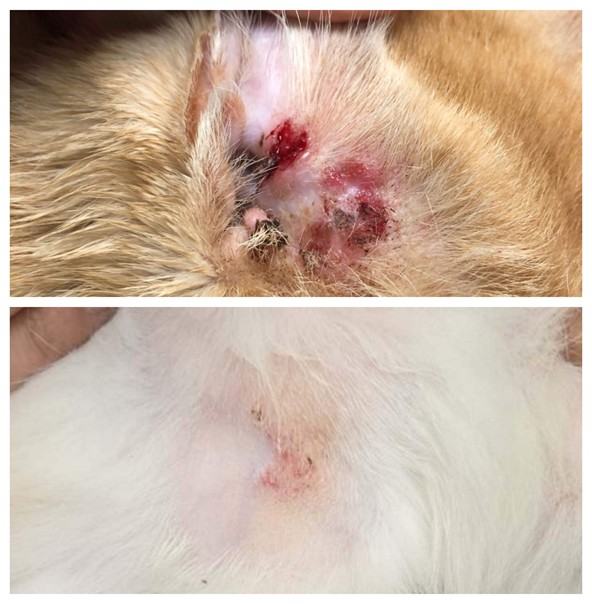
SCC of the skin most often appears as ulcerated, bleeding and/or crusted areas of skin. Chris Vanderhoof / Cats.com
SCC on the skin often appears as an irritated or ulcerated area of skin, not so much a lump or bump. It most often occurs on parts of the body most exposed to sunlight and which have thinner fur coverings. This is namely the top of the head and ears. The belly and inside of the legs can also be affected.
Here are some other appearances to look for and especially in those locations:
- Skin lesions that appear like burns
- Skin lesions that are persistently bleeding, crusting, or oozing
- Areas of the skin that appear ulcerated
SCC of the skin can initially look like many other common skin lesions in cats including:
- Eosinophilic plaques
- Skin infections (pyoderma)
- Allergic dermatitis (atopy)
- Wounds or other trauma (bites, scratches, etc.) that get crusted, irritated, or infected
SCC of the skin may start out as a lesion called solar keratosis. This may be a discolored or rough area of skin without the bleeding and ulceration. In cats that spend a lot of time in the sun, persistent areas like this that start to develop bleeding, ulceration, and other worse changes, should be considered for further testing.
In all cases, cats may try scratching, rubbing, or licking at these areas since they are prone to being itchy and irritating.
Where I get concerned about possible SCC is when lesions like the ones above that I’m treating don’t improve or resolve as expected. All of the other lesions mentioned will typically show noticeable improvement with an antibiotic and a steroid like prednisolone within 2 weeks.
SCC lesions will usually not only remain but will often continue to worsen in appearance. In these cases I will consider a skin biopsy to determine what process is occurring and the best steps to take next.
Oral Squamous Cell Carcinoma
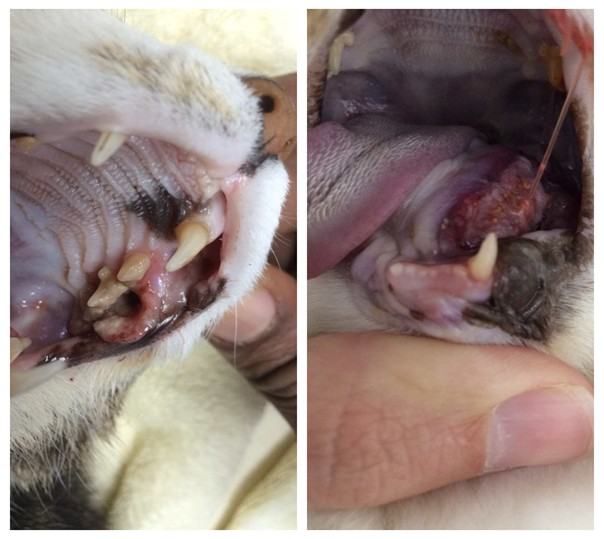
Two variations of oral SCC which were both confirmed. Tumors under the tongue are very common. Ones that affect gum tissue can at first look like more common dental disease. Chris Vanderhoof / Cats.com
Oral SCC can be tricky because unlike SCC of the skin, it is very often hard to see. It also tends to cause significant pain in the mouth very much limiting the ability to try to open the mouth and look for a problem.
Cats with oral SCC often show one or more of the following clinical signs:
- Lack of interest in food
- Difficulty prehending or chewing food
- Aggression towards food (hissing or swatting at the food bowl)
- Dropping food when trying to eat
- Chewing on one side of the mouth
- Pawing or scratching at the mouth
- Excessive drooling/hypersalivation
- Uncharacteristic signs of pain or reactivity with attempts to touch the face or mouth
Any of these signs should warrant a veterinary exam. If your vet is able to open and examine the mouth during a basic exam, they may see be able to see findings to support a lesion like SCC being present:
- Displacement of the tongue
- Swelling or a mass visible beneath the tongue
- Loss of one or more teeth
- Plaques or ulcerations in the mouth
In many cases, the mouth will be too painful to get a thorough oral exam. Your vet may need to sedate your cat to be able to get a good look. If a lesion is found, this also often provides an opportunity to collect a tissue sample for testing.
Oral SCC can also look like other lesions that commonly occur in the mouth. These can include:
- Severe periodontal disease
- Tooth root abscesses
- Feline oral resorptive lesions/tooth resorption
- Eosinophilic ulcers or granulomas
- Wounds or trauma
With a good thorough oral exam, veterinarians can often determine the difference between these lesions visibly. But their similarity highlights the importance of collecting a biopsy sample from any lesions that is unusual or not responding as expected to treatment.
Bowenoid In Situ Carcinoma
BISC is comparatively rare. But one distinction it may have over SCC of the skin is that it appears in multiple places at once. It also has a tendency to spread to multiple surrounding areas of the skin. SCC by contrast usually occurs as a single lesion. It may grow larger or a new one may develop in another location over time if not treated, but BISC occurs over a spreading area more from the get-go.
BISC can also appear more as multiple discrete red or black brown patches or bumps. They can appear roughly circular and unlike many SCC lesions of the skin, will have more of a raised nodular appearance.
Complications of Having Squamous Cell Carcinoma
Complications of SCC can vary depending on the location.
Sadly, for oral SCC many cats cannot be effectively treated and are often euthanized because tumors develop under their tongue where they cannot be surgically removed. These tumors are very painful and cats will refuse to eat and have trouble swallowing.
SCC of the skin can be more effectively treated by removing lesions surgically, though location does matter. More than one surgery may also be needed during a cat’s life if they are at high risk. This can lead to significant appearance changes.
As an example, our hospital’s outdoor cat Simon’s first surgery required removal of an ulcerated tumor on top of his head. The removal of skin in this area led to him always having a “squint eye” on the right side from tension of the closure. Simon’s second surgery required removal of one of his toes. His third, and by far the most involved, required removal of his outer ear tissue and his entire ear flap by a specialty surgeon.
The result of multiple surgeries was a cat only a devoted hospital team family could love.
Include if there are important complications to note for cats living with this disease/condition.
Diagnosis of Squamous Cell Carcinoma in Cats
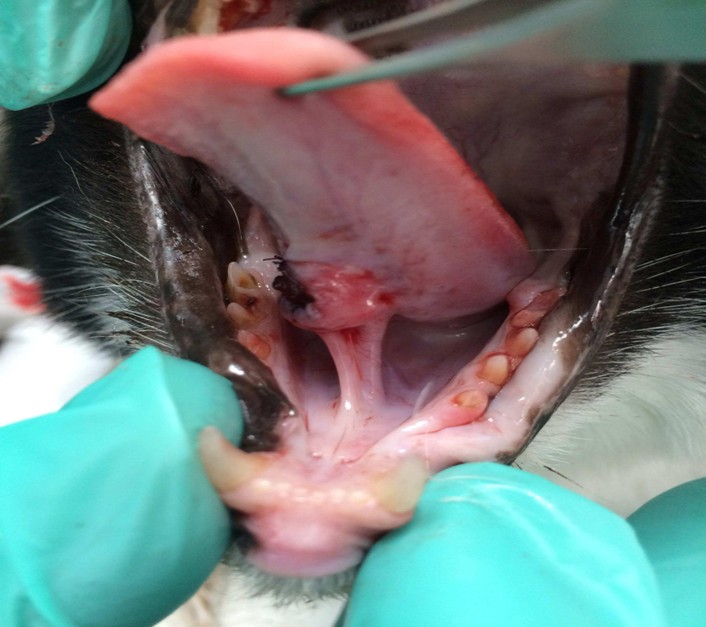
A confirmed SCC after a tissue sample collection for biopsy. Confirming the tumor type is extremely important to understand treatment options and prognosis. Chris Vanderhoof / Cats.com
Squamous cell carcinoma is best diagnosed with a small tissue sample, or biopsy, which is then sent out to a lab to be examined by a veterinary pathologist.
A veterinarian may suspect SCC based on the appearance of a skin lesion or lesion in the mouth. Any kind of ulcerated growth under the tongue is highly suspicious.
But because there are other noncancerous conditions that may look similar, a tissue biopsy is the best way to determine if SCC is present or not.
For example, SCC on the skin may appear as ulcerated, scabbed sores. Forms of allergic or eosinophilic skin disease may look similar, like flea allergy dermatitis or eosinophilic plaques.
In the mouth, SCC may appear similar to severe periodontal disease since the cancer may lead to the loss of one or more teeth. Wounds or trauma to the mouth may also cause painful or swollen lesions.
For many cancerous growths, a test called a fine needle aspirate, or FNA may be performed. This is where a needle attached to a syringe is used to “suck up” cells from a growth where they are then emptied onto a slide to view under a microscope.
SCC is one type of cancer where an FNA may not be helpful. In many cases, SCC lesions are flat or appear more as sores or ulcers. However, if there is a raised part, your vet may elect to collect samples for cytology to be examined.
Treatments for Squamous Cell Carcinoma
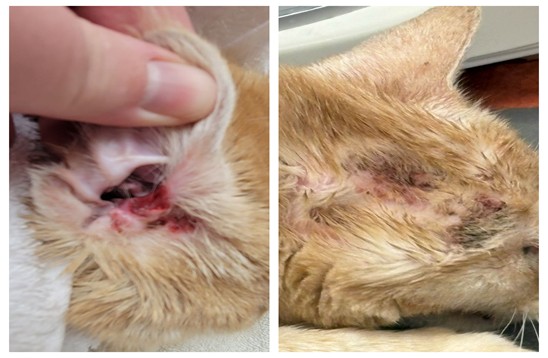
Simon had confirmed SCC involving his ear pinna. Surgical removal resulted in removal of cancer but a significant appearance change. Because SCC often occurs on the head of cats, this is a common outcome to consider. Chris Vanderhoof / Cats.com
In all cases, the treatment of choice for SCC is to surgically remove the lesions. These should always be sent out to a lab for a pathologist to look at both to confirm SCC but also to ensure that all of the cancer cells were removed.
This may start with a smaller biopsy for larger lesions to get an idea of what they are first, and what is required. As an example, one patient of mine (photo above) developed SCC across the base of his head and down into his ear canal. While SCC was suspected, we wanted to be sure before pursuing an involved surgery. A small biopsy punch sample confirmed SCC and a board certified veterinary surgeon was able to successfully remove the cancer, though this did require removal of the entire ear pinna and some surrounding skin.
If squamous cell carcinoma cannot be surgically removed or if more conservative means are needed, some other potential options remain. These may include:
- Topical anti-inflammatory or immune-modulating creams
- Topical laser therapy
- Topical chemotherapy
- Cryotherapy
- Radiation treatment
These options may also apply to BISC as it is also found on the skin. Surgical removal is ideal, but medical management with topical approaches may be an option. In at-risk breeds like the Devon Rex and Sphinx, treatment should be urgent and aggressive to remove tumor lesions, as they have shown to spread internally.
Oral SCC is much harder to treat as the location may limit what can be done. Tumors under the tongue always carry a very poor prognosis. Surgical removal will still leave a painful, poorly healing lesion that will typically regrow. Many veterinarians will not recommend surgical removal for this reason.
Medical therapies typically poorly effective and unrewarding.
In cats that are painful and unable to eat as a result, an oral solution composed of combined lidocaine, children’s liquid Benadryl (diphenhydramine), and Maalox (aluminum and magnesium hydroxide) in equal ratios can be helpful temporarily.
Commonly called “magic mouthwash” this solution helps to numb pain and can help if given about 30 minutes before a meal. It is however, only a temporary and superficial measure to provide some pain relief.
Unfortunately a large majority of cats with SCC of the mouth are euthanized, especially when the tumor is under the tongue. In my own experience, this often occurs within 1-2 weeks of diagnosis.
When SCC occurs in other areas of the mouth that don’t involve the tongue, treatment still has to be very aggressive but may be successful. This can especially be true of lesions affecting the mandible or lower jaw. SCC involving the teeth and gums often spreads into the jaw bone itself.
But it is possible to surgically remove parts of the jaw bone, effecting a cure. This is a surgery usually only performed by board certified veterinary surgeons or dental specialists. While this surgery can be painful, full healing and recovery is possible and cats can adapt to the structural change of their mouth.
Cat Care Tips
Here are some tips for how to be more aware of SCC:
- If your cat likes to spend lots of time in very sunny places, monitor areas of their head, ears, and underbelly very closely. This is where you may notice solar keratosis, a precursor to many SCC lesions.
- If you see any skin lesion that doesn’t heal on its own or doesn’t heal as expected after a veterinary treatment, make sure to follow up with your vet, don’t wait and watch.
- If you have a Devon Rex or Sphinx, keep a very close eye out for unusual skin lesions like persistent bumps or ulcers on the skin.
- While it is possible for cats to get sunburn, don’t assume that something looking like it will heal on its own. Always have it examined with your vet.
- Cats with fair skin (like light coat colors and orange tabby cats) are at higher risk for UV-related disease like solar burns, solar keratosis, and SCC. Be extra aware if your cat fits that appearance.
If your cat has SCC of the mouth, here are some tips to help:
- Pain medication is key for quality of life, make sure to keep in touch with your vet for needed refills.
- Your vet may be willing to dispense lidocaine to help you make magic mouthwash at home, adding in liquid Benadryl and Maalox. This can be a big help for pain relief and eating.
- Keep food softer, even like a gruel, to help keep the need for too much prehending or tongue motion.
- In most cases, the quality of life factor cats with oral SCC fail is pain management as the lesion will become more painful as it grows. Check in regularly with your vet for a quality of life assessment to ensure you consider the most humane decision at the best time.
Prevention of Squamous Cell Carcinoma
There are certainly some environmental measures you can take to reduce the risk of SCC.
For SCC of the skin, consider these tips:
- Help your cat avoid sun exposure during peak times (usually between 10am and 2pm)
- Provide shaded areas if your cat likes to go outside on the deck or patio
- If your cat spends lots of time at the window, consider special window screens that can filter out damaging UV radiation (such as from 3M). Your cat can still enjoy the light but without the same risk!
- Sunscreen can be used as long as it is pet-safe. Avoid products containing zinc especially as toxicity can result if cats lick it off
For oral SCC, consider these tips:
- Avoid use of flea collars and canned tuna. Both present about a 5x risk for SCC.
- Tobacco smoke is highly linked to cats getting oral SCC. If you smoke or use other tobacco products, limit your cat’s exposure by using those products outdoors. Quitting use altogether eliminates the risk altogether.
- While canned food presents a higher risk (about 3.5x) wet foods also present health benefits like increased hydration and better weight management. It is very unlikely this is the only risk in SCC cases.
All cases of SCC have connections to feline papilloma viruses. Unfortunately, there is no way to prevent them from acquiring these. There is no effective vaccine available and transmission often occurs much too early in life for vaccination to be effective. Currently, there is no simple in-clinic test that can determine if any of these viruses are present and even if they are, many cats carry them normally without any disease ever occurring.
If your cat does develop something resembling a viral plaque, make sure to have it evaluated by your vet and closely monitor it. If ever in doubt, consider having it removed with a punch biopsy procedure.
-
Medeiros-Fonseca, B., Faustino-Rocha, A. I., Medeiros, R., Oliveira, P. A., & Da Costa, R. M. G. (2023). Canine and feline papillomaviruses: an update. Frontiers in Veterinary Science, 10, 1174673. https://doi.org/10.3389/fvets.2023.1174673
-
Manuali, E., Forte, C., Vichi, G., Genovese, D. A., Mancini, D., De Leo, A. a. P., Cavicchioli, L., Pierucci, P., & Zappulli, V. (2020). Tumours in European Shorthair cats: a retrospective study of 680 cases. Journal of Feline Medicine and Surgery, 22(12), 1095–1102. https://doi.org/10.1177/1098612x20905035
-
Egberink, H., Hartmann, K., Mueller, R., Pennisi, M. G., Belák, S., Tasker, S., Möstl, K., Addie, D. D., Boucraut-Baralon, C., Frymus, T., Hofmann-Lehmann, R., Marsilio, F., Thiry, E., Truyen, U., & Hosie, M. J. (2025). Feline papillomatosis. Viruses, 17(1), 59. https://doi.org/10.3390/v17010059
-
Villalobos, A. (2024, September). Tumors in the Skin of Cats: Squamous Cell Carcinomas. Merck Veterinary Manual (Pet Owner Version).
-
C McEntee, M. (2001). Evaluation of Superficial Masses: Diagnostic and Treatment Considerations. Veterinary Information Network (VIN).
-
Munday, J. S., Benfell, M. W., French, A., Orbell, G. M., & Thomson, N. (2016). Bowenoid in situ carcinomas in two Devon Rex cats: evidence of unusually aggressive neoplasm behaviour in this breed and detection of papillomaviral gene expression in primary and metastatic lesions. Veterinary Dermatology, 27(3), 215. https://doi.org/10.1111/vde.12319
-
Weir, M., Stoewen, D., & Pinard, C. (n.d.). Squamous Cell Carcinomas in Cats. VCA Animal Hospitals.
-
Cornell University College of Veterinary Medicine. (n.d.). Squamous Cell Cancer: Dangerous. Cornell Feline Health Center.
-
Brooks, W. (2023, October 7). Oral Squamous Cell Carcinoma in Cats. Veterinary Partner.
-
Pellin, M., & Turek, M. (2016, October 18). A Review of Feline Oral Squamous Cell Carcinoma. Today’s Veterinary Practice.