 Published Feb 4, 2026


Kate Barrington / Cats.com
Automatic litter boxes promise to put an end to scooping by doing the unpleasant work for you. Smart technology can certainly make your life as a cat owner easier, but not all automatic litter boxes live up to their potential. Some may even put your cat’s safety at risk.
After researching the market and testing over two dozen automatic litter boxes with our own cats at home, we’ve identified ten crucial factors you should consider when selecting a self-cleaning litter box. Here we offer practical tips for evaluating automatic litter boxes, choosing the right model for your needs, and getting your cat to use it.
The Top 10 Things to Know About Automatic Litter Boxes
The core function of every automatic litter box is the same. They’re designed to separate clean litter from waste and clumps, saving you the hassle of scooping the litter box yourself. But a machine with so many moving parts can be costly, and potentially hazardous if not engineered specifically with cat safety in mind.
Safety concerns aside, choosing the wrong model could be an expensive mistake if your cat refuses to use it. With all this in mind, here are ten things you should think about as you’re shopping for an automatic litter box.
1. There Are Three Main Types
When shopping for automatic litter boxes, you should be familiar with the different types (along with their pros and cons). There are three main types:
- Enclosed models that rotate on the X-axis (side to side)
- Open-top or enclosed models that rotate on the Y-axis (front to back)
- Tray-style models equipped with a rake system
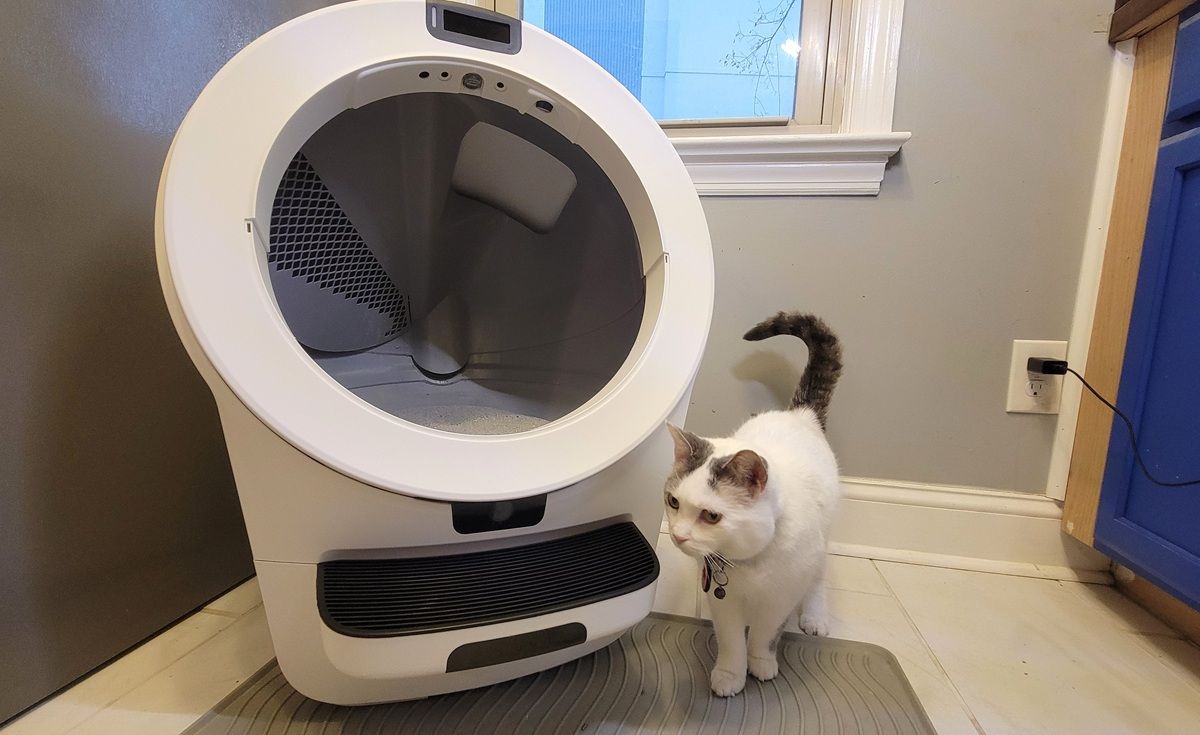
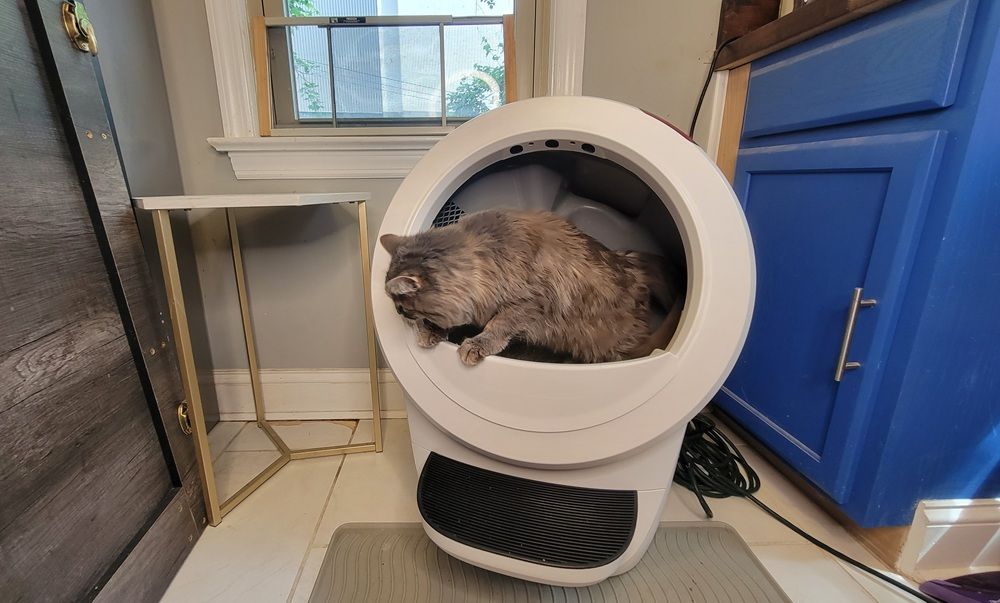
The first of these is perhaps the most popular, exemplified by the Litter-Robot. These automatic litter boxes often have a globe-like shape and a sifter integrated into the housing through which the litter bed is filtered during a cleaning cycle. Because models that rotate side to side don’t create pinch points the way other models can, this style is generally thought to be the safest option for cats.
Automatic litter boxes that rotate on the Y-axis also work by sifting the litter to separate out clumps and waste, but the unit tips back rather than rotating to the side. There are open-top models with this design, like the Neakasa M1, as well as enclosed models from PetSnowy and HomerunPET. This style of litter box can be completely safe as long as the necessary sensors and software fail-safes are included in the design.
The third type of automatic litter box features a tray-like design that looks similar to a standard open-top litter pan. These usually have a built-in rake that moves across the litter bed, scraping clumps into a waste collection compartment. Examples of this style of litter box include the PetZone SmartScoop and PetSafe ScoopFree. This kind of automatic litter box tends to be cheaper than the others and some cats prefer the open-top design.
2. You Still Need to Clean the Litter Box
Kate Barrington / Cats.com
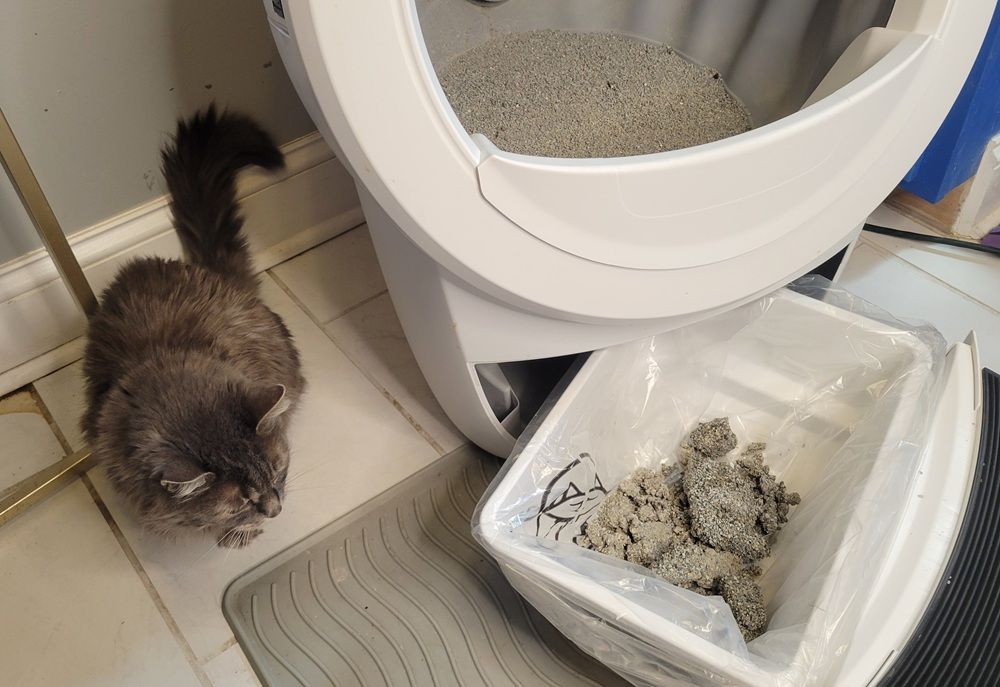
The whole point of an automatic litter box is that it scoops the litter for you, but that doesn’t mean you’re completely off the hook. Most models collect dirty litter in a covered waste compartment that you’ll need to empty regularly. How quickly the compartment fills up depends on its size and the number of cats using the litter box.
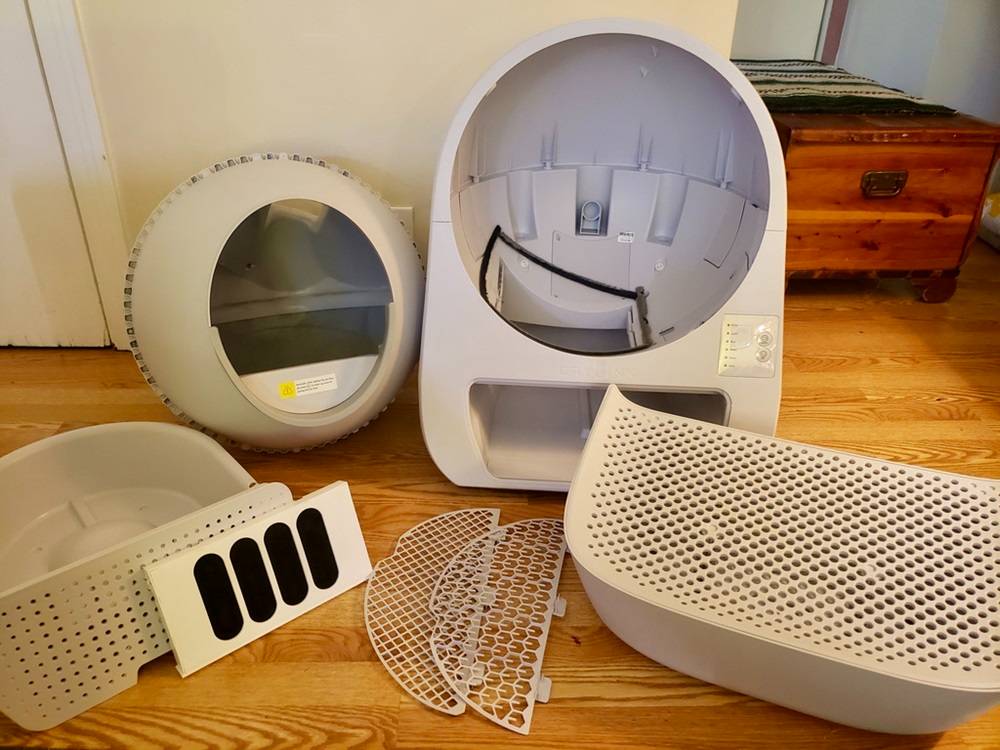
Cleaning the litter box is never an enjoyable task but deep-cleaning an automatic litter box is a little more involved than with a standard litter pan. Most automatic litter boxes only need to be taken apart for cleaning every 2–3 months, depending on usage. Many models can be wiped clean or sprayed with a hose, but you’ll need to take care to avoid getting the electrical components wet.
3. Size Might Matter to Your Cat
Automatic litter boxes tend to be pretty big but it’s not the footprint of the unit that matters to your cat—it’s the dimensions of the litter bed. Open-top models with built-in rakes can comfortably accommodate a wide range of cats, including large breeds. It’s still worth checking the measurements against your cat’s body length, but you won’t have to worry about head room limitations.
Many models that rotate are at least partially enclosed, so the shape of the unit can limit the dimensions of the litter bed. Automatic litter boxes that rotate on the Y-axis tend to be more spacious since they’re often square or rectangular in shape.
Round litter boxes that rotate on the X-axis sometimes have smaller litter beds, but they’re generally roomy enough for the average cat. Even large cats may have no trouble using these litter boxes, depending on their personal preferences. Having a wide entry can help the litter box from feeling cramped.
4. You May Need to Switch Cat Litter
Depending what kind of cat litter you’re currently using, upgrading to an automatic litter box could necessitate a switch. While some rake-style models use crystal cat litter, the majority of self-cleaning litter boxes require clumping cat litter to work properly.
Models with integrated sifters rely on the clumping action of the cat litter to help separate out the clumps. Depending on the size of the holes in the sifter, you might be limited to fine-grained litter like clumping clay or granular alternative litters. A few automatic litter boxes come with a second sifter with larger holes that you can swap in if you want to use a type of litter that comes in pellets, like tofu cat litter.
5. Safety Features Aren’t Optional
To ensure your cat’s safety, an automatic litter box should not move when your cat is inside, or even touching the unit. Most models have weight sensors in the base that activate under pressure. These sensors keep the unit from cycling while your cat is inside and immediately stop mid-cycle if your cat steps into the box.
More advanced models like the Litter-Robot utilize infrared curtain sensors and some even have cameras as a third level of safety. Infrared sensors are typically integrated into the unit’s opening or inside the globe, and they can detect when a cat enters or exits the unit. Some models also have radar sensors that will stop the unit from cycling if your cat gets too close, even if they don’t make contact.
At a minimum, you should choose an automatic litter box with a weight sensor and some kind of motion or infrared sensor to detect cat entry/exit. Mechanical pinch sensors are also crucial, just in case the other sensors fail and your cat gets stuck. When activated, these sensors should trigger the unit to stop cycling and reverse.
6. You Should Read the Fine Print
As you’re comparing models, don’t forget to check for information about warranties, return policies, and replacement parts. Find out how long the warranty lasts and whether it covers issues specific to automatic litter boxes such as:
- Manufacturing defects
- Accidental damage from drops or spills
- Software glitches
- Power surges or electrical component failures
- Mechanical component breakdowns
Some brands allow you to purchase an extended warranty, sometimes up to a year after purchasing the unit. Be sure to read the return policy, in case the model simply doesn’t work for you, and find out if replacement parts are available, should something break in the future.
7. Convenience Comes at a Cost
Kate Barrington / Cats.com
There’s no denying that automatic litter boxes are expensive, with many models costing over $500. If you’re going to invest in this kind of smart technology, you want to make sure you’re getting what you pay for. There’s nothing worse than spending a fortune just to have the unit break down a year later.
Don’t be tempted by heavily discounted product listings that look similar to popular models—they might not have the features you’re looking for or the fail-safes that protect your cat. Do your research on the brand you’re considering to make sure the product is backed by sound engineering, quality-controlled manufacturing practices, and rigorous safety testing.
8. You Should Read Customer Reviews
As you’re researching automatic litter boxes for comparison, pay attention to customer reviews. And don’t just read the ones posted on the manufacturer’s website, either. If the manufacturer controls the website, they technically have the ability to filter or remove negative reviews.
Some of the more well-known manufacturers of automatic litter boxes have a presence on third-party review websites like Trustpilot. If the product is sold on a major retail platform like Chewy or Amazon, you should be able to find reviews there as well. If you’re shopping on Amazon, you can even use tools like RateBud to identify deceptive reviews.
9. Some Models Can Help Monitor Cat Health
If you’re going to invest in a self-cleaning litter box, it’s worth considering a model with integrated smart features. Many models include built-in scales, for example, that can help you track your cat’s weight (and even the weight of their deposits). This information can be useful in establishing trends, which enables you to identify abnormalities that might indicate a developing health problem.
It’s also becoming more common for automatic litter boxes to incorporate AI technology. This technology is particularly useful in interpreting usage patterns but it can be particularly helpful in models equipped with cameras. Models like the Litter-Robot 5 Pro and Petkit Purobot Ultra even use AI-powered facial recognition software to identify individual cats.
Some models can also tell the difference between liquid or solid waste and set the clean cycle delay timer accordingly. After your cat urinates, for example, the unit might wait for a few extra minutes to give the clumps time to harden.
10. You Should Acclimate Your Cat Gradually
Liz Coleman / Cats.com
You could spend hours researching the market to find the perfect automatic litter box for your feline family, just to have your cat reject it. While some cats simply don’t take to self-cleaning litter boxes, it’s often just a matter of getting them used to it.
Cats who tend to be finicky about food or picky about litter may also be hesitant to try a new litter box, so it’s crucial to give them a chance to acclimate. Here are some tips to try:
- Place the unit next to the old litter box (you can move it later, if needed)
- Start with the unit off, so it doesn’t startle your cat with sound and motion
- Use positive reinforcement to encourage your cat to step inside
- Add some dirty litter from your cat’s old box to make it smell familiar
Once your cat demonstrates some interest in the automatic litter box, start scooping the old litter box less frequently to make the new one more appealing. Eventually you can turn the unit on and adjust the timer delay so it doesn’t startle your cat when it starts to cycle.
Overall, Are Automatic Litter Boxes Worth It?
For many cat owners, the right automatic litter box is worth its weight in gold (which is a considerable amount). If you’re looking for a reprieve from the hassle of scooping or seeking a solution for problematic odor, an automatic litter box could be a great investment. They’re particularly well suited to multi-cat households and cat owners who struggle with the physical task of keeping the litter box clean.
Some of the primary drawbacks of automatic litter boxes are the cost, size, and potential for malfunction. Certain models can also be noisy, which might only be an issue for sensitive cats or certain placements in the home.
Overall, if you have room in your budget for an automatic litter box, it’s a valuable option to consider. Just take the time to think about the features you want and the design your cat will find most comfortable before you buckle down to research the options.
Also Read: The 7 Best Automatic Litter Boxes (Tested 31 Models)