Published Oct 30, 2026


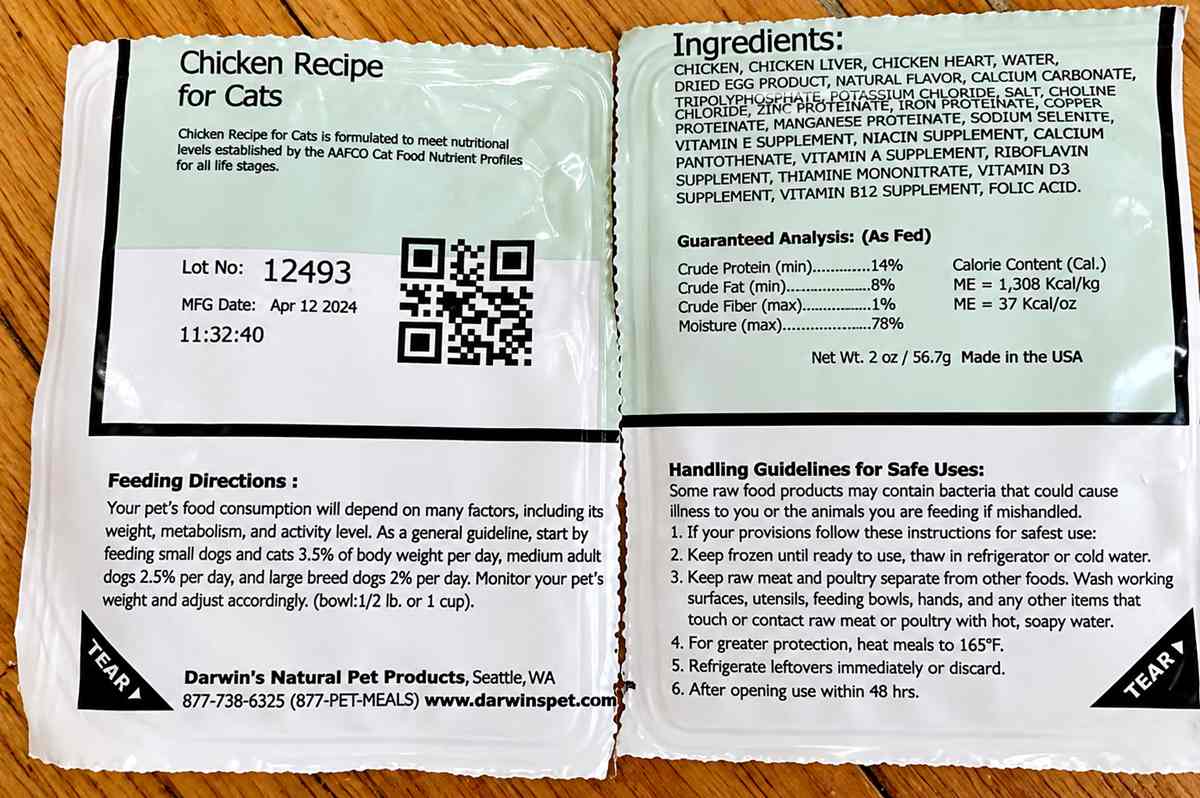
Photo: FDA
The U.S. Food and Drug Administration issued an advisory on October 26, 2026, warning pet owners not to feed their cats two lots of Darwin’s Natural Pet Products Natural Selections Chicken Recipe for Cats after samples tested positive for Salmonella.
The FDA reported that it collected and tested the samples after receiving a consumer complaint about two cats that developed gastrointestinal illness after eating Darwin’s Natural Selections Chicken Recipe for Cats. According to the advisory, one cat was hospitalized after eating food from one of the two affected lots. Both cats recovered after they stopped eating the products.
The FDA recommended that Arrow Reliance, Inc., doing business as Darwin’s Natural Pet Products, recall the two product lots that tested positive for Salmonella. However, at press time, the company had not initiated an adequate recall or publicly addressed the advisory. The company did not respond to requests for comment.
The FDA is advising pet owners to check their freezers for the affected lots of Darwin’s Natural Pet Products, which were sold frozen in 2-pound white and clear plastic packages with green and black labeling, with each 2-pound package divided into four separate units. The products are sold online through a subscription service and have no expiration dates on the labels.
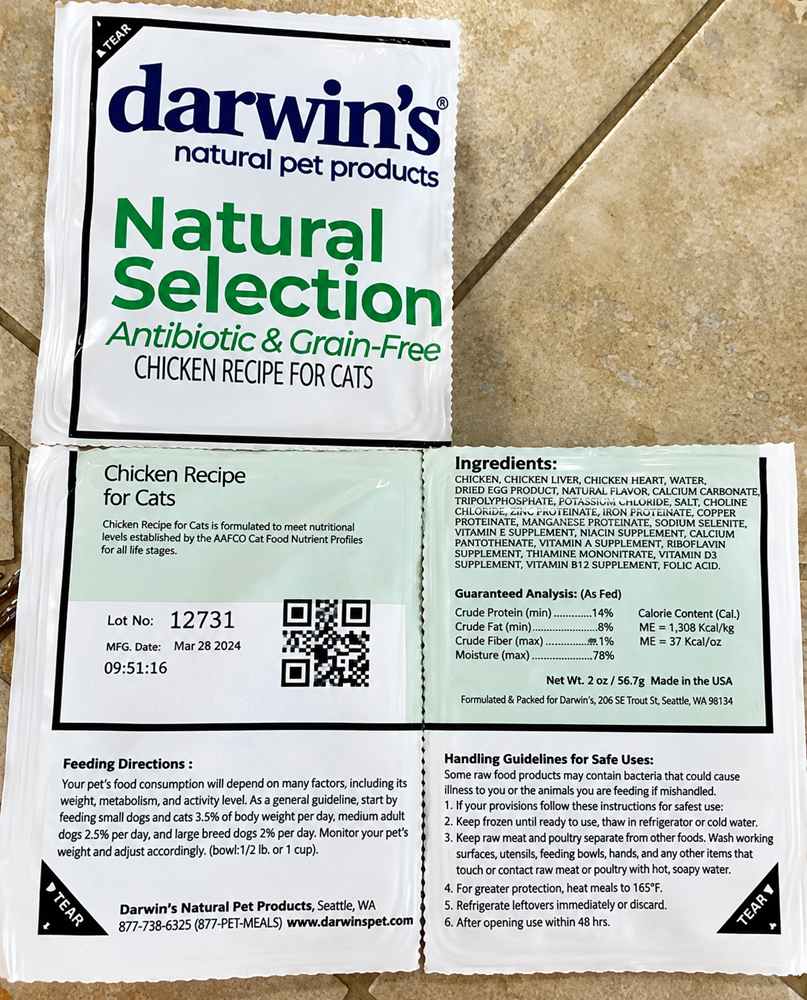
Photo: FDA
If you have this food in your freezer, check the product lot codes printed on the front of the lower-left unit of the package. The affected variety and lot codes are:
- Darwin’s Natural Pet Products Natural Selections Chicken Recipe for Cats
- Lot 12731, MFG Date: Jul 08, 2026
- Darwin’s Natural Pet Products Natural Selections Chicken Recipe for Cats
- Lot 12493, MFG Date: Apr 02, 2026
What to Do if You Have the Affected Food
If you have any food from either of the affected lots, the FDA recommends the following:
- Do not feed the food to pets.
- Do not donate the food.
- Throw the food away in a secure container so animals, including wildlife, cannot access it.
- Clean and disinfect any bowls, containers, utensils, or food-prep surfaces that came into contact with the food.
- Clean and disinfect any areas of your refrigerator or freezer that may have come into contact with the contaminated food.
- Clean and disinfect floors, pet bedding, and toys.
- Clean up your cat’s feces in litter boxes, yards, or other areas where people or animals could be exposed.
- Wash your hands thoroughly after handling the food or cleaning potentially contaminated items and surfaces.
Throw the food away if you can’t verify the lot code, whether because you transferred it to a different container and no longer have the original package, no longer have the front lower left unit of the package with the printed lot code, or can’t read the lot code.
Salmonella is a type of bacteria that can cause illness in both pets and people. Those who are very young, very old, or have weakened immune systems are especially vulnerable. Freezing or refrigerating contaminated pet food does not kill Salmonella.
If your pet shows signs of Salmonella infection, including vomiting, diarrhea, fever, loss of appetite, or decreased activity level, contact your veterinarian promptly. If you have symptoms of Salmonella infection (diarrhea, fever, and abdominal cramps), consult a healthcare provider.
Even if your cat does not appear sick, pets can carry Salmonella and pass it on to human family members. Infected pets might shed the bacteria in their feces and saliva, potentially contaminating household surfaces and exposing other pets and people. To help prevent transmission, clean up feces promptly, wash your hands after touching your cat or cleaning the litter box, and avoid contact with your cat’s saliva. Clean and disinfect any surfaces your cat or the contaminated food might have contacted.
If you believe your cat became ill after eating the affected food, contact your veterinarian and consider reporting the incident through the FDA’s Safety Reporting Portal.