 Last updated Sep 17, 2026





Liz Coleman / Cats.com
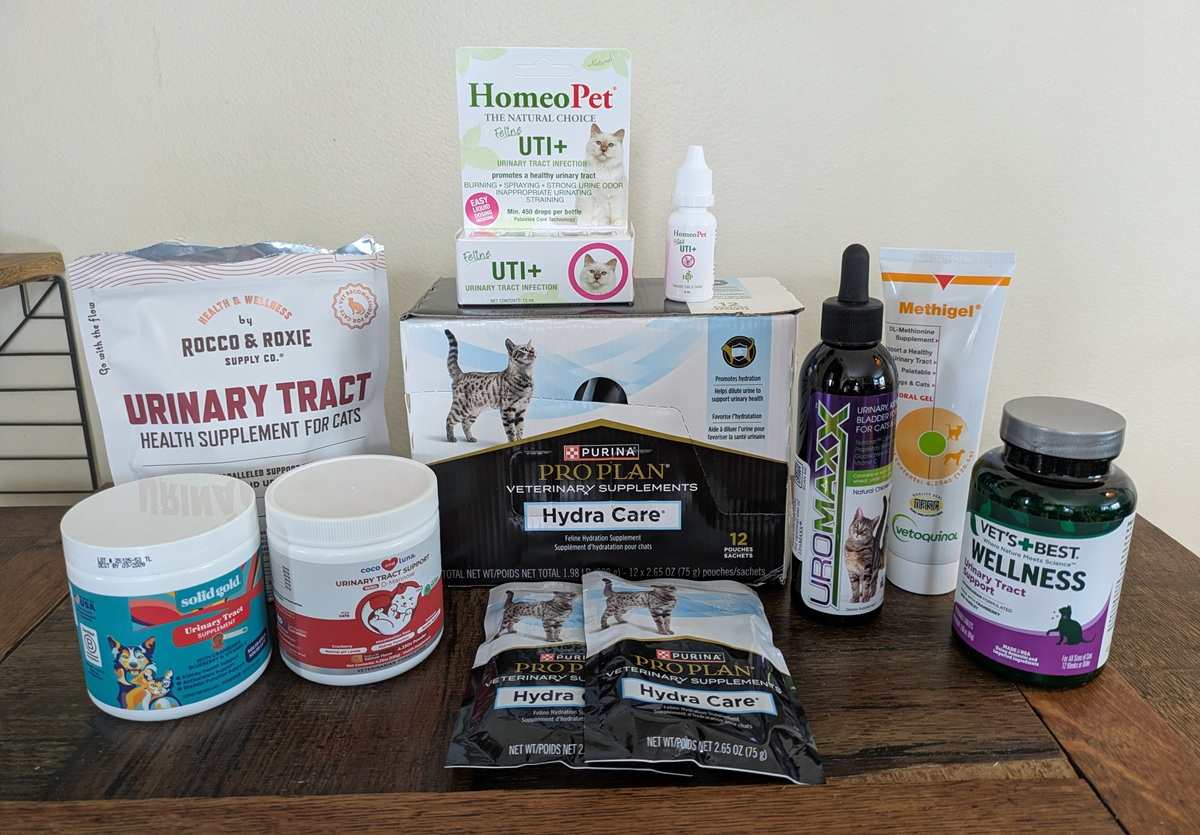
The best supplements for cat urinary health contain active ingredients proven to help resolve or prevent symptoms of urinary tract issues. Pet supplements are a dime a dozen, though, and it can be tricky to find one that actually works.
We recommend UroMAXX Urinary Tract, Kidney & Bladder Formula as the best supplement for cat urinary health. These drops are available without a prescription and contain four active ingredients designed to support your cat’s urinary tract health and kidney function.
But this urinary health supplement isn’t the only one on the market. Here, we’ll delve into cat urinary health and explore some of the best supplements on the market.
At a Glance: Best Rated Cat Supplements For Cat Urinary Health To Buy


Want a quick look at the products reviewed in this article? In the comparison table below, we’ve highlighted some of the most important features of each product. You’ll find more detailed information about each product later in the article.


UroMAXX Urinary Tract, Kidney & Bladder Formula
- Easy to administer with the included dropper
- Tasty chicken flavor
- Helps make the urinary tract less hospitable for bacteria


Almo Nature HQS Hydration Help Goat Milk & Broth Wet Cat Food Pouches
- Extremely simple, clean two‑ingredient recipe
- HQS (human‑grade sourced) goat milk
- High moisture content to support hydration


Solid Gold Cranberry Supplement for Urinary Tract Health
- Easy to administer powder form
- Made with antioxidant-rich cranberry and blueberry
- Beef liver flavor cats seem to like


Rocco & Roxie Supply Co. Urinary Support Chew Supplement
- Contains seven effective active ingredients
- Third-party lab tested
- No artificial colors or flavors


Vetoquinol Methigel Gel Urinary Supplement
- Promotes normal urinary and bladder function
- Reduces odor in urine
- Contains fish oil


Vet’s Best Cat Urinary Tract Support Chewables
- Affordably priced under $10
- Contains a variety of active ingredients
- Formula developed by a veterinarian


Purina Pro Plan Veterinary Diets Hydra Care Supplement
- Appealing liver flavor and gravy-like consistency
- Encourages cats to drink more water
- Contains natural osmolytes to help cells absorb water


Coco and Luna Urinary Tract Cranberry Supplement
- Easy to administer powder form
- Affordably priced, one container has over 100 servings
- Supports urinary wellness and immune system health


HomeoPet UTI Plus Urinary Tract Support Drops
- Supports urinary health and kidney function
- Safe for kittens weighing under 1 pound
- Easy to administer by mouth or in food/water
Before going into detail about our top picks, let’s take a look at some of the most common urinary tract problems in cats to learn how the supplements we’ve recommended can help.
4 Common Cat Urinary Health Problems
Kate Barrington / Cats.com
Urinary tract disorders are fairly common in cats, and many of the symptoms overlap. Straining to urinate, increased frequency of urination, and peeing outside the litter box are often an indication of urinary health problems in cats. But there are numerous concerns in this category.
Some of the most common urinary health problems seen in cats include:
A urinary tract infection (UTI) is an infection that affects any part of the urinary tract, which includes the kidneys, ureters (carries urine from the kidneys to the bladder), bladder, and urethra (carries urine from the bladder to the outside of the body). The bladder and urethra make up the lower urinary tract.
Because UTIs most commonly affect the bladder, they’re also sometimes called bladder infections.
UTIs fall under the heading of feline lower urinary tract disease (FLUTD). They occur when bacteria enter the bladder through the urethra.
Common symptoms of UTIs in cats include peeing outside the litter box, frequent urination, and straining to urinate. Cats may also cry or vocalize during urination out of pain and you may notice increased odor or blood in your cat’s urine.
1. Feline Lower Urinary Tract Disease (FLUTD)
Feline Lower Urinary Tract Disease (FLUTD) refers to a group of illnesses affecting the bladder and urethra in cats. These illnesses range in severity from mild to very serious and can be brought on by infections, inflammation, diet, or even behavioral problems.
Urinary Tract Infections (UTIs) fall under the heading of FLUTD. A UTI is an infection that affects any part of the urinary tract, which includes the kidneys, ureters (carries urine from the kidneys to the bladder), bladder, and urethra (which carries urine from the bladder to the outside of the body).
Common symptoms of UTIs in cats include peeing outside the litter box, frequent urination, and straining to urinate. Cats may also cry or vocalize during urination out of pain, and you may notice increased odor or blood in your cat’s urine.
FLUTD can affect cats of any age, but it’s most commonly seen in older and overweight cats. Diagnosing FLUTD generally involves a review of clinical symptoms, a physical exam, and a urinalysis. In some cases, other testing, such as bloodwork or x-rays may be required.
2. Feline Idiopathic Cystitis (FIC)
Feline idiopathic cystitis (FIC) is the name given to cases of FLUTD in which the cause is unknown. Though the exact cause is unknown, stress is often a key factor in the development of FIC.
Cats with FIC often have trouble urinating but, due to bladder discomfort, make frequent attempts to urinate. It’s common to find blood in the urine of cats with FIC as well.
Many cases of FIC resolve within a few weeks, with or without treatment. However, many veterinarians recommend treating the condition to help prevent a recurrence. Stress management is an important part of treating and preventing FIC. It’s also a good idea to keep your cat’s diet consistent.
3. Bladder Stones
Uroliths, or urinary stones, are other names for bladder stones. These are rock-like collections of minerals that form in the urinary tract, causing pain and discomfort. Urinary stones can even block the urethra, causing a dangerous urinary obstruction that requires emergency veterinary care.
Bladder stones in cats are divided into two types: struvite stones and calcium oxalate stones. Struvite stones form in alkaline (non-acidic) urine and are linked to diets high in magnesium and phosphorus. Calcium oxalate stones form in more acidic urine and most commonly affect cats over 7 years of age. These stones can develop when blood calcium levels are too high, often from excessive calcium supplementation.
4. Urinary Tract Obstruction
Male cats have a higher risk of developing urinary tract obstructions than female cats. While urinary stones are the most common cause, obstructions can also result from urethral plugs, tumors, physical abnormalities in the bladder or urethra, or lower urinary tract inflammation.
Urinary tract obstructions may be partial or complete. Unfortunately, the signs of partial obstruction can be easy to miss, which may allow the condition to progress into a life-threatening complete urinary obstruction. When the urethra becomes blocked, urine can’t flow normally. The blockage can damage the lower urinary tract and cause your cat to go into kidney failure.
Early signs of urinary tract obstruction may include frequent trips to the litter box, increased vocalization, and overgrooming around the anus and urethra. Treatment generally involves medication to dissolve the stones or placement of a urinary catheter to relieve the blockage.
Do Supplements Really Help?
Kate Barrington / Cats.com
There’s a supplement for everything. But just because a product claims to provide a certain benefit doesn’t necessarily mean that it actually does. It all comes down to the active ingredients and whether they’ve been scientifically shown to work for cats.
For example, drinking cranberry juice is a popular natural remedy for recurring UTIs in humans. Studies show that various compounds found in cranberries can help prevent bacteria from adhering to the lining of the urinary tract, kill bacteria in the bladder, and reduce inflammation. These results are not universal, however, and scientific studies involving pets are limited.
Cranberry extract, a common ingredient in urinary care supplements, might provide some benefit, but it is unlikely to be more effective than antibiotics.
It’s also worth noting that many studies on the effects of cranberry juice for UTIs in humans involve a single strain of bacteria, E. coli. While E. coli can cause UTIs in pets, it isn’t the only type of bacteria that can. The efficacy of cranberry juice also depends on the dosage, and there is no standardized, scientifically tested dose for cranberry juice in pets.
Whether it’s nutritional supplements, probiotics, or products to support urinary wellness, it’s important to take health claims with a grain of salt. Do your research before purchasing a supplement to make sure that the product is:
- Formulated based on scientific evidence.
- Recommended by veterinarians.
- Ideally, made in the USA or certified by a national regulatory agency.
- Formulated for the specific problem your cat is experiencing, whether it’s high urinary pH, recurring UTIs, or bladder inflammation.
Most importantly, talk to your vet before starting a supplement to make sure it is safe to take with your cat’s current treatments. Your vet can also recommend urinary health supplements for your cat. Remember, supplements aren’t a miracle cure, and they often work best alongside a good diet, increased moisture intake, and stress management.
Best Supplements for Cat Urinary Health: Our Top 9 Picks
#1 Best Liquid Supplement: UroMAXX Urinary Tract, Kidney & Bladder Formula
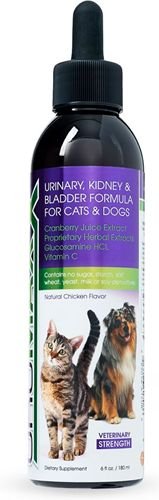
Some cats simply aren’t interested in treats or chewable tablets, in which case a liquid urinary supplement might be more appropriate.
UroMAXX comes in a 6-ounce bottle with a dropper that makes it easy to administer directly into your cat’s mouth or dribbled over his food. As some cat owners have commented, however, the dropper isn’t as long as the bottle, and it may not hold a full dose in one draw for larger cats.

Liz Coleman / Cats.com

Liz Coleman / Cats.com
The primary active ingredient is cranberry juice extract, which helps prevent microorganisms from adhering to the lining of the urinary tract. Glucosamine also supports the lining of the urinary tract. Vitamin C helps acidify the urine, making the bladder a less favorable environment for bacteria.
This urinary supplement is safe for both cats and dogs. It’s safe for everyday use and can be used in conjunction with medications and specialty diets for urinary tract disease.
Ingredients
Active Ingredients
Active Ingredients: Cranberry Juice Extract, Glucosamine as HCL, Vitamin C, Herbal Extract and Amino Acid Support.
Inactive Ingredients
Glycerin, Purified Water, Natural Chicken Flavor, Potasium Sorbate, Xanthan Gum.
Pros
- Easy to administer with the included dropper
- Tasty chicken flavor
- Helps make the urinary tract less hospitable to bacteria
- Safe for both cats and dogs
Cons
- Content of active ingredients isn’t listed
- Dropper is shorter than the length of the bottle
#2 Best For Hydration: Almo Nature HQS Hydration Help Goat Milk & Broth Wet Cat Food Pouches
This hydration‑focused topper is made with HQS (High Quality Sourced) goat milk and designed to help support your cat’s daily moisture intake. The recipe is extremely simple, just goat milk with a small amount of tapioca starch for texture, and contains no additives or artificial ingredients. Because it’s liquid and highly palatable, it’s ideal for cats who don’t drink enough water or need extra hydration to support urinary tract health.

Amy Brown-Towry / Cats.com

Amy Brown-Towry / Cats.com

Amy Brown-Towry / Cats.com

Amy Brown-Towry / Cats.com
Unlike Almo Nature’s complete formulas, this topper is supplemental only and meant to be added to your cat’s regular meals. Its single‑protein composition makes it gentle on the stomach, and the naturally low lactose content of goat milk can be easier for sensitive cats to tolerate. It’s also rich in calcium, which may benefit bone health.
This topper can be especially helpful for neutered, inactive, or overweight cats, as well as seniors who may have reduced appetite, taste, or smell. Adding it to meals can make food more enticing while boosting hydration and overall wellness.
Ingredients
Goat Milk (98.5%), Tapioca Starch (1.5%)
Pros
- Extremely simple, clean two‑ingredient recipe
- HQS (human‑grade sourced) goat milk
- High moisture content to support hydration
- Gentle on the stomach and naturally low in lactose
- No preservatives, artificial additives, or synthetic vitamins
- Single‑protein formula suitable for sensitive digestion
Cons
- Tapioca starch adds a small amount of unnecessary carbohydrate
- Supplemental only, not a complete diet
- Goat milk may not appeal to all cats, especially those who dislike liquid textures
#3 Best Powder Supplement: Solid Gold Cranberry Supplement for Urinary Tract Health
Cranberry extract has a solid track record for helping prevent UTIs in humans, but data are limited for pets.

Liz Coleman / Cats.com

Liz Coleman / Cats.com

Liz Coleman / Cats.com
This urinary supplement from Solid Gold comes in powder form. It’s designed to be sprinkled on your cat’s food in a dosage of 1/8 teaspoon for cats up to 15 pounds. The 100-gram container should last for about 160 servings.
This supplement features antioxidant-rich cranberry and blueberry as the primary active ingredients. These ingredients help maintain a healthy urine pH, which may reduce the risk of urinary stones.
Ingredients
Cranberry Powder, Blueberry Powder, Beef Liver, Natural Flavoring, Silica Aerogel, Rice Flour, Ascorbic Acid.
Pros
- Easy to administer powder form
- Made with antioxidant-rich cranberry and blueberry
- Beef liver flavor that cats seem to like
- Affordable (approximately $15 for over 150 servings)
- NASC-Certified
Cons
- Contains starchy rice
#4 Best Soft Chew: Rocco & Roxie Supply Co. Urinary Support Chew Supplement
Sometimes, it’s easiest to introduce a supplement in the form of a treat. These chicken-flavored chews from Rocco & Roxie support your cat’s kidneys, bladder, and urinary tract health. Crunchy on the outside and creamy on the inside, they have a lot of cat appeal—even for picky eaters!

Liz Coleman / Cats.com

Liz Coleman / Cats.com

Liz Coleman / Cats.com
There are a lot of active ingredients we’re happy to see here, including cranberry extract and D-Mannose. Tart cherry provides antioxidants and reduces inflammation. There’s also marshmallow root, which has anti-inflammatory and antimicrobial properties, and dandelion root, which supports kidney function by increasing urination. Echinacea root gives your cat’s immunse system a boost.
Ingredients
Active Ingredients
Cranberry Extract (Vaccinium macrocarpon), D-Mannose Birch Bark Extract (Betula Platyphylla), Organic Marshmallow Root (Athaea officinalis), Dandelion Root (Taraxacum officinale), Organic Echinacea Root (Echinacea purpurea), Fish Oil, Tart Cherry
Inactive Ingredients
Barley Flour, Brewers Dried Yeast, Chicken Fat, Chicken Meal, Citric Acid, Dried Cultured Skim Milk, Dried Whey, Glucono-Delta-Lactone, Mixed Tocopherols, Natural Flavor, Pork Fat, Rice Flour, Rosemary Extract, Sunflower Lecithin, Tapioca Starch.
Pros
- Contains seven effective active ingredients
- Third-party lab tested
- No artificial colors or flavors
- No fillers, gums, or sweeteners
- Includes fish oil
- Enjoyed by many picky eaters
Cons
- Larger cats will need a lot (instructions say to give one chew per pound of body weight)
#5 Best Gel: Vetoquinol Methigel Gel Urinary Supplement
Vetoquinol is a reputable brand that develops pet pharmaceutical products and health supplements alongside a team of scientists and veterinarians.

Liz Coleman / Cats.com

Liz Coleman / Cats.com

Liz Coleman / Cats.com
This gel contains methionine, which supports a healthy urinary tract by lowering urine pH, thereby preventing the formation of urinary stones. It’s also designed to help control odors in your cat’s urine.
Application is easy—just dab a bit on your cat’s nose or paws, and they’ll likely lick it up. This supplement is suitable for both cats and dogs, so it’s a great choice for multi-pet homes. As for taste, cats are split: some love it, others are less enthused.
A 4.25-ounce tube contains approximately 24.4 teaspoons, so each serving costs about $0.32.
Ingredients
Active Ingredients
Dl-Methionine 480 mg.
Inactive Ingredients
Cane Molasses, Citric Acid, Corn Syrup, Fish Oil, Gelatin By-Products, Malt Syrup, Silicon Dioxide, Sodium Propionate (a Preservative), Soybean Oil, Water, Xantham Gum.
Pros
- Promotes normal urinary and bladder function
- Reduces odor in urine
- Works for cats and dogs
- Contains fish oil
- Palatable taste
Cons
- Not safe for cats under 1 year of age
- Contains molasses, corn syrup, and malt syrup
#6 Best Budget: Vet’s Best Cat Urinary Tract Support Chewables
Treatment for UTIs and other urinary concerns can be expensive. If your cat has been treated for these issues before, spending a few dollars on a urinary tract support supplement to help prevent a recurrence may be well worth it.

Liz Coleman / Cats.com

Liz Coleman / Cats.com

Liz Coleman / Cats.com
These chewable tablets from Vet’s Best are veterinarian-formulated with natural, plant-based ingredients for urinary health, including cranberry and parsley leaf. Herbal ingredients like couch grass root and butcher’s broom root also help by flushing wastes from the body.
Note: Several of the ingredients in this formula are diuretics, which could be a problem for cats with kidney disease and those taking other medications. Consult with your vet before use, especially before long-term use over 7 days.
Vet’s Best recommends breaking the tablets into smaller pieces to “release the ingredients and activate the natural flavorings.” Unfortunately, the tablets are fairly hard and can be difficult to break up – it may be easier to simply crush them and sprinkle them over your cat’s food.
Ingredients
Active Ingredients
Cranberry Fruit, Ascorbic Acid (Vitamin C), Butcher’s Broom Root, Cornsilk, Couch Grass Root, Horsetail Leaf, Marshmallow Root, Parsley Leaf, Slippery Elm Bark Extract, Uva Ursi Leaf, Brewer’s Yeast, Cellulose, Dicalcium Phosphate, Magnesium Stearate, Natural Flavors, Silica.
Inactive Ingredients
Brewer’s Yeast, Cellulose, Liver Powder (Defatted Porcine), Magnesium, Stearate, Natural Chicken Liver Flavor.
Pros
- Affordable (under $10)
- Contains a variety of active ingredients
- Formula developed by a veterinarian
- Features the National Animal Supplement Council (NASC) Seal of Approval
Cons
- Not recommended for long-term use
- Flavor may not be appealing on its own
#7 Best For Hydration Support: Purina Pro Plan Veterinary Diets Hydra Care Supplement
The urinary tract is designed to help remove waste from your cat’s body in the form of urine. Proper hydration is essential for healthy urinary function, but many cats don’t care much for drinking water. This supplement promotes hydration by encouraging your cat to drink more.

Liz Coleman / Cats.com

Liz Coleman / Cats.com

Liz Coleman / Cats.com
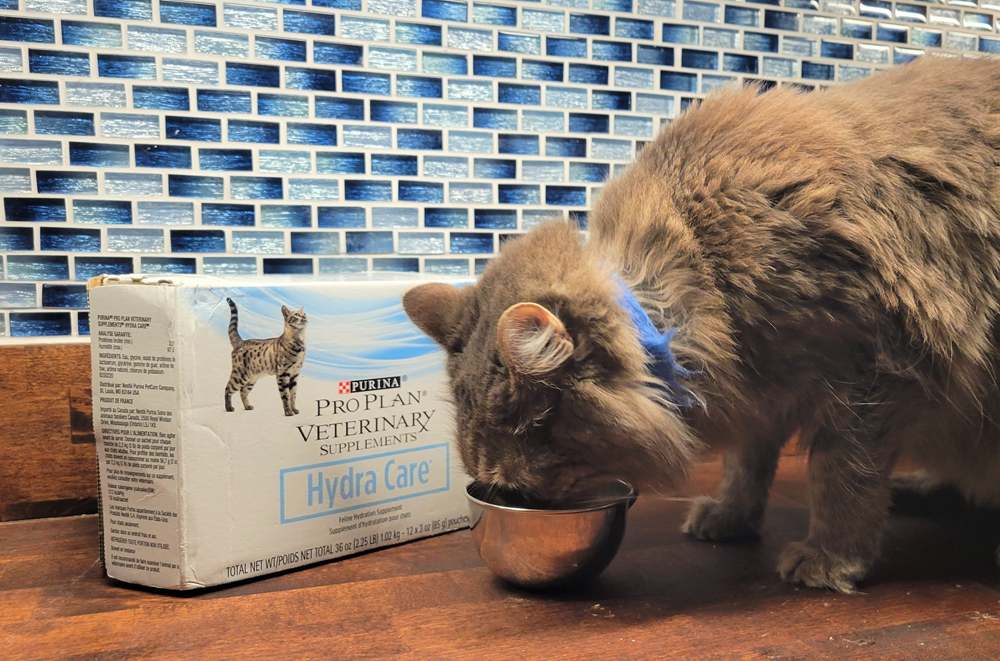
Packaged in 75-gram (2.65-ounce) pouches, this hydration care supplement looks and smells similar to a thick gravy. The liver flavor entices cats to consume the supplement and, in doing so, they take in more moisture. The formula also contains nutritional osmolytes that help the cells absorb more water.
Customers report positive results with this product, and cats seem to enjoy the flavor. The cost, however, could be prohibitive for some pet parents. It’s unclear whether your cat would gain the same benefits from eating a moisture-rich wet food or consuming bone broth.
Ingredients
Active Ingredients
None
Inactive Ingredients
Water, Glycine, Glycerin, Whey Protein Isolate, Guar Gum, Liver Flavor, Natural Flavor, Potassium Chloride
Pros
- Appealing liver flavor and gravy-like consistency
- Encourages cats to drink more water
- Contains natural osmolytes to help cells absorb water
- Developed by a team of scientists, veterinarians, and nutritionists
Cons
- Contains artificial flavor
- Expensive, some cats need 2-3 pouches per day
#8 Best For Kidney Health: Coco and Luna Urinary Tract Cranberry Supplement
This supplement is designed for kidney support, with cranberry, D-Mannose, and echinacea as the primary active ingredients. It comes in powder form and is completely free from gluten, egg, synthetic color, and artificial preservatives.

Liz Coleman / Cats.com

Liz Coleman / Cats.com

Liz Coleman / Cats.com
With its tasty salmon flavor, this formula seems to be appealing to cats and it’s easy to sprinkle over your pet’s food. The recommended serving size is 1 scoop (about 1 gram) for cats up to 25 pounds. Each 4-ounce container contains over 100 servings.
Cranberry extract is the main ingredient, included for bladder support and to help resolve and prevent UTIs. D-Mannose is rich in antioxidants and vitamin C, while echinacea helps boost the immune system to help your cat fight off infections.
Ingredients
Active Ingredients
Cranberry, D-Mannose, Echinacea, Vitamin C, Bromelain, Marshmallow Root
Inactive Ingredients
Fiber(Prebiotic), Natural Flavor, Silicon Dioxide.
Pros
- Easy to administer in powder form
- Affordable
- One container has over 100 servings
- Supports urinary wellness and immune system health
Cons
- Contains artificial flavor
#9 Best For UTI: HomeoPet UTI Plus Urinary Tract Support Drops
UTIs can be painful. Once your cat experiences one, he’s likely to have more unless you address the underlying cause. In the meantime, a urinary tract supplement like HomeoPet could help.

Liz Coleman / Cats.com

Liz Coleman / Cats.com

Liz Coleman / Cats.com
HomeoPet contains herbal active ingredients designed to support normal urinary tract function. It may also help relieve stress-related urination and strong-smelling urine.
This liquid cat UTI supplement is designed to be added to your cat’s food or water, though you can also drop it directly into his mouth. It’s an easy 5-drop dose for cats up to 20 pounds, and the formula is safe for kittens in doses up to 2 drops at a time.
Ingredients
Active Ingredients
Aconitum Nap, Apis Mel, Arg Nit, Arnica, Arsenicum Alb, Avena, Belladonna, Benzoicum Ac, Berber Vulg, Calcium Phosphate, Calendula, Cantharis, Causticum, Chimaphila Umb, Copaiva, Echinacea angustifolia, Epigaea, Equisetum hyem, Ferrum Phosphate, Gelsemium, Graphites, Hydrangea, Hydrastis, Ignatia, Kali mur, Lachesis, Lycopodium, Merc Solub, Nat Mur, Nux Vom, Pareira, Passiflora, Petroselinum, Phos, Plumb Acet, Pulsatilla Nigricans, Saba, Sarsaparilla, Scutellaria, Sepia, Solidago, Staphysag, Stramonium, Sulphur, Terebinthina, Thlaspi, Thuja, Uva-ursi, Valeriana.
Inactive Ingredients
20% USP Alcohol, Purified Water.
Pros
- Supports urinary health and kidney function
- Safe for kittens weighing under 1 pound
- Easy to administer by mouth or in food/water
Cons
- Customers report very mixed results
Supplements Can Help Support Urinary Health, but They Aren’t a Substitute for Treatment
There’s no replacement for sound veterinary advice. Whatever problems your cat is experiencing, it’s important to address the issue with your vet instead of trying to diagnose and treat it yourself.
While most urinary health problems are not life-threatening for cats, they can be extremely uncomfortable – even painful – and a lack of treatment could cause the issue to progress into something more serious. Untreated urinary problems also frequently contribute to behavioral issues like peeing outside the litter box and increased irritability.
Treatment for urinary health concerns varies depending on the specific issue. In addition to treatment, your veterinarian may recommend giving your cat a supplement. Urinary health supplements are intended to support your cat’s ongoing urinary health and to help remedy or prevent issues that contribute to urinary issues.
Before purchasing a supplement, talk to your vet about what active ingredients to look for so you can be sure you’re supporting the critical aspect of your cat’s urinary health.