

 Last updated Jul 23, 2026


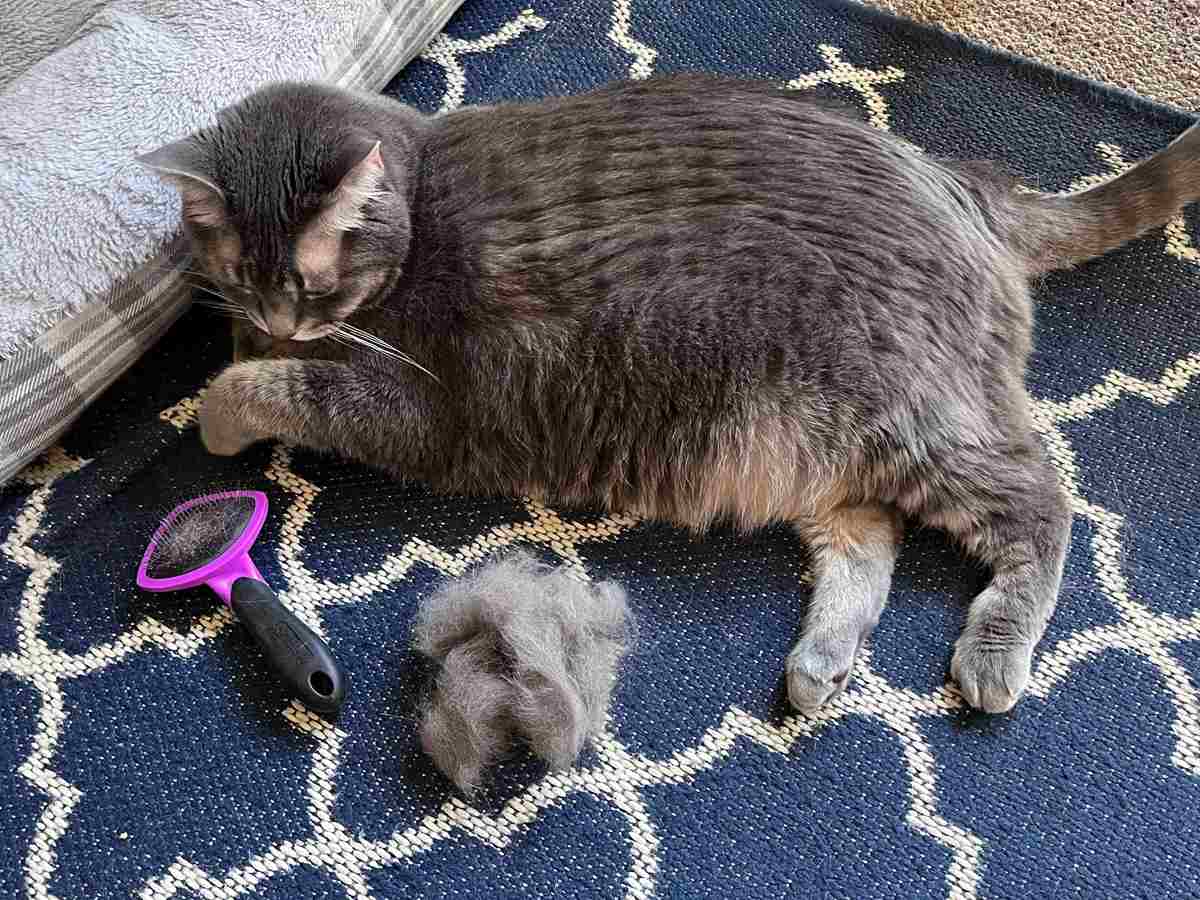
Katelynn Sobus / Cats.com
Most cats are constantly shedding some fur and regrowing more. This hair loss leads to all the fur on your furniture and clothing, but it’s normal. However, cats can experience too much hair loss and develop bald spots or areas with thin fur. This abnormal hair loss (also called alopecia) can be caused by many different health issues, including allergies, fleas, mites, ringworm, pain, and stress.
We know our cats love to groom themselves; it’s part of their normal behavior and how they keep their skin and coat healthy. However, if they’re itchy, painful, or stressed they can do too much grooming, licking, and scratching and actually cause excessive hair loss and alopecia.
In this article, we’ll go in-depth on hair loss in cats, explaining its causes and how to treat it.
Common Causes of Hair Loss
Cats may overgroom for many reasons, but itching from allergies, fleas or mites (or even allergies to fleas and mites), are some of the most common. In summary, the most common causes of hair loss in cats are as follows:
Allergies
Environmental things such as dust, grass, pollen, trees, cotton, or wool, or things in food like chicken, or insect bites can cause allergies in cats.
It’s actually very common for cats to be allergic to flea bites! This is called Flea Allergy Dermatitis (FAD) and is one of the most common reasons for scratching and hair loss in cats. Cats with this issue can be so allergic that a single flea bite can make them itch and have hair loss for weeks even though you never saw any fleas on them.
Having fleas and mites, even if a cat is not allergic to them, can still cause itching and damage to hair and hair follicles, which leads to patchy hair loss. There are several types of mites cats can get, including Demodex species of mites, Notoedres cati, and Sarcoptes scabei. When mites cause fur loss and itching, the condition is called mange.
Stress and Anxiety
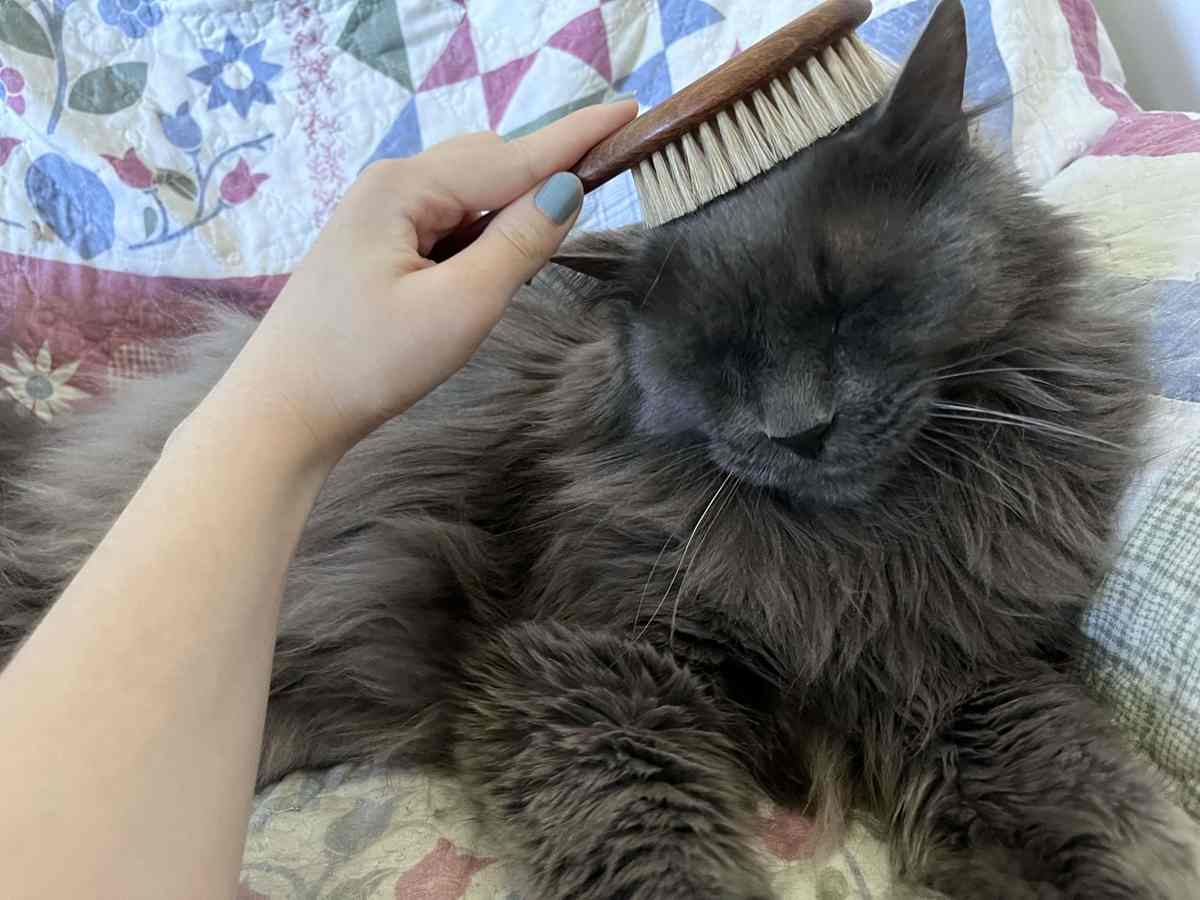
Cats thrive on routine, and changes in their environment or conflicts with other pets can cause stress, sometimes leading to excessive grooming and hair loss. Katelynn Sobus / Cats.com
Another common reason cats overgroom and experience sudden hair loss is stress or anxiety, a condition sometimes referred to as psychogenic alopecia or barbering behavior.
Cats love routine, and anything that disrupts routines can be stressful for them. Not all cats get along with other cats or other pets, and that can be a source of stress too. Many cats are predisposed to anxiety and stress, which can lead to excessive grooming. Hair loss may occur in a few places, typically on the abdomen or over the back legs. Cats may also overgroom areas on their front legs, back, and around the neck or eyes.
Overgrooming behavior can appear different than other conditions causing hair loss because instead of missing hair, the hair will appear shortened, almost as if it was shaved. In most cases, the underlying skin also will not have any abnormalities like redness, scabs, or bumps.
Pain
Pain can also cause cats to lick excessively and lose hair in the painful area. Most commonly, this happens on the belly due to stomach or abdominal pain, constipation, or even bladder stones. Cats may lick too much and cause hair loss over painful joints too.
Ringworm
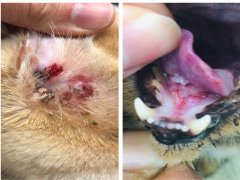
Ringworm (a fungal infection also called dermatophytosis) is another fairly common cause of hair loss, especially in kittens. This fungus actually damages the hair and the hair follicles causing hair loss. Ringworm can also be itchy and cause cats to lick, chew, and scratch the area. This creates bald spots, often with crusting and flaking.
Other Causes of Hair Loss in Cats
There are other less common causes for clumps of hair loss in cats such as auto-immune diseases, thyroid issues (hyperthyroidism), Cushing’s disease (hyperadrenocorticism), hormonal imbalance, and some kinds of cancer. Rarely some older cats can get bald patches on bony areas like their ankles and on their ears as an age-related change. Hair loss in older cats is most likely associated with an underlying medical issue.
When To Be Concerned About Hair Loss
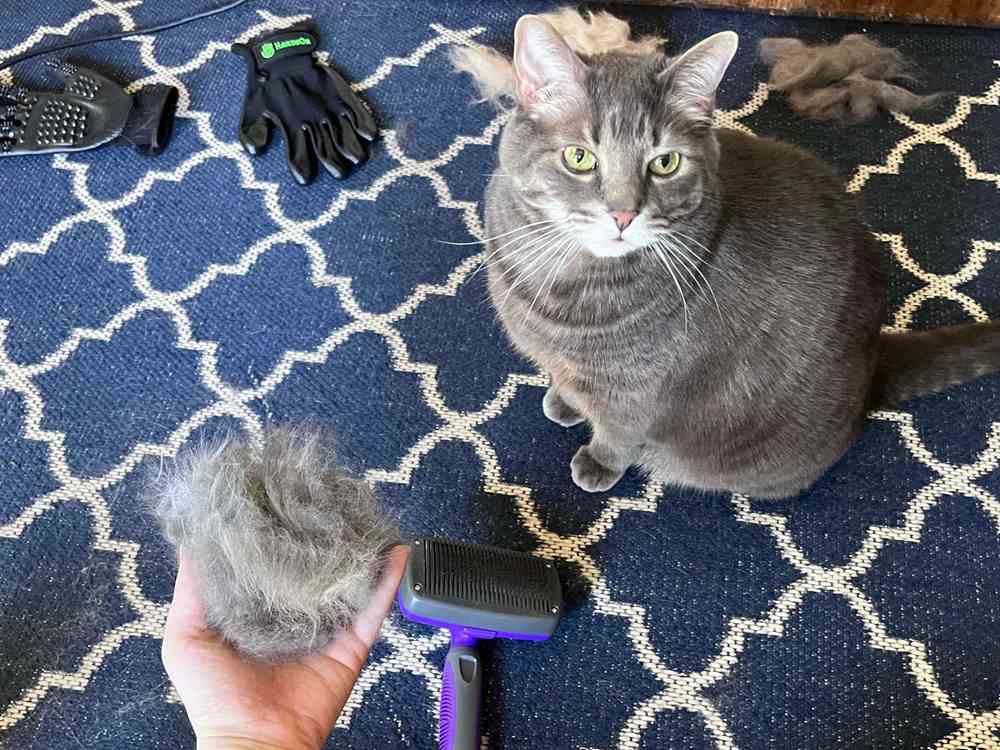
If your cat is losing a significant amount of hair, it may be a symptom of pain, stress, or a health problem. Katelynn Sobus / Cats.com
Since true hair loss is rarely normal in cats, especially if you notice a sudden or significant increase in hair shedding, experience bald patches or if the loss is accompanied by other symptoms like itching or redness on the scalp can also be a symptom of pain or other diseases. It’s important to schedule an appointment with your vet if you notice patches of fur missing or bald spots on your cat.
It’s important to keep in mind that shedding is normal to see. Some cats may shed more than others and seasonal changes can also lead to fluctuations in shedding cycles, even in indoor cats. However, with normal shedding, only dead hair should be coming out. Normal shedding should not lead to any areas without fur. Any patches of bare skin where fur is coming out is always abnormal.
Diagnosing the Cause of Hair Loss
As a first diagnostic step, your vet will do a thorough physical exam, focusing on the skin and coat and looking for evidence of pain or any fleas.
Your vet will also ask about any other symptoms you might be seeing, like any scratching, head shaking, behavioral changes, vomiting, constipation, diarrhea, or urinary issues.
Mites, bacteria, yeast, and fungi like ringworm, can only be seen with a microscope so your vet will probably recommend checking for these with testing like skin scraping, skin or hair cytology, and fungal cultures.
Allergy testing can be done with a blood test or a skin test. Your vet may recommend basic blood and urine tests as well to get a more full picture of your cat’s health and if any body system abnormalities may be contributing to skin and hair conditions. Some unusual cases may need additional testing like a skin biopsy or may be referred to a veterinary dermatology specialist.
Treatment of Hair Loss
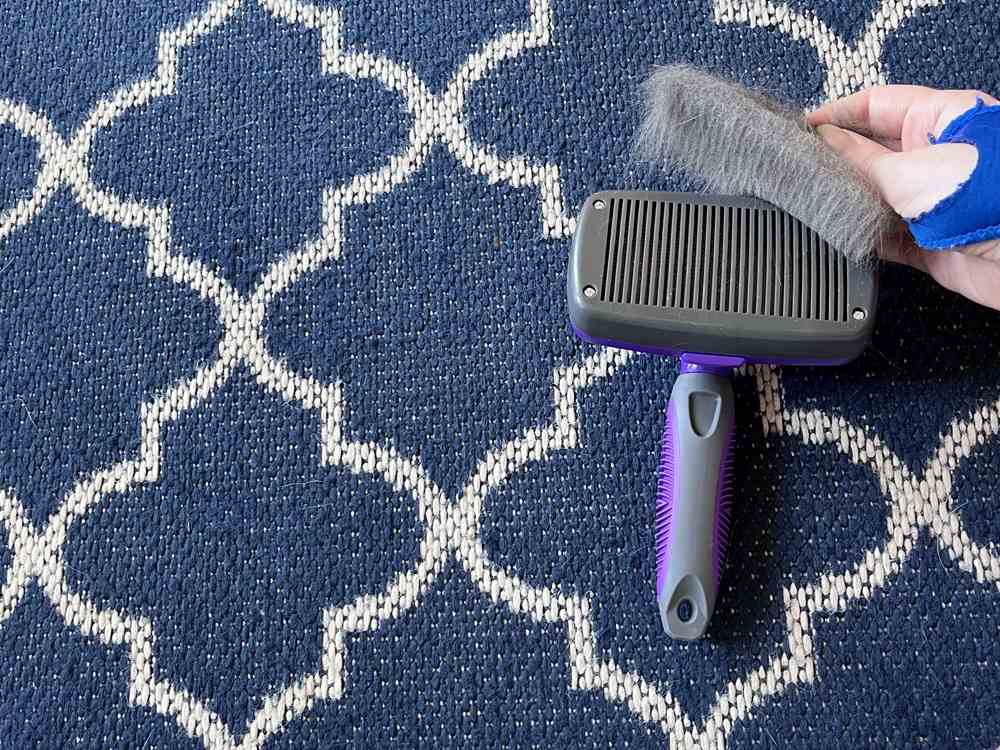
The appropriate treatment for your cat’s hair loss will depend on its underlying cause. Katelynn Sobus / Cats.com
Treatment for hair loss depends on addressing the underlying cause. Here is a summary of the causes of hair loss we’ve already discussed and some therapy approaches.
Treating Fleas and Mites
Because fleas and mites are such common causes of hair loss in cats, effective treatment for these parasites is an important part of treatment for many cats with hair loss. However, not all flea preventatives are equally effective and not all are also effective against mites. Your vet can help you find the safest and most effective options for your cat.
In some cases, even if mites or fleas cannot be definitively found, your vet may still choose to treat for them. Some mites are notoriously hard to find even with the best samples and with small numbers of fleas, cats may ingest them, making them difficult to find during an exam.
Treating Allergies
If a food allergy is suspected your vet may recommend a diet trial to eliminate common allergens like chicken. For environmental allergens, there are treatments to reduce the allergic reaction.
Flea allergy dermatitis (FAD) is one of the most common allergies in cats. Because only one flea bite may induce a skin reaction in a sensitive cat, it is very common for fleas to not be visible with flea allergy dermatitis. If your vet suspects FAD, they may choose to treat for fleas even if they cannot find any during an exam.
Stress
Stress-related overgrooming behavior can be addressed by addressing the underlying stressor(s). Because it can be very hard to determine what the actual cause for stress is for a particular cat, your vet may suggest several environmental modifications to help reduce potential sources of stress. This approach is called MEMO, which stands for multimodal environmental modification.
MEMO can include strategies like increasing the number of litter boxes in the home, expanding access to food and water and increasing access to quiet hiding places, perches, windows, and other high value locations. Interactions between cats in multiple cat households is important, as competition for resources can be a cause of stress. Stimulating activities that encourage play and hunting behavior can also be included.
Other therapies that can help with stress include supplements, pheromones, and anxiety medication.
Pain
Pain from the abdomen like pancreatitis, Inflammatory Bowel Disease, constipation, or bladder inflammation is treated with pain medications and treatment of those diseases. Stress can also contribute to these conditions at times, requiring an evaluation of the home environment. Joint pain is treated with anti-inflammatories and other pain medications.
Ringworm
Ringworm is treated with oral antifungal medication like itraconazole, and/or topical antifungal medications like miconazole.
Since most hair loss is due to the skin being itchy, medications to help reduce itching like anti-inflammatory doses of a steroid and antihistamines may be used. Your vet may also advise using a plastic cone or shirt to help protect your cat from further licking or scratching until the underlying issues have been addressed.
In Conclusion
Hair loss in cats to the point of seeing bare skin is never normal and can be due to serious health issues such as allergies, fleas, stress, pain, or ringworm. If you notice any bald spots or areas with shorter or thin hair on your cat, schedule an appointment with your vet so you can figure out what’s going on and treat it.
Thanks. I have already removed the answering machine out of the picture. There isn’t anything that smells like his former owner. I have gotten rid of anything that reminds him of her. We give him extra love and attention and much better and different food than she ever did plus vitamins.
I have a 10 year old Maine coon cat who was eating curtains at my sister’s house. He has been in my care for almost a year. He was being starved and had no water, litter box was full. This was going on for a few months but his curtain eating has been since he was young. He weighed 5 lbs when I got him and now he is about 20 lbs. We pulls out his hair. He has always been an inside cat. So fleas,mites,ringworm are all out. I don’t feed him any fish products and sometimes meat from my dinner. He is healthy otherwise. He acts normal but he always had the problem of pulling out his hair. What can I do to help him? He was getting his full coat until my sister started calling and leaving messages on the answering machine. He would growl and hiss and hide under her bed. He was a healthy kitten that I bottle fed before giving him to her as a present which I also sorry I did that. He was sweet and gentle which he is now because I have him back. I am giving probiotics, vitamins, and melatonin for cats plus all natural cat food wet and grain free dry. The vets can’t find out why he is doing this.
Hello there, Cynthia. That’s a complex question, but based on everything you’ve mentioned here, it sounds like your cat is having a stress response to the neglect he experienced while under your sister’s care (or lack thereof). You say that the curtain eating preceded the neglect, but are you sure that his circumstances were stress-free back then? Pica can be a stress response, and since there doesn’t seem to be any physical cause that the vets can identify, I would suspect that stress is, and always has been, to blame. It sounds like he’s doing pretty well, but you may be able to help him feel more stable by enriching the environment as much as you can, creating a stable routine, and ensuring that he gets plenty of playtime. Since you said that the voicemails seemed to trigger more hair pulling, I wonder if other reminders of his time with your sister are exacerbating this. Getting rid of anything that smells like his “former life” may be helpful along with those other enrichment methods. Hope this helps!
I have three indoor cats that are rescues. 2 males ages 8 yrs and 6 yrs. One female 2 years old. They eat both wet and dry food and have fresh water replenished twice daily. The 6 year old male has asthma and is given medication for it. He recently has experienced hair loss on his tummy and patches on his front legs. They have all received their shots within the last 4 months. Dr. Darlene White is their vet.
Buddy , the 6year old male, does not do well going to the vet. Anxiety levels are high. Darlene has been our vet for over 15 years. She is great.
That said, before I make an appointment, I would like an educated guess on the cause. The cat does not seem bothered by the loss of hair. Thank you,
Is he overgrooming at all? You mention that he has a lot of anxiety, so I would suspect overgrooming and hair pulling as a potential cause. Alternatively, you might be seeing an allergic reaction to something, either environmental or dietary. I would consider what changed around the same time that the hair loss started and how it may have contributed. Hope this helps!
Hi My cat Lily who is soon to be 9 years old, was recently diagnosed with liver disease. We are giving her milk thistle and are starting to see a difference in her. Her appetite is back and she is back to climbing on my lap. Although, trips to the vet are very stressful for her, we still manage to get her there. I just feel it disrupts her too much. We have been going quite often and her world gets turned upside down. She has bitten me and my husband and forget about the scratches. It is a battle, which totally stresses her out and her sister Rosey. I noticed several weeks ago her ears had some hair missing. Then when I pet her, I found her ears to have a brown crusty something on them. I have reached out to my vet, but that is a whole different story. She wasn’t quite sure and sent us home with nothing. I started putting coconut oil on her. No change. She is now scratching and her skin is getting red. A friend of mine said it could be mites. She is strictly indoors but the end of May we took a stray in our home. I took her to the vet first and she was healthy. She had a microchip and a home. My friend said I should put revolution on her, that is what her vet recommends. I am at wits end and hope you can advise me. I love my Lily and want her to be comfortable. Is the revolution ok with her liver disease?
Hello Ann, thanks for the comment. This question is a little out of my depth as a non-veterinarian. If you make a post in the All About Cats Community, one of our veterinarians will be able to give you some advice for Lily.
Hi Paul,
I’m sorry to hear about your struggles with Monster. The “no-contact” approach to veterinary appointments is still desired by some but even at the height of COVID when everyone was doing it this way, communication was a constant challenge. There are many practices who have moved away from that approach too, as there are probably far more folks who simply wish to accompany their pet. It is reasonable to look for a new practice if you are not comfortable with their current approach to appointments and communication.
For Monster, there could be several potential causes for the vocalizing, abnormal movement behavior that you described as “mini-seizures”, and the hair loss. I can provide some possibilities but to be clear, a veterinary exam would still be needed to rule out these causes and narrow things down.
My first thought with the vocalizing and abnormal activity is that if it is only associated with eating and not at other times, we could be seeing mouth pain here. Cats with pain from one or multiple teeth as well as other causes of oral pain may make odd guttural noises like growling and they may even hiss and swat at their food. Teeth and mouth chattering or jerky behavior of the head and neck can also be seen which may closely resemble neurologic behavior, though it is in reality a pain reaction to eating attempts. This is generally caused by the conflict that results from their degree of hunger and need to eat with the fact that they don’t want to because of the pain. Many cats will still push through oral pain to eat their food unless it is just too much for them. An oral exam at the vet could certainly determine if this is more likely vs. another underlying neurologic disorder.
The hair loss could be caused by external parasites like fleas and mites, a skin infection, skin allergies, and some other things as well. If Monster still goes outdoors or any other kitties he interacts with do and even one of them is not on flea prevention, this would be the first thing to rule out. Older kitties could always develop a skin sensitivity or allergy and secondary bacterial infection that leads to hair loss too. There are simple strategies to determine and treat this.
I do agree for you in this case that an in-person visit may be best to see how Monster is assessed and see the findings for yourself, so that you can talk to the vet about them and what may need to be done.
I do hope that info is helpful and wish you and Monster the best of luck here.
Hi. This is my first time posting here. Covid turned my Vet into an ass. You have to make an appointment, and park in an assigned spot. A woman then comes out, collects your cat, and brings him inside. 30 minutes later she brings the cat back to the car and hands you a bill. You then hand her your debit card and she goes inside for a few minutes and then comes back out and hands you your card back. There is minimum fee of $75.
Yes, I am looking for a new Vet.
The reason I am writing is that I have four rescue cats, Their ages range from 15 or so two years old.
Around 2014 the old cat came out of a relative forested area one day while I was feeding a neighbor’s 2 kittens. He rushed between the kittens and gobbled all their food. I turned around to go up the steps of my condo and the cat wrapped his front legs around my right leg and would not let go.
I scooped him up and saw one notched ear. Apparently he was a “trap and release” cat. I brought him inside and he met my cat Marvin. Marvin ate some food laced with rat poison 2 years later and died a terrible death. Monster was a single cat for awhile but I let him out during the day and every so often, when I left the window open he would come back with a friend.
Anyway, I am protective of Monster. He sleeps in my bed when I’m sleeping. For the past few months he has been losing clumps of hair along his spine. He has gone bald in a few spots. Also, he has begun to make a god-awful cry – sounds like he’s barking and laughing. This occurs only when he’s eating. He seems to be having mini-seizures when he makes that cry. They only last for a minute or two but it happens at least once a day.
I may have missed them but I did not see any posts here regarding the health of older cats. I probably would have found a new vet by now but on June 16 I had “robotic enhanced” prostate cancer surgery.
I was pissing blood for about a month.
Anyway, an old cat, making weird barking sounds, having momentary seizures, and going bald. I’ve grown to love the s.o.b.. I’m 70 years old and my knees have no cartridge. “bone on bone” . Walking is difficult, and when I need to go down a flight of stairs I am forced to do it backwards. I have already bought a Rubbermaid box to bury him when the time comes.
If anyone has experience with an older cat I welcome any feedback. Thank you
thank you, Mallory. I am sure she does not have fleas. I do agree with the stress issue. When I try to place some itch lotion on her, she will have nothing to do with me for a day. LOL Sounds like my wife. I digress. I have purchased some allergy dry cat food and tonight she is not really happy with that but her buddy Cali loves it. So a little cat/peer pressure I am sure she will eat in the morning. Also, I have my cat trap on the front porch and will set it in the morning and hope she will walk in while it is under my legs. If that happens she is off to the vet. If not I am back to all recommendations. I will try the fish oil but she is a dry food baby. We will see what happens. If you pray, pray for her and for my success to help her out. Thanks
Hi Danny, I hope things work out. Most cats will accept a fish oil supplement over dry food, so I’m optimistic. Good luck!
I feed several feral cats. Blackie’s rear quarters are losing hair, ie thinning. No bald spots, eats well and is still the only feral cat that sits on my lap. I doubt I can get her in a cage for a vet visit. I treated her for fleas and that was a circus act. What can I do while she is on my lap?
Hello Danny, thanks for the comment. I would wonder if she may be overgrooming due to some other underlying issue—stress or itchiness might contribute. Are you sure she doesn’t have fleas? While she’s sitting on your lap, I’d recommend going through her coat with a flea comb to make sure there aren’t any fleas in the coat. Once you’ve confirmed that she doesn’t have fleas, I would consider stress and allergies as other possible causes, but these are difficult to treat for a feral cat. A basic anti-inflammatory supplement (like fish oil) may be added to her food to relieve itchiness and skin irritation.