
 Published Jul 21, 2026


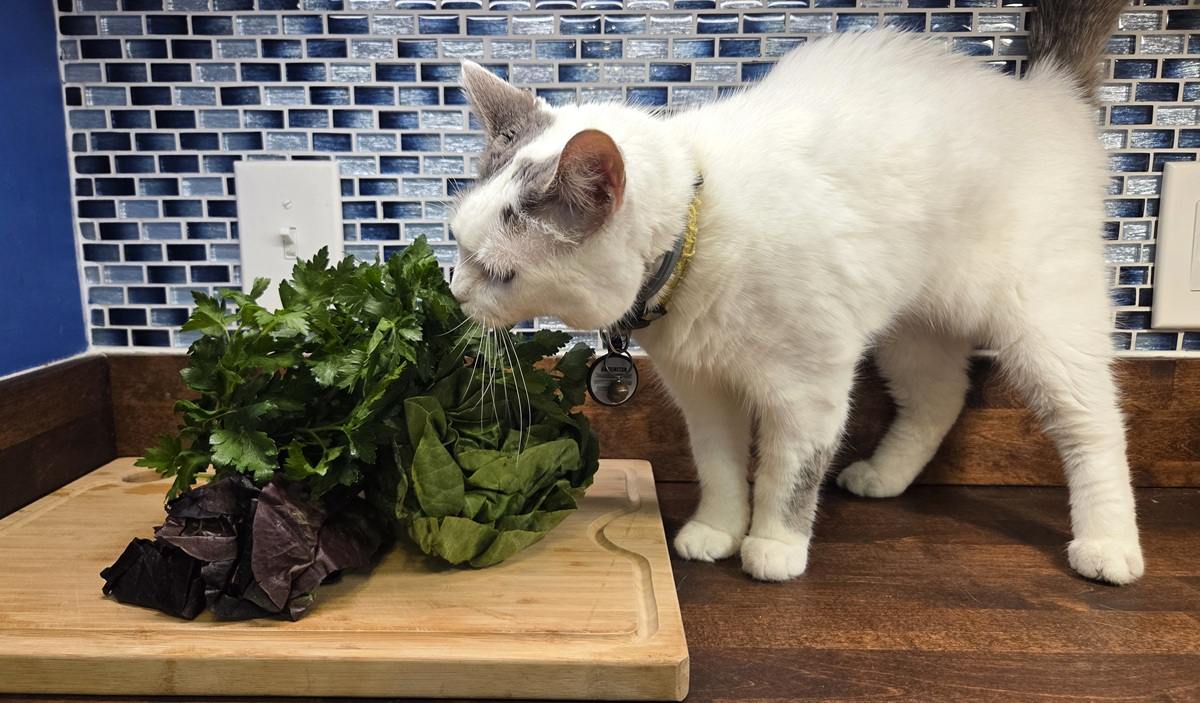
Kate Barrington / Cats.com
Cats are obligate carnivores, yet the vast majority of cat food formulas contain plant-derived ingredients. From peas and potatoes to rice and other refined grains, carbohydrate-heavy ingredients often outweigh animal proteins—especially in dry cat food—which leaves cat parents confused. If cats need meat to thrive, why do so many commercial cat foods prioritize plants?
Here we explore the role plant ingredients play in the domestic feline diet. We’ll discuss what a carnivore-appropriate diet looks like, why pet food manufacturers rely so heavily on plant-based ingredients, and how cat parents can make thoughtful choices when it comes to feeding.
What Does a Carnivore-Appropriate Diet Look Like?
To say that cats are carnivores isn’t a statement about preference. Yes, most cats would opt for a piece of chicken over a bowl of rice, given the choice. But it’s actually a matter of biology. Cats need certain nutrients to survive, and some of them can only be reliably sourced from animal tissues. A key example is taurine.
Taurine is an essential amino acid that plays an important role in vision, cardiovascular function, and reproductive health. Unlike humans, cats can’t synthesize taurine from other amino acids. This means it has to come from their diet. Many plant ingredients contain protein (which is made up of amino acids), but—with the exception of some marine algae—none provide enough taurine to meet feline nutritional requirements.
There are a few other notable examples of essential nutrients that can be found in plant ingredients, but generally in lower concentrations than in animal tissues or not in the specific form that’s most biologically valuable for cats. These include arachidonic acid (an essential omega-6 fatty acid), preformed vitamin A (retinol), arginine (an essential amino acid), and vitamin B12.
In other words, it’s not enough for a cat food formula to check all the right nutrient boxes. To assess a product’s nutritional value and biological appropriateness, it’s also important to think about the balance of plant versus animal ingredients and the overall digestibility.
Why Pet Food Manufacturers Use Plant Ingredients
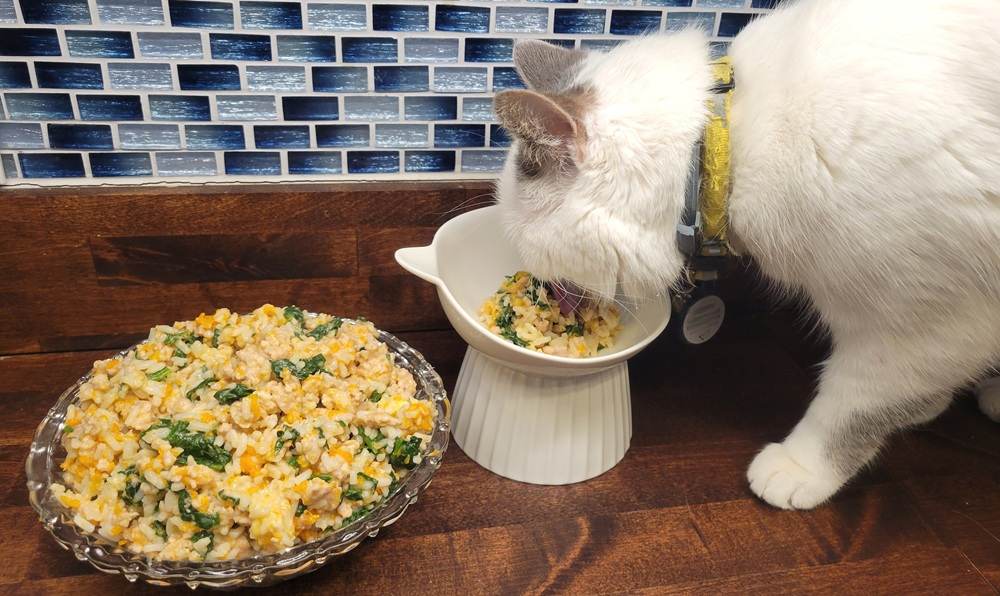
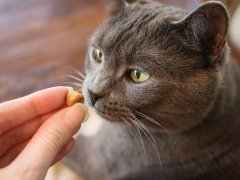
Cats thrive on meat-based diets, but plant ingredients can also serve functional purposes beyond simply reducing production costs. Kate Barrington / Cats.com
Cats are built to process meat more efficiently than plants, but that doesn’t necessarily mean plant ingredients have nothing to offer. There are a number of reasons pet food manufacturers use plant ingredients in feline formulas, and not just as a cost-cutting measure.
- Starch is required to form extruded dry food (kibble) and, in some cases, bind or thicken wet cat foods.
- Carbohydrates provide a concentrated source of energy, especially when compared to lean animal proteins like chicken or fish.
- Plant fiber is a crucial component of recipes for gastrointestinal health and weight management, helping to promote satiety, support stool quality, and regulate gut motility.
- Limited-ingredient and novel-protein diets often lean on plant proteins as an alternative to common animal proteins for cats with sensitivities or allergies.
- Plant-heavy pet foods generally have a lower carbon footprint than animal-heavy diets (particularly those that rely on red meat).
Of course, plant ingredients are generally cheaper and more supply-stable than animal ingredients. Cost is a key factor in commercial pet food formulation, but inexpensive cat food isn’t automatically low-quality. And if the product still meets the minimum nutritional requirements set by the Association of American Feed Control Officials (AAFCO), the functional difference for your cat can be hard to quantify.
Much like fortified breakfast cereals for humans, cat food can be enriched with essential nutrients in order to meet minimum requirements. Many manufacturers add synthetic taurine, for example, to account for losses caused by high heat and pressure during cooking. It’s common for cat food ingredients lists to end with a string of vitamin and mineral supplements.
The Pros and Cons of Plant Ingredients in Cat Food
Plant ingredients in cat food aren’t inherently harmful, so it’s important to consider their role in the diet rather than avoiding them outright. Kate Barrington / Cats.com
The question of plant ingredients in pet food should be approached with a sense of nuance. After all, plants aren’t inherently bad (except for those that are toxic to cats).
In fact, the thoughtful inclusion of plant ingredients in cat food can have some measurable benefits. It’s when they’re prioritized over more biologically appropriate options or used solely as a cost-cutting measure that it becomes problematic.
Let’s weigh the pros and cons of using plant ingredients in cat food.
Pros of Plant Ingredients in Cat Food
- Some plant ingredients help boost protein content. While plants aren’t “complete” protein sources for cats, many contain essential amino acids needed to maintain muscle and support metabolic processes in the body.
- They don’t appear to negatively impact digestibility. Though cats aren’t built to easily digest raw carbohydrates, plant ingredients in cat food are processed or cooked in a way shown to yield over 93% digestibility.
- Plant ingredients are often rich in micronutrients. Careful use of nutrient-rich plant foods can reduce reliance on synthetic supplements in commercial formulas.
- Added fiber can support healthy digestion. Plant fiber (like cellulose, pumpkin, and beet pulp) performs a similar function in domestic feline diets as animal fibers (like fur, feathers, and bone) do for wild cats who consume prey.
- Balancing plant and animal ingredients supports affordability. Plant-inclusive recipes make complete and balanced nutrition more accessible for many households.
Cons of Plant Ingredients in Cat Food
- Key nutrients may be absent or less bioavailable when sourced from plants. While formulas labeled “complete and balanced” meet core minimums, some nutrients are most biologically valuable when sourced from animals.
- Some recipes prioritize carbs over protein. There’s debate whether high levels of carbohydrates negatively impact feline health but nutritional balance remains crucial and some manufacturers rely on plant ingredients as a cost-cutting measure.
- Plant protein quality and digestibility may vary. The quality and digestibility of plant proteins vary greatly, depending on processing, while animal proteins generally offer high digestibility and bioavailability for cats.
- Legume-heavy formulas may carry their own risk. While research is primarily dog-focused, investigations into a potential link between legume-heavy, grain-free diets and diet-associated dilated cardiomyopathy (DCM) provide cause for caution.
Here’s How to Evaluate a Cat Food Formula
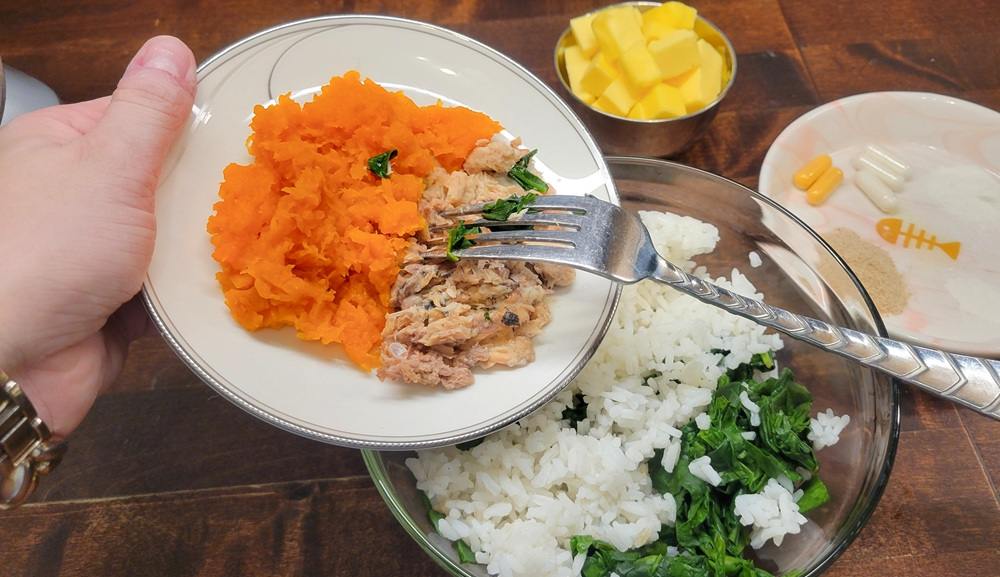
There’s no single “perfect” cat food. While all cats have similar basic nutritional needs, factors like age, health, allergies, and preferences influence the best choice for each individual. Kate Barrington / Cats.com
The pet food market has become saturated with options and the truth is, there’s no such thing as a “perfect” cat food formula. Though cats share similar core nutritional requirements (depending on their life stage), individual factors like health or reproductive status, food allergies, and personal preferences also come into play.
It’s not about choosing the overall best cat food, but the one that’s best for your particular cat. Here are some steps cat parents can take to evaluate the appropriateness of a cat food formula, particularly when it comes to the inclusion of plant-based ingredients:
1. Check for a Statement of Nutritional Adequacy
Start by making sure the recipe is correctly formulated for your cat’s life stage. Kittens and pregnant or lactating female cats have higher requirements for protein and fat than healthy adult cats in a state of maintenance. Check the label for a statement of nutritional adequacy, which should look something like the following:
“_____ is formulated to meet the nutritional levels established by the AAFCO Cat Food Nutrient Profiles for [all life stages, maintenance, or growth and development].”
2. Convert the Guaranteed Analysis to Dry Matter Basis
The guaranteed analysis on a cat food label tells you the product’s protein, fat, and fiber composition as a percentage. These percentages include moisture, which varies across different product types (especially dry versus wet food). You’ll need to convert these values to dry matter if you want to compare products with different moisture levels.
The easiest way is to plug the guaranteed analysis values into an online dry matter calculator. You can also calculate the values yourself using the following formula:
Dry matter = nutrient % ÷ (100 – moisture %) x 100
3. Weigh the Position of Plant Ingredients
Once you’ve determined that the product meets your cat’s needs for essential nutrients, consider the sources for those nutrients. Animal protein should top the list and, ideally, comprise two of the first three or three of the first five ingredients.
Keep in mind that ingredients are listed in order by weight. Sometimes manufacturers split plant ingredients to artificially reduce their prominence and move animal ingredients higher on the list.
For example, breaking a single ingredient like corn into its component parts, such as whole ground corn, corn flour, and corn gluten meal.
4. Consider Factors That Affect Digestibility
Just because a cat food formula meets core feline nutrient requirements doesn’t mean your cat will actually absorb all those nutrients. This is where protein quality comes into play and factors like processing can make a big difference.
Reputable manufacturers with veterinary nutritionists on staff may be more likely to understand how different forms of certain nutrients interact and formulate their recipes accordingly. You can check the manufacturer’s website for digestibility studies or feeding trial data, as well as typical analyses which show the actual nutrient composition in specific batches (whereas the guaranteed analysis only provides minimum or maximum values).
5. Factor in Any Individual Dietary Needs or Restrictions
You can always talk to your veterinarian to inquire whether a specific formula is appropriate for your cat. This is particularly important if your cat has a condition that requires dietary management, such as diabetes, pancreatitis, or kidney disease. Some cats may be sensitive to certain plant ingredients, so double-check food labels (don’t just read the formula name).
To wrap things up, plant ingredients aren’t inherently harmful in cat food but it’s worth taking your cat’s biology into account when assessing the role plant products should play in your cat’s diet. The best approach is to evaluate the formula as a whole rather than reacting to any single plant ingredient on the label.

Over my 73 year lifetime, I have seen my outside cats catch and eat mice, moles, rabbits, birds, flies, spiders, and even a praying mantis. But I have never found one raiding my vegetable garden. They eat grass to assist in hairball removal. That is the extent of their vegetarian diet. Do cat food makers really know what a cat needs more than the cat himself?
Thanks for sharing your experience! Cats are obligate carnivores, and hunting small prey like mice, birds, and rabbits is exactly what their bodies are designed for. Many cats also eat grass from time to time, though the exact reason isn’t fully understood. It may help with digestion or hairballs.
You’re right that cats naturally obtain most of the nutrients they need from animal sources. However, many domestic cats don’t have access to the same variety of prey as outdoor cats, so commercial cat foods are formulated to provide essential nutrients such as taurine, arachidonic acid, vitamin B12, and preformed vitamin A that cats require. While many cat foods contain plant ingredients, these are typically included for functional reasons, such as providing fiber, helping form kibble, or supporting digestion, rather than replacing the meat cats need. The most important thing is that animal-based ingredients remain the primary source of nutrition and that the food is complete and balanced for a cat’s nutritional needs.