Published Oct 25, 2026



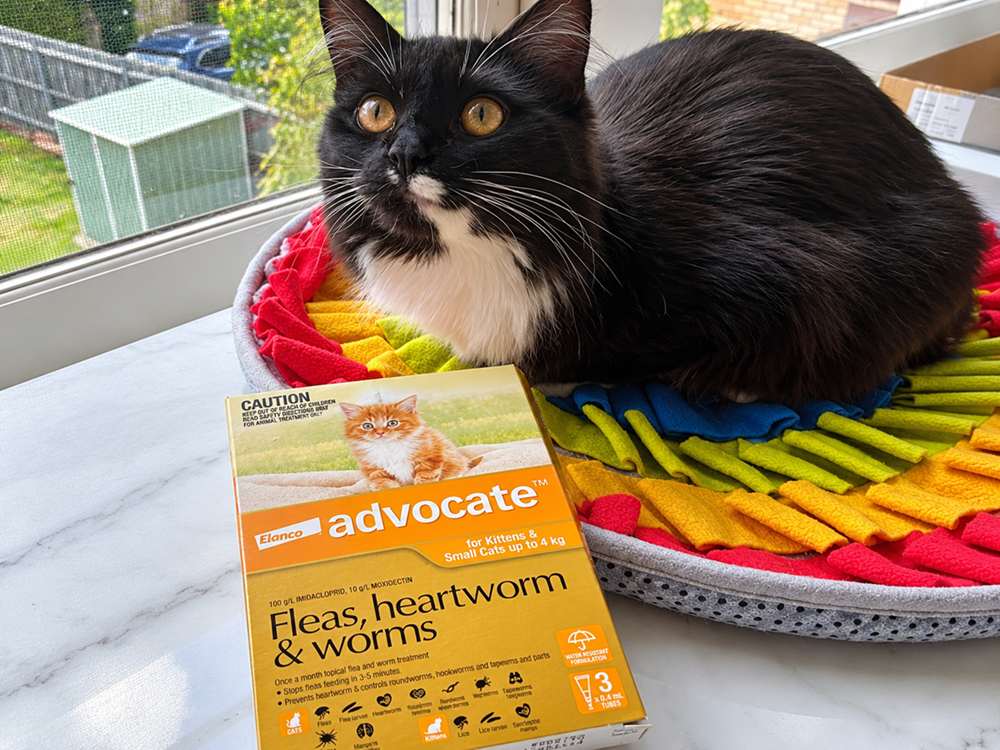
Spot-on treatment frequency varies by product, with some applied monthly and others lasting up to three months. Melina Grin / Cats.com
Spot-on treatments are a convenient and often necessary way to protect cats from internal and external parasites, though some veterinarians debate whether indoor cats need year-round use. The right prevention plan depends on where you live, your cat’s lifestyle (especially if they hunt outdoors), and whether children or immunocompromised family members live in your household.
Although the process is simple, you must apply it correctly to ensure the treatment is effective and safe with minimal irritation and stress to your cat.
What Exactly Is a Spot-on Treatment?
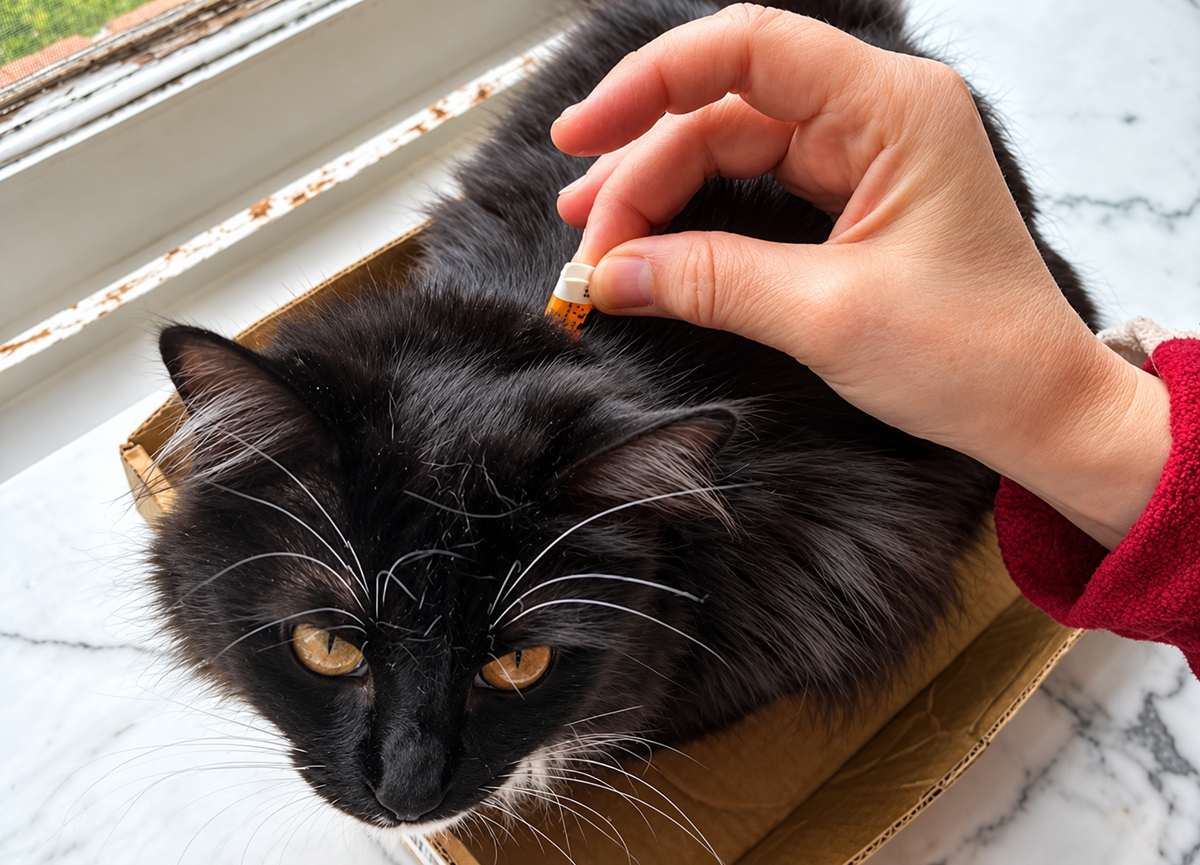
A spot-on treatment is a liquid veterinary medication supplied in a small tube or pipette. Melina Grin / Cats.com
A ‘spot-on’ treatment is a liquid veterinary product that comes in a small tube or pipette.
You apply the product directly to a specific part of a pet’s skin, usually at the back of the neck or between the shoulder blades. From there, the product spreads across the body.
Not all ‘spot-on’ flea treatment products are created equal. While they typically come in small pipettes and are applied directly to your cat’s skin, their active ingredients work differently. Beyond fleas, many topical medicines can also protect against ticks, mites, lice, heartworms and intestinal parasites (like roundworms and hookworms).
Consult your veterinarian to choose the correct treatment for your specific cat and environment.
How Often Should You Apply Spot-on Treatment to a Cat?
Spot-on frequency depends on the specific product. Many spot-on treatments are applied monthly, while some longer-lasting products provide protection for up to 12 weeks. The correct treatment interval depends on the product and the parasites being targeted.
Always check the product label or consult your veterinarian to avoid mixing up the schedules. Keep a record of when you last treated your cat to avoid leaving it unprotected or accidentally overdosing it.
6 Step-By-Step Guide: How to Apply Spot-on Treatment
Applying a spot-on treatment can go smoothly or turn into a stressful struggle if your cat had a negative experience in the past. The key to a calm, fear-free application lies in the right preparation and cooperative training.
1. Prepare and Train Your Cat for a Calmer Application
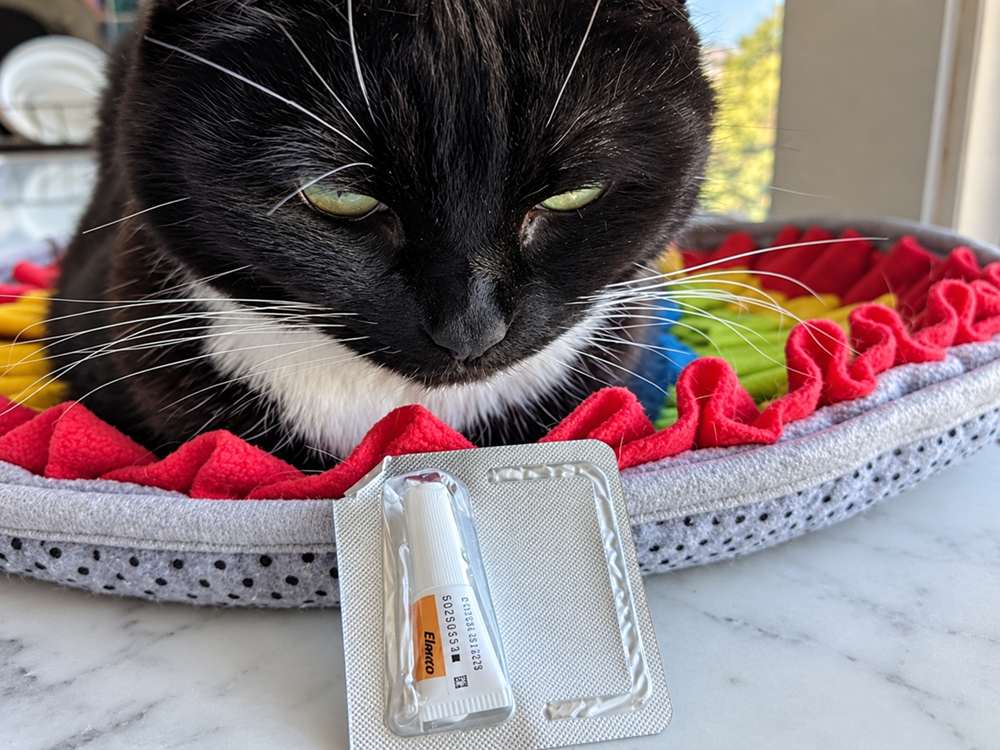
Prepare your cat before opening the treatment packaging to help make application smoother and less stressful. Melina Grin / Cats.com
Before you open the packaging, take a few steps to prepare your cat and the environment so the process goes smoothly.
- Consider asking a family member or a friend to help if your cat is anxious or difficult to handle during medication administration.
- Read the packaging instructions and confirm the expiry date.
- Invest time in training your cat to stay calm. Focus on teaching “stationing” behaviors so your cat learns to settle in a designated spot.
- Gradually build your cat’s confidence by mimicking the sensation of parting their fur. You can also teach them a “touch” cue and desensitize them to the sight of the topical parasiticide from a distance.
- Before calling your cat or bringing them into the room, gather all the needed supplies, including a pair of gloves and the treatment vial, so you’re ready to act quickly and calmly.
2. Find a Quiet Area Where Your Cat Can Stay Calm
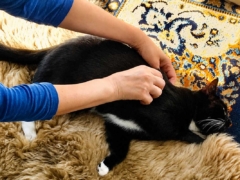
Choose a quiet spot where your cat feels at ease, away from children and other pets. If you have a particular spot where you administer medication, use it. Gently stroke your cat before you start.
Ideally, your cat should be sitting calmly rather than you trying to restrain them. You can also try wrapping your cat in a towel or blanket if they are wriggly. If your cat becomes highly distressed, stop and contact your veterinarian for advice on how to administer the treatment safely. Avoid delaying parasite prevention without discussing an alternative plan with your vet.
3. Open the Pipette for Application
Remove the pipette from the packaging, then open it according to the manufacturer’s instructions. Keep the applicator upright as you open it to help prevent spills.
4. Part the Cat’s Fur
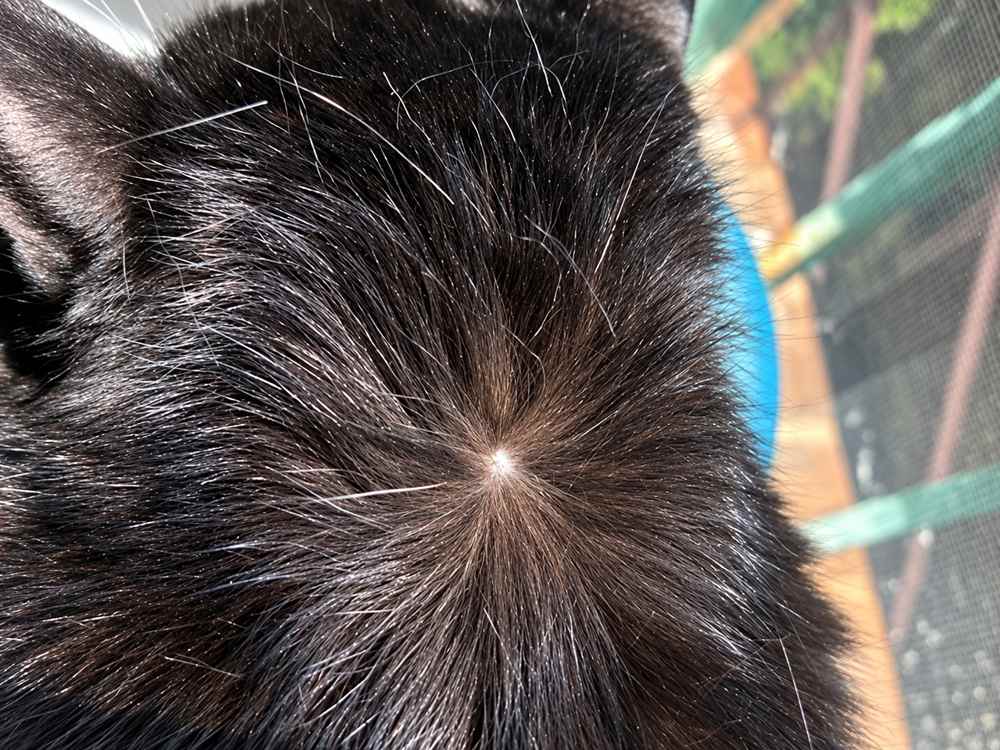
Gently part the fur on the back of your cat’s head or neck to expose the skin. Melina Grin / Cats.com
The spot-on medication needs to reach the skin, not just the fur. Gently part the hair on the back of your cat’s head or neck. The skin should be clearly visible beneath the coat (this may be tricky with medium- to long-haired cats, so it may take a little more patience).
5. Apply the Product Directly to the Skin
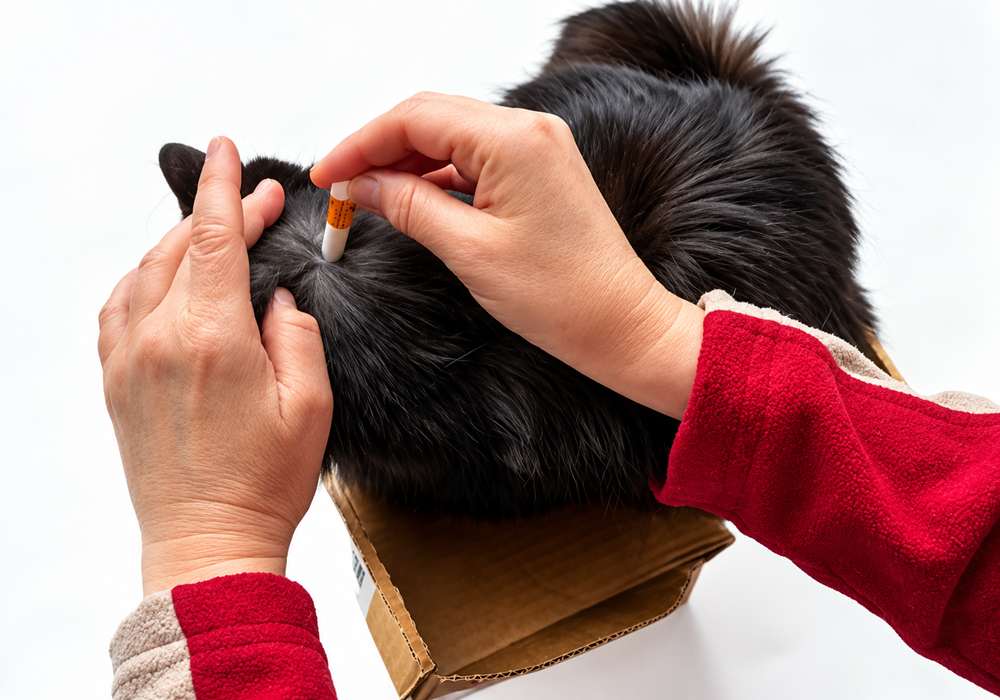
Place the tube tip directly against your cat’s skin and squeeze the medication onto the skin. Melina Grin / Cats.com
Place the tip of the applicator against your cat’s exposed skin and dispense the full prescribed dose as directed by the manufacturer. Apply it slowly and carefully to prevent the liquid from running onto the fur.
Most spot-on treatments are applied to the skin at the back of the neck or between the shoulder blades, where cats are less likely to lick them. Some products require more than one application site, so always follow the manufacturer’s instructions. Avoid getting the product into your cat’s eyes, nose, mouth or ears. Don’t panic or apply another dose if a small amount gets onto their fur.
6. Allow the Treatment to Dry
After the treatment, let the area dry naturally. Try to prevent your cat from licking or grooming the application site while it dries. If you have other pets, keep them separated from your cat until the application site is completely dry. This helps prevent other animals from licking or ingesting the medication. Follow any longer separation period specified on the product label.
If your cat is calm, you can offer a favourite toy or treat to distract them from grooming the application site. Continue supervising your cat until the treatment has dried, following the manufacturer’s instructions.
Avoid bathing your cat or allowing the application site to become wet for the period specified on the product label. Some treatments require a longer waiting period before bathing, so always follow the manufacturer’s guidance.
Spot-on Treatment Safety Precautions
Taking these extra precautions can make parasite-prevention treatment safer and more effective for your cat:
- Always buy a product labelled safe for cats, suitable for your cat’s age and weight; moreover, follow the pharmaceutical company’s guidelines carefully to avoid toxic effects.
- If your cat is ill, pregnant, senior or taking medications, speak to your vet before using a new parasite treatment.
- Never use dog flea products on cats – some contain permethrin, which can be fatal to cats!
- Read the instructions before use, as application sites and dosing requirements vary between products and may depend on your cat’s weight.
- Wear protective gloves if recommended on the label, and wash your hands thoroughly with soap and water after applying the treatment.
- Keep unused parasiticides out of reach of kids and other pets.
- Don’t let children or other pets touch the cat’s treated area until the product has fully dried.
- Keep the original packaging and product information until the treatment period ends, so you can refer to the active ingredients, dosage, safety warnings, and manufacturer’s contact details if needed. You may need to check the ingredients, safety warnings, or first-aid instructions if:
- Your cat has an adverse reaction to the medication.
- Your child accidentally comes in contact with the wet product on your cat’s fur.
- You need to call your vet or a poison hotline, as they will need to know the exact brand, dosage, and active ingredients used.
What to Do if Your Cat Reacts Adversely to Spot-on Treatments
Although cat-approved spot-on treatments are generally well tolerated when used correctly, some cats may experience side effects such as localised irritation, itching, redness, or temporary hair loss at the application site. Excessive drooling, repeated vomiting, tremors, difficulty walking, seizures, or breathing problems after a spot-on treatment require immediate veterinary attention. If you suspect your cat has been exposed to a dog-only flea product containing permethrin, contact a veterinarian immediately, even if symptoms have not yet appeared.
If an adverse reaction occurs, contact your veterinarian immediately and have the product packaging ready. Your veterinarian may recommend washing the treatment from your cat’s skin, depending on the product and the symptoms. Do not attempt home remedies or induce vomiting without professional guidance.
The EPA notes that a major portion of severe adverse reactions in cats stem from accidental misuse or accidental exposure to dog products containing permethrin. If you suspect your cat has been exposed to an inappropriate antiparasitic, contact a veterinarian, ASPCA Poison Control or the Pet Poison Helpline.