Published Nov 16, 2026


The Cat Chronicles / YouTube.com
Does your cat know any tricks? Teaching them can create a unique bonding experience and provide vital mental enrichment to keep their minds sharp and active.
Hero, a cat dad to two Maine Coons, talked to us about training his own cats and how others can get started.
Meeting the Cats
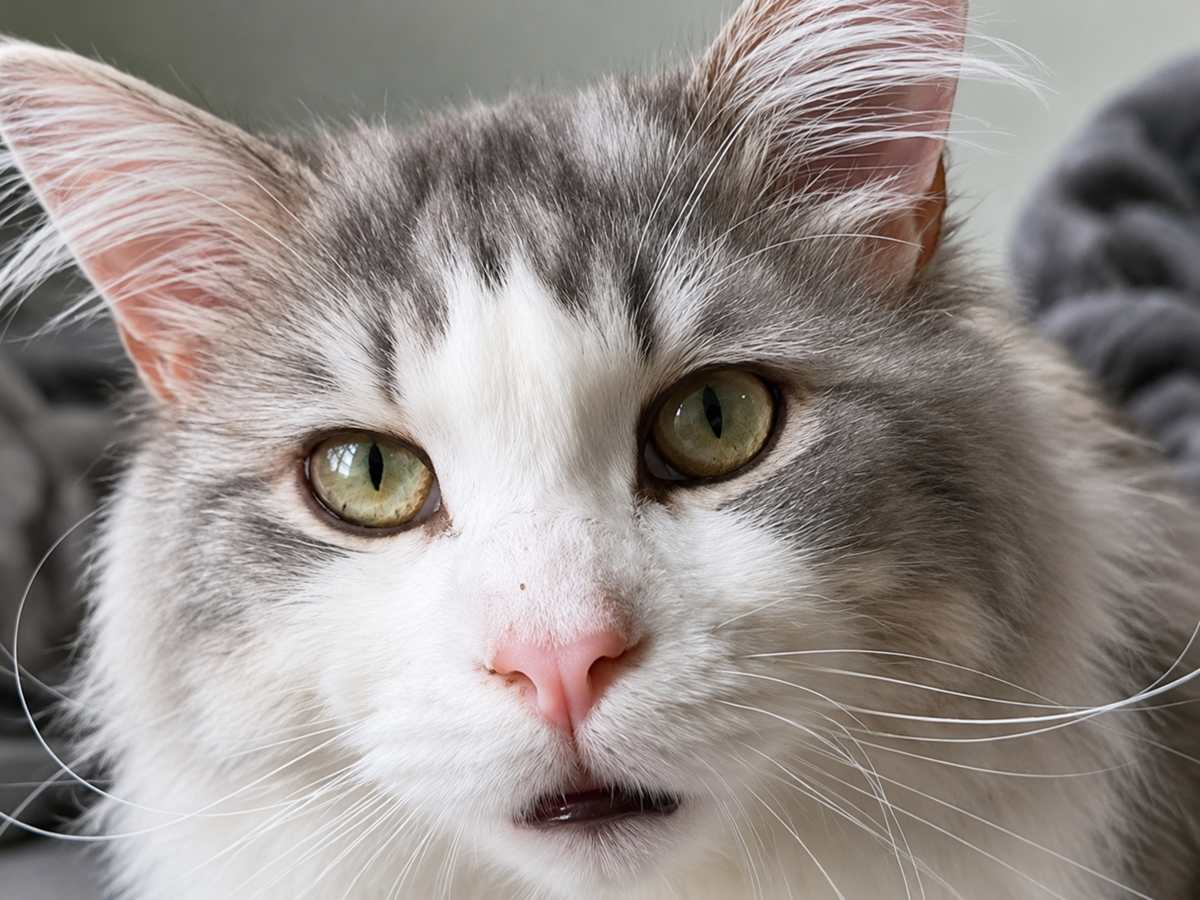
Hero has a black Maine Coon named Jack and a gray and white Maine Coon named Robin. Robin is about a year older.
Hero jokes that Robin is a human in a cat’s body because he always looks surprised by everything. He’s also inquisitive, smart, and highly food-motivated. He even likes to steal food from Jack when he can get away with it!
Jack is more skittish, though he’s gotten braver with age. Hero thinks it might be a black cat thing, as Jack is easily startled by loud noises and even people walking too quickly.
Hero says that while he grew up with dogs, he always wanted cats. His mom was hesitant and afraid of them, so it took a long time for her to agree.
Then his first cat, Finn, almost ruined it with his reckless behavior! He somehow crawled into the bathroom walls, and the family had to conduct a search-and-rescue mission to get him out. He also came home with fleas.
“I was like, man, you’re not making a good first impression,” Hero says. “My mom’s about to get rid of you instantly.”
In reality, his mom warmed to Finn quickly, and Hero has adopted three more cats since, including Jack and Robin.
Cat Training Tips
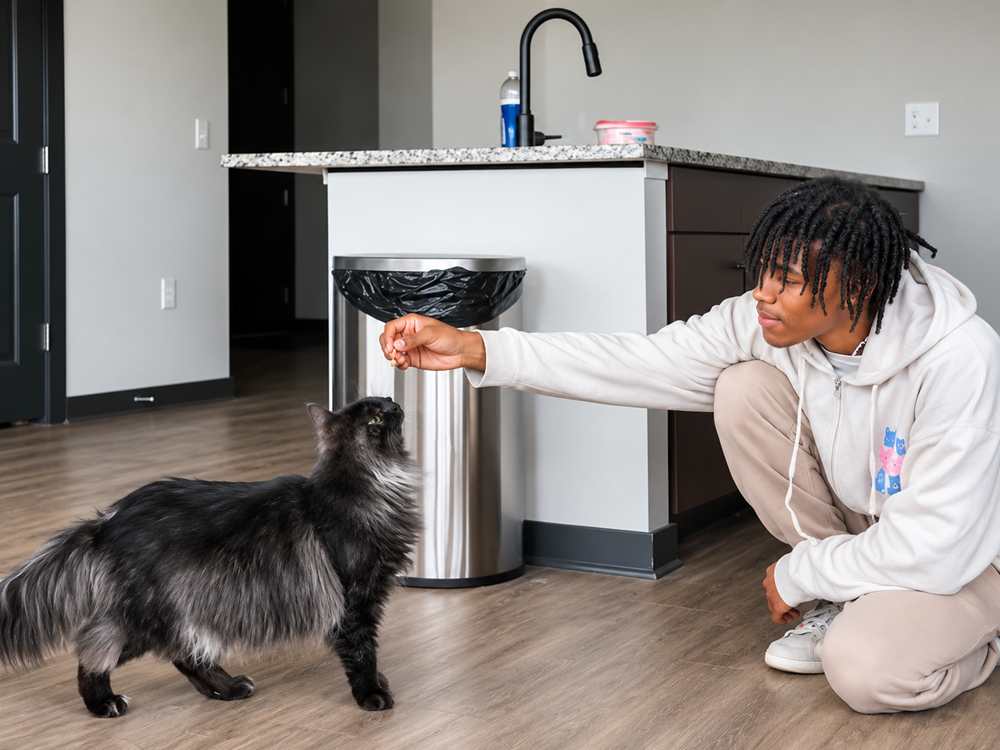
Hero recommends starting with “sit,” then building up to tricks like “stay,” “paw,” and following a hand cue. The Cat Chronicles / YouTube.com
- Start with the basics. Once you have those down, there are many tricks that build off of them. Hero recommends starting with sit, and then you can branch out to things like stay, paw, or I also like to teach my cats to look in the direction of my hand, which is easy to do while holding a treat! It makes taking pictures of them super easy.
- Use treats to encourage behaviors your cat is doing naturally. For instance, Hero noticed Robin rolling onto his back every time he went to feed him. By using this to his advantage, he was able to train him to fully roll over in about half an hour!
- Choose high-value rewards. If your cat is food motivated, this might be their favorite treat. The smellier the better! Some cats, however, prefer a toy to chase, petting, or praise.
- When it comes to unwanted behaviors, use redirection rather than punishment. It’s better to tell your cat what behaviors you do want from them than to say no to everything, leaving them bored or questioning what behavior is appropriate.
Also see our guides on clicker training and cooperative care.