 Published Aug 25, 2026


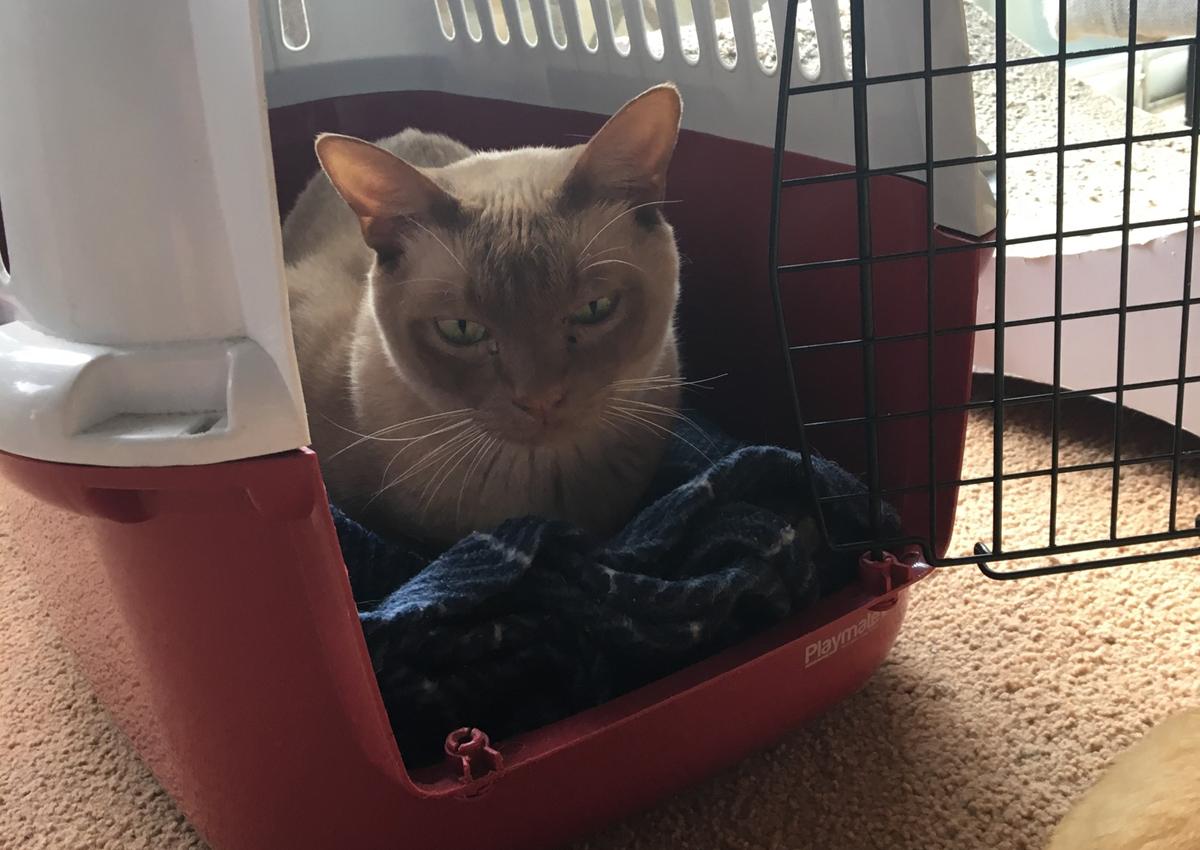
Habituating a cat to be comfortable in a carrier requires making the carrier part of their environment. Melina Grin / Cats.com
As a dedicated cat owner of four cats, a seasoned cat behaviorist, and a pet sitter with 15 years of experience, I’ve come to understand that every cat has its own distinct personality and emotional sensitivity. Some cats exude confidence and thrive on being handled and groomed, while others may feel anxious or shy, particularly in new environments or during vet visits.
Have you ever wondered how to connect more deeply with your cat while prioritizing their physical and emotional well-being? Try cooperative care training. This advanced method fosters a partnership between you and your feline companion, transforming typically stressful situations, such as veterinary visits or grooming—into engaging, positive experiences.
By embracing fear-free care techniques, we unlock amazing opportunities to improve our cats’ health and wellness. Let’s delve into the power of understanding and collaboration for our beloved pets!
What Is Cooperative Care Training?
Cooperative care training is a consent-based approach that encourages your cat to actively and calmly participate in their own handling, daily management, and medical care. Rather than forcing or restraining your cat, this method uses positive reinforcement to build confidence, reduce stress, and give both you and your cat more control over the process.
Benefits of Cooperative Care Training
Cooperative care encourages your pet to engage willingly in their own care. Giving your cat a say and letting them make choices is an important part of their daily well-being as providing food, play, and enrichment.
Let’s look at the benefits of collaborative training:
- Reduced fear, frustration and stress – Helps cats become accustomed to being handled, minimizing fear and lowering panic or anxiety.
- Increased compliance – Cats accustomed to care may be more cooperative during grooming sessions.
- Enhanced medical care – Helps veterinarians perform thorough checks without heavy restraint by multiple members of the veterinary team or sedation. Moreover, pet parents are more likely to return to the vet clinic for routine check-ups.
- Real voice and perceived choice – Allows your cat to express a preference and choose to proceed with the procedure or decline by saying “NO.” Cats generally cope better when they know what to expect and when things are predictable.
- Increases caregiver safety – Reduces the likelihood of your cat displaying defensive or aggressive behaviors, such as snarling, growling or lashing out, thus minimizing the risk of injury from cat bites.
- Feeling of control – Cats are naturally born rulers of their domain. They can decide when and how they want to be held and treated, which enhances their sense of control.
- Improved behavior – Low-stress training betters your cat’s behavior and helps them get accustomed to being held by pet sitters and in boarding.
- Heightened bonding – Enhances the relationship between you and your cat through positive experiences and trust building. By being patient and attentive to your cat’s needs, you develop a relationship characterized by mutual respect and teamwork.
- Better long-term care – Being able to do regular health checks at home with less fear and stress can lead to early illness detection, improved medication and pet longevity. Who doesn’t want their pet to live at least until 20?!
When to Introduce Tools and Equipment for Cooperative Cat Care
To ensure effective cooperative and husbandry training, introduce your pet to all necessary devices and equipment before each activity. This reduces anxiety and builds trust, creating a supportive learning environment. Acclimating your pet to these tools increases the chances of successful training outcomes and a stronger human-animal bond.
What You Can Teach Your Cat During Cooperative Care and Why It’s Useful
You can teach your cat to willingly enter their carrier, eliminating the struggle when it’s time for a vet visit. Picture them stepping onto the scale on their own, making it easy to monitor their weight right at home. You could also train them to enjoy grooming sessions, reducing the need to struggle and lessening dependence on a professional groomer.
Here are some practical skills you can teach your cat:
- Handling: Accepting touch and routine handling helps your cat receive affection, husbandry, and veterinary care. Know your cat’s petting tolerance level before conducting this activity. Start by gently petting under the chin and around the ears, then gradually move to stroking along the neck, body, spine and tail, and finally pick them up for only three seconds, then put them down. Do this daily, repeating this a few times without exceeding your cat’s comfort threshold.
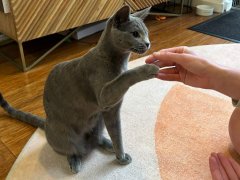
- Target training: Target-touching guides movement without grabbing, which is especially beneficial for skittish or rescue cats because it gives them control over interactions in a safe way. Teach your cat to touch the target with their nose or paw as a starting point.
- Voluntary nail clipping: Teaches cats to tolerate paw handling, toe pressing and having their nails clipped without scratching or biting. Start by teaching your cat to offer their paw and retract their nails, then introduce the nail clippers and trim only one nail at a time.

Introduce the nail clippers before touching your cats paws. Melina Grin / Cats.com

Creating a positive association with nail clippers involves pairing the tool with high-value rewards. Melina Grin / Cats.com
- Cat grooming: Turn brushing, eye and ear wiping, and dematting into an enjoyable, rewarding experience without the stress. Pamper your cat with high-value treats or praise for cooperation.
- Dental care: Teaching your cat to accept tooth brushing is a gradual process that requires patience. Break the task into small steps and only increase the difficulty when your cat is comfortable. Start by training your cat to allow you to touch their face, then progress to encouraging them to open their mouth voluntarily. Creating a positive association with the toothbrush and toothpaste is key to helping your cat tolerate dental hygiene practices.
- Medication administration: At some point in your cat’s life, they may need medication. If your cat willingly accepts pills, liquid medicine, and eye or ear drops, the process can be much less stressful for both of you. Practice giving liquid medicine from a syringe or dropper, and practice giving tablets with a pill gun, indulging your cat with treats.
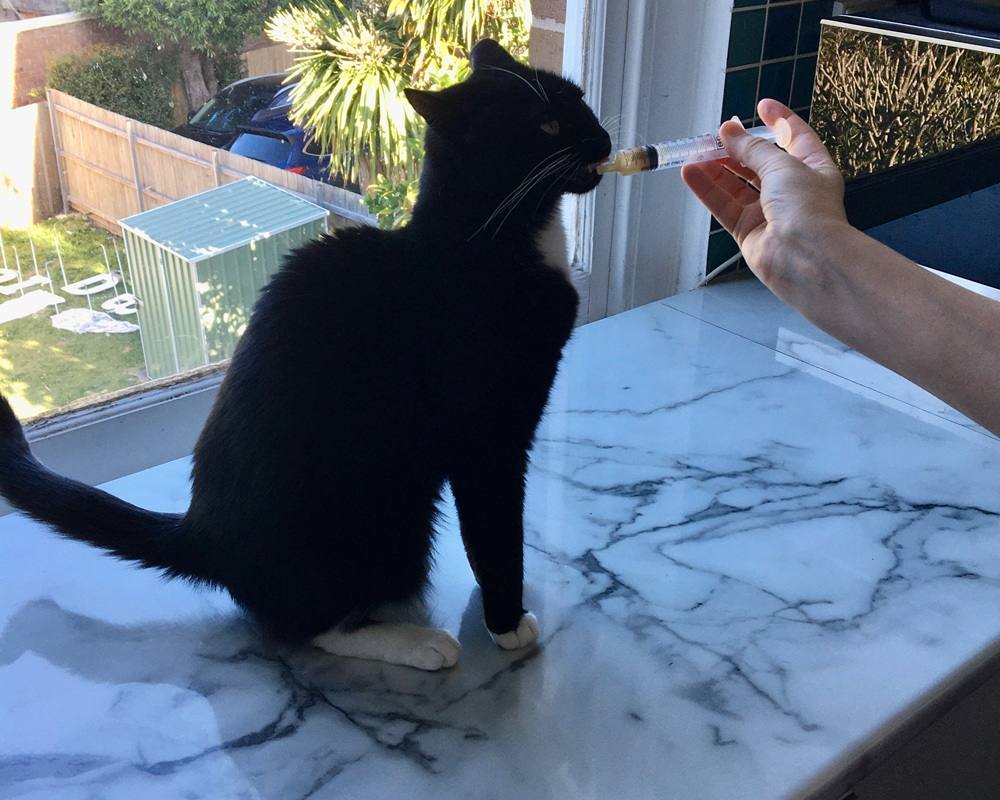
Train your cat to accept medication via a syringe at home. Melina Grin / Cats.com
- Chin rest: This technique teaches your pet to rest their chin on your hand, lap, or a prop, which can help your pet stay still for short periods while you gently touch a specific body part, such as a leg or paw. The goal is to acclimate your cat to rest their chin on your hand or a towel. As long as they voluntarily keep their chin there, you continue the procedure. If your cat lifts their head or moves away, stop the exercise and allow their brain to reset.
- Veterinary visits: To reduce fear during veterinary exams, start at home by habituating your cat to the carrier and desensitizing them to metal surfaces, scales, and veterinary devices. Take them to the vet clinic for positive experiences, like receiving treats and being petted, to help create a positive association with the environment.

Lure your cat with a treat so that at least one or two paws touch the scale surface. Melina Grin / Cats.com

Gradually wait until all four paws are on the scale before giving your cat a treat. Melina Grin / Cats.com

Scale training teaches your cat to step voluntarily onto a scale for fear-free weight tracking. Melina Grin / Cats.com
Things to Avoid During Cooperative Cat Care Training
As a Fear Free trainer, I cannot emphasize enough that cooperative care training requires understanding your cat’s temperament and body language, as well as a great deal of patience.
Avoid the following:
- Training in noisy spaces: Avoid teaching new procedures in busy environments where children and pets are present. Instead, choose a quiet, familiar area where your cat feels calm and safe.
- Restraining your cat: Never hold down, pin, trap, or force your cat from a hiding spot.
- Ignoring body language: Don’t train your cat when they are scared or stressed, and avoid pushing them beyond their tolerance threshold. Watch for warning signs such as skin or tail twitching, stiffness, or a frozen posture.
- Rushing the steps: Don’t skip the crucial process of acclimating your cat to new sounds, being approached, or the sight of training equipment.
- Inconsistency: Stay consistent with your training methods to avoid confusing your cat.
- Overlooking a “No”: If your cat pulls away, steps off the scales, flattens their ears, or turns their head away, don’t push them. Stop immediately and try again another day.
- Long sessions: At the beginning of fear-free training, limit sessions to a few minutes and extend to 15 minutes max. Always stop while your cat is relaxed and willing to participate.
- Use of punishment: Avoid scolding your cat for resisting new behaviors, as this can erode trust and harm your relationship with them.
How Long Does It Take to Teach a Cat to Accept Cooperative Care?
Most cats can learn basic cooperative care techniques during 5-10-minute training sessions a few times a week. Confident cats may pick up behaviors like getting on the pet scale, entering a carrier or backpack within days, while shy or anxious cats may take weeks to do the same. Nail clipping, teeth brushing, and medication acceptance can take weeks or even months of coaching, depending on your cat’s temperament and previous handling experience.
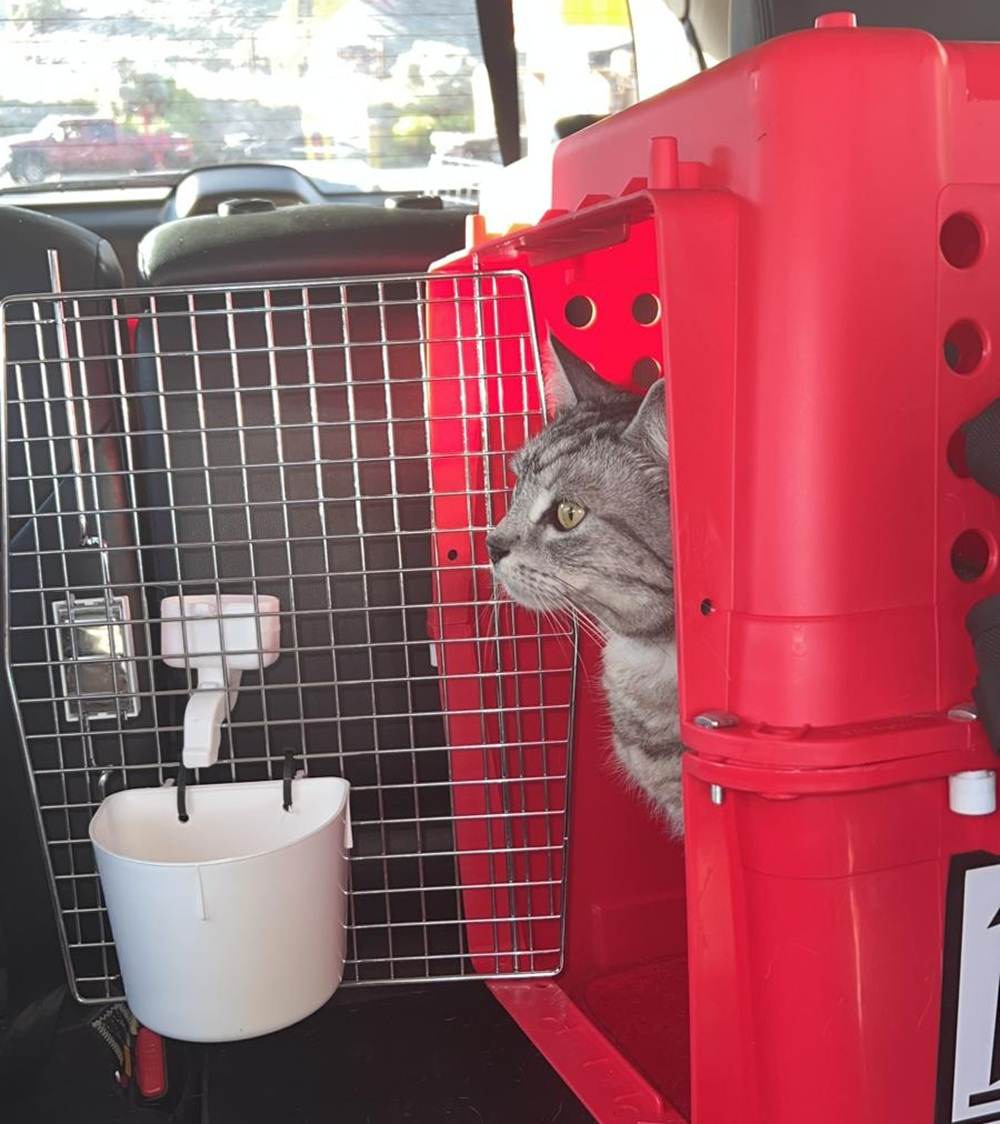
Teach your cat to voluntarily enter, stay inside, and be comfortable traveling in their crate before a flight. Melina Grin / Cats.com
Cooperative and husbandry care doesn’t guarantee that a cat will always enjoy each procedure; however, it will significantly reduce fear and make routine care easier and safer for the owner and the person handling the cat!