
 Last updated Mar 1, 2023


Kirsten McCarthy / Cats.com
Pet favoritism is rife in our house. My cat loves me and will spend all her time giving me cuddles, letting out a purr whenever she sees me, and even giving me a lovely (if painful) knead of the claws every evening. My husband? Not so much. She even sleeps on my side of the bed!
It's very common for cats to choose one member of the household as a "favorite." Cats often gravitate toward the person who spends the most time with them, and the one that feeds, plays, and cuddles them. To strengthen your bond with your cat, take over some of the important chores like feeding and cleaning the litter box, and try spending more time playing, cuddling, and grooming the cat. Key Takeaways
But why do cats choose one person to focus all their love on? Is it some natural instinct to choose a best friend? Or just another slightly odd cat behavior that seems to have no reason behind it? Well, cats are clever creatures and are always looking out for themselves. Having a dedicated primary caregiver can be a very useful tool, and every cat likes to increase their own chances of survival.
Read on to find out exactly how having definite “favorite people” can help cats, and why all cat owners should be proud of this strong bond.
Why Am I the Cat’s Favorite?
If you are the chosen favorite, take it as a compliment! However, if you’re wondering why you’ve been picked as the best sleeping spot, the one to shadow, and the recipient of all the purring, here are some reasons why.
1. Early Bond and Socialization
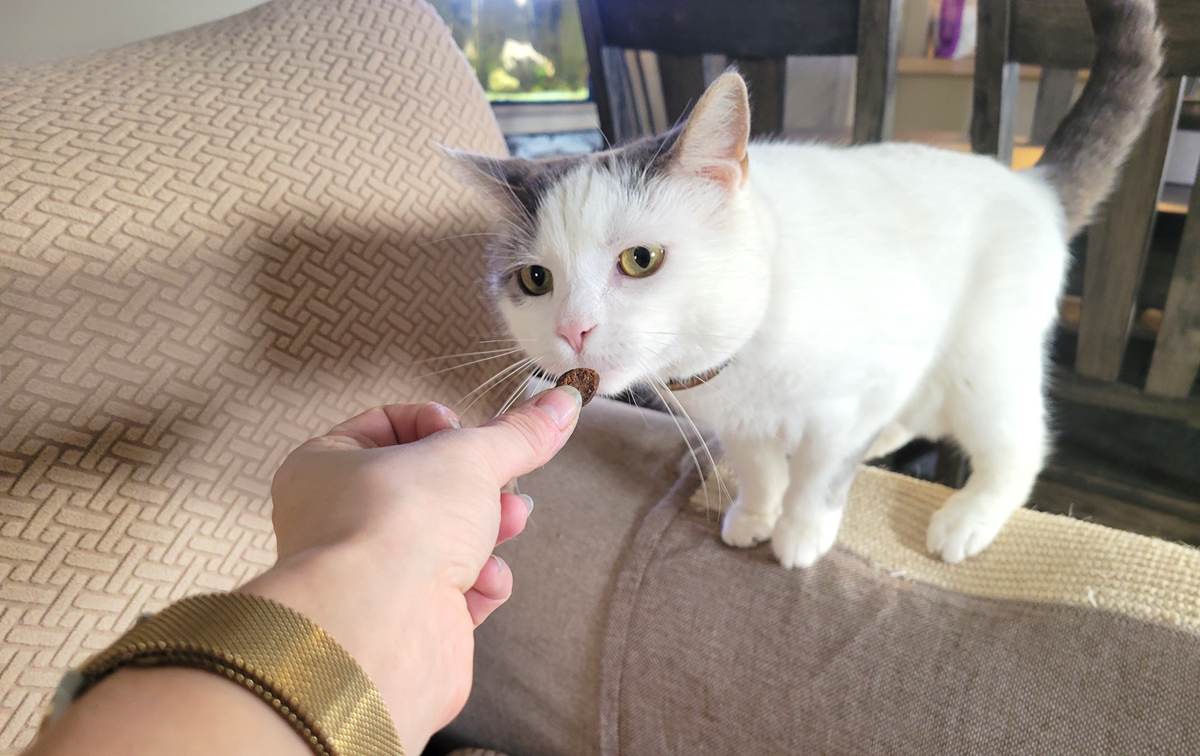
Young kittens form strong bonds with the people they are around the most. Kate Barrington / Cats.com
When kittens are very young (around 4 to 9 weeks old) they go through a period of rapid brain development. This is a really important age for socialization, where kittens learn what is normal, safe, and good in their environment.
Kittens exposed to lots of different people, places, animals, and objects tend to be more confident as older cats. They can also form strong bonds at this age, so if you’ve had your pet since kittenhood, this might explain their love for you. However, adult cats can still form strong attachments.
2. You Fulfill Their Needs
Attachment to a primary caregiver is a natural survival instinct, to stay close to the source of your food and other resources. If you are the main person to feed your cat, clean the litter box, hand out delectable catnip toys, and generally be the “cat person” in the household, your cat might respond by choosing you for extra snuggles. Unfortunately, this gratitude is not guaranteed!
3. Time
Strong bonds form when cats are familiar with and trusting of their companions, and spending a lot of time in your presence will help with this. Plenty of bonding activities such as playtime, grooming, and gentle handling will help cats to bond, and cat lovers will appreciate the tight relationship that is formed.
A new cat in the household might need extra time and attention. Spending lots of time with your cat leads to trust, and this can lead to changes to things like sleeping behavior, with your cat now preferring your lap to their deluxe cat bed! They might also honor you with a feline sign of affection, such as a slow blink or kneading you with their front feet.
4. Communication
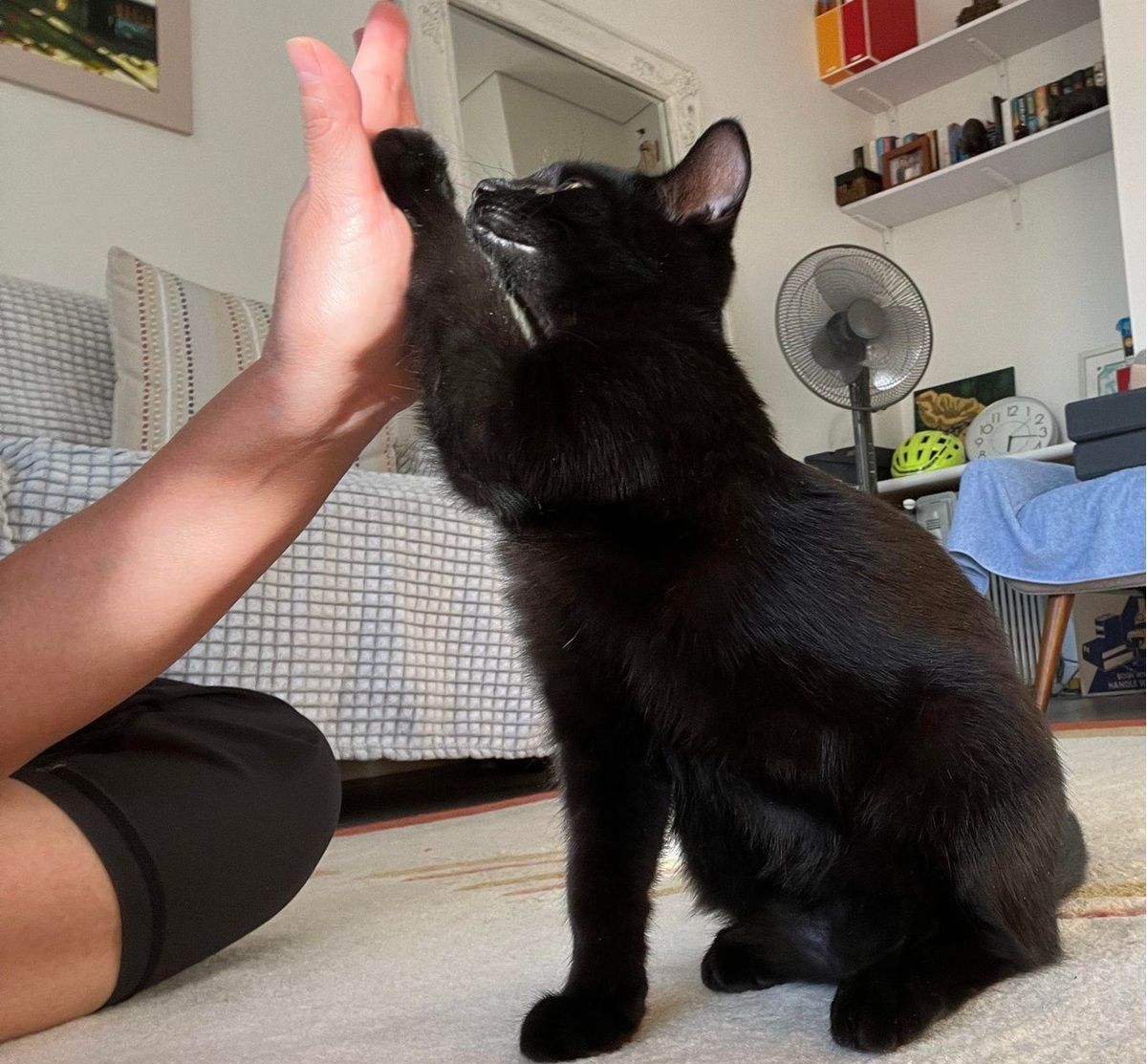
Cats enjoy being around people who understand what they are trying to communicate. Melina Grin / Cats.com
Feline communication is often subtle, and pet owners who take the time to interpret their signals will reap the rewards. Learning about cat body language, posture, vocalizations (more than just a meow!) and scent communication can help you discover what your cat wants and needs. “Speaking cat” might help you become their new favorite person!
5. Personality
Sometimes, cats are just cats. And because they’re cats, they may just ignore all of the valid reasons above and just choose their favorite person for some mysterious reason of their own! There are some cat breeds who are known to form strong, loyal bonds with their owners, and some who seem more relaxed about their friendship circle.
Personality also plays a role—those cats that just like to relax and snooze might be drawn to a quieter person, and an energetic pouncing prowler might gravitate to the person who plays with them the most.
Creating a Strong Bond With Your Cat
If your cat is playing favorites, it might help you to know that this is perfectly normal, and common, cat behavior. However, if your husband is feeling left out of the feline love, then here are some suggestions to even up his chances and strengthen their feline-owner bond.
1. Spend Time With Them
Creating a bond takes time and effort. Play to your cat’s strengths—indulge in some new cat toys and initiate daily playtime for those energetic felines, or curl up with a book next to a more snoozy kitty.
2. Take On The Jobs
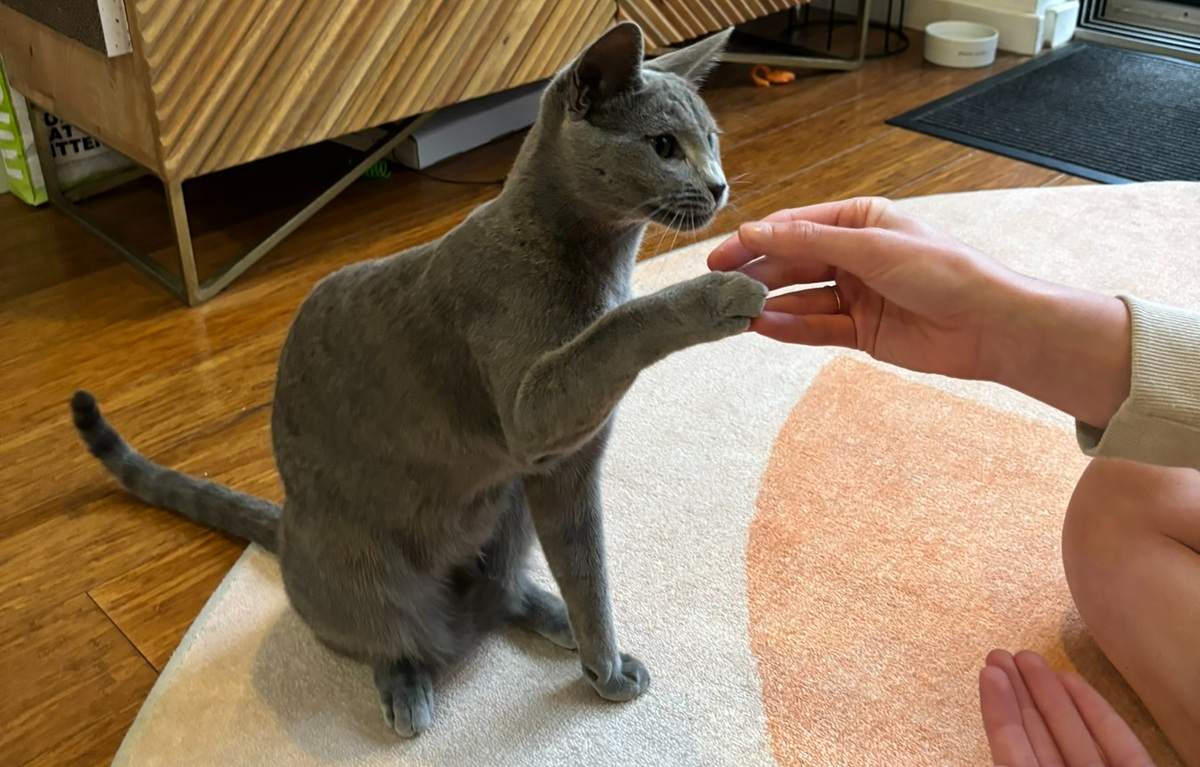
Taking over feeding or litter box cleaning can grab your cat’s attention. Melina Grin / Cats.com
Been avoiding the litter box? Always forget to feed them? Cats have a long memory for things like this, so make sure you are visible in your attention to their care. Some cat treats won’t go amiss either!
3. Grooming
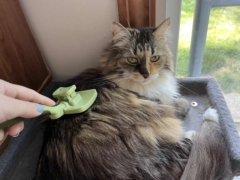
Grooming, petting, and cuddling are all great ways to bond with your cat. As well as being a pleasant activity for you both, physical contact helps spread pheromones from your cat to you, marking you as a safe and friendly presence they can trust.
4. Communicate
Don’t worry, no one is expecting you to meow at your cat! But some long, slow blinks are the equivalent of “I love you” in cat language, and rubbing heads is also a great sign of affection. Learn to read your cat’s body language and respect when to back off, and when to give affection. If a cat knows that they can communicate with you, they’ll be more relaxed in your presence.
5. And If All Else Fails…
Catnip toys and super tasty cat treats are always winners!
Cat Favoritism: Final Thoughts
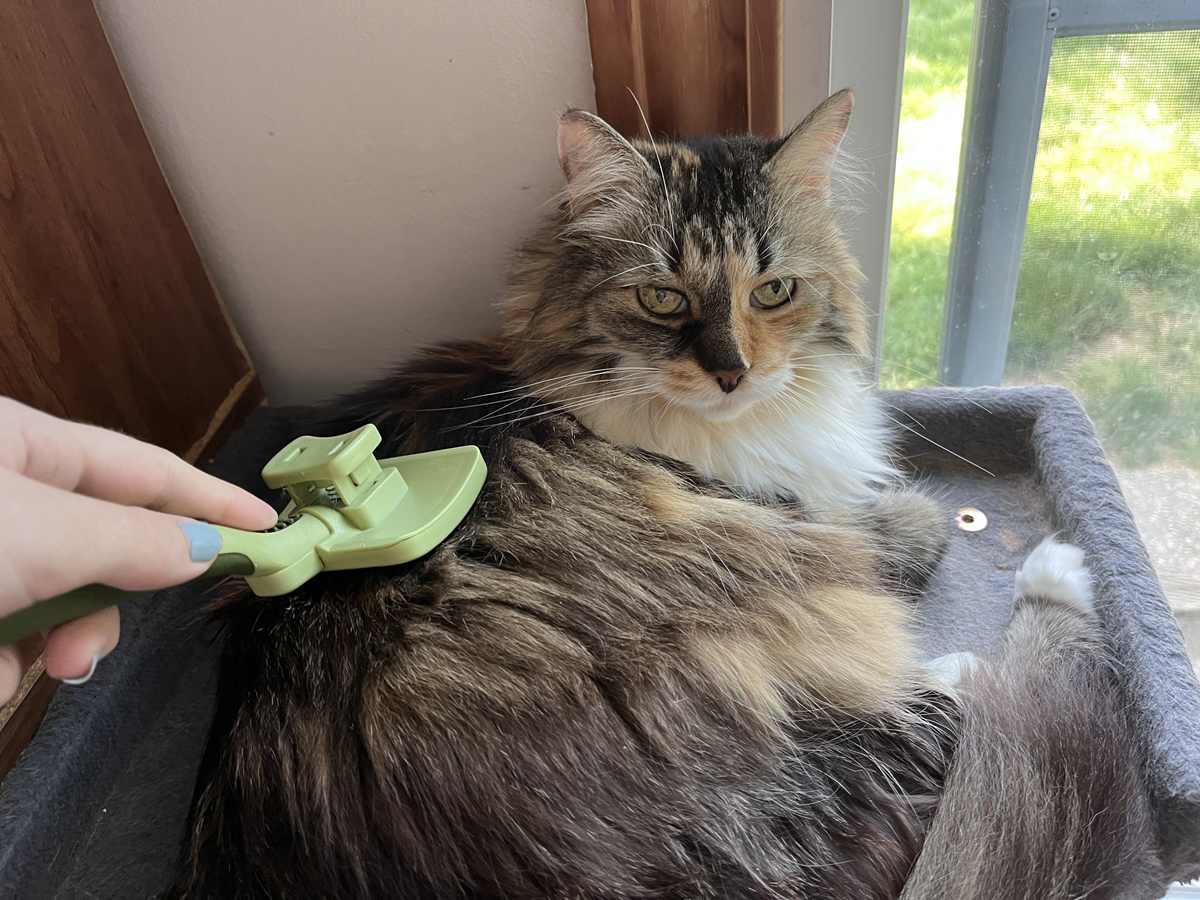
It’s not unusual for cats to choose a special favorite human, but everyone else can get their share of affection if they spend more time with the cat. Katelynn Sobus / Cats.com
It is perfectly normal and common for cats to prefer one member of the household. This might be an inbuilt survival mechanism, relying on their likely source of food and comfort, or it may be related to their early kitten experiences.
Most cats will gravitate toward those cat lovers who spend time with them, pet them, groom them, play with them and learn to read their signals. Cats are often loyal pets, but it’s never too late to strengthen your bond with your kitty, even if you’re not their top human.
Frequently Asked Questions
How do cats pick their favorite person?
Cats often gravitate toward the person who spends the most time with them, feeds, plays, and cuddles them. They also appreciate those who can read their body language and other communication signals.
Why does my cat like me more than my partner?
It might be down to who spends the most time with them, feeds them, plays with them, and cuddles them. It also might be related to their experiences as a kitten, their personality type, and who is better at picking up on their body language.
Why do cats like one person and not another?
Cats often appear to have a favorite, this might be a person who spends time with them, and provides their basic care. It may also be down to simple personality, or who understands the cat’s body language and communication well.
Why do cats bond with only one person?
Cats are often fairly solitary, and when they do form social bonds, it is often to an individual rather than a group. This may be someone who provides their primary care, or who spends the most time with them.