 Published May 6, 2025


Chris Vanderhoof / Cats.com
If your cat is shaking their head or constantly scratching at their ears, an ear infection is a possibility. Not only are these very irritating for cats, the constant scratching and shaking is also bothersome for us to constantly see happen at home.
In this article, you’ll learn a little about ear infections in cats, including how they happen and how they’re treated. We’ll then cover some common ear cleaners and medications that are used.
At a Glance: Our Top Picks for Best Ear Drops for Cat Ear Infection To Buy


Want a quick look at the products reviewed in this article? In the comparison table below, we’ve highlighted some of the most important features of each product. You’ll find more detailed information about each product later in the article.


Virbac Epi-Otic Advanced Ear Cleaner for Dogs & Cats
- Generally non-irritating
- Inexpensive
- Safe to use even with a ruptured eardrum


pH-notix Rebalancing Ear Cleaner for Cats & Dog
- Non-irritating
- Fresh lemon scent eliminates ear odor
- Gentler application style


Plus TrizEDTA Flush for Cats and Dogs
- Helps assist with medically treating bacterial and fungal ear infections
- May help provide better maintenance for cats prone to ear infection recurrence


Vetoquinol Cerumene Ear Cleaner for Dogs & Cats
- One of the best products to break down heavy ear debris and waxy build-up
- Safe to use even if the eardrum is compromised
- Non-irritating


Zymox Veterinary Strength Dog & Cat Ear Cleanser
- Antimicrobial properties
- Low risk of ototoxicity
What Causes Ear Infections in Cats?
When I tell a client that their pet has an ear infection for the first time, I can tell they’re trying to compare this information to what they know about ear infections. Ear infections are very common in human kids and it’s a common assumption that they must have the same causes.
But there’s a “yes” and a “no” to that. This is why the approaches to treating ear infections in pets are very different from how they’re treated in kids.
There are three parts to the ear: the outer, middle, and inner ears. You can have infections in each of these areas.
Are Pet Ear Infections Like Human Ear Infections?
In human kids, they commonly get what’s called otitis media, or a middle ear infection. This occurs when fluid gets trapped just behind the eardrum. Their eustachian tube, which helps to drain this part of the ear, is short and narrow, making it easier for fluid to get trapped. As we grow into adults, this changes, making us less prone.
As any parent knows, it’s common for kids to pick up head colds. Fluid, swelling, as well as viruses and bacteria involved can all lead to otitis media in kids.
In pets, we far more commonly see otitis externa, or infection of the outer ear canal on the other side of the eardrum. Bacteria and fungal yeast live in the ear canal normally and changes to the ear canal through inflammation and swelling can allow these organisms to overgrow and cause nasty, itchy debris buildup.
Ear infections occur much more often in dogs, responsible for 15% (sometimes more depending on the season) of veterinary visits for dogs. In cats, we see them less, at about 5%.
In dogs, we almost exclusively see ear infections secondary to atopic dermatitis, or allergy. This may be related to environmental allergies or food-related allergies. Allergy flare can lead to itchy, red ears and overgrowth of bacteria and yeast make all of that much worse.
Can an ear infection happen after a bath or swim in the lake? Sure, it does happen from water sitting down in the ear. This happens in human kids too (swimmer’s ear), but for all involved, it is a less common cause. While the cat I grew up with oddly loved baths, most cats famously hate water, making swimmer’s ear an unlikely cause in kitties.
Middle or inner ear infections can happen in dogs, but usually only if an outer ear infection gets so bad that the eardrum ruptures and the infection is allowed to get deeper.
How Are Cats Different?
Of course, cats have to do their own thing. In cats, we can see a mix of both an outer ear infection as well as something similar to what happens in human kids with a middle ear infection.
Cats have normal bacterial and fungal organisms that can overgrow secondary to allergy, just like in dogs. In cats that get recurrent fungal yeast growth, which may appear as a dark brown waxy type of debris, this is the most common reason for recurrence.
But cats can also get ear infections due to a viral or bacterial infection working its way up into the middle ear. In one study where just over 300 cats received CT (CAT) scans of their heads, about ⅓ of them had evidence of otitis media.
We can see upper respiratory infections more commonly in cats compared to dogs, especially due to viral infections like feline herpes virus. These can lead to sneezing and eye discharge. There is evidence that these infections can ascend into the middle ear.
What About Ear Mites?
Ear mites can be a common finding in kittens or in cats with compromised immune systems (such as cats with FIV). Ear mites are in a separate category, causing an infestation vs. an infection.
Dark brown debris in the ear is not specific for ear mites. Fungal growth often looks like this and is a more common cause, especially in adult cats. But cats with ear mites can also have fungal growth present too, secondary to the inflammation caused by the ear mites.
Ear mite debris needs to be cleaned out just like we’ll discuss shortly with ear infections, but treatment is different. For mites, an antiparasitic product that works against them (such as Revolution for Cats) is used instead.
Important Parts to Treating Ear Infections in Cats
Katelynn Sobus / Cats.com
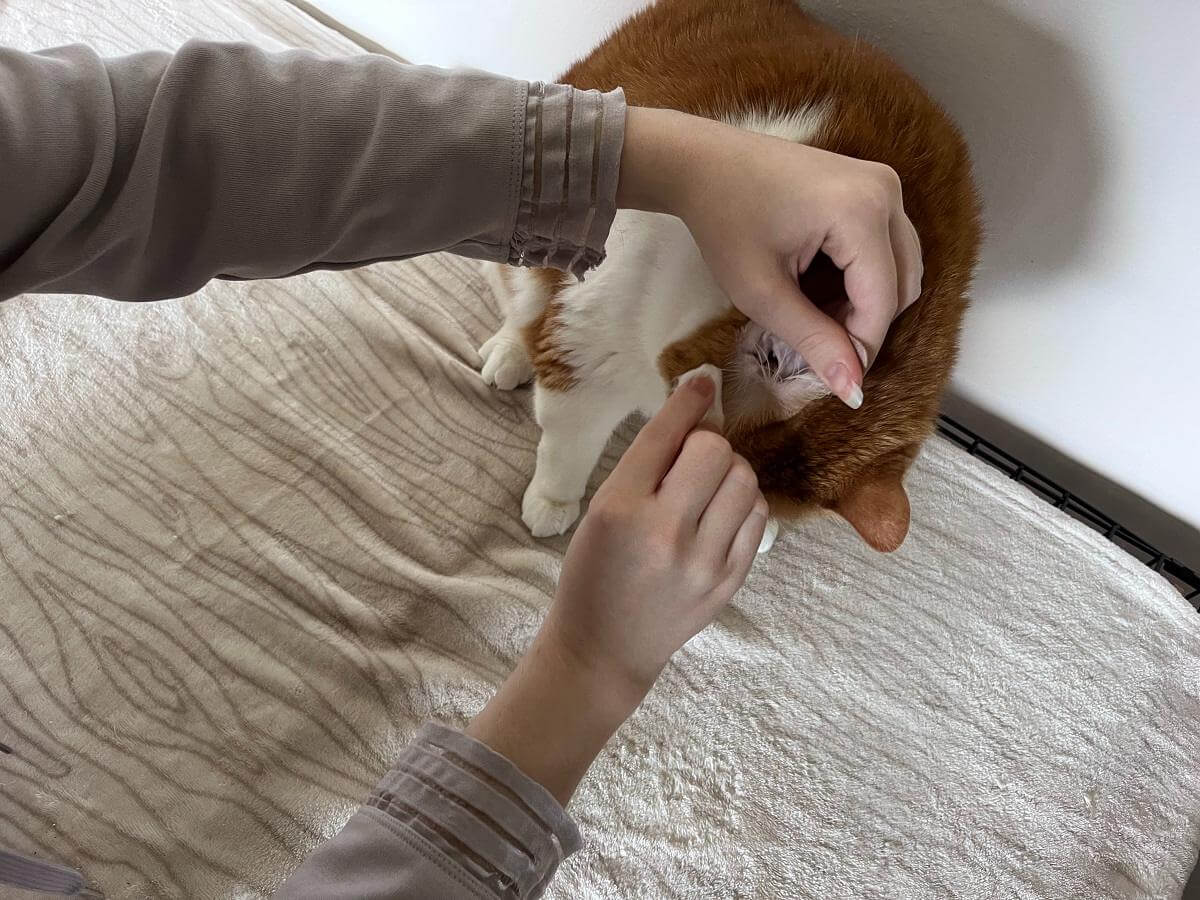
When we treat ear infections in cats, there are two important parts. The first is an ear cleaning solution. An ear cleanser helps to remove debris buildup. We know that bacterial and fungal growth can “hide” within debris, making ear medications less effective if this debris is not flushed out.
The second part is using an ear medication. These are prescription products used to reduce ear canal swelling and inflammation and kill the overgrowth present.
When Do I Seek Veterinary Care?
If you see some debris in your cat’s ears and they’re a little itchy or scratchy, it’s reasonable to do some basic cleaning.
For further steps and information on how to clean your cat’s ears, see our article on 10 Simple Steps to Cleaning a Cat’s Ears.
But if signs persist beyond 2-3 days of cleaning, a veterinary exam is warranted.
Here are some other situations where you should have your veterinarian get a closer look at your cat and what’s going on with their ears:
- Your cat has a head tilt or balance issues when walking
- Signs of ear irritation worsen
- Eye changes are noticed (changes in pupil size, eyelid closure, eye discharge, etc.)
- An ear problem is coupled with any respiratory issues (snorting, wheezing, sneezing, etc.)
- Ear infections frequently recur or don’t appear to fully resolve
Your vet will take a look down the ear canal with an otoscope to view the eardrum, look for any unusual foreign material, swellings, or masses present. It’s very common to collect a sample of ear canal debris to check and see what kind of growth is present and to what degree.
In cats that do not allow a thorough exam or if the ear is especially painful, sedation may be needed to make sure nothing is missed.
A vet exam is the best way to determine if treatment for otitis media is warranted. In some cases, this may involve oral antibiotics or steroid medication.
5 Common Ear Cleaners for Cats
There are several characteristics of ear cleaners that makes them different from using something like tap water to clean ears:
- Formulated to evaporate in the ear canal and not contribute to moisture build-up
- Break up debris
- Reduce microbial growth attachment to the skin surface
- Has a neutral to low pH to prevent interference with other ear preparations
- May have ingredient(s) to reduce some types of growth
You should never use things at home like alcohol, hydrogen peroxide, or vinegar to clean the ears. These can cause irritation and swelling of the lining of the ear canal. This causes increased secretions, causing more debris buildup and microbial growth.
At a Glance: Our Top Picks for Best Ear Cleaners for Cats to Buy
Want a quick look at the products reviewed in this article? In the comparison table below, we’ve highlighted some of the most important features of each product. You’ll find more detailed information about each product later in the article.


Tresaderm
- A small volume (3-4 drops per dose) is often effective to treat outer ear infections in cats
- The dropper bottle is small and easy to handle and administer
- Contains an antimicrobial spectrum that is effective against even harder to kill bacteria like Pseudomonas


Animax
- Adaptable for multiple topical locations of the ears and skin
- Relatively inexpensive


Mometamax
- Once daily administration is common
- Does not require refrigeration


Claro
- Does not require daily administration of ear medication
- Continues to work actively for at least 30 days


Osurnia
- Does not require daily administration of ear medication
- Continues to work actively for at least 7 days

Zymox Otic Dog & Cat Ear Infection Treatment with Hydrocortisone
- Antimicrobial properties
- Available over the counter—no prescription needed
It’s important to remember too, that something that may be okay and non-irritating in a normal ear may not be tolerated in an already inflamed or irritated ear.
Most ear cleaners are over-the-counter and do not require a prescription. Here are some options I frequently use in veterinary practice.
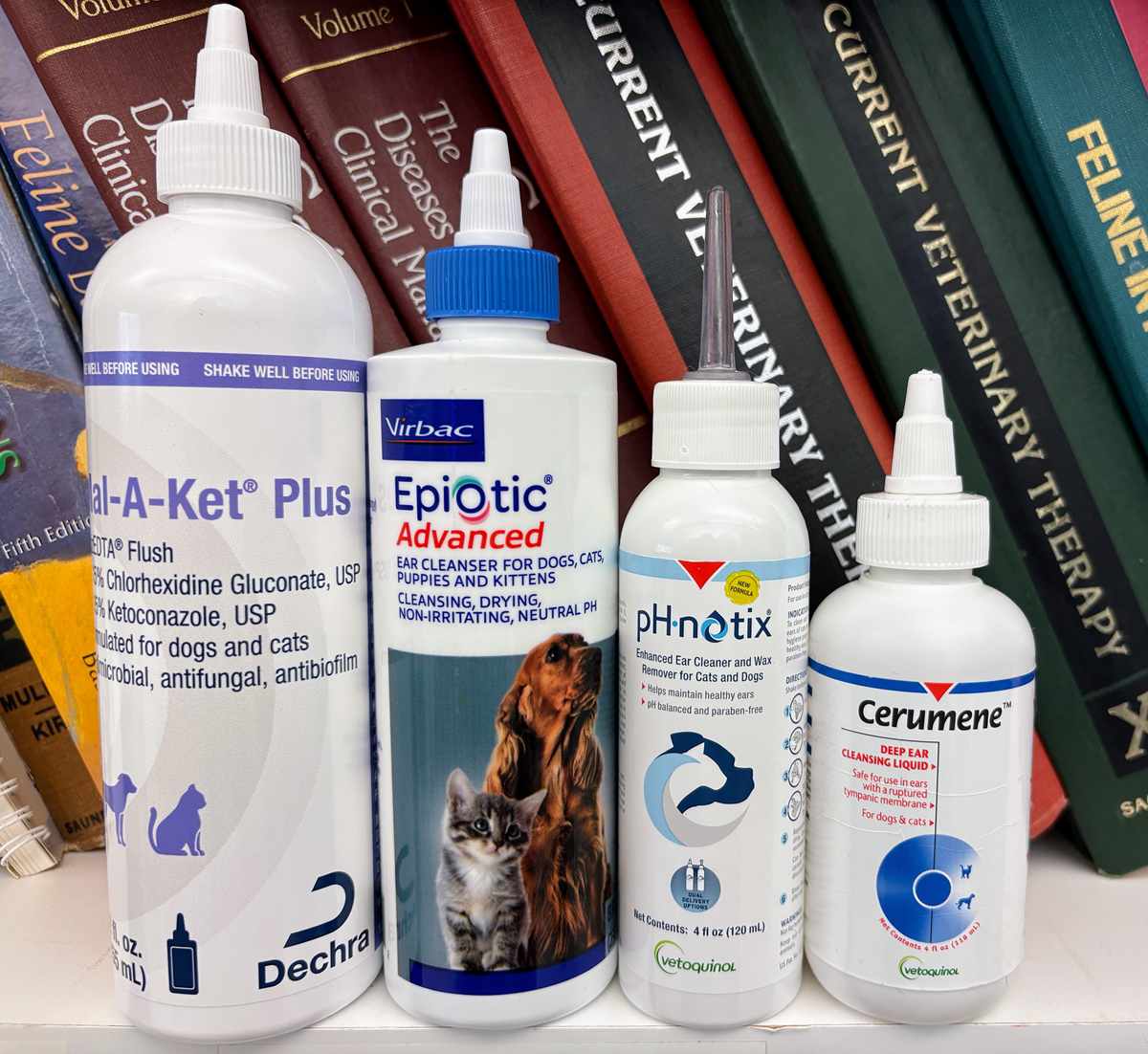
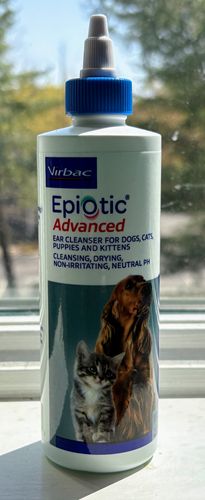
#1 Overall Best: Virbac Epi-Otic Advanced Ear Cleaner for Dogs & Cats
Chris Vanderhoof / Cats.com
EpiOtic is one of the most common ear cleaners on the market. It’s a great compliment to treating infected ears and also functions well for regular maintenance cleaning. It is very inexpensive, especially relative to its volume size.
What We Liked
- Generally non-irritating
- Inexpensive
- Safe to use even with a ruptured eardrum
What We Didn’t Like
- It has no directly antimicrobial ingredients
- In very inflamed ears, I have seen it cause some irritation, possibly from the low pH
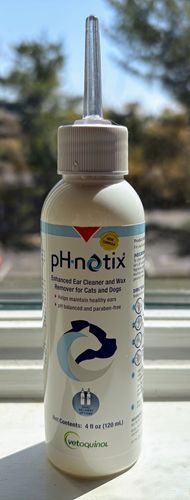
#2 Best Scent (and Least Irritating): pH-notix Rebalancing Ear Cleaner for Cats & Dog
Chris Vanderhoof / Cats.com
I really like pHnotix for cats. It is very non-irritating and the cleaning process seems less bothersome compared to some other cleaners. The tip of the bottle and consistency of the cleaner fluid allow for small volumes to enter the ear more gently (instead of a big splash). And the fresh lemon scent is nice but not overpowering.
What We Liked
- Non-irritating
- Fresh lemon scent eliminates ear odor
- Gentler application style
- Contains lipicides that help regulate sebum production (ear wax)
What We Didn’t Like
- A little more expensive compared to some products like Epi-Otic
- Manufacturer warns against using it if the eardrum is not intact
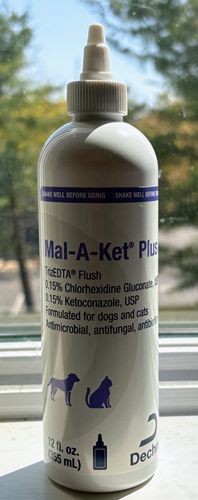
#3 Best for Cats with Chronic Ear Infections: Plus TrizEDTA Flush for Cats and Dogs
Chris Vanderhoof / Cats.com
Malaket Plus can help pets prone to bacterial and yeast overgrowth. This is especially for pets where an underlying atopic dermatitis/allergy disorder is responsible. This cleaner contains three antimicrobial ingredients, 0.15% ketoconazole, 0.15% chlorhexidine, and Triz EDTA. Ketoconazole is an antifungal. Chlorhexidine has action against both fungal and bacterial organisms. Triz EDTA serves to alter the cell membrane of bacteria, weakening them and making them more susceptible to topical medications.
What We Liked
- Helps assist with medically treating bacterial and fungal ear infections
- May help provide better maintenance for cats prone to ear infection recurrence
What We Didn’t Like
- Should not be used if the eardrum is not intact, as chlorhexidine can cause ototoxicity
- Comparably more expensive than some other cleaners
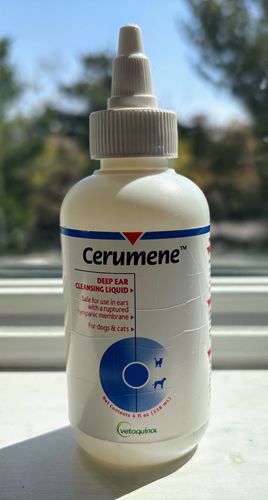
#4 Best for Heavy Wax Build-up: Vetoquinol Cerumene Ear Cleaner for Dogs & Cats
Chris Vanderhoof / Cats.com
Cerumene contains squalane, which is one of the best ingredients to break down heavy waxy ear debris. I like recommending Cerumene for pets that are prone to heavy, waxy build up. It is non-irritating and very safe to use even if the eardrum is not intact.
What We Liked
- One of the best products to break down heavy ear debris and waxy build-up
- Safe to use even if the eardrum is compromised
- Non-irritating
What We Didn’t Like
- It contains mineral oil, which makes it a little greasy compared to other products
#5 Honorable Mention: Zymox Veterinary Strength Dog & Cat Ear Cleanser
I really like Zymox products and they have made a difference for many patients. They contain an enzymatic solution that helps to break down debris and counteract bacterial presence. The cleanser contains only the enzymatic solution. I cover the product containing hydrocortisone below.
What We Liked
- Antimicrobial properties
- Low risk of ototoxicity
What We Didn’t Like
- There is no drying agent
6 Common Ear Medications for Cats
Ear medications are prescription items used to kill overgrowth of bacteria and/or fungal yeast. With the exception of the two leave-in medications in our list, these are commonly used alongside regular use of cleaners to keep debris levels down while treating.
At a Glance: Our Top Picks for the Best Ear Medications for Cats To Buy
Want a quick look at the products reviewed in this article? In the comparison table below, we’ve highlighted some of the most important features of each product. You’ll find more detailed information about each product later in the article.
Tresaderm
- A small volume (3-4 drops per dose) is often effective to treat outer ear infections in cats
- The dropper bottle is small and easy to handle and administer
- Contains an antimicrobial spectrum that is effective against even harder to kill bacteria like Pseudomonas
Animax
- Adaptable for multiple topical locations of the ears and skin
- Relatively inexpensive
Mometamax
- Once daily administration is common
- Does not require refrigeration
Claro
- Does not require daily administration of ear medication
- Continues to work actively for at least 30 days
Osurnia
- Does not require daily administration of ear medication
- Continues to work actively for at least 7 days
Zymox Otic Dog & Cat Ear Infection Treatment with Hydrocortisone
- Antimicrobial properties
- Available over the counter—no prescription needed
Most topical ear medications contain three types of ingredients, an antibiotic for bacteria, an antifungal for fungal organisms like yeast, and a steroid to reduce inflammation.
We’ll cover ear drop medications first, which are commonly prescribed. Leave-in medications are less ideal for use in cats, but in some cases, may be the only treatment option. We’ll discuss how they’re used and some precautions.
Note: I’m using the term drop medications to describe those used topically at home one or more times per day, where your cat is prescribed a certain number of drops per dose.
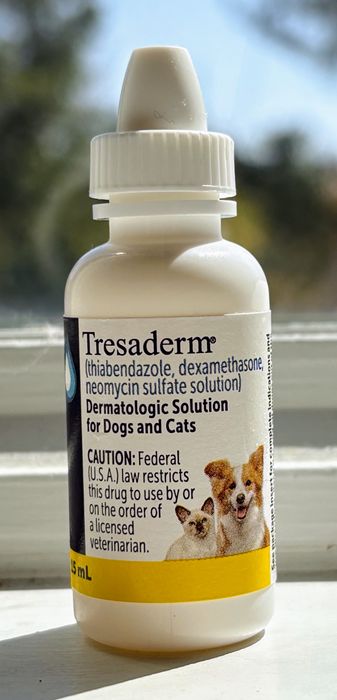
#1 Overall Best: Tresaderm
Chris Vanderhoof / Cats.com
- Format: Drops
- Active Ingredients: Dexamethasone, Neomycin, Thiabendazole
- Typical Price Per Dose: ~$0.60 per dose (based on 3-4 drops per dose)
- Doses per Container: ~75
- Ideal For: A majority of bacterial and fungal infections of the outer ear.
Tresaderm is a topical ear medication that is FDA-approved for use in cats. It contains dexamethasone as a steroid for inflammation, neomycin as an antibiotic, and thiabendazole as an antifungal agent.
What We Liked
- A small volume (3-4 drops per dose) is often effective to treat outer ear infections in cats
- The dropper bottle is small and easy to handle and administer
- Contains an antimicrobial spectrum that is effective against even harder to kill bacteria like Pseudomonas
What We Didn’t Like
- Tresaderm must be refrigerated
- Cats may dislike the feeling of the cold drops being applied
- Application every 12 hours is often needed
#2 Best for a Small Budget: Animax
- Format: Drops
- Active Ingredients: Triamcinolone, Nystatin, Neomycin, Thiostrepton
- Typical Price Per Dose: ~$0.30 per dose (based on 3-4 drops per dose)
- Doses per Container: ~35
- Ideal For: A majority of bacterial and fungal infections of the outer ear.
Animax is just one brand name for the topical ointment containing the ingredients nystatin, neomycin sulfate, thiostrepton, and triamcinolone. Nystatin is an antifungal, neomycin and thiostrepton are antibiotics, and triamcinolone is a steroid. Nystatin and thiostrepton are complementary, targeting two different classes of bacteria.
Besides Animax, other brand names for the same ingredient combination include EnteDerm, Panalog, Dermalone, and others. This ingredient combination is FDA approved for use in cats for a variety of dermatologic indications, including use on the skin for wounds or infections, as well as ear infections.
The label indications have a wide interpretation for dosage frequency, depending on the need. Animax is most often used every 12 hours in my experience but may be used more or less often as the severity of the condition indicates.
What We Liked
- Adaptable for multiple topical locations of the ears and skin
- Relatively inexpensive
What We Didn’t Like
- Ointment tends to be greasy and runny
- The tube may not make it as easy to apply drop dose amounts as with a dropper bottle
- May require use every 12 hours
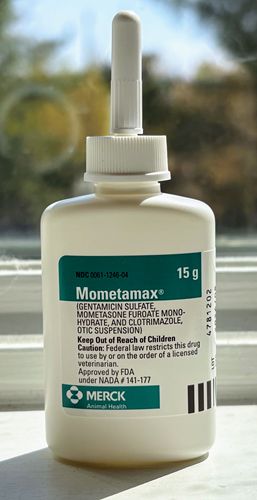
#3 Best Off-label: Mometamax
Chris Vanderhoof / Cats.com
- Format: Drops
- Active Ingredients: Mometasone, Gentamicin, Clotrimazole
- Typical Price Per Dose: (based on 3-4 drops per dose)
- Doses per Container: N/A
- Ideal For: Bacterial rods and very inflamed ears.
Mometamax contains gentamicin as an antibacterial agent, clotrimazole as an antifungal, and mometasone as the steroid.
Mometamax is only labeled for use in dogs, but may be used off-label by veterinarians in cats. Mometamax may have some advantages for use. It is commonly prescribed for only once daily application and does not require refrigeration like Tresaderm does. The gentamicin in Mometamax may be more effective if your vet is seeing heavier growth of bacterial rods.
What We Liked
- Once daily administration is common
- Does not require refrigeration
What We Didn’t Like
- Does not carry a label for use in cats
- The solution is more greasy/oily
Leave-in Medications
These medications are applied at the veterinary hospital. Their long-acting properties allow them to be effective for several days to weeks. No leave-in medication is approved for use in cats and caution must be taken when using them.
However, given the difficulty many cat parents may have in trying to clean and medicate their cat’s ears even just once a day, a leave-in medication may be the only option in some cases to treat an ear infection.
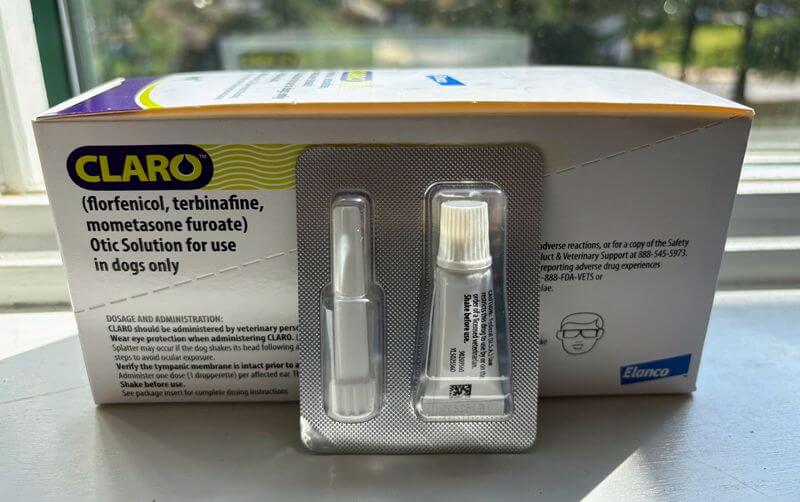
#4 Longest-Acting Leave-in: Claro
Chris Vanderhoof / Cats.com
- Format: Leave-in application
- Active Ingredients: Mometasone, Florfenicol, Terbinafine
- Typical Price Per Dose: ~$30-$40
- Doses per Container: 1
- Ideal For: When a long-acting medication is needed for a cat that does not tolerate daily medicating.
Claro is the first of two leave-in ear medications we’ll cover. Its use requires very careful consideration and detailed discussion with your veterinarian, because there is a higher risk for side effects in cats.
Claro contains florfenicol as an antibiotic, terbinafine as an antifungal, and mometasone as a steroid.
Claro’s packaging and drug sheets contain warnings against use in cats. The reason is that a higher risk of side effects have been seen in cats in post-approval studies, usually pertaining to ototoxicity. These include side effects like Horner’s syndrome, nystagmus (abnormal eye movement) a head tilt, trouble with balance and walking (ataxia), eardrum rupture, and vomiting.
The combination of the risk for these effects along with Claro’s long duration of action (about 30 days) has contributed to stronger warnings against its use in cats.
But given these warnings, Claro may still be utilized off-label in cats in some scenarios. Even board-certified dermatologists may consider its use if the benefit has the potential to outweigh the risk.
I have seen cats benefit well from it but I have also seen ototoxicity signs develop too. This highlights the need for caution and weighing the benefits with potential risks.
Claro has been documented to cause eye surface injury in people and dogs from the medication splashing in the eyes when a pet shakes their head. We always use eye protection in my practice when applying it.
What We Liked
- Does not require daily administration of ear medication
- Continues to work actively for at least 30 days
What We Didn’t Like
- Not labeled for use in cats. Packaging contains warnings against use in cats
- The risk of ototoxicity for cats is higher than with other ear medications
- Carries risk of eye surface injury to people and pets if medication splashes into the eyes
#5 Shortest-Acting Leave-in: Osurnia
- Format: Leave-in application
- Active Ingredients: Betamethasone, Florfenicol, Terbinafine
- Typical Price Per Dose: ~$15-$20 (full treatment usually requires 2 doses)
- Doses per Container: 1
- Ideal For: When a long-acting medication is needed for a cat that does not tolerate daily medicating.
Osurnia is the second leave-in medication. It is also not approved for use in cats, and carries a similar warning as Claro does to not use in cats.
Osurnia contains florfenicol as an antibiotic, terbinafine as an antifungal, and betamethasone as the steroid ingredient.
Osurnia is only effective for 7 days at a time. The label for dogs recommends applying a second dose one week after the first. This second dose may be sent home with a pet owner, or a vet practice may schedule a brief visit to have the second dose applied at the hospital.
The packaging also carries warnings about using eye protection during application. However, since it is more of a gel compared to Claro, which is a liquid solution, the “splash” risk is lower with Osurnia.
What We Liked
- Does not require daily administration of ear medication
- Continues to work actively for at least 7 days
What We Didn’t Like
- Not labeled for use in cats. Packaging contains warnings against use in cats
- Ototoxicity risks may be higher in cats
- A second dose is needed after 7 days for a full treatment course
- There may also be an eye exposure risk if it gets in the eyes during application
#6 Best Non-Prescription Product: Zymox
- Format: Drops
- Active Ingredients: Betamethasone, Florfenicol, Terbinafine
- Typical Price Per Dose: ~$0.25
- Doses per Container: 1
I mentioned the Zymox cleaner earlier, but Zymox also makes an enzymatic solution containing hydrocortisone. This is not a prescription medication and I would not consider it a replacement for one.
However, it can have a greater impact on mild or early ear infections compared to cleaners alone. Inflammation is a common part of the issue with otitis, and the addition of hydrocortisone can be extremely important.
The enzymatic solution does have antimicrobial properties. So it can have action against early or mild growth but I don’t feel it works nearly as well for more serious infections.
Zymox is not a prescription item and can be purchased over the counter. I find it useful for pets that have a history of chronic recurrent ear problems. If early flare-ups can be caught, there’s a chance a product like Zymox may help to control them before they get worse.
While not a prescription medication, it still isn’t safe to use if the eardrum is not intact, so precautions should always be taken if there is any uncertainty.
What We Liked
- Antimicrobial properties
- Available over the counter—no prescription needed
What We Didn’t Like
- Not safe if the eardrum is perforated—vet exam may be needed
Side Effects of Ear Medications
It’s extremely important to understand that side effects can occur with any ear medication. Adverse effect signs are very similar in most cases.
Side effects of ear medications may include:
- Hearing loss (temporary)
- Head tilt
- Nystagmus (abnormal eye movement)
- Horner’s syndrome
- Trouble with balance and walking (ataxia)
- Lethargy
- Reduced appetite
- Vomiting (usually from vertigo/balance problems)
Hearing loss I find to be uncommon, but I have had owners describe this on occasion. It is usually temporary and resolves on its own with discontinuation of the medication. The need to treat the infection should be weighed against the side effects to decide whether to continue use or not. This should be discussed with your vet if seen.
The other signs are related to ototoxicity. This means that the inner ear has been affected. The inner ear is part of our vestibular system, which controls our sense of where we are within a space and balance.
A common cause of these side effects can be that the eardrum is not intact. The eardrum is the barrier between the outer ear canal and the middle/inner ear.
Veterinarians do try to assess the eardrum integrity before prescribing ear medications. However, the need to insert the otoscope cone down into a cat’s itchy, irritating, or painful ear is a regular challenge. Sometimes, the eardrum cannot be adequately viewed due to swelling, debris, or a cat’s behavior.
While I find these side effects to be rare in general, I think it’s always important to discuss the potential risks with cat owners, especially if the eardrum cannot be adequately viewed.
Ear Medication Tips
Applying ear medications at home can be a challenge in cats. Here are some tips that may help at home.
- Use a small space. I have always found that when clipping nails, applying eye or ear medications, or anything that requires one of my cats to be held, using a small room, like a bathroom, is useful. Your cat may need a break (such as between cleaning and medicating) and if they can run upstairs under the bed, you may not get a chance to finish.
- Take breaks if needed. Using your small space, you can give your cat a break during your cleaning or medicating process. This might be taking a break between cleaning and medicating. Or it might be a break between each ear. During the break, give your cat some pets and some treats.
- Offer treats during the application. Using a treat paste like Churu or even a jar of baby food can provide some welcome distraction while cleaning or medicating the ears. You can apply it to a table surface or have a second family member offer it.
- Offer treats after application. Even if your cat won’t be distracted during cleaning, try to provide a calming atmosphere after the worst is done. Providing some treats and cuddles as a wind-down will leave that experience in their more recent memory. Salmon-flavored Greenies are my cats’ absolute favorite. Associating cleaning/medicating with food may hopefully reduce the chance that they run when they see the medication bottle come out.
- Towel Wrap. Even if your cat is docile, you might find their patience wears down with ear cleaning and medicating. Cats like to use their paws to push you away or bat away the medication bottle. A simple towel wrap can help safely control their body and expose only their head and ears.
See our article on using a towel wrap in cats for some extra tips.