
 Published Jun 11, 2026


Kirsten McCarthy / Cats.com
Cholangitis/cholangiohepatitis syndrome is certainly a mouthful to say. But as the most common acquired liver disease in cats, it’s important to know what it is, causes, and how it’s treated.
Quick Overview: Cholangitis/Cholangiohepatitis Syndrome in Cats
 Other Names: CCHS
 Common Symptoms: Lethargy, poor appetite, and vomiting are most common. Other signs may include jaundice/icterus (yellow tinge to skin, gums, and whites of the eyes), fever, and weight loss
 Requires Ongoing Medication: Not all, but many cases do require long-term management
 Vaccine Available: No
 Treatment Options: Acute (suppurative) CCHS often requires antibiotics while chronic (non-suppurative) often requires addressing an underlying inflammatory and/or immune disorder of the digestive tract, pancreas, and liver. Other diseases like pancreatitis inflammatory bowel are commonly present as well, also requiring treatment. Some cats may be very ill and require hospitalized care while others may be treated as outpatients. Frequent rechecks are often needed.
 Home Treatment: Make sure to follow your veterinarian’s instructions and finish prescribed antibiotic courses, even if your cat appears to feel better. Make sure to keep follow-up visits your veterinarian recommends for weight checks, labwork, or therapy adjustments. Treatment for CCHS can be long. Always seek council with your veterinarian before adjusting or discontinuing any therapies.
What is CCHS in Cats?
Cholangitis/cholangiohepatitis syndrome refers to inflammatory disease of the bile ducts (which course through the liver), the gallbladder, and sometimes the liver itself.
The prefix chol- means bile or gall and the prefix angio- means vessel. Bile is the green-colored fluid produced by the liver that helps the body digest fats. Bile courses through the bile ducts (which can be thought of as vessels) to the gallbladder where it is stored until needed.
Bile also serves some other important functions, including binding toxins the liver processes, allowing them to be eliminated from the body.
Bile is then released from the gallbladder through the common bile duct where it can then enter the digestive tract through a small opening in the small intestine. Right before this opening, the common bile duct merges with the pancreatic duct. This is a very important detail we’ll come back to later.
The suffix -itis means inflammation of an organ or tissue. The prefix hepa- means liver.
Cholangitis/cholangiohepatitis syndrome may involve only inflammatory conditions affecting the gallbladder and bile ducts. However, inflammation may also extend from the bile ducts into the liver tissue itself. Conditions primarily affecting the liver may also in turn less commonly impact the biliary system.
For simplicity, we’ll refer to the syndrome as CCHS throughout the remainder of this article.
Causes of CCHS in Cats
When inflammation occurs within the bile ducts and/or gallbladder, this interferes with the proper flow of bile, which is called cholestasis. Because of its main role of aiding in digestion of fats, bile is a naturally caustic substance. When it isn’t flowing properly and just sits in one place, it can in turn contribute to further inflammation of surrounding structures.
There are two main underlying sources of inflammation in the bile ducts. The first tends to be more sudden and acute while the other occurs more slowly and progressively.
Neutrophilic/suppurative/acute cholangitis
This version of cholangitis has traditionally been called neutrophilic cholangitis but in recent years the term suppurative has become more common. Neutrophilic/suppurative cholangitis typically involves a white blood cell called a neutrophil, which is the immune system’s earliest phase inflammatory cell. Neutrophils are seen with acute inflammatory conditions, often infections.
If you recall from just a little earlier, the common bile duct empties into the small intestine. While the intestinal tract normally contains bacteria, the bile ducts, liver, and gallbladder typically do not. Neutrophilic cholangitis often includes digestive tract bacteria making their way through that small opening into the common bile duct, the gallbladder, and the bile ducts that course throughout the liver.
While bacterial infection may often be a primary cause, research in recent years has shown that this is not always the case. Another underlying cause, like a gallstone, may be present first, posing a high secondary risk of bacterial infection.
This acute form is typically seen more in younger to middle-aged cats. It is also characterized by a more sudden onset, usually requiring a veterinary visit within 5 days of signs of illness developing.
Lymphoplasmacytic cholangitis
Lymphocytic or lymphoplasmacytic cholangitis involves a more chronic inflammatory condition. It may also be called non-suppurative or chronic CCHS. A different type of white blood cell called a lymphocyte can be seen with many chronic inflammatory conditions.
This condition is largely different from the more acute form due to a lack of bacterial involvement. The immune system is more often involved, causing a more slowly progressive chronic inflammatory state.
This form has a more insidious onset, often taking anywhere from weeks to years before outwardly visible illness signs are recognized. This usually means that cats are at least middle-aged and usually older when they are diagnosed with this form of CCHS.
These are the two main forms that are recognized. More recent studies on CCHS have revealed some further subtypes of this syndrome. These include:
Feline lymphocytic portal hepatitis:
This condition does not involve the bile ducts or gallbladder, only the liver. However, it may appear very similar to non-suppurative cholangiohepatitis in other respects.
Destructive (sclerosing) cholangitis
This condition is a subset of non-suppurative CCHS where lymphocytes infiltrate the bile ducts and cause scarring. This leads to permanent destruction of the bile ducts. This condition has some additional unique treatment approaches compared to generic non-suppurative CCHS.
Cholangitis caused by liver flukes
This cause is limited to more tropical climates where liver flukes, a type of flat, worm-like internal parasite, are prevalent. This includes areas like Florida, Hawaii, Puerto Rico, Mexico, and the Caribbean.
Other Conditions Contributing to CCHS or Occurring Together
With the exception perhaps of CCHS caused by liver flukes, CCHS doesn’t occur in isolation. In a majority of cases, one or more other conditions are occurring at the same time. These can include:
- Cholelithiasis (gall stones)
- Extrahepatic bile duct obstruction (EHBDO)
- Toxoplasmosis
- Inflammatory bowel disease
- Primary cholangitis
- Pancreatitis
- Neoplasia/cancer (for example of the pancreas, gallbladder, or bile ducts)
- Biliary cystadenoma (a non-cancerous type of growth in cats)
- Bile duct malformations
Of these, pancreatitis and inflammatory bowel disease are very common in cats with CCHS. According to a 2022 study, 88% of cats with suppurative CCHS had confirmed IBD and 93% had pancreatitis. These two conditions are very common to find in cats with non-suppurative CCHS as well. When medical conditions like IBD and pancreatitis occur together with a condition like CCHS and are connected, these are called comorbidities. Comorbidities are very common in cats with CCHS.
As noted earlier that the bile duct shares a connection with the pancreatic duct in cats, just before entering the small intestine? This common sharing of space is what contributes to cats often being affected by inflammation in all three areas. When this occurs at the same time and a cat has CCHS, IBD, and pancreatitis, the condition is then called triaditis.
Symptoms of CCHS in Cats
Kirsten McCarthy / Cats.com
Symptoms of CCHS can be a little different depending on the form.
Suppurative/neutrophilic CCHS is appreciated to be a more acute form where cats “appear” more ill in a shorter period of time. Signs you may see in a cat with this form include:
- Reduced appetite
- Lethargy
- Vomiting
- Jaundice/icterus (a yellowed appearance to the gums, skin, and whites of the eyes)
- Weight loss
- Fever
Of these, the most common are the first three. Jaundice/icterus has been reported in only 30-60% of cats and fever in only 20-40% of cats.
Non-suppurative/lymphocytic cholangitis is considered to be more of a chronic and vague onset of signs. These may include:
- Intermittent vomiting
- Intermittent diarrhea
- Gradual weight loss
- Reduced or absent appetite
- Jaundice/icterus that may come and go
Because similar structures and organ systems are affected by both forms of CCHS, there can be a lot of overlap between the two in terms of symptoms cats may show.
With reduced appetite, vomiting, and lethargy being the most common, it’s important to have an idea of when to bring your cat to the vet for an exam and further work-up.
A more acute onset of reduced activity, hiding behavior, less interest in food, and vomiting over a couple of days should always warrant a veterinary exam. Don’t let signs like this persist for more than 2-3 days. If your cat stops eating altogether, make sure to schedule an exam visit as soon as possible.
Chronic illness can be harder to recognize, but if your cat has off/on periods of waxing and waning appetite, it’s not something to ignore. Appetite issues are the most common sign of pancreatitis in cats, which is one of the most common comorbidities with CCHS.
Checking your cat’s weight is also important, especially for cats 10 years of age or older. Because weight loss can be very slow and progressive, weighing your cat every 2-3 months can be helpful if you’re concerned or aren’t sure if weight loss is occurring.
Chronic vomiting is a very common sign with CCHS and is also very common with IBD. Cats may vomit on occasion, but more than 1-2 times per month should be considered abnormal. This also goes for hairballs. Cats don’t “cough” up hairballs, they vomit them. More than 1-2 hairballs a month (and especially if they occur on a weekly basis) may indicate that an underlying vomiting disorder is actually present.
Complications of Having CCHS in Cats
CCHS in general can be a very complicated disorder. That’s in part due to the need to determine and manage the comorbidities also going on at the same time, like pancreatitis and/or IBD. Some cats may also develop CCHS because of a more severe underlying cause, like a gallstone or liver tumor.
Reduced or absent appetite is perhaps the complication of CCHS that needs the most attention. If a cat becomes completely anorexic, and is not eating food at all, they can develop another condition called hepatic lipidosis. In fact, CCHS is the most common cause of hepatic lipidosis in cats secondary only to digestive tract lymphoma (a type of cancer) and inflammatory bowel disease.
Cats with hepatic lipidosis often require intensive treatment, including hospitalization and nutritional support. Cats with a very acute onset of suppurative CCHS may also need to be hospitalized due to a high fever, bacterial infection, and anorexia as a result.
While it is less common for CCHS to have a high mortality rate, the longer it goes unrecognized, the harder it can be to treat effectively.
Diagnosis of CCHS in Cats
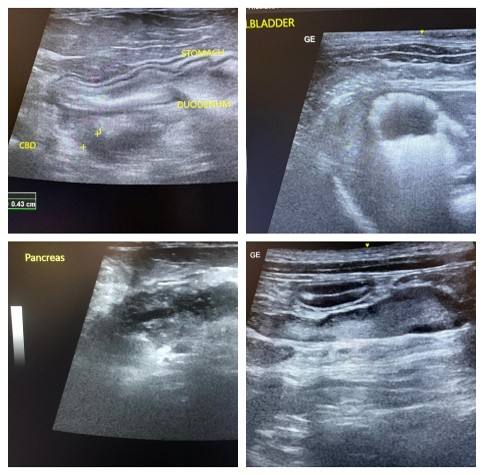
Ultrasound is one of the best ways to diagnose CCHS as well as its comorbidities. A dilated common bile duct (upper left), inflamed gallbladder with gallstones (upper right), inflamed pancreas (lower left) and inflamed intestinal lymph nodes seen with IBD (lower right) can all be seen in the various forms of CCHS in cats. Chris Vanderhoof / Cats.com
Diagnosis of CCHS always starts with a physical exam with your veterinarian. Your veterinarian may find some initial clues, such as a jaundiced appearance to the gums, whites of the eyes, or skin. A fever may also be present and found during initial check-in.
But these signs do not occur in all cats with CCHS and unfortunately, the disease can present in a very vague way. Lethargy and reduced appetite, the two most common signs, can be seen with many different conditions that affect cats.
If a cat has a history of pancreatitis and/or IBD, a veterinarian may suspect CCHS has developed given its high association with those conditions.
But after a physical exam, labwork is the first most common step taken to diagnose CCHS in cats. Unfortunately, bloodwork may be more helpful in ruling out some other causes of a cat’s symptoms versus getting a true answer. Frustratingly, many cats with CCHS can have normal bloodwork results.
Complete Blood Count
This part of bloodwork looks at the red and white cell counts and platelets. Even in cats with the suppurative form of cholangitis where neutrophils are more involved, abnormal levels of neutrophils only occur about 30% of the time.
Chemistry
The serum chemistry is the part of bloodwork that looks at organ function, especially of the liver and kidneys.
The most sensitive chemistry value was AST (aspartate transaminase), an enzyme found in the liver as well as a few other places. About 98% of cats with CCHS had an elevation.
ALT (alanine transaminase), the more “classic” liver enzyme, is only elevated in about half of cats. ALP (alkaline phosphatase) is even less reliable, with elevations in half or less of cats. Part of the reason for this is that impact on the liver itself may be variable with CCHS. In some cases in cats, only certain parts of the liver may be affected instead of the entire organ. In others, the condition may be limited to the bile ducts and have minimal effect on the liver at all.
Checking bilirubin levels in bloodwork is a way to assess bile flow. Direct bilirubin is directly impacted by a blockage or stasis to bile in the ducts. Bilirubin is elevated in about ⅔ of cats with CCHS.
X-Rays
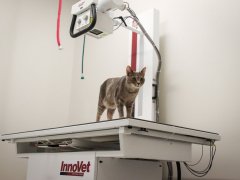
X-rays are a common test veterinarians turn to, especially in cases where vomiting or poor appetite are involved. However, for CCHS, there are no clear indicators on x-rays that can be used to diagnose the condition. While liver enlargement may occur with CCHS, this only happens in about 20% of cats. The comorbidities of pancreatitis and IBD may not have any clear signs on x-ray either.
Ultrasound
Ultrasound, or a sonogram of the abdomen, is the most useful test to support the presence of CCHS in cats, although the findings may still vary.
Ultrasound can be used to directly visualize the tissues of the liver, gallbladder, and bile ducts. The pancreas, digestive tract, and lymph nodes in the abdomen can also be assessed for evidence of pancreatitis and IBD.
Some findings on ultrasound may include a distended gallbladder and/or bile sludge material (always an abnormality in cats), the presence of gallstones, dilation of the bile ducts, and abnormal tissue appearance to the liver.
While ultrasound findings may be variable, ultrasound can also be used to collect fluid or cell samples from affected areas using a small needle and syringe. Fluid from the gallbladder may be collected for a bacterial culture and fluid analysis. Cell samples can be collected from abnormal liver tissue, pancreas, or abnormal lymph nodes.
Other Testing
Depending on the patient’s condition, veterinarians may pursue some other additional tests.
Pancreatic enzymes: feline pancreatic lipase (fPL) is a fairly reliable and specific test for pancreatitis in cats. Lethargy and poor appetite are common with feline pancreatitis, and this test can help provide a more full picture of illness.
Bile acids: bile acids are a way of measuring liver function. Veterinarians may consider checking bile acids if liver dysfunction is suspected, or if liver disease is highly suspected but other testing is inconclusive.
Clotting times: prothrombin time (PT) and partial thromboplastin time (PTT) are used to evaluate the function of clotting factors made by the liver. This test may be chosen as a way of diagnosing liver disease but may also be necessary if liver disease may be contributing to clotting or bleeding concerns.
Tissue biopsy: tissue biopsies are more invasive, but can provide more complete information about affected organs. Some tissue biopsy samples may be collected through ultrasound guidance. Other situations will require abdominal surgery. This allows for direct visualization of organs and the opportunity for multiple samples.
Treatments for CCHS in Cats
Some cats with CCHS may be very ill, requiring hospitalized care. Others may be treated at home with recheck medical visits. Kirsten McCarthy / Cats.com
When it comes to treatment approaches for CCHS, there is some overlap between suppurative/acute and non-suppurative/chronic forms. However, by and large there are some notable differences.
Acute/suppurative/neutrophilic CCHS
Antibiotics: antibiotics are a primary treatment for cats with this form given that bacterial infections are almost always present. Choices are best based on a culture (i.e. a fluid sample from the gallbladder obtained via ultrasound) but in many cases, therapy must be started even without culture results. Treatment is often for an extended period compared to other types of infections. It is very common to treat cats for at least a month, often longer.
Liver protectants: Ursodeoxycholic acid (ursodiol) can help improve bile flow and acts as a liver protectant. S-adenosyl-L-methionine (SAMe) is a supplement, most often given as the product Denamarin, can also help protect liver cells from inflammation.
Nausea/vomiting therapy: vomiting is a common symptom with either form of CCHS. In the acute form, vomiting may occur frequently. Medications used to stop vomiting and nausea may include Cerenia (maropitant), famotidine, omeprazole, and dolasetron and/or ondansetron.
Pain management: some cats may be painful with CCHS, especially if a gallstone is causing a blockage, or pancreatitis is present.
Appetite stimulants: with appetite loss and the risk of hepatic lipidosis being so common, getting a cat to eat as soon as possible is a major focus of therapy. Examples of stimulants include capromorelin (Elura), mirtazapine (Mirataz), and cyproheptadine.
Other therapies: other treatments for suppurative CCHS depend on the severity of the condition. Other cats may need vitamin supplementation, nutritional support either through a feeding tube or IV, intravenous fluids, and hospitalized care.
Dietary therapy is a less crucial part of therapy with suppurative CCHS. During treatment, a highly digestible diet with moderate fat and protein is used. One exception is for cats with IBD, who require a hypoallergenic diet.
Some cats with acute/suppurative CCHS may be treated on an outpatient basis, such as through a general practice. But given how acutely ill many cats with this form can be, hospitalized care is common. The good news is that many cats do survive to be discharged from the hospital and survive for over a year. More poor outcomes are often related to complications from concurrent pancreatitis and IBD.
Chronic/non-suppurative/lymphoplasmacytic CCHS
The immune system is a bigger player in this form of the condition. Bacterial infection may also be present, but is much less common. Many cats with this form have more vague signs that are managed over months to years.
Steroids: a steroid like prednisolone is commonly used to suppress and control immune-mediated disease.
Dietary therapy: a hypoallergenic diet in the form of a novel protein diet or hydrolyzed protein diet is common to start. An underlying component of the inflammatory nature of this form is related to dietary protein allergy. This is the underlying cause for IBD and the inflammation extends to nearby structures.
Appetite stimulants: cats with the chronic form often have off/on appetite changes where appetite stimulants are intermittently used. Examples of stimulants include capromorelin (Elura), mirtazapine (Mirataz), and cyproheptadine.
Nausea/vomiting therapy: in many cases, steroid therapy will address the chronic vomiting associated with CCHS. However, anti-vomiting/nausea medications may also be used periodically, especially if flare-ups occur. These may include Cerenia (maropitant), famotidine, omeprazole, and dolasetron and/or ondansetron.
Liver protectants: some cats may benefit from long-term therapy with ursodiol or Denamarin to help protect liver cells from continued inflammation.
As opposed to suppurative/acute CCHS where more urgent visits and hospitalized care is common, non-suppurative/chronic CCHS is approached from more of a long-game perspective. Periodic rechecks with a primary care veterinarian are common to recheck labwork findings, imaging, or adjust medication regimens.
Survival for chronic CCHS is variable and really depends on comorbidities that are present, just like with the acute form. With the chronic form, many cases don’t get diagnosed until signs like weight loss, poor appetite, or other concerns are more noticeable. This may mean the condition has been progressing for months or years before therapy can be started. This can impact how successful treatment or survivability may be perceived.
Cat Care Tips
For acute/suppurative CCHS:
- Antibiotic courses for this condition are often longer than what’s required for other conditions. Make sure to follow your veterinarian’s instructions and finish prescribed antibiotic courses, even if your cat appears to feel better.
- Cats with suppurative CCHS often need hospitalized care. Where this is not possible or affordable, cats often need intensive nursing care at home. Make sure to follow your veterinarian’s directions for home care and seek support.
- While acute CCHS is a crisis that can be treated and healed, comorbidities like pancreatitis and IBD are common. Make sure to keep follow-ups with your veterinarian to see what long-term therapies may be needed.
For chronic/non-suppurative CCHS
- This form requires lifelong management in most cases. Immune-mediated disease can often only be moderated, but not completely cured. Make sure to keep follow-up visits your veterinarian recommends for weight checks, labwork, or therapy adjustments.
- It’s not uncommon with the long-term nature of therapy for immune-mediated disease, that after some time you may question if a therapy is needed. Always seek counsel with your veterinarian before adjusting or discontinuing any therapies.
Prevention of CCHS in Cats
There is no specific way to prevent CCHS in cats. There are no defined risk factors that can be avoided to guarantee the condition will not develop.
Cats are great hiders or maskers of disease. Mild disease signs may go unnoticed for a long time. With CCHS, the most important thing is to have CCHS on the radar with early detection as soon as possible. Annual exams for young to middle-aged cats and biannual exams for older cats are one way to screen for subtle changes in weight or history of vomiting or appetite issues.
Although labwork findings are variable with CCHS, annual or biannual labwork can still act as a reasonable sentinel for CCHS if abnormalities in AST, ALT, or bilirubin are found.
-
Weir, M., & Ward, E. (n.d.). Cholangitis/Cholangiohepatitis Syndrome in Cats. VCA Animal Hospitals.
-
Brooks, W. (2023b, November 1). Cholangitis (Cholangiohepatitis) in Cats. Veterinary Partner.
-
Center, S. (2023, August). Feline Cholangitis/Cholangiohepatitis Syndrome. Merck Veterinary Manual (Professional Version).
-
Cornell University College of Veterinary Medicine. (n.d.-a). Cholangiohepatitis. Cornell Feline Health Center.
-
Randolph, J. F., Warner, K. L., Flanders, J. A., & Harvey, H. J. (2021). Clinical features, concurrent disorders, and survival time in cats with suppurative cholangitis-cholangiohepatitis syndrome. Journal of the American Veterinary Medical Association, 260(2), 212–227. https://doi.org/10.2460/javma.20.10.0555
-
Jaffey, J. A. (2022). Feline cholangitis/cholangiohepatitis complex. Journal of Small Animal Practice, 63(8), 573–589. https://doi.org/10.1111/jsap.13508
-
Forman, M. (2020, February 17). Neutrophilic Cholangitis in Cats: Are You Missing Out on an Easy Diagnosis? Today’s Veterinary Practice.
-
Center, S. (2024, September). Disorders of the Liver and Gallbladder in Cats. Merck Veterinary Manual (Pet Owner Version).
-
Ishida, T. (2011). Feline Triaditis: Inflammatory Diseases of the Liver, Pancreas and Small Intestine. Veterinary Information Network.
-
Webb, C. B. (2018). Hepatic lipidosis: Clinical review drawn from collective effort. Journal of Feline Medicine and Surgery, 20(3), 217–227. https://doi.org/10.1177/1098612x18758591