Published Sep 5, 2026


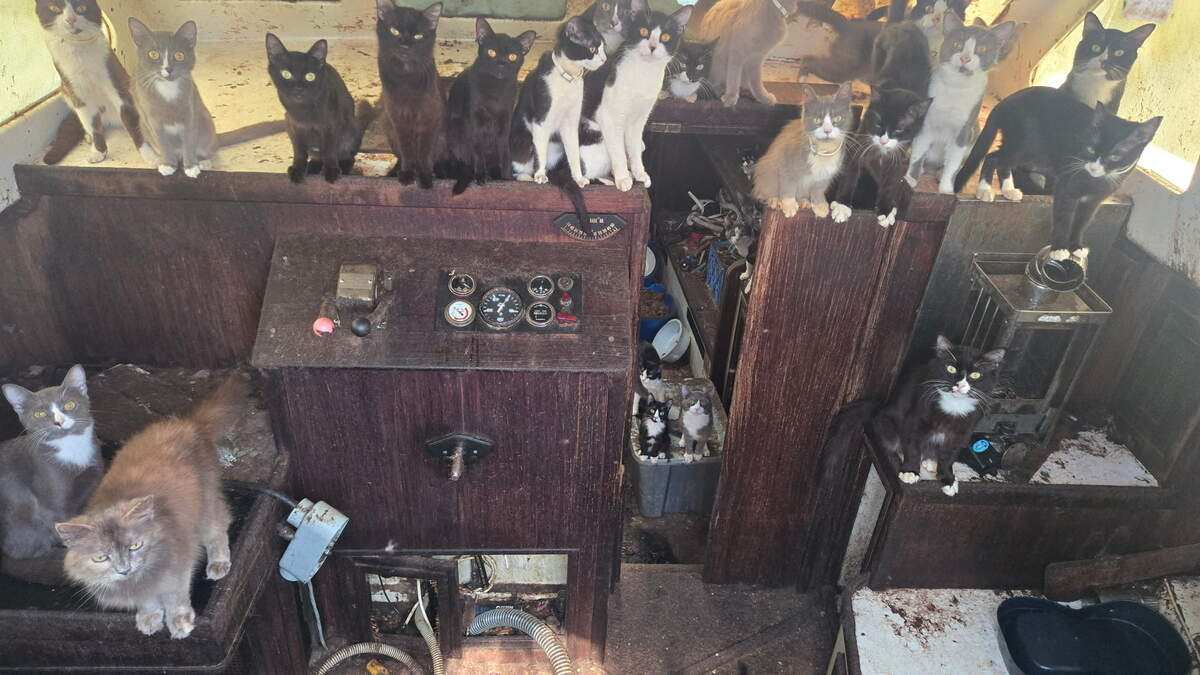
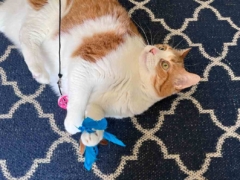
Image credit; Courtesy of the Tacoma Police Department
When the Tacoma Police Department received notice of a seemingly abandoned sailboat with no mast anchored off the coast of Owen Beach on August 6, the responding officers never could have guessed what they’d find: more than 60 cats and kittens on board with no humans in sight.
How the cats came to be on the boat was a huge mystery at first. However, it was clear that getting the cats off the boat was the number one priority. The vessel was filthy, with overflowing litter boxes and feces throughout, and there was no food or water available to the cats.
Initially, authorities were not certain how many cats were living onboard the filthy boat. Because many of the cats were fearful and hiding in every nook and cranny of the boat, removing all of them was a huge effort that ultimately took Tacoma Animal Control officers multiple trips over six days.
After the cats were safely removed from the sailboat, the mystery of how they got there was finally solved. According to the Seattle Times, the boat owner, identified as Derek Hieb, acquired his first cat from a friend during the COVID-19 pandemic. That cat, named Missy, was pregnant and gave birth to a litter onboard. Hieb said he had Missy and two of her kittens spayed but couldn’t afford to fix all the kittens. Nature soon took its course and six years later, the boat was overflowing with cats.
Hieb, who lived on the boat until it was seized by police, had left his vessel to go to land for medical treatment after one of his cats bit him. He was away for several days, during which time the boat was reported as abandoned and police discovered the cats.
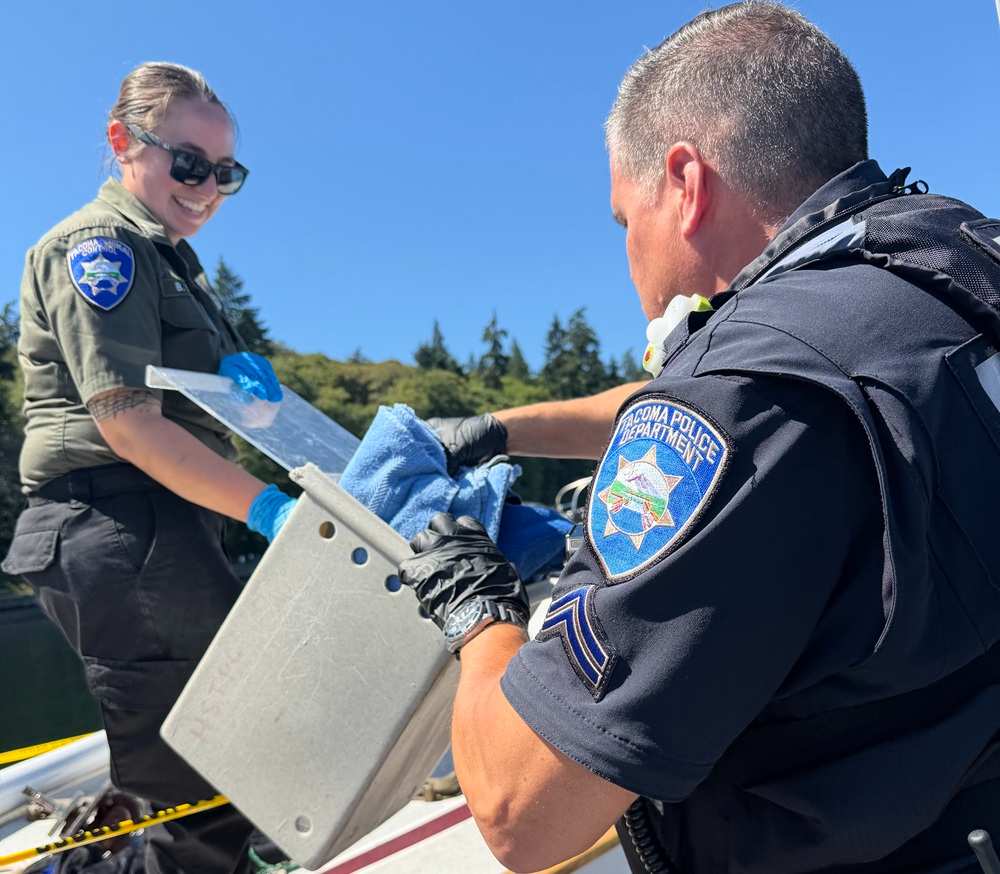
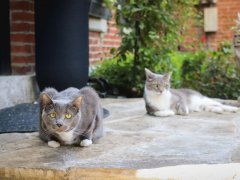
Image credit; Courtesy of the Tacoma Police Department
According to Tacoma Police public information officer Shelbie Boyd, the boat owner surrendered the cats to Animal Control, and the case was forwarded to the Pierce County Prosecuting Attorney’s Office for review.
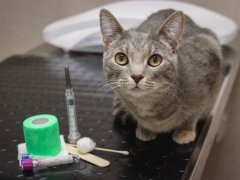
All 60 cats and kittens were transferred to the Humane Society for Tacoma & Pierce County, where they received exams, vaccines, and parasite preventatives.
“When they first came in, some were dehydrated, some had live fleas and flea dirt, and some had urine scalding on their paws,” said Stefanie Cornell, senior marketing strategist with Tacoma and Humane. “After being in our care, they have been doing pretty well health-wise.”
Behaviorally, however, the cats seemed unaccustomed to handling and were nervous around humans. Some of them spent time in foster homes, where the foster parents allowed them to go at their own pace and settle into a cozy home environment.
“With time and patience, some cats from situations like this become affectionate and enjoy cuddling,” Cornell said. “Others may always prefer to keep their distance and simply observe from afar rather than seek out physical affection. Every cat is different, and it’s hard to predict which path each individual will take.”
As of August 27, 40 of the cats were available for adoption and six had been adopted. The adoptable boat cats are identified with “Sailor Cat” before their names on Tacoma Humane’s adoption page.

Image credit; Courtesy of the Tacoma Police Department

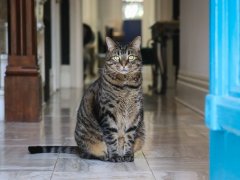
Image credit; Courtesy of the Tacoma Police Department

Image credit; Courtesy of the Tacoma Police Department
In an update posted on their website, Tacoma Humane said that large intakes like this one put a strain on shelter space and resources. What’s more, just a few weeks after the boat cats arrived at Tacoma Humane, the shelter received 101 additional cats and kittens seized from a local home by Tacoma Animal Control—putting even more strain on resources.
The organization highlights several ways people can help:
- Fostering a cat (for those living locally) frees up space at the shelter for the next cat that comes in.
- Adopting a cat (for those living locally), whether a boat cat or another shelter cat frees up space for the next cat that needs care.
- Monetary donations help support the cats’ medical and daily care. Excess donations will be used for other shelter pets that need care.
- Item donations are always welcome through Tacoma Humane’s wish lists on Chewy and Amazon.