Published Nov 21, 2026


Cincinnati Animal CARE / cincinnatianimalcare.org
After a rough start, an adorable and resilient kitten named Gelato has found a loving home with a family that understands his special needs. His new owner, Hope Hollandsworth, already cared for two paraplegic cats and two other cats with disabilities. Now, all five are part of one big, unconventional feline family.
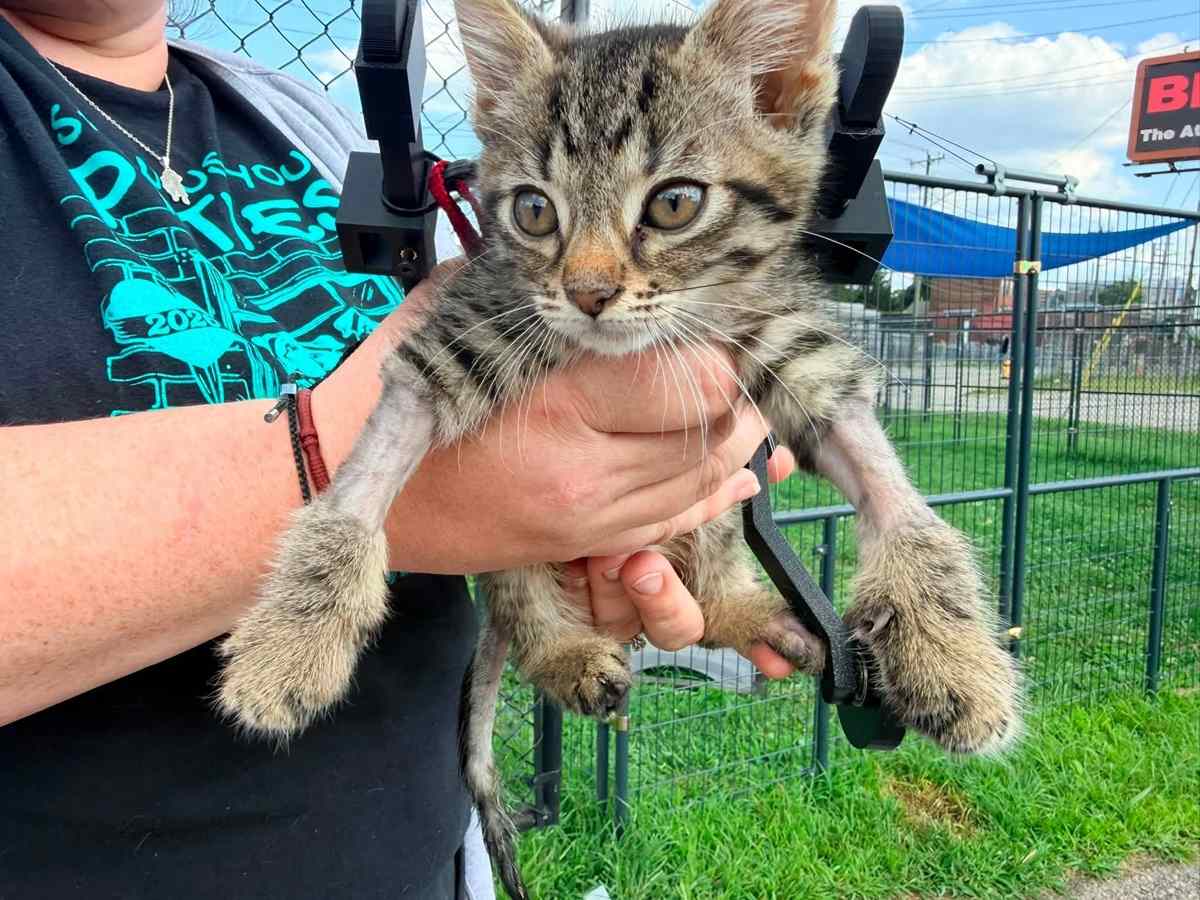
Gelato and several of his siblings arrived at Cincinnati Animal CARE on June 30. The tiny kitten was dragging his back legs because of a spinal injury. The shelter’s medical team began physical therapy and wanted to fit him with a wheelchair, but the equipment they had was too large for his little body.
CAC lead veterinary assistant Mallory Smith could see that Gelato desperately wanted to walk and play, but he couldn’t stand on his own. Smith and the medical team got creative, building a miniature wheelchair from rulers, zip ties, cardboard, tape, and Hot Wheels cars. When the shelter shared a photo of Gelato in his DIY wheelchair, the tiny kitten quickly became an internet sensation.
Smith fostered Gelato, providing specialized care and physical therapy. Over time, he began gaining strength in his legs and could even stand on his own for brief moments. Smith later 3D-printed a custom wheelchair for him and made another when he outgrew the first. Cincinnati Animal CARE continued sharing photos and videos of his progress, and the determined little kitten developed a huge fan base.
By September, Gelato was ready for adoption, with his adoption fee sponsored by PetSmart Charities. He would need an adopter prepared to provide ongoing care and support, but the right person was already out there.
“When I saw Gelato, I thought he was just so cute!” said Hollandsworth, the Cincinnati tattoo artist who ended up adopting him. “I honestly didn’t think I’d be able to adopt him because I knew he was so popular and so many people loved him.”
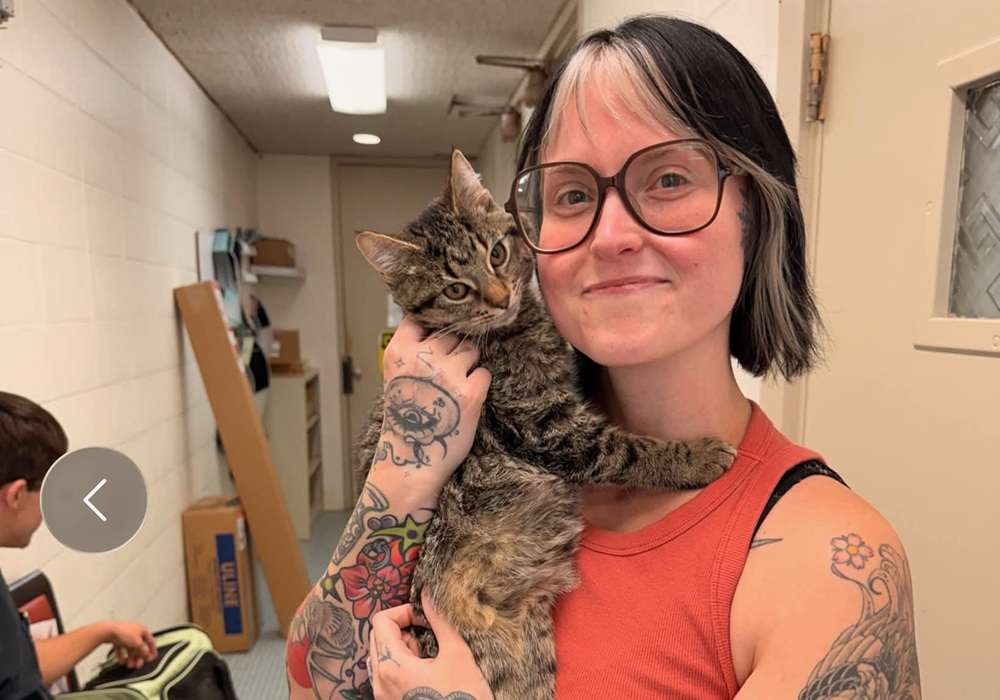
Hope Hollandsworth welcomed Gelato into a home shared with four other disabled cats, giving him the support he needs. Courtesy of Hope Hollandsworth
Hollandsworth, however, was no stranger to caring for cats with mobility challenges. Before Gelato joined the family, she and her husband had four cats with special needs, including two paraplegic cats who loved snuggling together. When she learned Gelato was available, she felt he would fit right in.
“I’ve always loved animals that were a little different,” Hollandsworth said. “It’s definitely intimidating at first to be responsible for an animal’s care to this extent. Seeing how happy they are and how much they really can do has opened my eyes to how resilient cats can be!”
Today, Gelato is settling into life with his new feline companions: Sprinkles and Bread Crumb, who are both paraplegic; Kit Kat, who is missing an eye; and Cupcake, who had a rear leg amputated.
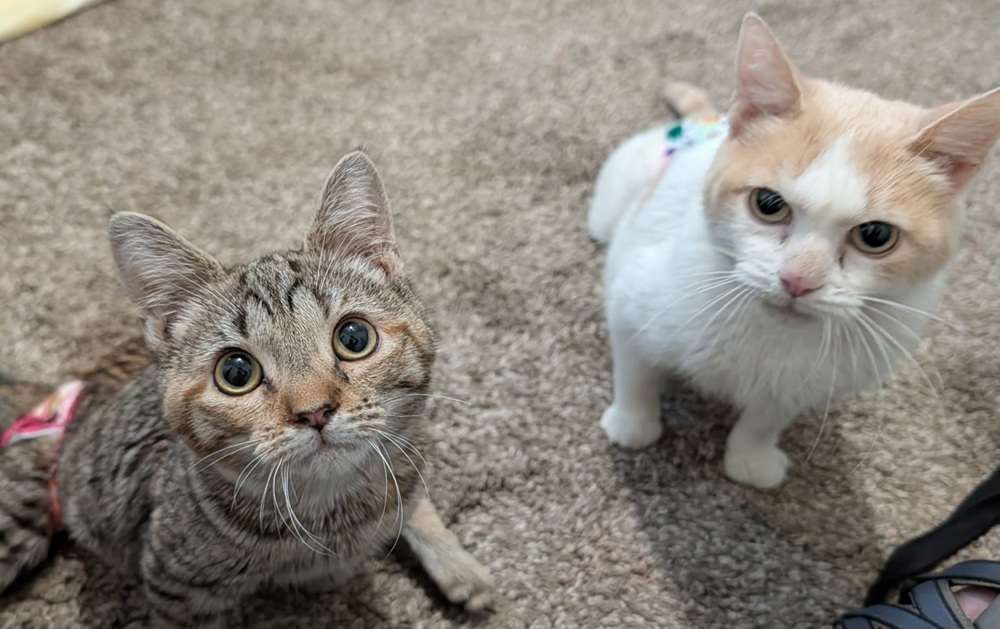
Gelato is settling in with Sprinkles, Bread Crumb, Kit Kat, and Cupcake—four feline companions with special needs of their own. Courtesy of Hope Hollandsworth
Gelato was initially nervous around the other cats, but he quickly warmed up to them and is adjusting very well to his new life. Because the three paraplegic cats can’t climb a traditional cat tree, Hollandsworth provides plenty of low pet beds and hiding places they can easily access. The three also groom one another and love curling up together.
Gelato has developed his own favorite new routines, too. Hollandsworth said that Gelato loves to sleep in her bed, tucked in close to her. “He loves to be held like a baby, play with our other cats, make biscuits, and loves some catnip,” she said. “He definitely knows his name too, and meows loudly when you call out for him.”
His mobility is also continuing to improve. Of the three paraplegic cats, Hollandsworth said Gelato currently has the best mobility. “Most of the day he pulls himself along with his front legs and can go quite fast!” she said. “We do physical therapy with his wheelchair right now, but we are looking into additional therapy for him such as laser therapy, acupuncture, or any other options available.”
With his special needs, Gelato is in great hands with Hollandsworth, who has become quite adept at caring for paraplegic cats. Sprinkles was the first to join the family. Found as a stray, she had limited movement in her hind end, possibly due to a congenital condition or an injury. Her exact diagnosis remains unknown.
“I took her in on a week basis to be sure I could handle her needs, fell in love the same day, and adopted her before the week was up,” Hollandsworth said. “She has some movement in her lower end and can feel some things in her hind. She’s not able to use them effectively to walk but can get around very quickly on her front legs.”
Bread Crumb came next, initially as a foster. Her paralysis had no known cause, although Hollandsworth suspects she may have been injured at the worksite where she was found. The cat was in poor condition when Hollandsworth took her in, with limited mobility, a heavy flea infestation, and a severe case of worms.
“Bread Crumb was very shy, but really loved to cuddle up, especially with Sprinkles—she really helped her come out of her shell,” Hollandsworth said. “I knew I’d foster fail after I saw how sweet they were together.”
Since then, Bread Crumb has made considerable progress. She’s happier and more playful, and she moves around the house much more than she used to. “She gets better every month it seems, so I’m so happy for her,” Hollandsworth said.
Caring for three paraplegic cats requires some additional attention and a daily routine. Hollandsworth said the most challenging part is bladder expression, which she performs for each cat two to four times a day. Some caregivers express their cats’ bladders over a litter box or puppy pad, but Hollandsworth prefers to do it over the toilet and wipes them clean afterward.
“The first days it is a little scary, but once you get the hang of bladder expression and get a routine down, it’s not that difficult and just requires a little more time than a typical cat,” Hollandsworth said. “I am blessed to own a tattoo shop, so I do make my own hours, which is a huge plus that allows me to have a lot of free time and flexibility. I could see it being difficult for people who work long days, eight-plus hours, because it’s not great for them to go so long without being expressed.”
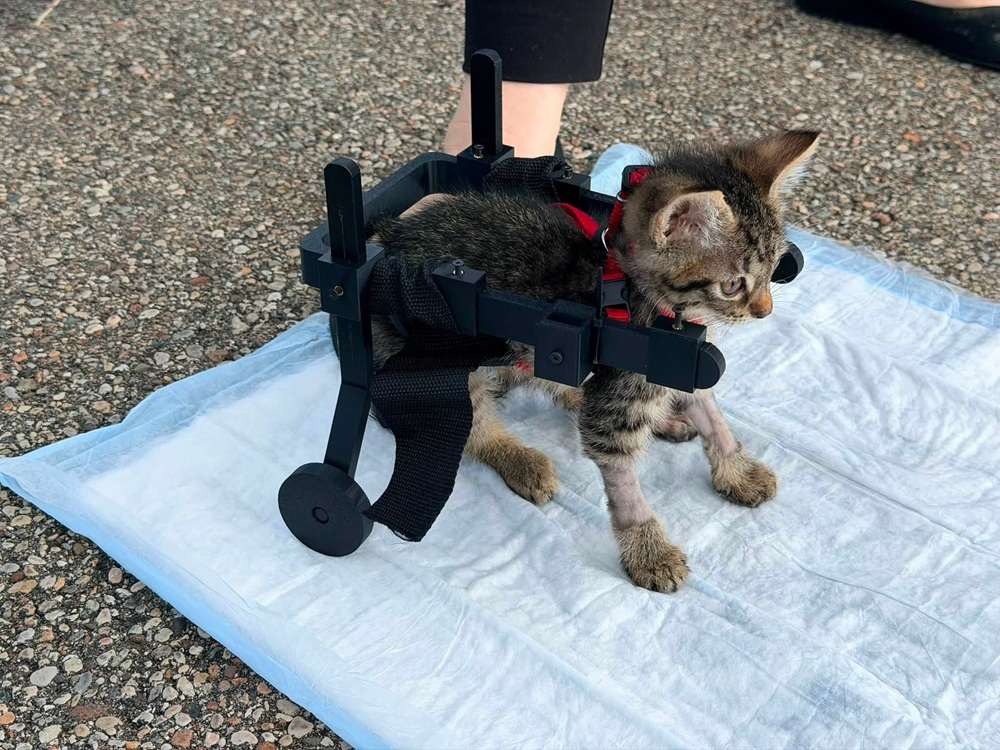
Hollandsworth focuses on hydration, wet food, and daily care to help support her paraplegic cats’ urinary and digestive health. Cincinnati Animal CARE / cincinnatianimalcare.org
Feeding is much like caring for any other cat, but Hollandsworth pays particular attention to hydration. She makes sure the cats get plenty of water and wet food to help prevent urinary tract infections and constipation. She also gives them probiotics and supplements to help prevent UTIs. At night, the cats wear washable diapers so they can sleep in bed with the family without accidents.
Compared to typical cats, caring for special-needs cats comes with additional expenses. Diapers, supplements, special wipes, and other supplies add to the cost of care, as can medications, veterinary visits, and specialized therapies. Hollandsworth said the expenses haven’t put a strain on her family, but she recognizes that the financial commitment is something prospective adopters should consider.
Finding appropriate pet care can be another challenge when the family travels or needs to be away for an extended period. Hollandsworth said she sometimes gets anxious about leaving the cats. “We had someone super experienced the last time we went out of town to pet sit them and it eased my mind a lot,” she said.
Hollandsworth’s husband occasionally helps with the caregiving, while their three children, ages 3, 5, and 6, shower all the animals with affection. The kids also help with simpler tasks, such as providing food and water.
Despite the extra work, Hollandsworth considers caring for her special-needs cats one of the most rewarding experiences of her life.
“They are so grateful to be loved, held, and just taken care of,” she said. “They have the most personality of all my cats! Once you get the hang of bladder expression and get a routine down, it’s not that difficult and just requires a little more time than a typical cat.”
Hollandsworth hopes that sharing her experiences will help change how people view cats with disabilities and encourage more people to consider adopting them.
“Overall, it is so worth it to adopt a cat that needs a little extra help,” she said. “I would recommend it to any cat lover! I am starting a nonprofit in Cincinnati to raise awareness about special-needs cat care, as well as doing free TNVR for cats in my area.”
Hollandsworth invites anyone with questions about caring for a special-needs cat or who needs help trapping and fixing stray cats in the Cincinnati area, to reach out through Hope for Felines on Facebook or TikTok @HopeforFelines.