 Published Sep 12, 2026


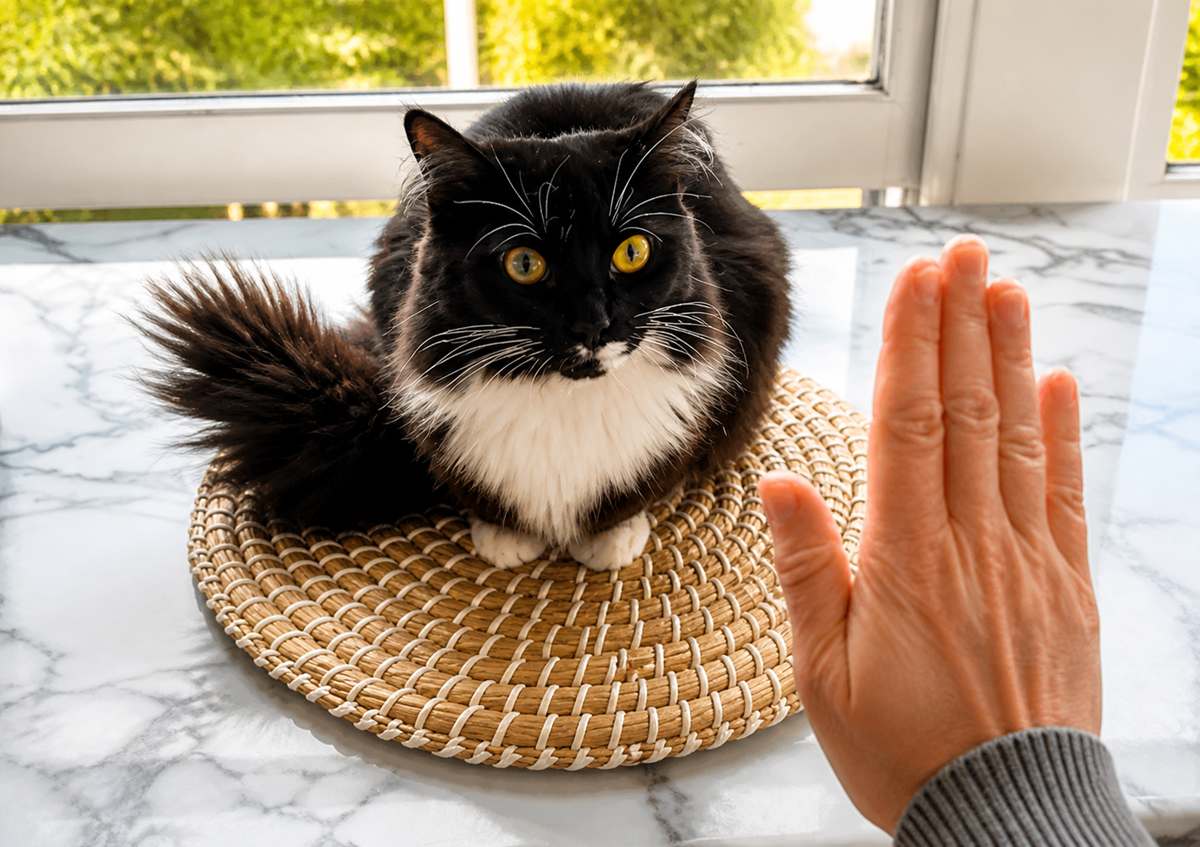
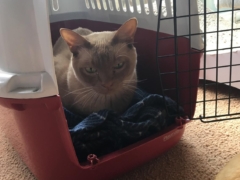
The stay cue helps direct your cat to remain in a specific spot for an extended period, providing them with a sense of security. Melina Grin / Cats.com
Teaching your cat to “Stay” on cue isn’t just about learning tricks, but a valuable skill that can be useful in a variety of real-life scenarios. While many pet owners associate this prompt with dogs, it’s important to recognize the potential of this lifesaving cue for cats. It can help keep your cat safe and prevent unwanted behaviors.
Why Teach a Cat the Stay Cue
The “Stay” cue helps direct your cat to remain in a specific spot for an extended period, providing them with a sense of security. This prompt is also crucial for protecting your cat from potentially dangerous situations, such as bolting out an open door or running onto the road and being hit by a car.
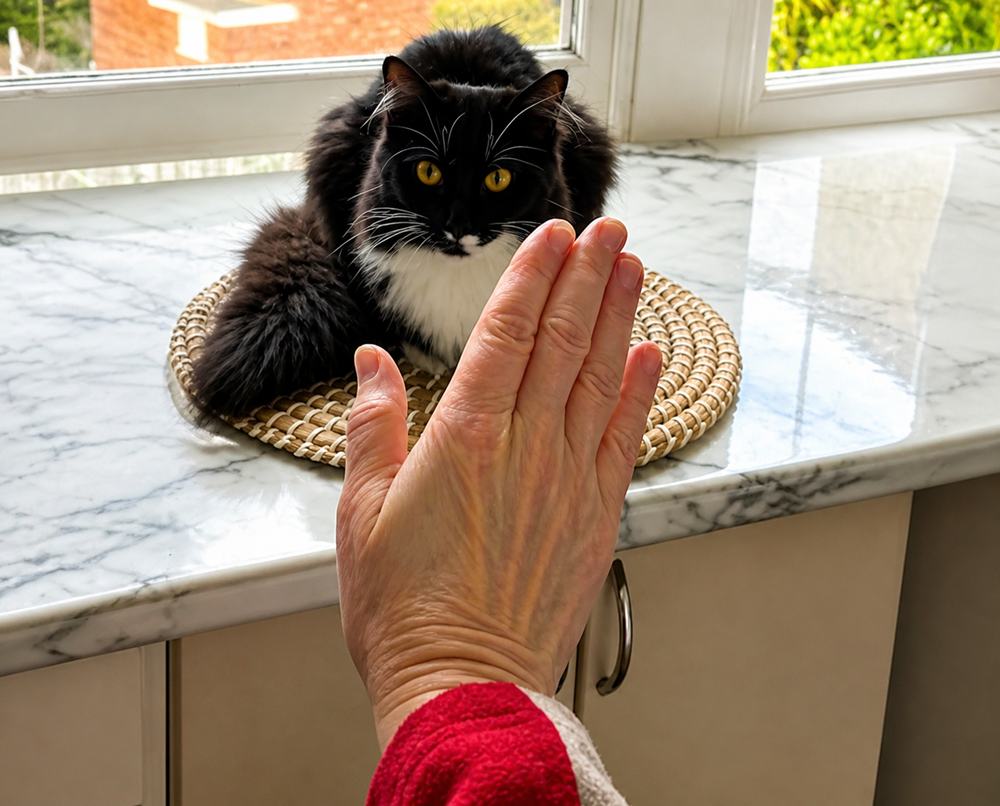
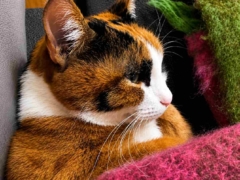
Teaching the stay cue helps keep your cat safe in daily situations and prevents unwanted behaviors like dashing out doors. Melina Grin / Cats.com
It also discourages your cat from jumping into inappropriate places (like the fridge or washing machine) or onto surfaces such as the kitchen counter or stove, and from trying to pounce on other pets, particularly when introducing a new kitten to a resident cat. This cue is also helpful during visits to the veterinarian or groomer, as it helps keep your cat calm and still while being handled for medical or grooming procedures.
What Is the Verbal Cue?
“Stay”
A Step-By-Step Guide to Teaching Your Cat to Stay on Cue
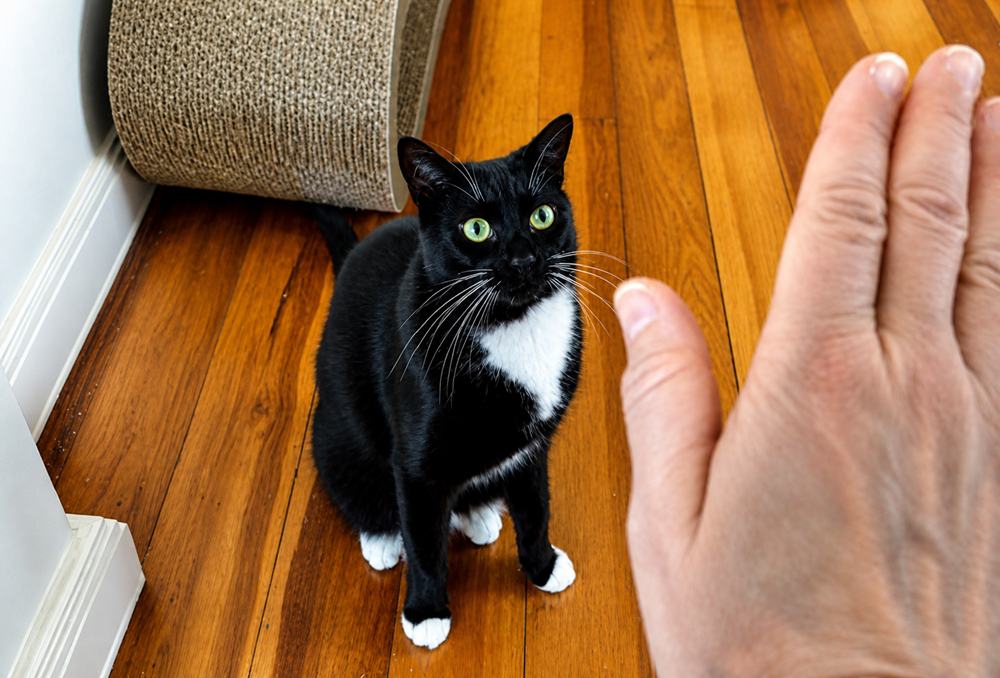
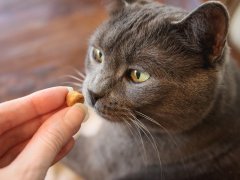
Teaching a cat the Stay cue can prevent a young one from pouncing on a senior cat. Melina Grin / Cats.com
- Step 1: Prepare your supplies, such as your cat’s favorite food, treats and a clicker if your cat is clicker-trained.
- Step 2: Select a quiet room where your cat likes to spend time, free from distractions such as other children or pets. This will help your cat focus during the training session.
- Step 3: Choose a designated spot, such as a chair, a mat, or a specific area in the room, to train your cat.
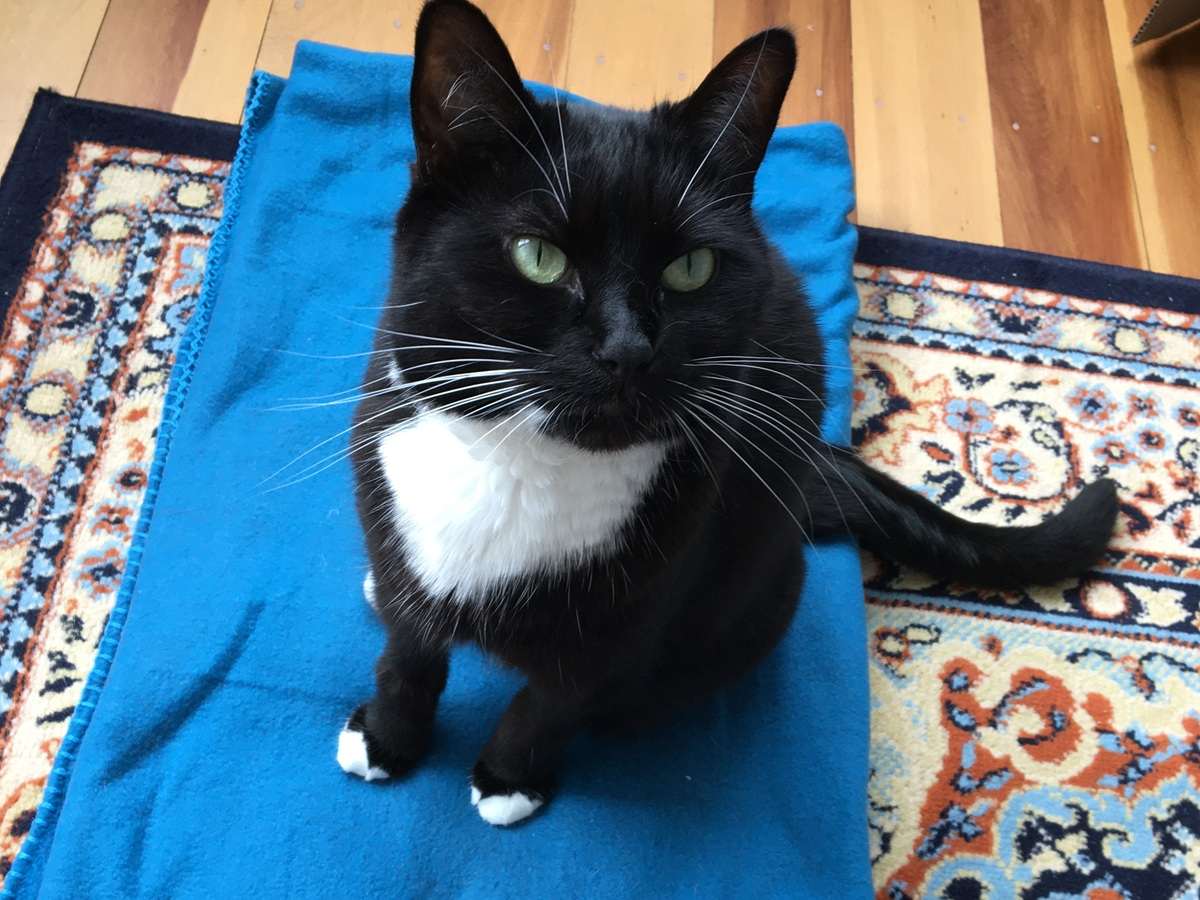
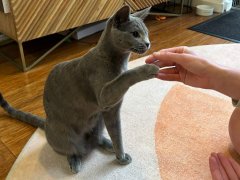
Teach your cat to sit on a mat first, and then practice the stay cue in small steps. Melina Grin / Cats.com
- Step 4: Teach a foundation behavior like “Sit” before expecting your cat to perform the “stay” cue.
- Step 5: Prepare a small, tasty treat. Show it to your cat to capture their attention. Stand in front of your cat and ask them to “sit”. Reward them immediately for sitting in position.
- Step 6: Get your cat’s attention. While holding a treat in your left hand, calmly say “stay.” At the same time, use your right hand to give a hand signal. I recommend showing an upright, open hand, palm facing outward and fingers pointing upward, resembling a stop sign, as your cat sits.
- Step 7: Take a half step back, continue saying “stay”, and give the hand signal as you return to them in the same half step. Click and treat upon your return.
- Step 8: Ask your cat to “stay” while it’s sitting. This time, take a full step back and return to your cat in that same step. While walking backwards and returning to your cat, keep saying, “Stay,” with your palm facing upward so your cat starts to learn the verbal cue, then click, and treat. If your cat remains seated, offer a high rate of reinforcement (rewarding your pet frequently and quickly). If they get up or move away, gently guide them back to the original spot and repeat this step.
- Step 9: Repeat step 8 three times. Positive reinforcement training with praise or tasty food helps your cat associate staying on cue with positive consequences. It may be helpful to end this part of the training session here and continue to the next stage another day.
- Step 10: On the next day, ask your cat to “sit” and “stay”, then take one and a half steps back. Return while asking your cat to “stay” and showing the corresponding hand signal. Reward your cat with a treat when you return.
- Step 11: Continue to ask your cat to “stay” and take two steps back while displaying the “stop” hand signal. Click and treat upon your return. You can use a release word like “okay” or “break” to signal when the “stay” cue is over. Alternatively, toss a tiny delicacy slightly away from their post so your cat knows they can leave.
- Step 12: Gradually increase the number of backward steps to five. Don’t expect your cat to stay in one spot for too long.
- Step 13: To add complexity, progressively turn your back to your cat while training them with the “stay” prompt. Repeat this step a few times.
- Step 14: Now it’s time to start walking around your cat. With the treat in your left hand, ask your cat to “sit” and “stay”; take one full step back, then one step to the left, then return to your cat and reward them.
- Step 15: In this step, tell your cat to “stay” as before while they are sitting, but take one step back and a step around to your cat’s shoulder. Return to your cat, click and treat.
- Step 16: Now that your cat understands you can make it stay the entire time, start to slowly walk around them so you return to the exact point you came from. Click and treat to reward them.
Additional Tips
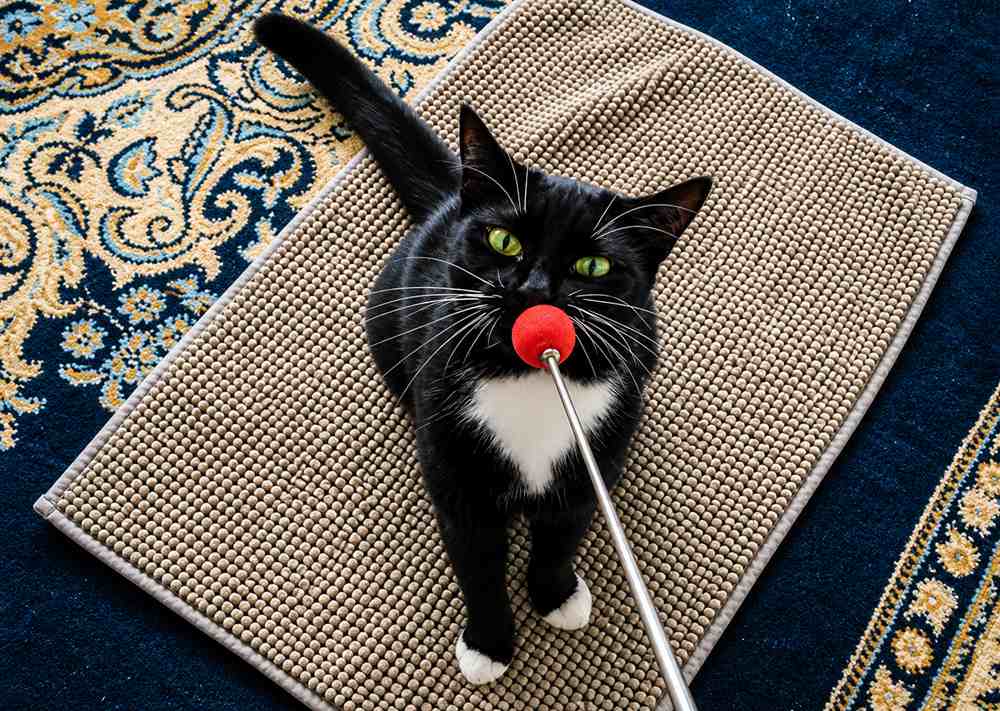
Teaching your cat to respond to a “Stay” cue can help stop a younger cat from pouncing on an older one. Melina Grin / Cats.com
- Keep the training sessions very short – only a couple of minutes at a time.
- Consistency and patience are key – practice this cue daily and slowly increase the time before you give the reward.
- Add distractions – once your cat has mastered this cue, start adding gradual disruptions to test their ability to stay in one spot.
- Steadily increase the distance and duration – extend the space between you and your cat by asking them to “stay” for longer periods.
- Change the training locations – once your cat can reliably perform the behavior, practice in different spots around the house and then outdoors, if permitted.
- Be patient – this trick can be challenging to master. If your cat struggles or loses interest, take a break and try again another day.
This training process not only establishes important boundaries for your pet but also strengthens the bond between you and your cat. Embrace the journey, as it can be both rewarding and enjoyable!