

 Last updated Jul 31, 2026




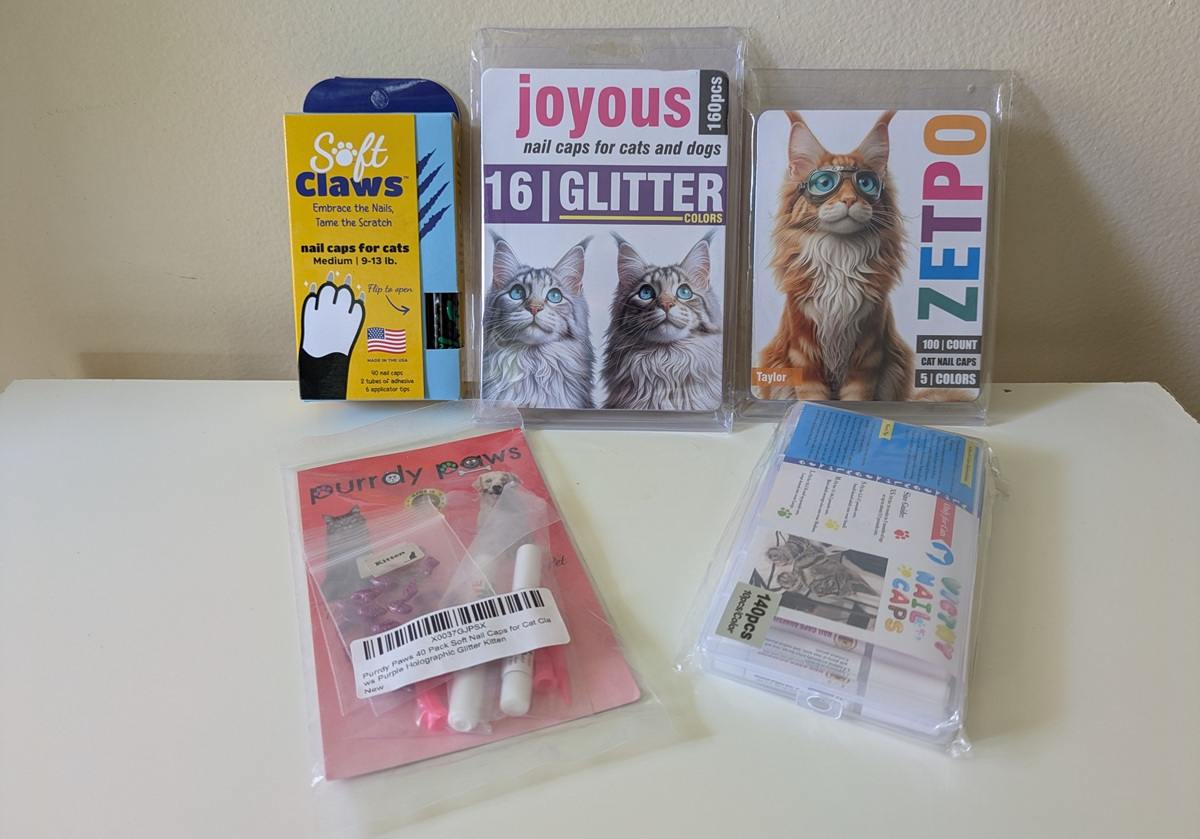
These nail caps for cats were chosen for their safe materials, easy-to-dispense glue, and range of colors and sizes. Liz Coleman / Cats.com
While scratching is a natural cat behavior, it can lead to damaged furniture, torn clothing, and even injuries to children or other pets. Nail caps for cats offer a humane and effective way to protect your belongings and loved ones. With nail caps, cats can still extend and retract claws normally, stretch their paws, and go through the motions of scratching. They just won’t cause any damage.
After extensive research and testing, my top pick for nail caps is the Soft Claws Cleat Lock System. These caps were pretty easy to apply — even for a first-timer — and they stayed put for the longest amount of time. Compared with the other tested brands, Soft Claws caps are made with a slightly thicker plastic, lending them the right blend of comfort and durability. And they were affordable, to boot.
In this guide, we’ll explain which cats can benefit from nail caps, and who might want to pass. We’ll also discuss what to consider when choosing nail caps for your cat and highlight the key features of the best options available.
At a Glance: Our Top Picks for Best Nail and Claw Caps for Cats


Want a quick look at the products reviewed in this article? In the comparison table below, we’ve highlighted some of the most important features of each product. You’ll find more detailed information about each product later in the article.


Soft Claws Cleat Lock System
- Cleat-Lock system helps keep caps in place
- Thick, durable material
- Easy-to-squeeze glue tube


Joyous Nails Caps
- Super affordable
- Pliable material
- Adhesive complies with European MSDS standards


Purdy Paws Soft Nail Caps for Cats
- Available in 5 sizes, including kitten
- Developed by a veterinarian
- Easy to apply & comfortable to wear


Zepto Cat Claw Covers
- Small and XSmall sizes available
- Sets come in nice coordinating color combos
- Good value


VICTHY Cat Nail Caps
- Large size is suitable for cats up to 22 pounds
- Very rubbery and pliable
- Plastic carry case keeps everything in one place
Why Trust Cats.com
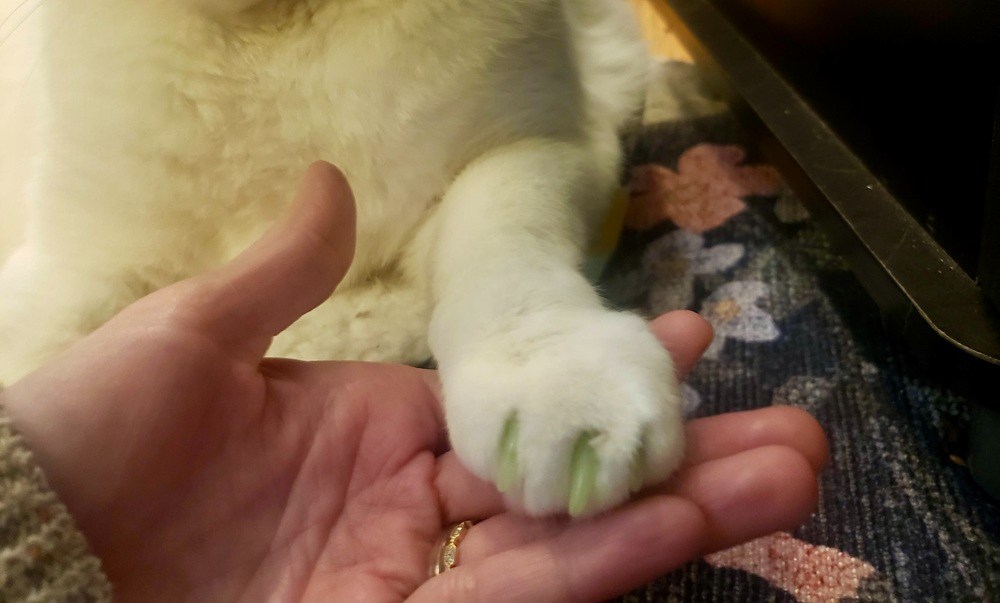
To learn whether nail caps are practical, we tried them at home. Liz Coleman / Cats.com
As a pet-focused reporter and product tester, I’m deeply committed to finding tools and gear that elevate the pet parent experience. When it comes to products like nail caps for cats, there’s a lot of conflicting information out there. Are they safe? Are they necessary? And if so, which ones are worth buying?
To get to the bottom of the nail cap debate, I explored consumer reviews, articles, and discussions on Reddit. I also consulted veterinarians and cat behaviorists to confirm the safety of nail caps. This research helped me identify five products worthy of testing at home with my own cat, Floyd.
Based on feedback from veterinary experts and reviews from cat guardians, I established criteria for what makes a good nail cap. The selections featured here were chosen for hands-on testing because they:
- Are made with safe, non-toxic materials.
- Come from reputable, trustworthy brands in the pet space.
- Have a lot of positive reviews from real cat parents.
- Include everything you need to apply them at home (e.g., adhesive, applicators, instructions).
Why Would Cat Guardians Use Nail Caps for Their Pets?
Nail caps aren’t for looks. Here are four practical reasons you might try using them:
1. To protect surfaces from destructive scratching
Scratching is a natural feline behavior. Cats scratch to mark their territory, stretch their limbs, and remove the dead, outer layer of their nails. But if your cat forgoes their scratching post in favor of your sofa or curtains, nail caps can help. (Personally, I was hoping to spare some of my nicer sweaters.)
Speaking of natural cat behaviors, Dr. Janet Cutler, a Certified Applied Animal Behaviorist and the owner of Landmark Behaviour, assures us that properly applied nail caps shouldn’t affect your cat’s mobility. “The covers go over the exposed part of the nail, and the tendons that extend the claws should not be affected.” Your cat can still stretch, scratch, and retract their claws — they just won’t be destructive.
2. To protect vulnerable human skin
Maybe you have a new baby at home, or a toddler who has yet to learn how we play with kitties. For older folks with delicate skin (and potentially slower reflexes) as well as people with autoimmune diseases, a seemingly simple cat scratch can become a serious problem. Using nail caps is a humane way to keep everyone at home safe.
3. To protect cats who scratch themselves due to anxiety
Persistent scratching in cats who are flea- and allergy-free could be anxiety-related. In these cases, nail caps can be used to prevent self-inflicted wounds.
4. To Protect hairless cats or cats with sensitive skin
With no barrier between sharp claws and their skin, hairless cats like the Devon Rex or Sphynx make good candidates for nail caps. Nail caps can also shield the skin of cats with allergies who suffer from chronic itching.
Alternatively, Who Might Want To Pass on Nail Caps?
Nail caps won’t work for every cat. Outdoor cats, for one, would be rendered defenseless with caps on their claws, says Cutler. “Cats that go outside typically need their sharp nails for climbing and protection, so this is not a good option if your cat has outdoor access.”
Cat guardians should also consider their own willingness (or ability) to add another grooming task to their agenda. “Nail caps require some maintenance, with most brands recommending nail trimming and replacement every 4-6 weeks if they have not fallen off on their own,” says Cutler. If you’re unable to trim your cat’s nails or reapply caps routinely, then perhaps nail caps aren’t the answer.
Lastly, there are some sensitive cats who just won’t acclimate to nail caps, even after an adjustment period. “Most cats may initially lick and bite at the caps but quickly lose interest and can be distracted with treats and play,” says Cutler. “If your cat continues to be bothered by them after wearing them, then you may want to consider an alternative option.”
After receiving the caps, I subjected them to a series of tests.
Test #1: Ease Of Application
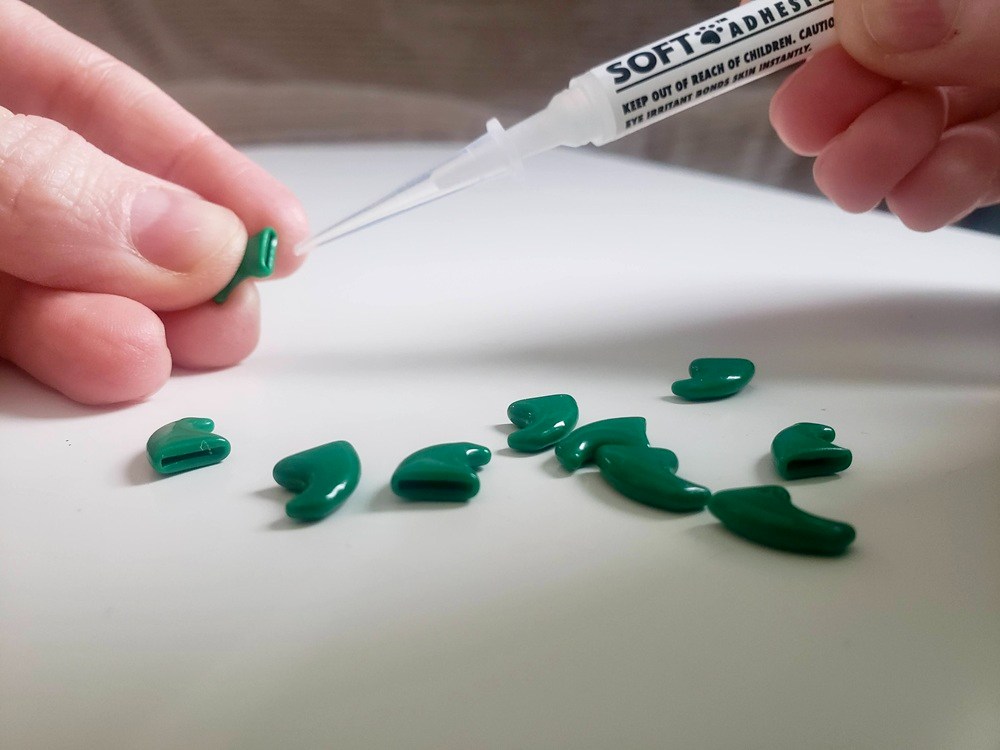
I assessed how easy it was to squeeze the glue into each cap. Most were easy to dispense, but a couple had firm tubes that were difficult to squeeze. Liz Coleman / Cats.com
If the prospect of applying tiny plastic covers to a displeased cat’s sharp claws seems daunting, you’re in good company. To keep stress to a minimum, I was looking for nail caps that were quick and painless to apply.
For me, this meant easy-to-squeeze glue bottles and pliable caps I could manipulate with my fingertips. I found Soft Claws and Purdy Paws had a flexible, rubbery feel that made it easy to coat them evenly with adhesive. Along with the Zepto caps, they also came with glue tubes that dispensed product with minimal effort.
It’s worth pointing out there’s an element of familiarity and practice that comes into play — the first time you apply nail caps, it might be tricky! To simplify the process, it’s helpful to get everything ready beforehand, take your time, and give your cat breaks if necessary. By the time Floyd’s nails were ready for a second round, I was more confident with the process.
Test #2: Cat Comfort Test
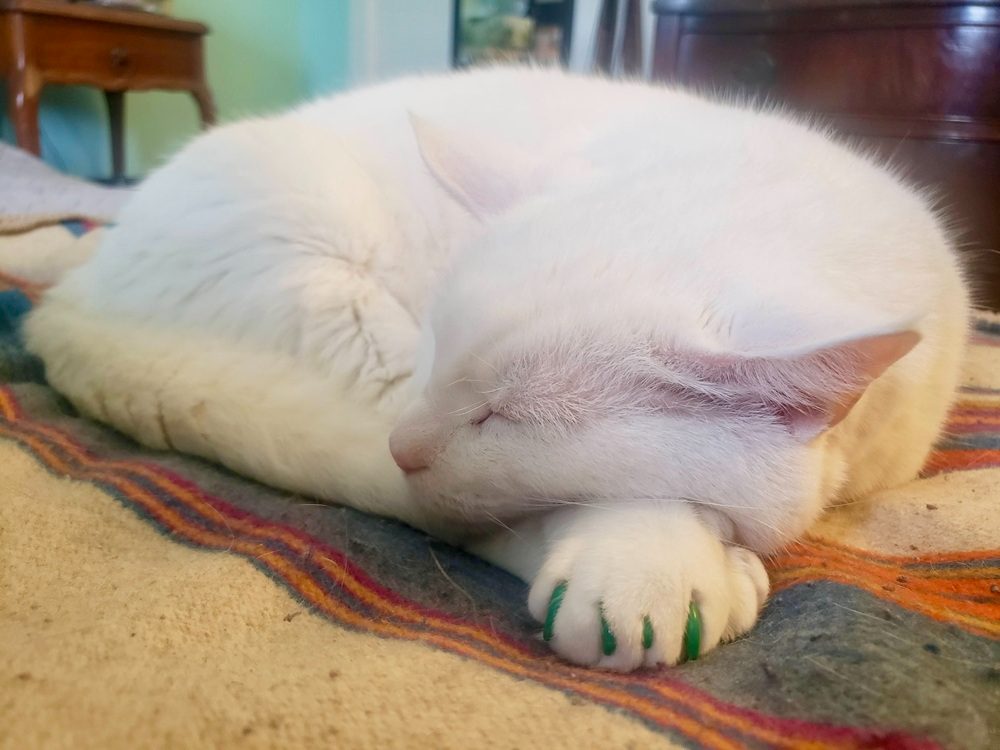
For the most part, tester cat Floyd was comfortable once the caps were set on his nails. Liz Coleman / Cats.com
Next, I observed how well Floyd tolerated the nail caps. I wanted to know if the caps would bother him in any way, or if they would affect his gait or behavior.
For every brand we tried, Floyd had the same basic reaction: at first, he fussed. Then he seemed to forget the caps were even there. There was some mild protesting during the application process, although I think Floyd was more offended about having his paws handled than the nail caps themselves.
As for his mobility, I didn’t notice any changes. He could still walk, jump, stretch, and carry on as usual. For the most part, Floyd seemed unfazed by these tiny plastic covers. Although I’d occasionally catch him yanking at them with his teeth.
Test #3: The Fabric Test
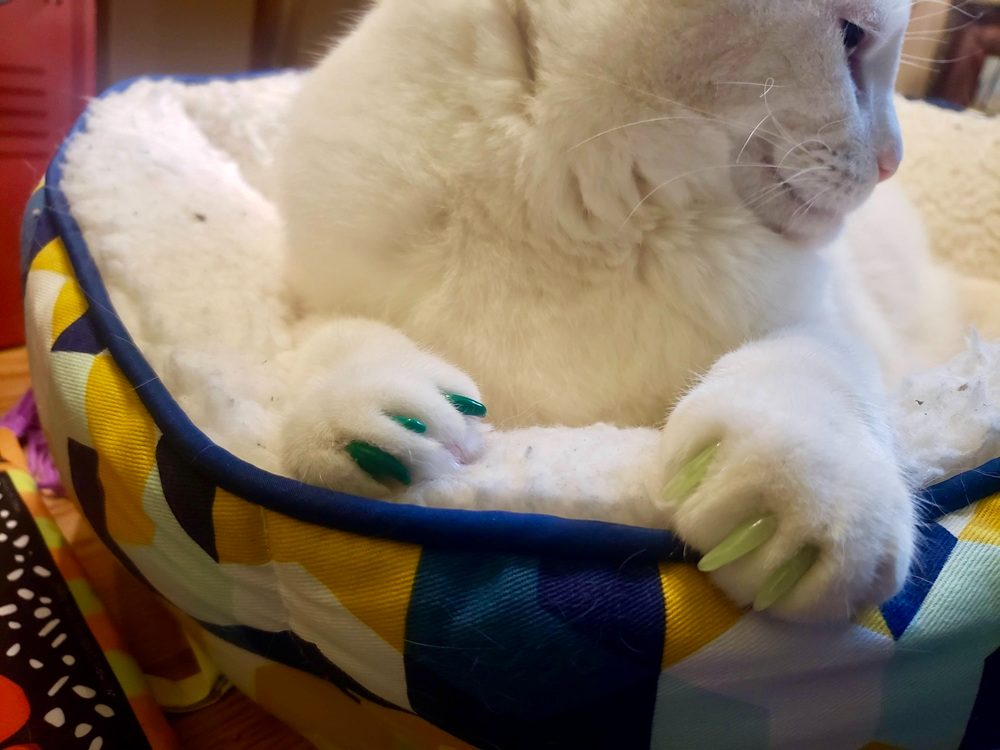
I observed how the nail caps kept Floyd’s claws from snagging soft surfaces around the home, including his bed. Liz Coleman / Cats.com
Finally, I wanted to learn if nail caps actually do what they’re supposed to do (i.e., protect skin & fabric). Since Floyd, thankfully, does not scratch my furniture, I observed how his kitty bed fared after a round of enthusiastic kneading.
For this test, I applied nail caps to one of his paws, leaving the second paw cap-free. As it turns out, the caps still got caught on the bed’s sherpa lining. But I can see how the blunted tips would cause considerably less damage than a sharp, uncovered claw.
Best Cat Nail Caps: Our Top 5 Picks Reviewed
#1 Best Overall: Soft Claws Cleat Lock System
- Number of caps included: 40
- Also includes: 2 tubes of adhesive, 6 applicator tips, instructions
- Material: Vinyl resin
- Sizes available: S (6-8 lbs), M (9-13 lbs), L (14 lbs & up)
- Price: $13.98 – $14.95
- Colors available: Clear, Black, Blue, Pink, Purple, Red, Green, Gray, White, Pink Sparkle, Blue Sparkle, Gold Sparkle, Silver Sparkle
Easily the most familiar nail cap brand, Soft Claws stands out with its cleat lock system — a series of ridges along the caps’ inside that help keep them in place. Generally, nail caps should stay on for 4-6 weeks, and the cleats add extra assurance that they’ll make the 6-week mark.

Liz Coleman / Cats.com

Liz Coleman / Cats.com

Liz Coleman / Cats.com

Liz Coleman / Cats.com
One of the first things I noticed about these caps was their slightly thicker plastic. This made them feel durable, and yet they were still comfortably “bendy” and soft between my fingers. The adhesive was easy to work with, and the caps were mostly cooperative during application. Soft Claws were well-tolerated by my cat, and they’re a pretty good value.
If you’re concerned about your cat swallowing one of these caps, this veterinarian-developed brand says Soft Claws are safe if accidentally ingested and pass harmlessly through the digestive tract.
Soft Claws are also available for dogs, and adhesive refills are available separately.
What We Liked:
- Thick, durable material
- Long-lasting
- Pliable material
- Easy-to-squeeze glue tube
What We Didn’t Like:
- Only 3 sizes available
#2 Best Value: Joyous Nails Caps
- Number of caps included: 160
- Also includes: 8 tubes of adhesive, 16 applicator tips, instructions
- Material: Vinyl resin
- Sizes available: XS (< 5 bs) S (6-10 lbs), M (10-16 lbs), L (16 lbs & up)
- Price: $7.99 – $9.99
- Colors available: Violet, Silver, Lemon, Rainbow-Green, Blue, Turquoise, Light-Blue, Ocean-Blue, 24k Gold, Bronze, Rose, Green, Red, Lavender, Ice-Blue, & more.
For regular users, nail caps represent a recurring expense. If you have multiple cats wearing them, costs add up quickly. These Joyous nail caps were one of the most affordable brands we found, at approximately $0.06 per cap. The package we purchased contained 160 caps, 8 tubes of adhesive, and 16 applicator tips — all for just $9.99.

Liz Coleman / Cats.com

Liz Coleman / Cats.com

Liz Coleman / Cats.com

Liz Coleman / Cats.com
Even at this affordable price, I was impressed with these caps. The glue was easy to dispense, and the caps were pliable. This set came with 16 colors total, with two coordinating colors per bag. This won’t be an issue for most, but some reviewers were miffed by the mixed bags and would prefer to see each color separated.
What We Liked:
- Easy-to-dispense glue
- Pliable material
- Adhesive complies with EU MSDS standards
- Excellent value
What We Didn’t Like:
- Colors were not in their own separate bags
#3 Best for Kittens: Purdy Paws Soft Nail Caps for Cats
- Number of caps included: 20 count, 40 count
- Also includes: 2 glue tubes, applicator tips, instructions
- Material: Vinyl resin
- Sizes available: Kitten (under 6 months), S (6-8 lbs), M (9-13 lbs), L (14 lbs & up)
- Price: $13.99
- Colors available: Glow-In-The-Dark, Blue Glow-In-The-Dark, Clear, Black, Sky Blue, Pink, Rainbow, Seafoam Glitter, Purple Glitter, Pink Glitter, Blue Glitter, Red Glitter, Gold Glitter, Silver Glitter, Rainbow Glitter
Purrdy Paws come in a kitten size, which is designed for cats under six months of age. They should fit most kittens by the time they’re 12-16 months old. The brand recommends testing the size before using glue, stating the caps should fit snugly, like a glove. Some 5-month-old kittens may need the small size, intended for cats between 6 and 8 pounds. Note that you don’t need to trim a kitten’s nails before applying caps; their tiny claws need to be their full natural length.

Liz Coleman / Cats.com

Liz Coleman / Cats.com

Liz Coleman / Cats.com

Liz Coleman / Cats.com
These were the most flexible (without feeling flimsy), so it was easy to get the glue evenly distributed. They were also fairly effortless to slip onto Floyd’s nails, and the glue gave me zero hassles. The soft, rubbery texture felt comfortable, and my cat was largely indifferent to wearing them. All wins in my book.
These would also be good for anxious cats or those who dislike having their paws handled. For these cats, a successful application needs to be as swift and painless as possible. Purdy Paws fit the bill.
Bonus tip: if you buy directly from the retailer’s site, there are a lot more color options. They also offer free shipping for all orders!
What We Liked:
- Available in 5 sizes, including kitten
- Developed by a veterinarian
- Easy to apply & comfortable to wear
What We Didn’t Like:
- Only carries a few multi-color kits
#4 Best for Small Cats: Zepto Cat Claw Covers
- Number of caps included: 100
- Kit also included: 5 glue tubes, 10 applicator tips, instructions
- Material: vinyl resin
- Sizes available: XS (up to 5 lbs), S (6-10 lbs), M (10-16 lbs), L (16 lbs & up)
- Price: $7.99
- Colors available: Over 52+ colors, including: Glow-in-the-Dark Green, Turquoise, Blue, Sky Blue, Violet, Purple, Glitter Violet, Glitter Silver, Glitter Light Pink, Glitter Rose, Glitter Turquoise, Glitter Blue, etc.
Zepto nail caps are available in Small and X-Small size, suitable for cats weighing between 6 and 10 pounds and cats up to 5 pounds, respectively.

Liz Coleman / Cats.com

Liz Coleman / Cats.com

Liz Coleman / Cats.com

Liz Coleman / Cats.com
Sets features coordinating color combos, with five shades included. Options include a set with five shades of blue glitter, a cool tones set, and a warm tones set with oranges, reds, and pinks. We went with a lovely kit with turquoise, sky blue, purple, rose, and orange peel.
Along with the 100 caps, these kits come with five tubes of glue and ten applicator tips. The affordable price makes Zepto a good choice for multi-cat homes, or folks who plan to make nail caps a regular part of their kitty’s routine.
While they’re a bargain, these caps don’t scrimp on quality: they have a soft, flexible, rubbery feel, not unlike the more expensive brands on this list. And the glue was dispensed easily with light pressure.
What We Liked:
- Small and X-Small sizes available
- Good value
- Sets come in nice coordinating color combos
- Caps have passed European SGS environmental certification
- Adhesive meets European MSDS regulations
What We Didn’t Like:
- No sets available with one single color
#5 Best for Large Cats: VICTHY Cat Nail Caps
- Number of caps included: 140
- Also includes: 7 tubes of adhesive, 7 applicator tips, instructions
- Material: vinyl resin
- Sizes available: XS/Kitten (1-5.5 lbs), S (5.5-11 lbs), M (11-16.5 lbs), L (16.5-22 lbs)
- Price:$8.99
- Colors available: Clear, Black, Blue, Pink, Purple, Red, Green, Gray, White, Pink Sparkle, Blue Sparkle, Gold Sparkle, Silver Sparkle
Not only do these VICTHY nail caps come at a great value, but they also offer a large size that should work for bigger cats between 16.5 and 22 pounds. These nail caps are very rubbery and pliable, which makes them easy to work with. It was also easy to dispense the glue, which didn’t come out too fast or too slow.

Liz Coleman / Cats.com

Liz Coleman / Cats.com

Liz Coleman / Cats.com

Liz Coleman / Cats.com
I liked that these came in a hard, plastic case that snaps shut. This makes it easier to keep all the tiny pieces together (vs. other brands where I needed to use a baggie for loose components). Additionally, the caps came in mini Ziploc baggies, so you can mix and match colors and safely store unused caps for future use.
What We Liked:
- Large size is suitable for cats up to 22 pounds
- Very rubbery and pliable
- Glue is easy to control
- Meets European SGS environmental criteria and MSDS regulation
- Plastic carry case keeps everything in one place
What We Didn’t Like:
- Some reviews mention these fell off after a week or two
What Features To Look For in Cat Nail Caps
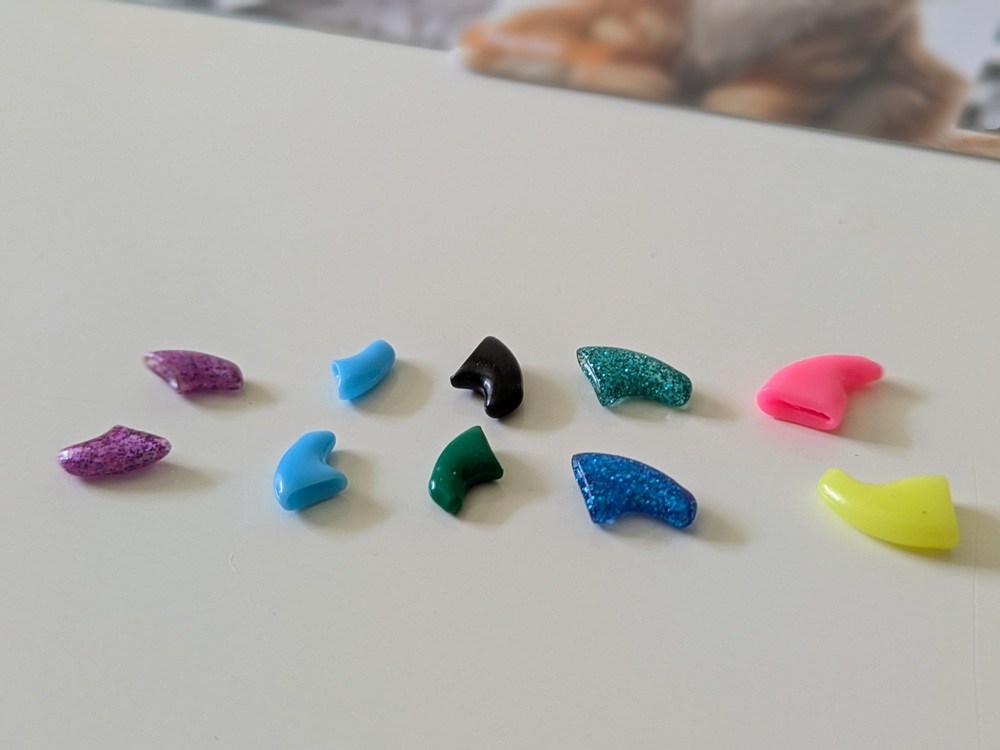
Nail caps come in a range of sizes, so pay attention when choosing. Liz Coleman / Cats.com
If you’re new to cat nail caps, the abundance of options can be overwhelming. Here’s what to focus on:
1. Size
Nail caps are sold in different sizes, which typically correspond to a cat’s weight. Cap sizes are not universal among brands, however, so it’s important to check individual size charts before purchasing. Getting the wrong size can result in an uncomfortable fit and may even hurt your cat.
2. Material
“Many nail caps are made from non-toxic materials, and the glue used to apply them is inert once dry,” says Dr. Cutler, who has used nail caps on her own cat. Most nail caps are made with cat-safe vinyl resin (including the five caps we tested). This material feels like a soft, pliable plastic that can be manipulated to fill the caps with glue. Even so, Cutler recommends checking the materials used by any brands you’re considering to ensure they’re safe. This is especially important if your cat happens to swallow one.
3. Number of caps included
Nail cap kits come in an assortment of quantities—from single sets of 20 to economy packages with over 100. Beginners might want to stick with a smaller kit to see how their pet tolerates the caps first (although having a few extra caps handy is nice if you accidentally over-fill them or lose any).
Consider, too, how frequently you want to purchase caps, and whether you’ll be using them on just the front paws or your cat’s back paws as well. Finally, how many cats will you be outfitting with caps? A set of 20-40 caps will only go so far in a multi-cat household.
4. Color
While undeniably cute, nail caps should not be used as a fashion accessory. They’re designed for practical purposes (more on that below)—so if your interest in nail caps stems from a desire for matching mani-pedis, nail caps probably aren’t for you.
For cats who can benefit from nail caps, you have your pick of colors: caps are sold in vibrant neons, glitter colors, and even glow-in-the-dark designs. For cats (or humans) with a more reserved style, there are clear nail caps as well.
Clear caps make sense if you’d rather not call attention to your kitty’s paws; however, they can be harder to spot if one falls off. I also found that it was easier to see the glue as I was filling the clear caps, unlike the solid-colored ones (a few of which I had to discard after overfilling with glue).
Are Nail Caps a Good Solution for Your Cat?
Overall, I think nail caps will be a practical solution for many cat parents. That said, individual success will depend on how well your own cat handles the application process, and whether or not you’re able to keep up with nail maintenance.
It’s helpful to have realistic expectations of how the application process will go. Despite the insistence of retailer sites that nail caps are an effortless breeze to apply, I wouldn’t call the experience a “piece of cake.” There is absolutely a learning curve here—and if your cat is resistant to wearing nail caps, the process could be doubly challenging.
Some tips for easing into the process:
- Enlist the help of a friend. It’s usually easier to apply caps with one person holding the cat and one person applying the caps.
- Consider applying when your cat is drowsy (my personal tactic).
- Use positive reinforcement and distractions like food, treats, toys, and praise.
- Trim your cat’s nails beforehand for a proper fit.
- To make sure the fit is correct, slide the cap onto the nail without glue first.
- Don’t overfill the caps with glue, and be careful about getting it on fur or skin (it’s super sticky!)
- Only apply to the front paws, if possible. Most damage is inflicted with your cat’s front paws.
- Monitor your cat’s behavior and comfort level during the adjustment period.
Keep in mind that some cats just won’t take to nail caps, and in these cases, it’s best to consult your vet for alternative solutions, like adding scratching posts or using deterrents. While nail caps can be helpful, they don’t address the underlying reason behind your cat’s destructive scratching, so they may benefit from a behavioral consultation to get to the bottom of things.
And finally, if you find applying the caps too challenging at home, many groomers and veterinarians will happily apply them for you.
I didnt get that… “beaten” must have been a typo. What happens often if the cat is active, does it fall off from the glue a lot?
I only ordered 20 for $17.
Hey Priscilla! You’re right to be confused—I’m having trouble understanding this article, myself. It’s one of our older pieces and wasn’t properly proofread. Frankly, I think that claim was inaccurate as well; active cats can wear nail caps just as well as inactive cats, and they usually won’t come off unless the cat is really fighting with them, biting and pawing at the caps. I’m looking into getting this piece updated so it’ll be a bit more accurate and easy to understand. Thank you!
Are you crazy! They could swallow these!