
 Published Feb 3, 2026


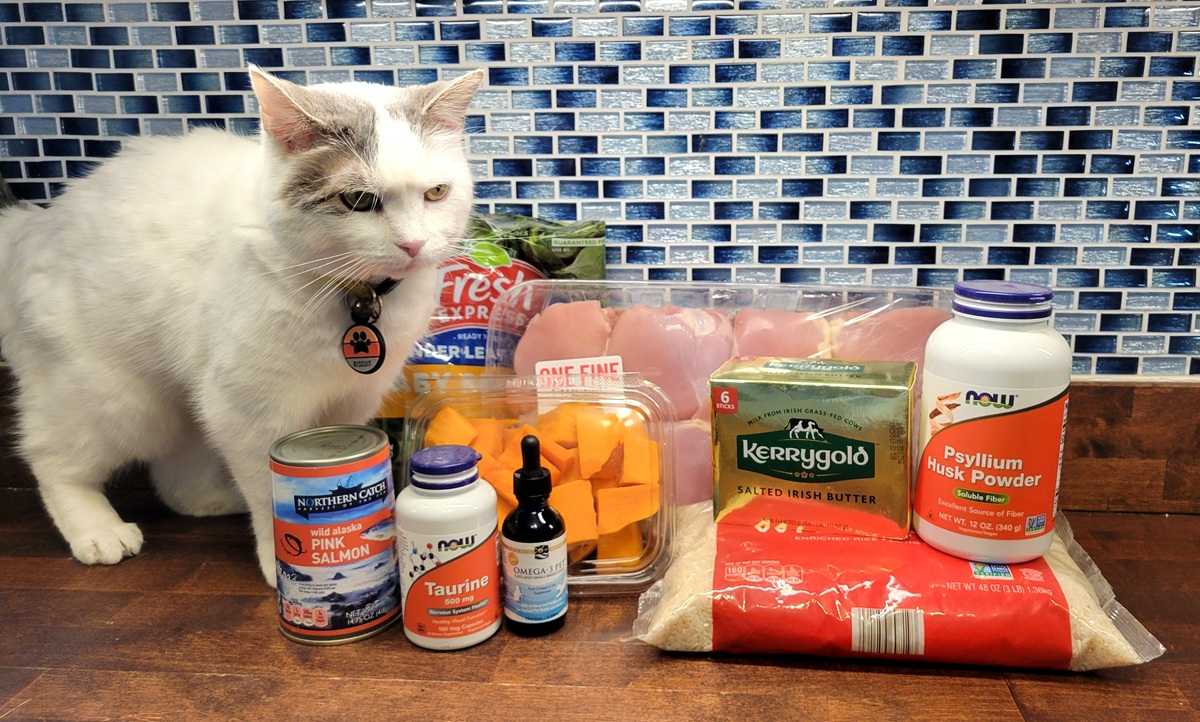
Kate Barrington / Cats.com
Treating kidney disease almost always involves dietary modification. Specifically, vets recommend a diet low in phosphorus and sodium, sometimes with restricted protein to protect kidney function and reduce its workload.
If you’re having trouble finding a recipe that fits these requirements, or prescription cat food doesn’t fit into your budget, homemade cat food for kidney disease could be a viable alternative. In this guide, we’ll discuss nutritional management of kidney disease and offer a sample recipe for low-phosphorus homemade cat food.
Wondering whether your cat could benefit from a therapeutic or homemade diet for kidney disease? Kidney-Check could help you find the answer. This simple saliva test can help you assess your cat’s kidney function without leaving home. Learn more about Kidney-Chek here.
Nutritional Management of Kidney Disease
Chronic kidney disease (CKD) is characterized by the progressive loss of kidney function and is the most common form of kidney disease in cats. Rather than a disease with a single cause, however, CKD is often considered a syndrome with multiple underlying factors.
Regardless of the cause, treatment of CKD is aimed toward slowing progression of the disease, since it cannot be cured. Dietary management is crucial in all four stages of chronic kidney disease. Prescription diets for CKD typically feature the following:
1. Low Phosphorus Content
When the kidneys start to shut down, they can no longer filter out phosphorus efficiently. High concentrations of phosphorus in the blood lead to an even faster decline in kidney function.
Cats in the early stages of CKD should follow a phosphorus-restricted diet, and some cats in the later stages may require a phosphate binder. Therapeutic diets for cats with kidney disease typically contain no more than 0.5% phosphorus on a dry matter basis.
2. Limited Sodium Content
High sodium intake can increase your cat’s blood pressure and may worsen kidney damage. This being the case, most therapeutic diets for kidney disease are low in sodium. Martha G. Cline, DVM, ACVN, notes that the sodium content of the typical renal diet for cats with kidney disease ranges from 0.5 to 1 gram per 1,000 kcal.
3. Restricted High-Quality Protein
While cats in all stages of chronic kidney disease can benefit from reduced phosphorus and sodium intake, protein restriction typically doesn’t become necessary until Stage III. Therapeutic diets for cats at this stage feature lower levels of high-quality, easily digestible protein. Improving protein quality may help reduce the burden on the kidneys.
Prescription Diets versus Homemade Cat Food
Most cases of kidney disease in cats are best managed with a prescription diet. Prescription renal diets are made with balanced levels of protein, phosphorus, and sodium. These diets are carefully formulated based on clinical research, sometimes specific to a certain stage of chronic kidney disease.
Though widely regarded as the most effective nutritional management strategy for kidney disease in cats, prescription diets aren’t perfect. These foods tend to be high in carbohydrates, often with added sugar, artificial flavors, and animal by-products. But homemade cat food isn’t necessarily a better option.
Research has shown that many homemade cat food recipes don’t provide adequate nutrition. For a cat with kidney disease, the nutritional risks of an improperly formulated homemade diet could be significant. Commercial prescription diets are specifically formulated to protect renal function, making them a safer choice for many cats.
The Best Homemade Cat Food for Cats with Kidney Disease
Because it’s such a challenge to get the right protein percentage balanced with restricted phosphorus and sodium, veterinary experts typically recommend commercial prescription diets over homemade diets for cats with kidney disease. If you’re determined to feed your cat a homemade diet, however, it’s crucial to work with a veterinarian who specializes in nutrition to tailor the diet to your cat’s individual needs.
To give you an idea what such a diet might look like, we’ve included a recipe developed by Dr. Meredith Wall, BA, BVSc. Dr. Wall completed a Bachelor of Veterinary Science at the University of Sydney in 2012 and a combined clinical nutrition residency and Ph.D. at Massey University in 2022.
You can find the original recipe (with accompanying updates, tips, and supplement recommendations) on her website here.
Chicken and Salmon Homemade Cat Food for Kidney Disease
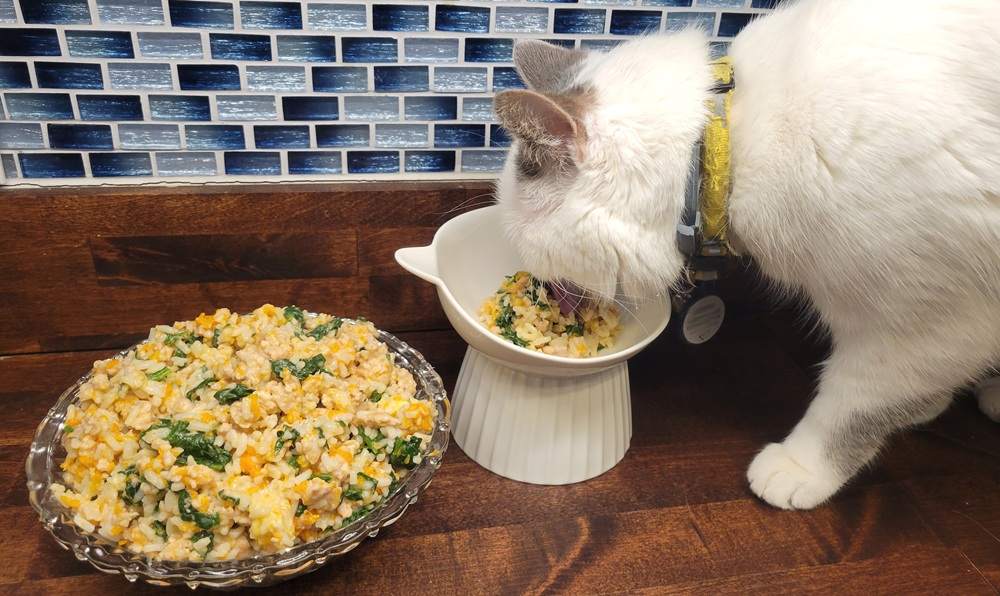
Kate Barrington / Cats.com
This recipe has been specifically formulated for cats with kidney disease. Dr. Wall stresses the importance of preparing the recipe as directed—swapping ingredients may change the nutrient composition of the food. If you have questions about the recipe, its nutritional features, or how to use it, contact the Veterinary Nutrition Group directly.
NOTE: Dr. Wall recommends using a digital kitchen scale to ensure accurate measurements. Measure all quantities precisely – do not estimate.
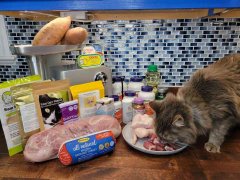
Ingredients Required:
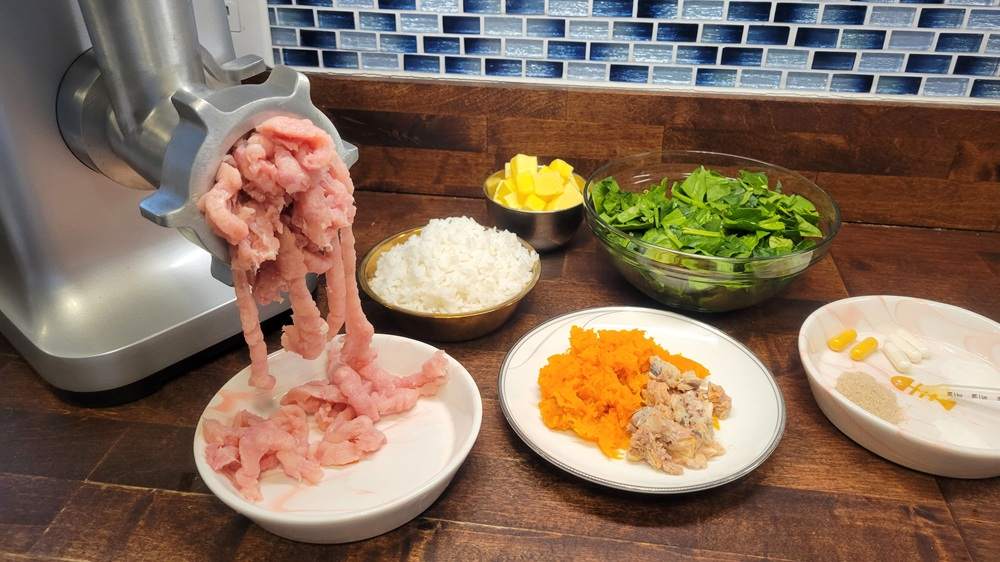
Kate Barrington / Cats.com
- 470 grams of raw boneless, skinless chicken thigh
- 30 grams of pink salmon, including bones and skin (canned in water)
- 90 grams of salted butter, softened
- 220 grams of cooked short- or medium-grain white rice
- 100 grams of raw pumpkin or butternut squash (peeled)
- 60 grams of raw chopped spinach, kale, or Swiss chard (stems removed)
Supplements Needed (per 1-kilogram batch):
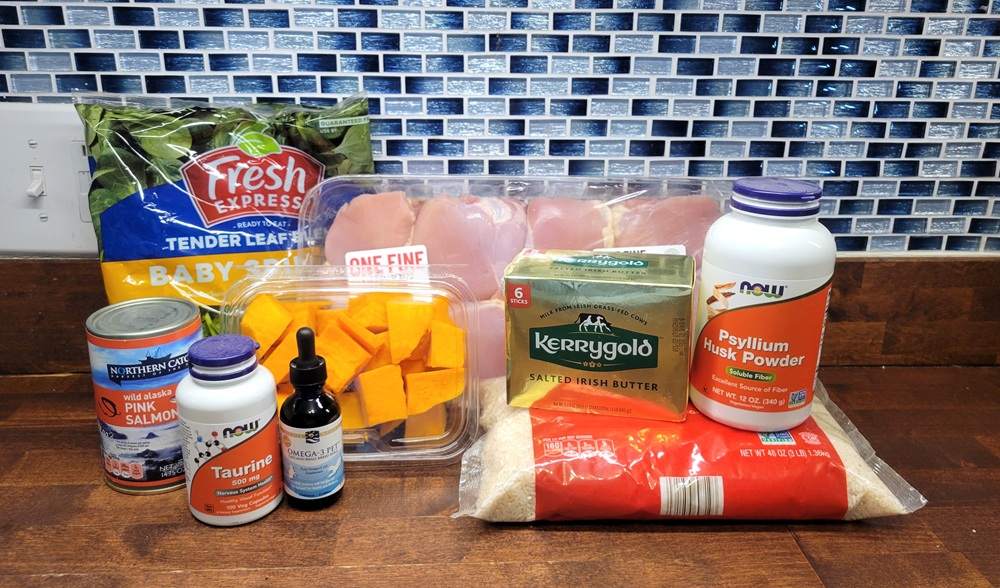
Kate Barrington / Cats.com
- 7 milliliters of Nordic Naturals pet liquid omega-3 supplement
- 5 grams of NOW psyllium husk powder
- 2 (1000g) capsules of NOW taurine supplement (contents only)
- 1 (25mg) tablet of Source Naturals iron supplement (crushed)
- 3 capsules NOW Daily Vits Multivitamin/Mineral supplement (contents only)
- 2 level teaspoons of NOW calcium carbonate powder
- ½ level teaspoon of NOW potassium chloride powder
- 2 (500mg) tablets of Nature’s Way choline supplement (crushed)
Instructions:
Kate Barrington / Cats.com
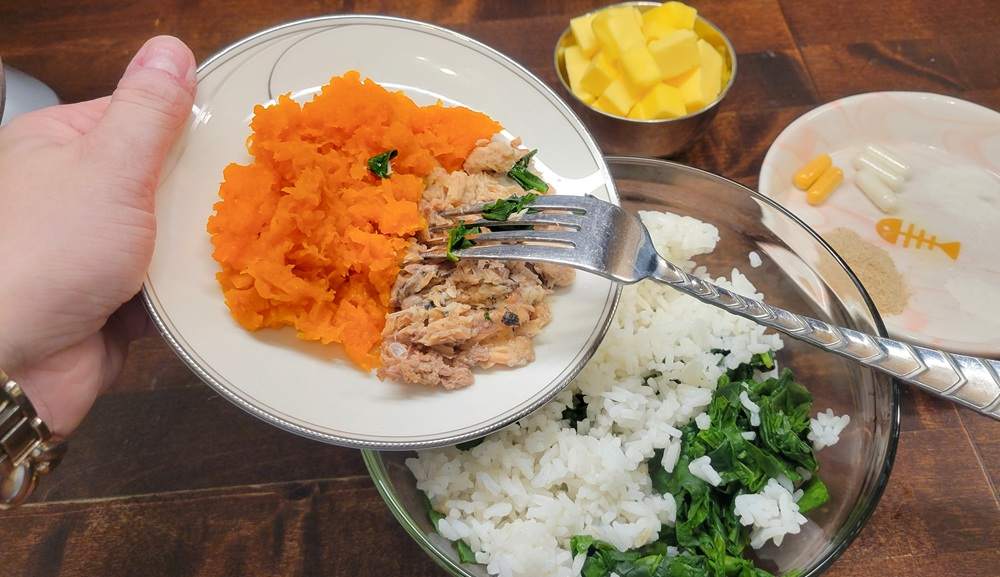
- Steam the rice until it is a little overcooked – it should be very soft.
- Allow the rice to cool slightly then measure out to 220 grams you need into a bowl and stir in the softened butter until it melts.
- Combine the pumpkin and spinach in a microwave-safe bowl with a teaspoon of water. Cover with plastic and microwave until the pumpkin is very soft.
- Let the veggies cool then mash them together.
- Gently sauté the chicken until cooked through then mince very fine—you can also use a meat grinder to grind the chicken prior to cooking.
- Stir the canned salmon into the cooked white rice then add the pumpkin, spinach, and chicken.
- Mix the ingredients thoroughly then add the psyllium husk powder and fish oil. Mix well.
- Add the remaining supplements then stir until well combined.
- Let the mixture cool completely.
- Transfer to a tightly covered container (or divide into portions) and refrigerate or freeze.
Nutrition (per 1kg): 27.8% calories from protein, 54.8% calories from fat, 17.4% calories from carbohydrates, 0.71g phosphorus per 1000 kcal, and 70% moisture content.
Storage Tips: This recipe makes about 1 kg (2.2) pounds of food, so you may need to freeze some of it to keep it fresh. Fresh food should only be refrigerated for about 3 to 5 days. If you plan to freeze it, try portioning it out and rolling the food into a ball before wrapping it in plastic. If the food doesn’t stick together, try individual containers.
Feeding Tips: Recommended feeding amounts differ depending on your cat’s body condition and daily calorie requirements. A good starting point is 100g of food per 2kg of body weight. Divide your cat’s daily portion into 3–5 meals and weigh them after a week or two on the diet. If your cat experiences undesired weight changes, increase or decrease the feeding amount by 10% and weigh them again after another week.
Recommended Supplements


Nordic Naturals Omega-3 Pet Liquid Supplement
- Sustainbly sourced and non-GMO
- Contains both EPA and DHA
- Supports healthy skin and coat


NOW Psyllium Husk Powder
- Rich source of soluble fiber
- Acts as a prebiotic to support gut health
- Fine powder is easy to measure

NOW Taurine (1,000mg) Capsules
- Taurine is an essential amino acid for cats
- Supports brain and nervous system health
- Made with non-GMO ingredients


Source Naturals Iron (25mg) Tablets
- Supports energy production and collagen synthesis
- Manufactured in the USA
- One tablet contains 25 mg of iron

NOW Daily Vits Multi Vitamin & Mineral
- Provides a broad blend of essential vitamins and minerals
- May help fill nutrient gaps when preparing homemade kidney-friendly cat food
- Trusted supplement brand with quality-focused manufacturing

NOW Calcium Carbonate Powder
- A concentrated source of calcium to support bone health and balance homemade diets
- Easy-to-measure powder formulation for consistent mixing
- Helpful for kidney-friendly homemade cat food recipes when carefully portioned

NOW Potassium Chloride Powder
- Potassium is a vital electrolyte that supports nerve function and muscle health in cats
- Helps maintain proper fluid balance, which is especially important in kidney disease diets
- Sodium-free powder formulation is easy to measure and mix into homemade cat food


Nature’s Way Choline (500mg) Tablets
- Supports healthy brain function
- One tablet contains 500 mg of choline
- Doesn’t contain added flavor
Dr. Wall notes that while the initial investment in the recommended supplements may be high, they’ll last you through many batches. She cautions her readers against using any supplements other than the ones listed. Availability of supplements can be highly variable, but we’ve included links to the ones currently available on Amazon below.
#1 Nordic Naturals
This unflavored liquid supplement blends easily into this homemade cat food mixture and the included dropper makes it easy to measure out the right dosage. It’s sourced from a combination of anchovy and sardine oils and contains both EPA and DHA.
#2 NOW Psyllium Husk Powder
Rich in soluble fiber, this psyllium husk powder is finely ground and easy to measure with a teaspoon. To ensure the proper dosage, however, it’s best to weigh out the 5 grams you need.
#3 NOW Taurine (1,000 mg) Capsules
This taurine supplement comes in 1,000 mg capsules. Though the cellulose capsules shouldn’t be harmful to cats, it’s best to empty the supplement out so it can be blended into the mixture more thoroughly. You can also purchase 500 mg capsules, but you’ll need to use twice as many.
#4 Source Naturals Iron (25 mg) Tablets
Iron is a key component of hemoglobin, the compound in blood responsible for carrying oxygen. This supplement comes in tablet form with 25 milligrams of iron per tablet. The tablet should be finely crushed before mixing it into your homemade cat food blend.
#5 NOW Daily Vits Multi Vitamin & Mineral
This multivitamin and mineral blend provides a variety of essential nutrients. It comes in vegetarian capsules, so empty the contents of the capsules into the homemade cat food mix.
#6 NOW Calcium Carbonate Powder
A concentrated source of calcium, this supplement comes in an easy-to-measure powder formulation. You’ll need two level teaspoons per batch of homemade cat food.
#7 NOW Potassium Chloride Powder
Potassium is a vital electrolyte for cats, playing a key role in nerve function, muscle contraction, and fluid balance. This powdered supplement is sodium-free and easy to measure.
#8 Nature’s Way Choline (500 mg) Tablets
This supplement contains 500 mg of choline bitartrate per tablet and should be finely crushed before use in the recipe. Choline is a precursor to acetylcholine, a neurotransmitter essential for healthy brain function.
Cats suffering from kidney disease require regular vet appointments to check blood work and monitor the progression of the disease. If your cat is taking medication, regular blood work will help you keep track of how well it’s working. It may also help inform your vet if the dosage of specific nutrients needs to be adjusted.
The most important thing you can do for a cat with kidney disease, however, is find a diet that meets your cat’s nutritional needs without putting too much stress on their kidneys. Before you try homemade cat food, do your research to make sure you understand what you’re getting yourself (and your cat) into.
Check out our in-depth guide to making homemade cat food here.
We followed this recipe closely and neither of our elderly cats would go near the end result after one sniff. Additionally, we were skeptical about the salmon. Salmon is pretty high in phosphorus, so this seems counterproductive and possibly even dangerous. We’re not happy with this concoction or whoever dreamed it up.
Since salmon is high in phosphorus can it be replaced by cod?
Yes, cod can generally be a lower-phosphorus alternative to salmon, making it a suitable replacement in some cases
Are the bones in the canned salmon safe for cats? I read contradictory information online, some say the bones are soft and therefore fine, others say because the bones are so soft they pose a splintering/internal injury risk. I’d already made the recipe and then got nervous and did the reading, so I processed the made food in a blender to pulverize the bones but wondering what makes them safe?
Yes, the bones in canned salmon are typically pressure cooked during the canning process, which softens them to the point where they’re generally safe for cats to eat. However, concerns about splintering or internal injury are understandable, and blending the food as you did is a smart precaution to ensure the bones are fully broken down and safe for digestion.
How much is a serving? Have a 27 pound Maine coon that I am considering this recipe for. How much do I give to him per day?
Hi Grace,
You can start with 1.5X servings and see how your cat reacts.
How much is a serving?
Hi Sarah,
Which recipe are you referring to?
I went to great expense including purchase of a digital kitchen scale for precise measurements and followed the Chicken and Salmon recipe exactly. Cat won’t touch it.
I know how frustrating it is. I actually started to cry when my cat wouldn’t touch it. Then I remembered reading that you are supposed to slowly transition to a new food, starting by replacing 10% of the old food with the new. This diet is still very new to my cat but she at least started to eat some when I mixed a little with her other food. Good luck to you!
Thank you for this article! It gave me a lot of great info and resources. On the website they actually have a few different recipes with various meat options: https://www.vngpets.com/
The only issue is the new recipes have a vitamin blend that only ships in Australia and New Zealand so I’ve reached out to them regarding vitamins that can be found in the United States. However I really like that there’s multiple recipes since older cats tend to be picky. I’ll reply to this comment when they get back to me to regarding the vitamins, because this is a great resource.
Did they ever respond to you? I sent an email regarding their supplements as well and have heard nothing back. Assuming I can utilize the recipes and replace the supplements needed with the 7 supplements listed on this specific website rather than the 2 supplements listed on the vngpets website recipes.
Thank you so much for this article and fur adding the supplements with where to buy them!! This is so overwhelming already and I’m so confused as to making my own or doing the tiki dark. What do you think of tiki? Also if I do not make homemade which supplements does he need? Still all the ones listed?
How about adding small amounts of activated charcoal? Some of my reading indicates it may help.
Hi Lisa, I’m familiar with the use of activated charcoal as a treatment for absorbing toxins a pet may have accidentally ingested but I’m not aware of it being used as an ingredient in a staple diet. It can be dangerous if used improperly, so I’d caution against it unless you’re working with a veterinarian and using it to treat a specific problem.
Hi,
I am searching for a low protein/purine diet I can feed my savannah cat who recently had 8 100% ammonium urate stones surgically removed. Would this diet be a step in the right direction? I currently feed all my animals a raw diet so making a special combo for one cat is not a problem. Thank you for your time!
Hi Lance! This recipe is designed for low phosphorus levels, not necessarily purines. Seafood and organ meats are high in purines, so this recipe might not work. You might look into a nutrient premix to create a custom homemade diet for your cat. That way you can control the type and amount of protein while still meeting your cat’s needs for essential nutrients.
The NOW Daily Vits isn’t very available. It looks like it might not be made any more? Is there an alternative to substitute?
Hi Rachelle! Specific questions about the recipe and ingredient substitutions can be directed to the Veterinary Nutrition Group who developed the recipe. It looks like they’ve shifted to offering multiple recipes for use with a powdered nutrient supplement (that might save you the hassle of buying individual supplements). You can find more info here: https://www.vngpets.com/recipes-cats-renal
Why do you say that sodium intake should be limited, when in fact salt = electrolytes = better hydration, which is essential especially for a cat with kidney problems?
Good question, Magda. Sodium is just one of several electrolytes along with calcium and potassium. It’s important to keep them in balance with each other to prevent dehydration. Too much sodium in the diet can also increase blood pressure and put additional strain on the kidneys, which can be dangerous if the cat’s kidney function is already impaired.
I have a question about some of the ingredients. CKD cats shouldn’t be eating sodium and foods that are high phosphorus yet this includes salted butter and canned salmon. Why not use unsalted butter? And if you need to use salmon at all wouldn’t fresh salmon be better since it won’t contain salt?
Hi Scott, this is a great question. You will have to contact the original creators of this recipe to get their take on this matter.
The supplement amounts are based on a kilogram (1000 mg) of food, but the food total is only 970 mg. Are some of the amounts in the ingredients list wrong, or am I missing something? Thank you!
Do you mean that your finished recipe amounted to less than 1 kg? I think that as long as you’re following the recipe as written, it should be okay, since water weight can contribute to some of these variations.
do you know what the salt content is here? im kinda worried it might be too much because of the salted butter, can i use unsalted instead?
Hello Lia! I would recommend contacting the Veterinary Nutrition Group directly.
My older kitty has kidney disease. I plan to try your recipe, but she is allergic to chicken. Can I use organic turkey instead?
Thanks,
Janene
Every different animal you use will have slightly different nutritional values, so I can’t confidently advise a 1:1 swap of turkey for chicken. However, the https://www.vngpets.com/post/should-i-feed-my-cat-with-chronic-kidney-disease-a-raw-diet people who created this recipe may be able to give you a more confident answer. Hope you’re able to find something that can help your cat!
Janene did you find a renal food that has no chicken im having the same issue my cat is also allergic to chicken any suggestions would be greatly appreciated
Just adopted a 17 yr spayed calico that also came with beginning kidney disease. I have 2 other seniors (13 yr spayed Fe & 9 yr neutered M). Vet has told me it won’t hurt the other 2 to be on the same diet as the old lady so I’m looking into home made diet as they all despise the prescription food. Question is how much of this do I feed per cat per feeding ? 9yr M is currently 11.5#, 13yr Fe is 7.5# and 17yr Fe is 6#. They all eat twice a day and are healthy other than the old lady’s kidney disease.
Hi Deborah, thanks for messaging. Unfortunately, I don’t have the calorie content of this recipe and can’t give a complete answer to that question. Generally, 6 ounces per day is a good estimate for a typical cat, but you have a good variety of sizes and ages, so that will vary. My apologies for the lack of a good reply!
90 grams of butter is a lot of fat, is this portion correct
Hi Jennie, the measurement is not for a single serving, and I have no reason to believe that the recipe was misprinted.
Thank you for this article.
The recipe here has the Taurine listed as “2 capsules (contents only) Now Foods taurine (1000g each)”. Should be 1000mg. 1000mg = 1g
Dr. Wall’s full blog post with detailed info on the diet and kidney disease is here:
https://www.veterinarynutritiongroup.com/post/should-i-feed-my-cat-with-chronic-kidney-disease-a-raw-diet
Thank you! I’ve corrected the article.
Hi. What to do if my cat is allergic to everything except poultry, including fish oils, but has CKD? My vet is not being responsive. I am starting to get concerned. I can’t include the salmon in this diet, and all prescription options contain fish oil. What should I do or who can I talk to?
Sorry to hear about your struggle, Rebecca! Did your vet confirm that fish oils are a problem specifically? Typically, allergies are triggered by proteins so, as long as the fish oil is derived only from fat with no proteins in it, it shouldn’t trigger a fish allergy. That’s not to say it’s impossible, of course.
If your vet isn’t being responsive or can’t give you clarification on this point, it might be worth finding a veterinary nutritionist to answer some of your questions. Veterinary training generally includes some basic animal nutrition but for specific issues like this it may be better to seek the expertise of a board-certified veterinary nutritionist. Let us know what you find out!
Clicked on the link to Dr. Wall’s website. Unfortunately, I couldn’t find the original article and recipe referred to here, but did find an article about algae omega 3 oil for cats and dogs. Apparently, there is a facility in the works to produce a special strain if algae oil for animals. Most likely it wouldn’t hurt to try it in this recipe and remove the salmon. If rice is an issue, you might be able to substitute something else. Please research grain substitutes for sensitive cats. I feed my elderly kidney cat a diet almost identical to this one, but without the salmon (no grains, just pumpkin). He’s done pretty well considering he has other chronic ailments. The article on that website lists algae oils that are acceptable for pets. Looks like you could also set up a consult with that group.
Correction- I did find the article mentioned above. An excellent read, full of good info.
I use light olive oil. My cat refuses salmon, so I won’t even try the fish oil.
Hello, where can I purchase basic B complex for cats with kidney disease? Thank you.
Here.
Hello, thank you very much. My cat is in stage 3 kidney disease and was wondering if I can use carrots instead of spinach and also do I have to add any extra vitamins with this recipe? thank you!
i use premixes (FOOD FUR LIFE) for making my own food for my cats, problem is i have a cat with CKD, what would be a good mixture to add to the meat so the calories stay up but protien restricted a little ??
thankyou
Hi Anthony, Food Fur Life is advertised as being an appropriate choice for cats with CKD, and the premix itself is not a significant contributor to the food’s protein content. I would recommend contacting FFL support; I’ve talked with Laurie on the phone before, and they’re extremely responsive and helpful. They may be able to give you personalized suggestions on the best meats to use with the premix to address your cat’s unique issues. Wishing you and your cat all the best!
Any tips on how to better mask the taste of the supplements? I whipped up a batch with just the fresh ingredients to make sure my cat would be interested in the food before investing in all the supplements, and he loved it, downing the sample I gave him with more vigor than he’s shown to any food since his diagnosis. However, after working in the supplements he now treats it like it’s full of poison. None of the other cats in the house seem all that interested in it either, unfortunately.
Good question, Justin! Cats rely heavily on their sense of smell when it comes to food and can be turned off pretty quickly if something doesn’t smell appetizing. I can’t say for sure that’s what’s going on here, but if your cat loved the food originally and now avoids it completely, it might be because it smells different.
You may not be able to mask the smell of the supplements entirely, but you could try adding something that has a lot of smell/flavor that won’t significantly change the nutritional composition of the food itself. A powdered cat food topper like Stella & Chewy’s Magical Dinner Dust could be mixed into each serving pretty easily, or even a bone broth powder. If mixing something into the food doesn’t work, maybe sprinkling bonito flakes on top would mask the smell and make the food appetizing enough for your cat to at least try it. Good luck!
Thank you for the suggestions, I will definitely look into it! A thought I had, if he can’t get past the smell, is there any reason I could not simply exclude the supplements from the food itself and just portion them out into a daily or twice daily supplement given separately?
I don’t have any veterinary training, so I’m not sure if there would be any negatives to trying that. If you’re going to separate out the supplements, though, you might want to leave in the oils. The powders might be easier to blend and divide into portions. I’d recommend weighing out the mixture and dividing it into as many portions as you do the food itself so everything remains in balance.
What purpose does the spinach serve and what can be used to substitute for it? – Spinach is really high in oxalates which leads to kidney stones, so I am keen to avoid it…
Hi Andy, unfortunately, I’m not sure why the recipe’s original author included spinach in the recipe, but she does suggest using kale instead, which is a leafy green that’s low in oxalates, so perhaps you can do a 1:1 substitution of kale instead.
Hi – I wanted to see if recipe provided is ok for cats without kidney issues. We have two cats and they tend to swipe food from each other.
Thanks and great article!
Hi Thomas! There’s no reason this recipe would be dangerous for a cat without kidney issues – all cats have the potential to benefit from a fresh food diet. The recipe is, however, designed to be limited in protein content. If you’re using this as an exclusive diet for both cats, you may want to talk to your vet about supplementing the protein intake of your cat without kidney problems. If they’re just sharing a little food here and there it shouldn’t be a problem.
Can I substitute the spinach and pumpkin with canned or frozen organic brands? I live quite rural, so this would help. Thanks!
Hi Janet! It shouldn’t be a problem considering the veggies in this recipe end up being cooked anyway. Just be sure to squeeze out any excess moisture and stick to the same weight as the original recipe.
Hi, can I use skinless and boneless pink salmon in can?
Hello,
Thank you for sharing this recipe. I have now made it twice for my cat with stage 2 renal disease and am hopeful it will be a great alternative to the big brand prescription foods – according to your research, it sounds like it will!
I did have a question on feeding quantities – do you have any information on the caloric content per serving and/or any suggested serving amounts? It would be very helpful if you do.
Thank you so much
Hi Nate, I’m so glad the recipe is working out for you and your cat! I ran the main ingredients through a recipe nutrition calculator and it looks like the food is about 71 calories per ounce. The average cat needs between 4 and 6 ounces of raw or wet food per day, depending on the recipe. I can’t say for sure that the calorie content I came up with is accurate, however, so I’d recommend starting with two 2-ounce portions a day and track your cat’s weight and appetite closely. Cats with kidney disease need to consume enough calories per day to prevent the loss of muscle mass, so if your cat starts to lose weight you’ll need to increase the portion. Hope that helps!
Hi Kate, I’m wondering about the addition of the choline. In all the recipes I’ve viewed, chicken/turkey/beef, the is not this addition. Why is it required in this recipe? Tks.
Good question, Morleta! Dr. Meredith Wall is the vet who created this recipe, so she can answer your question better than I could. You can contact her here: https://www.vngpets.com/dr-meredith-wall