
 Published Jun 4, 2026


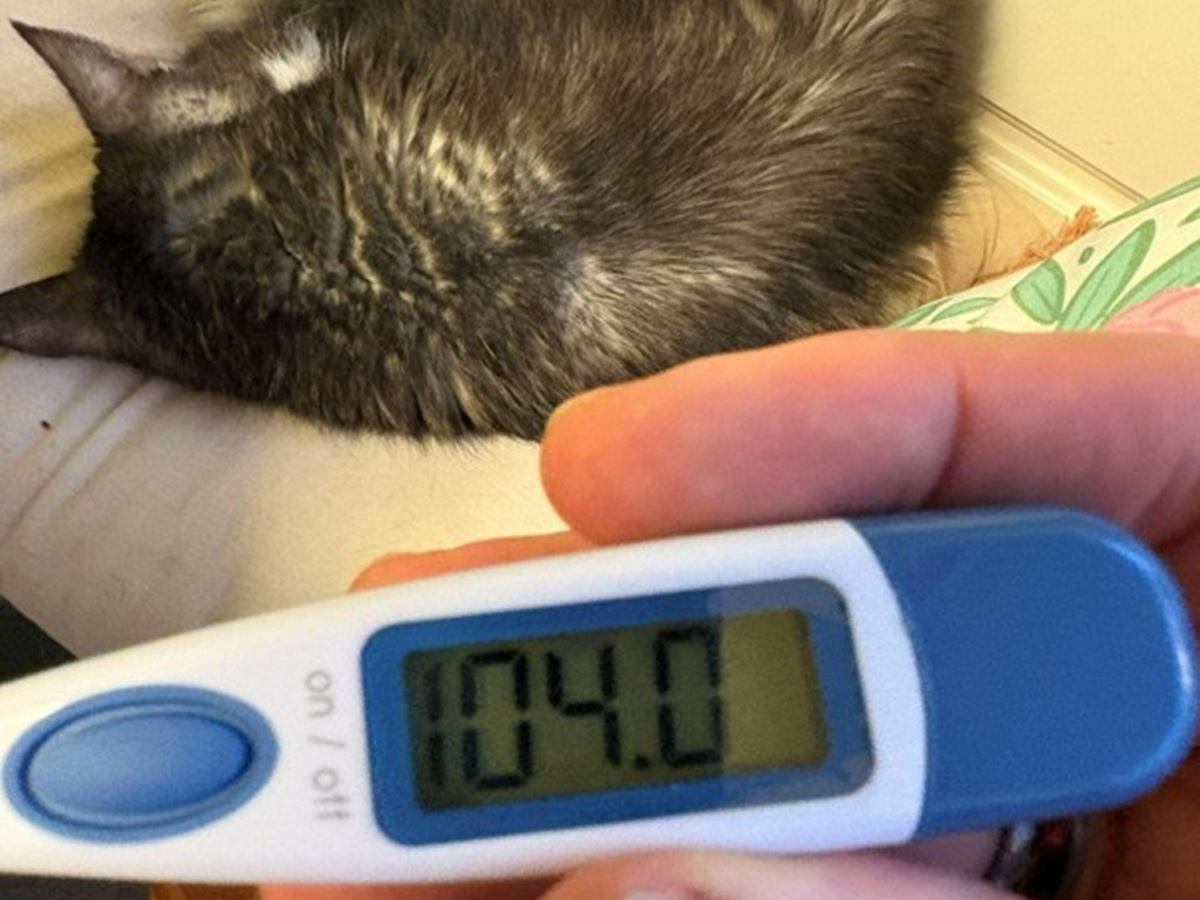
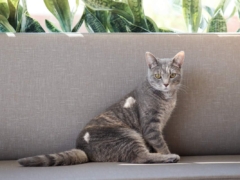
A temperature over 103.5 is one requirement for a fever of unknown origin. Chris Vanderhoof / Cats.com
A fever of unknown origin (FUO) in cats is a potentially serious condition. While an FUO does not necessarily indicate a rare disease or cancer, identifying the underlying cause and an effective treatment can be challenging can lead to prolonged periods of not eating, weight loss, and other effects on the body.
In this article, you’ll learn about some of the most common causes of FUO in cats. There are several diagnostic and treatment approaches veterinarians use to tackle these challenging medical cases.
Quick Overview: Fever of Unknown Origin in Cats
 Other Names: FUO
 Common Symptoms: High fever (exceeding 103.5), lethargy, reduced to absent appetite
 Requires Ongoing Medication: No
 Vaccine Available: Not specifically, though sometimes feline leukemia virus (FeLV), or one of the three viruses in the FVRCP/HCP vaccine can be causes highlighting the need for core and risk-based vaccines to be kept updated.
 Treatment Options: Highly dependent on the underlying cause, but may include antibiotics, non-steroidal anti-inflammatory OR steroid medication, subcutaneous or intravenous fluid therapy, appetite stimulants, and other supportive therapies
 Home Treatment: A diagnosis is important to understanding the best treatment, however, a diagnosis is often elusive with an FUO. Make sure to work with your vet to rule out more common causes of fever. Avoiding hepatic lipidosis is a big risk, as many cats stop eating with an FUO. Focusing on encouraging appetite is key for home care. Do not try to put your cat in cold water, surround with ice packs, turn the thermostat way down, etc. as these methods will not efficiently reduce a fever and will only serve to potentially cause other problems.
What is a Fever of Unknown Origin?
A fever of unknown origin (FUO) in cats is essentially a persistently elevated temperature exceeding 103.5°F in a cat where a cause cannot be determined after several days of investigation.
The definition can vary and there are some caveats. Some definitions rely more on the amount of time the fever has been present. This may range from a few days to one week to up to two weeks.
Other definitions rely on the efforts that go into determining the fever. Some suggest a high fever with no apparent cause after a thorough history and physical exam findings. Others reserve the definition for the cause being undetermined after a certain period of time spent doing diagnostic testing.
A fever that doesn’t respond to an initial course of antibiotics would not be considered an FUO. As you’ll read next, there are many potential causes of an FUO and not all are bacterial infections. Antibiotic response can also vary depending on the bacteria involved and where they’re causing an infection.
Causes of Fever of Unknown Origin
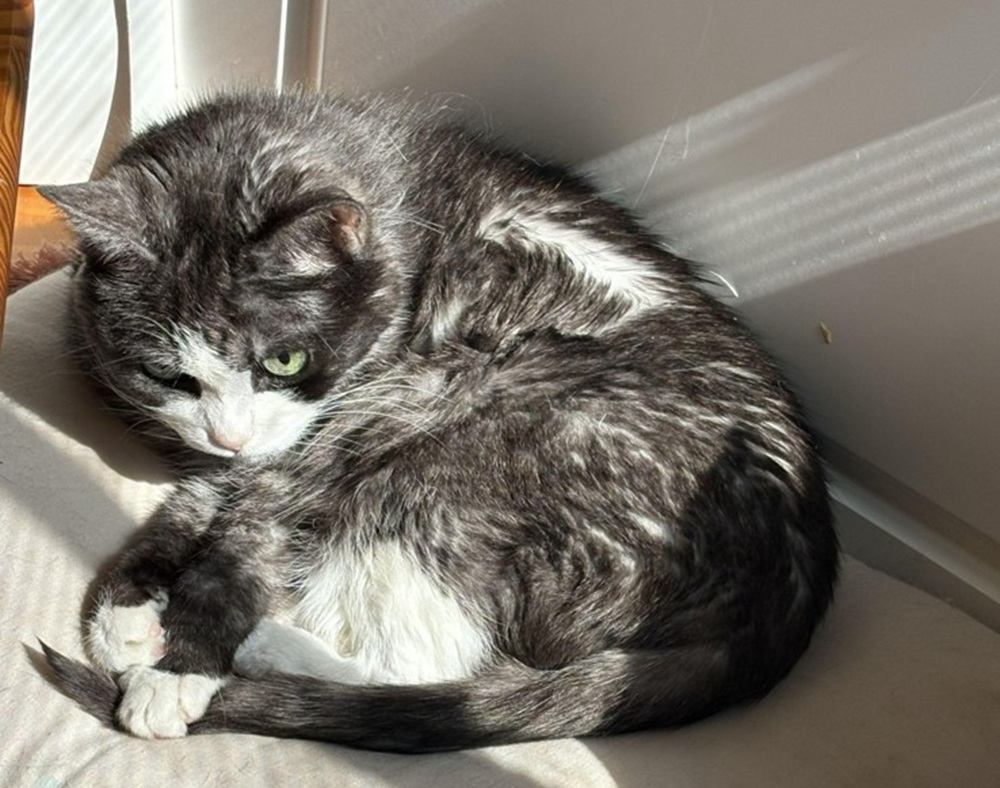
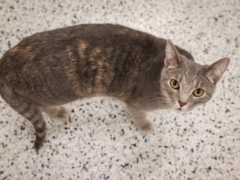
A fever is different from hyperthermia. It’s very important when checking your cat’s temperature, that they’re not overheated, such as from lying in the sun for extended periods. Chris Vanderhoof / Cats.com
A true fever occurs when the body’s internal thermostat is reset, allowing the internal temperature to elevate. This is different from hyperthermia, where external factors (such as a hot car) heat up the body from the outside.
The hypothalamus is the part of the brain responsible for temperature regulation. If the body is exposed to certain pyrogenic (fever-producing) factors, the immune system will respond, sending signals to the brain and causing the hypothalamus to alter the body’s temperature from within.
Pyrogenic factors most often include microorganisms like bacteria and viruses, and/or toxins they produce.
A fever is an important response by the body. A fever can slow the growth of microorganisms like bacteria and viruses and improve the immune system’s response.
However, fevers can also have unwanted effects like the symptoms we’ll talk about next, which can contribute to their own challenges to overcome in cats.
A fever of unknown origin can have multiple potential causes. However, a large majority are caused by an infection. This does not mean the infection is easy to find. Sometimes, an infection by a common organism presents in a very uncommon way or resides in an organ/body system not routinely sampled.
The following is a list of potential causes of fever of unknown origin in cats:
Infectious Causes
- Pyelonephritis (kidney infection)
- Other localized infections (pneumonia, septic arthritis, endocarditis of the heart)
- Blood-borne infections (septicemia, bartonellosis, mycoplasmosis, ehrlichiosis, anaplasmosis)
- Feline leukemia virus (FeLV)
- Feline immunodeficiency virus (FIV)
- Feline infectious peritonitis (FIP)
- Feline panleukopenia virus
- Parasitic infection
- Upper respiratory tract infection (herpesvirus, calicivirus, mycoplasma, E. coli)
- Feline herpesvirus
- Infection/abscess secondary to bite wounds (especially from other cats)
- Systemic mycotic (fungal) diseases (histoplasmosis, blastomycosis, cryptococcus)
Neoplastic (Cancerous) Diseases
- Lymphoma
- Leukemia
- Multiple myeloma
Immune-mediated Disease
- Immune-mediated hemolytic anemia
- Immune-mediated neutropenia
- Pemphigus foliaceus
- Immune-mediated polyarthritis
Other
- Drug-induced reactions
- Toxin
This list, while long, is still not fully complete or exhaustive. For example, depending on the region of the world, different infections (like fungal disease or parasites) may be more or less likely. More rare diseases not included in this list may also be possible.
Symptoms of Fever of Unknown Origin in Cats
A cat’s normal body temperature ranges from 100.5°F to 102.5°F with small excursions not being of large concern. As low as 99.5°F may be normal in some cats while an excited or stressed cat may get up to 103°F.
In cats with a fever exceeding 103.5°F, the most common signs of concern include:
- Lethargy/reduced activity
- Reduced or absent appetite
- Dehydration
- Increased heart rate
- Increased breathing rate
In my own experience, appetite may wax and wane with fevers that fluctuate between temperatures of 103°F to 104°F. In cats with fevers exceeding 104°F persistently, very little to no appetite is often observed.
Complications of Having Fever of Unknown Origin
While temperatures of 103°F-105°F will cause lethargy and appetite concerns, body temperatures reaching or exceeding 106°F can cause more direct damage to the body. This can include:
- Swelling around the brain (cerebral edema)
- Bone marrow suppression (where the bone marrow cannot produce new blood cells)
- Clotting disorders
- Seizures
Diagnosis of Fever of Unknown Origin in Cats
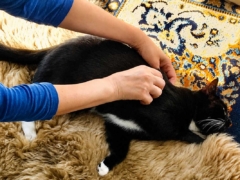
A full physical exam and labwork is the first initial approach to investigating a cause of a fever of unknown origin. Kirsten McCarthy / Cats.com
Diagnosing an FUO is often no simple task. By definition, an FUO earns its title through several testing approaches already being performed over at least a couple of days with no clear indication of the underlying cause. Testing approaches may also include starting treatments, such as anti-inflammatories or antibiotics, and assessing improvement.
Every fever of unknown origin begins with an initial veterinary visit during which a high fever is identified. A cat may often present for signs of lethargy and not eating. In these cases, checking for a fever is extremely important. While taking a rectal temperature is not a cat’s (or anyone’s) favorite experience, avoiding it or missing the presence of a fever can significantly delay the right treatment.
Initial Testing Approaches
When a cat has a fever, your veterinarian will first collect as much historical information as possible. Make sure to bring any past records if it’s your cat’s first visit. Important factors include:
- Past FeLV/FIV testing
- Indoor/outdoor status
- Travel history
- Previous medical conditions
- Other signs or behaviors your cat is exhibiting
Your vet will then perform a full physical exam. Sometimes, the source of the fever may be identified during the exam itself. For example, when checking the skin and fur, a swollen/painful area may be found, revealing the presence of an abscess. Bite wound abscesses are common in cats, even indoor cats, if there is at least one other cat in the household who may be the culprit.
As another example, a febrile young cat found to have a large swollen abdomen during a physical exam may be very suspicious for feline infectious peritonitis (FIP). This finding together with a fever alone may be enough for a vet to consider treating for FIP.
While an exam may find a potential cause in some cases, a physical exam may not reveal the cause of the fever, but can help narrow things down. If a physical exam is otherwise normal, it’s necessary to start running tests to look for a cause.
The first is getting blood and urine samples. This helps a vet look at the red and white cell counts, providing valuable information about how the body’s immune system is interacting with the fever. The chemistry panel evaluates proteins, electrolytes, and markers for the function of several organs, like the liver and kidneys.
While sometimes overlooked, a urine sample is an extremely important part of the minimum database of testing. Some bloodwork values require a urine sample for further clarification. An elevated BUN and Creatinine for example, may be elevated from dehydration from the fever, or could indicate a kidney condition, like pyelonephritis. Only a urine sample can help clarify the difference.
Depending on the age of the cat and previously known testing, many vets will check for FeLV and FIV.
At this time, some veterinarians may choose to start with a treatment plan based on what is known so far. A common choice is to start an antibiotic, an anti-inflammatory medication (like an NSAID or steroid), and provide fluids. Fluids under the skin or intravenously help to lower a fever and replenish some hydration.
If a cat responds to this approach, you don’t have a fever of unknown origin per se. While the specific cause may not be known, you do know it is responding to some therapy approach.
However, if after 24 hours of an initial therapy plan, there is no response and the fever remains, a fever of unknown origin starts to emerge as being likely.
Although only about two days may have passed, time is critical. If a cat has a high fever and is not eating and is not responding to common care approaches, there is a risk of a cat developing hepatic lipidosis from anorexia (loss of appetite).
Further Testing Approaches
After basic lab work and/or a poor response to common therapy approaches, there is more testing your veterinarian may recommend to search for the cause. Fevers of unknown origin often require extensive testing to determine a cause and require a lot of patience and good communication to work through.
- X-ray: an x-ray can be useful for looking for bone lesions as well as a survey of the chest and abdomen. In FUO cases, it is common to image the cat’s entire body, looking for an abnormality.
- Ultrasound: ultrasound is best for looking at soft tissues and is the best way to evaluate the abdomen and heart. Ultrasound can also be used to collect cell samples, called cytologies, of an abnormal-looking organ, lymph node, or mass, which can then be sent to a pathologist to look at further.
- Fecal exam
- Serology testing: serology, such as polymerase chain reaction (PCR) testing, can be used to detect the presence of a bacteria, virus, fungal organisms, protozoal organisms, and some toxins. Some other serology testing can detect antibodies to some conditions, suggesting at least exposure has occurred, which can still be helpful.
- Urine culture: some bacteria may not be visible in urine samples. If an infection, especially a kidney infection is still suspected, a culture may be recommended. A culture is also used to determine what antibiotic can be used to treat for a specific bacteria strain.
Advanced Testing Approaches
Advanced testing may be used to complement testing already performed or used if other approaches have not been fruitful
- Bone marrow aspirate or biopsy: some infectious agents or immune-mediated processes may only be found in the bone marrow.
- CT or MRI scan: computed tomography is like an x-ray but a far more thorough one. It can be used to look at both soft tissue and bone throughout the body for an abnormality that may have been missed with more basic imaging. In animals, an MRI is most often used for imaging the brain and spinal cord, but sometimes may be used to evaluate other soft tissues.
- Cerebrospinal fluid tap: this is commonly performed at the same time as an MRI to check for inflammation or infection within the fluid that envelopes the brain and spinal cord.
- Blood culture: infectious organisms within the bloodstream may not be apparent visually, but may be diagnosed with culture, similar to infections in the urine.
- Bronchoscopy and/or Bronchoalveolar lavage: these tests evaluate disease within the lower airways of the lungs. Some infectious agents, like Histoplasma, may reside within lung tissues.
- Exploratory surgery: while an older method (since advanced imaging is very extensive and thorough), surgery of the abdomen to visually inspect for abnormalities is one approach. The surgeon will usually also collect tissue samples and send those out for testing.
Treatments for Fever of Unknown Origin
The treatment for a fever of unknown origin depends greatly on what the cause is determined to be.
In the case where the cause of an FUO cannot be determined, there are several treatment categories that may be employed. Your veterinarian will determine which are the best and most appropriate to use based on what is known about your cat’s condition.
- Antibiotics: some broad spectrum antibiotics may be used initially while others are more targeted. Clavamox for example is a common broad-spectrum choice while doxycycline is more effective against Mycoplasma and rickettsial bacteria.
- Antifungals: some fevers may be caused by fungal infections like histoplasmosis or blastomycosis. Treatment often requires extended courses of medication, making a firm diagnosis important. But if potential benefits outweigh risks, a trial on an antifungal medication may be considered.
- Non-steroidal anti-inflammatories: NSAID medications like Onsior may be tried initially to get a fever down. However in cats, NSAIDs traditionally can only safely be given for shorter periods of a couple days.
- Steroids: Steroids for longer periods and dosages can be more catered to the need. For immune-mediated diseases, a steroid like prednisolone may be the initial or even sometimes, longtime choice.
- Fluid therapy: fluids given either intravenously or under the skin can help to lower a fever and rehydrate dehydrated patients. Some cats may need to be hospitalized on IV fluids to help stabilize them or get their fever low enough to encourage eating.
- Appetite stimulants: while an appetite will never truly return until the fever is addressed, an appetite stimulant like capromorelin and mirtazapine may be used to encourage eating, even if it’s only small amounts.
Cat Care Tips
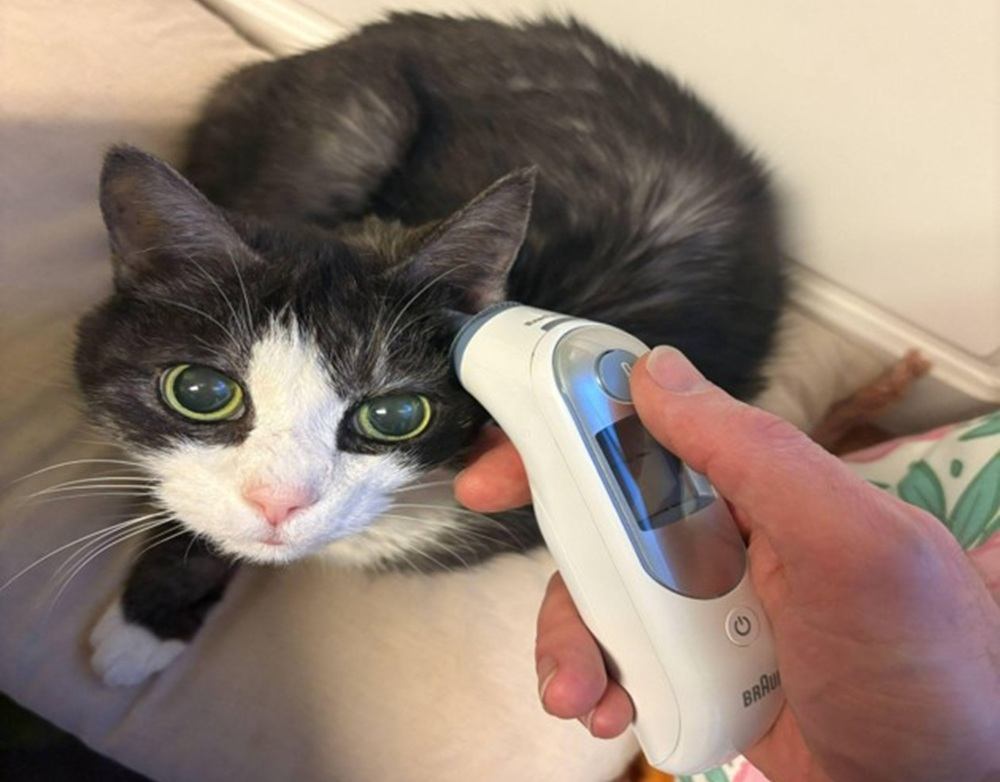
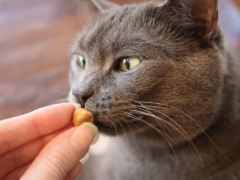
When caring for a cat at home with an FUO, an ear thermometer is one less invasive way of monitoring their temperature. Chris Vanderhoof / Cats.com
The following are some tips to help you recognize your cat may have a fever, requiring same day or next day action at the least.
- A reduced or absent interest in food is one of the top signs of a high fever. Scheduled meal feeding (rather than free-feeding) can help you recognize appetite changes more quickly.
- Cats sleep many hours of the day, but still exhibit other normal behaviors. Lethargy in cats is a lack of interest in these other behaviors, including play, quality time, and rotating to different favorite spots throughout the day.
- An ear thermometer is a less invasive way to screen for a fever. Ear thermometer readings may differ from rectal temperatures by approximately one degree. Any temperature over 102°F on an ear thermometer in a lethargic cat should be suspicious.
- Use a thermometer to support suspicion of a fever. Don’t use nose wet/dry appearance, or whether your cat “feels” warm. These can vary a lot depending on what your cat is doing and are not reliable indicators on their own.
- When taking your cat’s temperature, consider their environment. For example, if your cat has been laying in the sun for a long time or laying next to a heater, their ear temperature may be elevated, and a true fever not necessarily present.
If your cat has a fever, it’s very possible you will need to be part of care at home, sometimes for several days or longer. Here are some tips to help.
- Avoiding hepatic lipidosis is a big risk, as many cats stop eating with an FUO. Focusing on encouraging appetite is key for home care.
- Do not try to put your cat in cold water, surround with ice packs, turn the thermostat way down, etc. as these methods will not efficiently reduce a fever and will only serve to potentially cause other problems, like poor blood flow to extremities.
- Sometimes treating an FUO requires trying different therapies and assessing a cat’s response. Make sure to keep your vet updated with 24-48 hours of a new therapy as to whether it appears to be helping or not.
Prevention of Fever of Unknown Origin
A fever of unknown origin can happen for so many different reasons that there is no complete way to prevent one. However, there are some proactive steps you can take to prevent some causes.
Feline leukemia and FIV testing: Any new kitten needs to be individually tested as early as 8 weeks and rechecked again after 6 months. The same pattern goes for any new cat you get, especially with an unknown history. Both viruses may be missed by testing with a very early infection. Indoor/outdoor cats should be tested at least annually. If you have an indoor only cat, make sure to test after any potential exposure to an outdoor cat. This may include a housemate that goes in/out.
FeLV vaccine: feline leukemia virus can be vaccinated against for cats at risk. Make sure to keep this vaccine updated if your cat has any exposure to outdoor cats.
FVRCP vaccine: this vaccine can protect against both feline panleukopenia virus and feline herpesvirus. Make sure to keep this vaccine updated.
Keeping your cat indoors: this is not an option for everyone, but keeping your cat indoors significantly helps to reduce certain risks. This includes abscesses (from bites from other cats or other penetrating wounds), high stress situations that may impact the immune system, exposure that may contribute to illness, and exposure to outdoor pathogens like fungal organisms (histoplasmosis and blastomycosis).
-
Hunter, T., Weir, M., & Ward, E. (n.d.). Fever of unknown origin in cats. VCA Animal Hospitals.
-
M Barrington, G. (2024, September). Fever of unknown origin in cats. Merck Veterinary Manual (Pet Owner Version).
-
Flood, J. (2009, January). The diagnostic approach to fever of unknown origin in cats. Vetfolio.
-
R Harkin, K. (2017, February 10). Uncovering the Cause of Fever in Cats. Today’s Veterinary Practice.
-
R Lappin, M. (2008, August 1). Fever of unknown origin in cats (Proceedings). DVM360.
-
World Small Animal Veterinary Association, & Wolf, A. (2001). Fever of undetermined origin in the cat. Veterinary Information Network.
-
Hohenhaus, A. & AMC Internal Medicine. (2018, September 26). Immune-mediated neutropenia: what you need to know. Schwarzman Animal Medical Center.
-
Lafuente, P., & Carnevale, J. (2025, December). Immune-mediated polyarthritis in dogs and cats. Merck Veterinary Manual (Professional Version).