
 Published Jun 5, 2026


Kirsten McCarthy / Cats.com
Rhinitis, or inflammation of the nasal passages, is very common in cats. In many cases, this occurs acutely due to a viral or bacterial infection. Sinusitis describes inflammation extending further back from the nasal passages into the sinus cavities.
This article will review rhinosinusitis in cats, especially the chronic form which can be a frustrating disorder to treat. In this article, you’ll learn about the potential causes, the signs that distinguish the chronic condition from more common URIs, and available treatment options.
Quick Overview: Rhinitis in Cats
 Other Names: Feline Idiopathic Chronic Rhinosinusitis (FICR)
 Common Symptoms: Recurrent sneezing, nasal congestion, nasal discharge
 Requires Ongoing Medication: In some cases, yes
 Vaccine Available: The FVRCP/HCP vaccine that includes vaccination for feline herpesvirus and feline calicivirus can help reduce the severity of those viruses, which can contribute to chronic rhinitis
 Treatment Options: Options vary depending on the severity of the condition. A variety of approaches may be considered including antibiotics, steroids, antihistamines, appetite stimulants, nasal flushes, and supportive therapies.
 Home Treatment: Having air purifiers in the home and using low dust cat litter can help reduce risk for flare-ups. It’s important to keep your cat up to date on vaccinations. Humidifiers may help loosen congestion. Consider placing one or more in a room where your cat spends a lot of their time. Treatment of chronic rhinitis is often a lifelong management condition. Make sure to keep regular check ups with your vet for the best management.
Causes of Rhinitis and Sinusitis in Cats
Rhinitis can occur with many cases of upper respiratory tract infections or inflammatory conditions (like airborne allergens). Sinusitis may also develop with more severe conditions or those that go untreated.
There are many underlying causes of rhinitis including:
- Viral infections (feline herpesvirus or FHV-1 and feline calicivirus being most common)
- Bacterial infections (especially Chlamydophila, Mycoplasma, Bordetella)
- Fungal infections
- Foreign body/foreign material
- Trauma
- Tumors
- Allergens
- A dental issue, like a tooth root abscess
- Feline idiopathic chronic rhinosinusitis (lymphoplasmacytic rhinitis/rhinosinusitis)
Feline idiopathic chronic rhinosinusitis, also known as lymphoplasmacytic rhinitis/rhinosinusitis, is the one condition we will continue to focus on more closely.
Feline idiopathic chronic rhinosinusitis (FICR)
Feline idiopathic chronic rhinosinusitis (FICR) is an important but frustrating disease seen in both young and older cats. It is characterized by chronic sneezing, nasal discharge and audible congestion lasting for longer than 4 weeks. It is often recurrent, progressive, and has variable response to treatment.
FICR cannot be definitively diagnosed with any single test and is more often a diagnosis of exclusion. The other causes of rhinitis and sinusitis in the list above should be ruled out before considering FICR. The term “idiopathic” means that the cause of the condition is not well understood and appears to occur without a defined cause.
FICR certainly differs from other forms of rhinitis as it becomes clear over time that the disease is recurrent and has no other apparent cause.
There are several proposed causes for FICR but in many cases, experts feel the disease could have more than one contributing factor or the contributing factors may differ among cats.
One proposed cause is that viral infections, particularly FHV, cause intense inflammation. Viral infections can become latent, or quiet down, but recrudesce, or become active again. This cycle of viral flare may be one cause.
The immune response to viral infection may also separately be a cause. The immune system’s response may be overactive, leading to recurrent cycles of inflammation on its own.
The nasal turbinates are folds of tissue located in the rear of the nasal passages. They filter, warm, and moisten air as it enters. Destruction of the nasal turbinates can occur commonly with FICR. This tissue destruction can lead to a viscous and recurrent cycle of inflammation and further tissue damage.
A more recent study has shown that in younger cats less than two years of age, these inflammatory changes and destruction of nasal tissues tended to be more severe.
One challenge in treating FICR is that secondary bacterial infections can commonly occur, causing apparently worse disease, or flare-ups. Bacteria are rarely, if ever, a primary cause of chronic rhinosinusitis but are common complicating factors. Bacteria can be attracted to inflamed or damaged tissue. Their involvement with any worsening or flare always has to be evaluated.
Symptoms of Rhinitis and Sinusitis in Cats
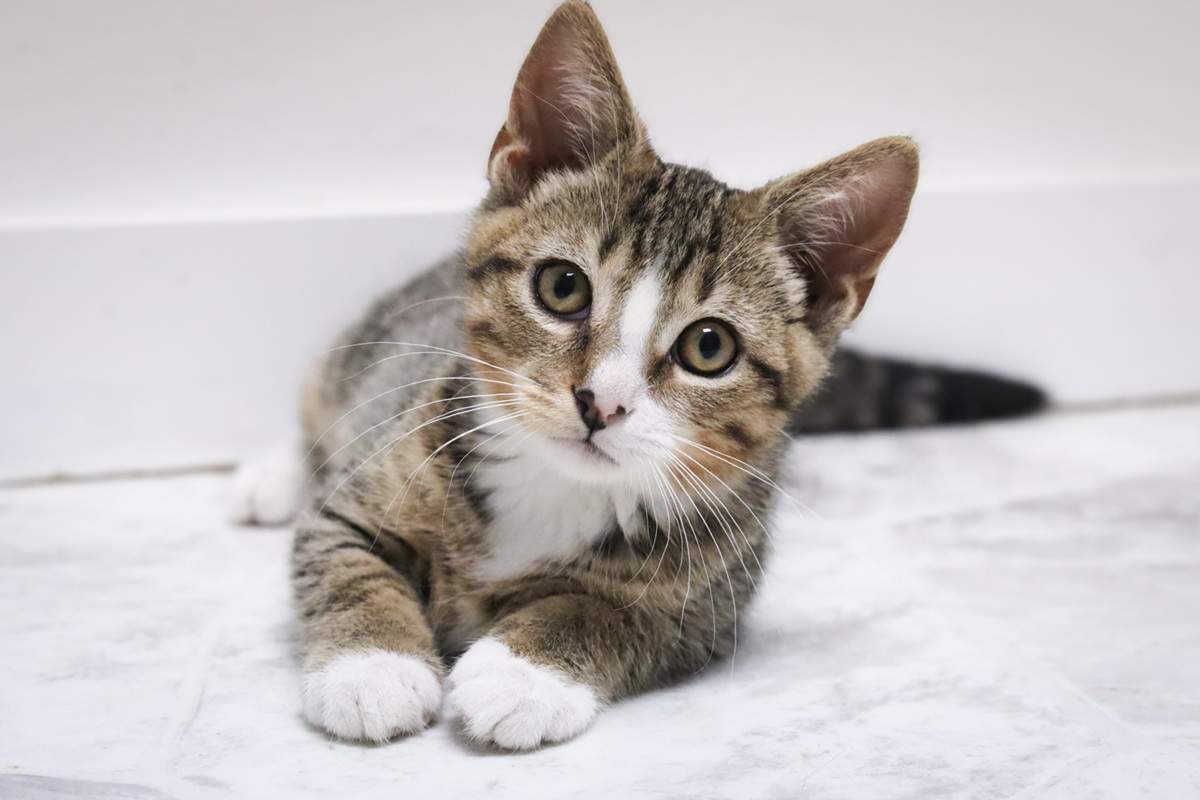
Crusts around the eyes and nose are common with upper respiratory infections, which can include rhinitis. Kittens with rhinitis can suffer more tissue damage to their nasal passages. Kirsten McCarthy / Cats.com
Rhinosinusitis in cats can appear as any URI. These signs typically include:
- Sneezing
- Nasal discharge (ranging from clear to mucousy to green and even with some blood tinge)
- Stertor (a kind of snoring/congested noise from the nose)
Signs of more serious upper respiratory signs may include
While these signs can occur in any cat with an upper respiratory condition, FICR is primarily characterized by two features:
- Recurrence lasting longer than 4 weeks (and in many cases it continues progressively for the cat’s lifetime).
- Other common causes of upper respiratory signs have been ruled out.
Failure of a single treatment approach is not sufficient to diagnose the condition. For example, treating a cat with URI signs with an antibiotic only to have either poor response or to see it recur a week or two later, does not define FICR. Other possibilities could still include a fungal infection, a trapped piece of foreign material, or a tumor. These may all improve with antibiotics but never fully resolve.
Treatment trials alone are often not sufficient, as the example above shows. Additional testing, which we’ll get to in a minute, is often needed.
It is important to pay attention to any noticeable patterns of recurrence. If there is a clear seasonal component to upper respiratory signs, this could be related to allergies. FICR symptoms will continue to recur regardless of season or location.
Complications of Having Rhinitis and Sinusitis
By its very definition, chronic rhinosinusitis continues for a long time. Even when well managed, there can be recurrent complications that occur. The most common is a secondary bacterial infection.
Any bacterial infection that goes untreated has the potential for causing more serious illness. Bad URIs can impact a cat’s desire to eat. Cats rely a great deal on their sense of smell when it comes to eating. If there is a significant amount of congestion, their interest in food may be greatly reduced or absent.
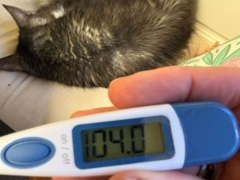
Fever may be present with some URIs. A fever of 103-104 will impact a cat’s interest in food. Fevers over 104 usually result in anorexia or complete absence of appetite.
If either a fever or congestion cause anorexia in a cat, a complication called hepatic lipidosis can occur, which can be very serious.
When untreated, the chronic or recurrent inflammation will cause actual tissue damage to the nasal turbinates. As already mentioned, very young cats with the condition appear to suffer the most tissue damage. Cats with more damage to their nasal turbinates can be more susceptible to secondary bacterial infections. They can also be more affected by particulates in the air, since the filtration functions of the turbinates are significantly reduced.
Diagnosis of Rhinitis in Cats
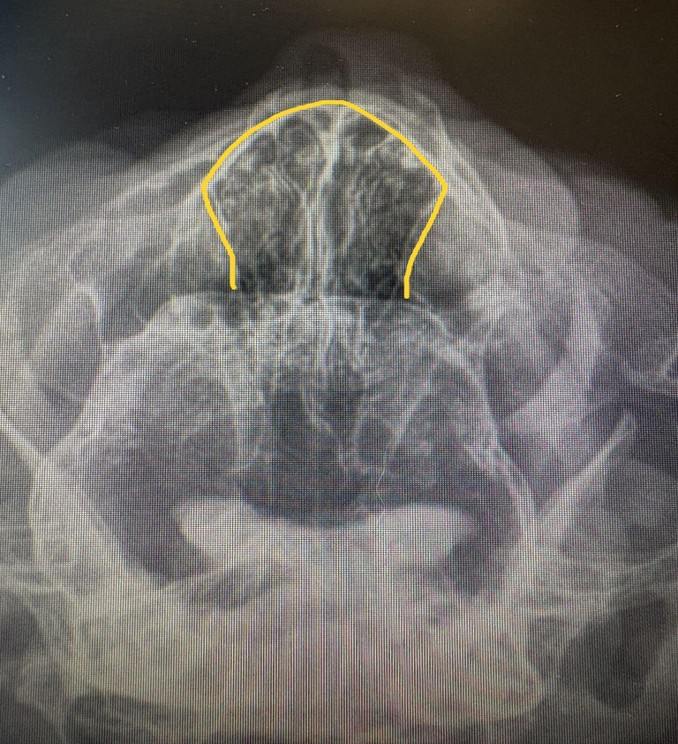
Healthy looking nasal turbinates, the highlighted structures seen on this skull x-ray, are important to evaluate as rhinitis can cause damage to them over time. Chris Vanderhoof / Cats.com
There is no one single test to diagnose FICR in cats. Arriving at a diagnosis for it requires ruling out other causes, including those that are more common, self-limiting, or less complicated to treat.
The path to diagnosis always starts with a visit to your veterinarian. A full detailed history of your cat’s illness will be collected. Some important things to relay include:
- How long have the current signs been seen for?
- Besides the upper respiratory signs, are there other signs of illness (lethargy, coughing, etc.)
- How is your cat’s appetite and interest in food?
- Have these signs occurred before? If so, how many times and when was the last time?
- Have any medications or home remedies been tried already?
- What is your cat’s vaccination history, especially for FVRCP/HCP (which includes feline herpesvirus and feline calicivirus)
- What is your cat’s testing history for feline leukemia and feline immunodeficiency viruses?
Your vet will review this information with you and ask some more detailed follow-up questions. With FICR, getting a full picture of disease and its recurrence is very important.
Your cat will be checked for signs of a fever and the vet will complete a full physical exam. This often includes checking for airflow through both nostrils. This can be done by placing a glass microscope slide in front of each nostril and looking for condensation with each exhale. A lack of airflow does raise concern for severe congestion, a foreign object, or a tumor being present.
Other important physical exam findings your vet looks for may include:
- The color/appearance and volume of any nasal discharge
- Is the nasal discharge coming from one or both nostrils?
- Upper respiratory noise (like congestion or stertor)
- Sneezing during the exam
- Other upper respiratory signs (like conjunctivitis)
- Any lower respiratory signs (like coughing or abnormal lung noises heard with the stethoscope)
- Evidence of weight loss
What is recommended next may depend on how many times this has occurred for your cat.
If there is discolored nasal discharge plus/minus fever, your vet may elect to treat for a bacterial upper respiratory infection if it’s the first occurrence.
But if there is any suspicion about a recurrent or chronic condition, more serious signs of illness, or single-sided nasal discharge, further testing will likely be recommended.
For recurrent upper respiratory conditions or those that never fully resolve, here are some further tests your vet may recommend.
X-rays: x-ray images of the skull are important for assessing the nasal passages. The presence of fluid or a possible tumor can be assessed. The nasal turbinates, while lined with tissue, are actual bony structures and can be seen with an x-ray. Damage or loss of them can be seen. Your vet may also elect to check the lower airway if there are any concerns during physical exam.
While x-rays of the chest or abdomen may be performed without sedation or just some light sedation, x-rays of the head must be performed with heavier sedation. This allows for the head and mouth to be adjusted into a couple of specifically needed positions.
Dental x-rays may also be recommended if one or more tooth concerns are present that could be causing nasal discharge. Dental health is hard to assess accurately using conventional x-rays and are better performed with a much smaller and focused x-ray machine, just like at a human dentist. Dental x-rays may be done on their own but often are included as part of a dental procedure that allows the teeth to be more safely assessed for disease under anesthesia and where any needed tooth removal or other treatments can be performed at the same time.
Bacterial testing: Bacteria can be tested for in two general ways. One is with a culture, where a sample is taken from the nasal passage and grown in a culture medium to find out if bacteria is present and if so, what type it is and what antibiotics can be used to treat it.
The second form is with polymerase chain reaction (PCR) testing. This test looks for DNA presence.
Both types of testing need to be interpreted carefully. Cats can harbor many strains of bacteria in their upper respiratory tract, some of which are considered normal flora.Proving the presence of bacteria does not mean that all (or sometimes any) of the strains present are actively causing disease.
Fungal testing: ruling out fungal disease is very important in some regions where it is more prevalent. Fungal infections can be aggressive and difficult to treat, causing tissue damage that can appear like chronic FICR or even cancer. Fungal organisms can be tested for with culture or PCR, similar to bacteria.
Viral testing: You can check for the presence of certain viruses like feline herpesvirus and feline calicivirus using PCR or viral isolation testing. As with bacteria, the results need to be considered carefully. Many cats can be asymptomatic carriers and proving the presence of an organism doesn’t always mean it’s the direct cause of a current illness.
FeLV/FIV testing: while feline leukemia and immunodeficiency viruses don’t directly cause chronic rhinosinusitis, they can impact the immune system and make a cat more susceptible to recurrent infections. Your vet may wish to rule these out as underlying contributors.
Computed Tomography (CT) imaging: this is a more advanced type of x-ray that allows for multiple image “slices” through the area of concern. This removes the problem regular x-ray creates of needing to make interpretations through bone and tissue structures that are all superimposed on top of each other. For the nasal passages and sinuses, this allows for more precise imaging and understanding of how bad disease is and its extent.
One limitation of CT imaging is that it requires a brief period of anesthesia.
Rhinoscopy: A rhinoscopy procedure involves passing a scope of the nasal passage to directly view the tissue. Because a cat’s nasal passages are so small, this requires passing the scope into the mouth and up over the soft palate to view the passages from behind.
Like CT, this procedure also requires anesthesia. In many cases, CT imaging and rhinoscopy are performed together.
Tissue biopsy: A tissue biopsy may be needed to help narrow down a diagnosis of FICR. This is especially necessary if concern for a tumor or cancer has not yet been ruled out. A tissue biopsy may be collected during rhinoscopy. This is ideal as the tissue being sampled can be seen with the scope. However, when a biopsy is needed and a scope is not available, a vet may choose to collect a tissue sample of the nasal passage with a tiny pair of long forceps.
While some tissue biopsies can be collected with only a local anesthetic or sedation, any samples collected from the nasal passages must be performed under anesthesia. The endotracheal tube is needed to protect the airway from nasal passage bleeding after sample collection. Flushing the nasal passages and sinuses with sterile saline is also common during these procedures, requiring airway protection.
The most common result supportive of FICR is called lymphoplasmacytic rhinitis. This involves the immune cells lymphocytes and plasma cells being seen in the tissue sample at the lab. These are seen more with chronic inflammation. Neutrophils may also be seen, which is called neutrophilic rhinitis.
Bloodwork: Regular bloodwork, including a CBC and chemistry profile, may be performed but often provides limited information about the upper airway. Globulin, a protein marker for chronic inflammation, may be elevated in the chemistry and may be the most helpful to support a chronic condition. The white cell counts however, may be variable and many cats may have a normal CBC.
Overall, to reach an accurately presumed diagnosis of FICR, the following often need to happen:
- An overlying and treatable bacterial or fungal infection are not primary causes. This may be achieved through treatment trials, bacterial culture results, PCR testing, or even tissue biopsy.
- Cancer and foreign objects have been ruled out through x-ray or CT imaging, and tissue biopsy.
- Tooth root/dental disease has been ruled out through dental x-rays and a full dental assessment under anesthesia
While these are ideal, it may not be feasible to pursue them all in every situation. It’s important to work closely with your vet to help prioritize the most useful testing options to arrive as close to a diagnosis as possible.
Treatments for Rhinitis and Sinusitis in Cats
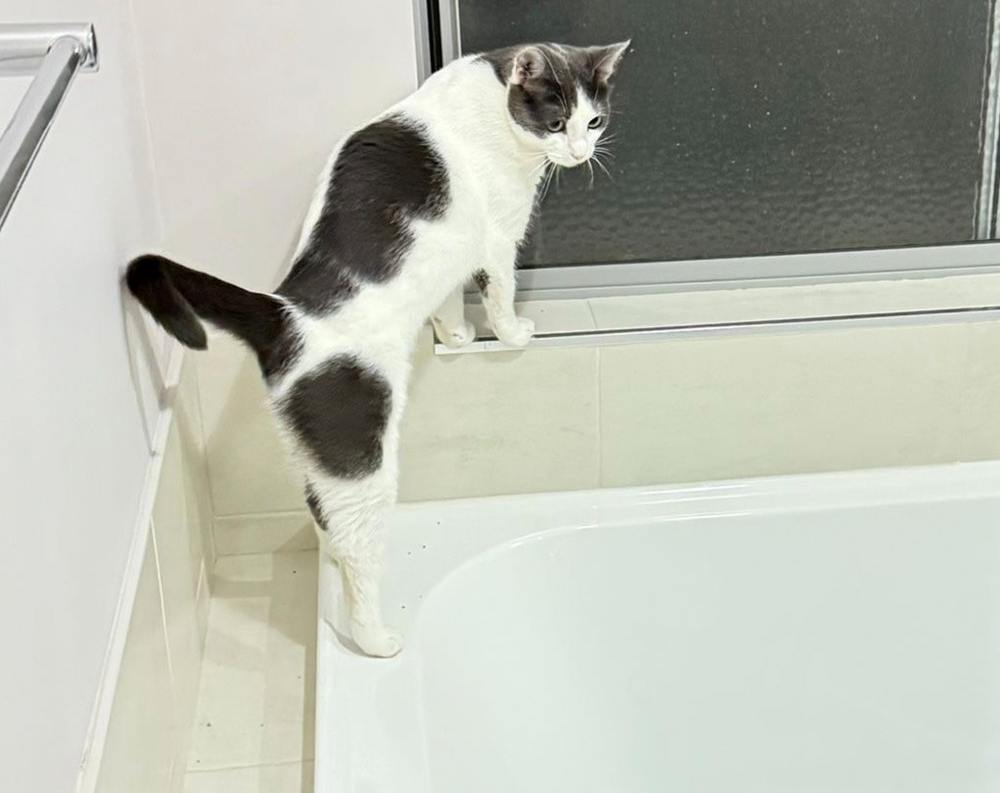
One common home therapy for rhinitis is to have your cat sit or lay in the bathroom with the shower on for 15-20 minutes. The steam can help loosen congestion in the nasal passages. Melina Grin / Cats.com
There is no specific treatment for feline idiopathic chronic rhinosinusitis in cats. It can also not be cured in most cases. But management is possible with the goal of keeping flare-ups and secondary bacterial infections less frequent and supporting a good quality of life.
The following are different types of therapies that may be included as part of a therapeutic plan for a cat with FICR:
Antibiotics: these can be a core approach but vary based on the need. Some bacterial infections associated with FICR can be harder to resolve with treatment requiring several weeks. Others, particularly when guided by culture and sensitivity results, may resolve within 2–3 weeks. There are some cats where pulse-dose therapy with an antibiotic may be of benefit as a palliative approach, where an antibiotic is used for a week or two, discontinued for a few weeks, and then the cycle is repeated.
Antibiotic use must always be balanced with the risk for antimicrobial resistance. Not finishing a fully prescribed antibiotic course and constantly changing to new antibiotics are two ways this can happen. If a second antibiotic fails to show benefit, that’s when I do push the priority of a bacterial culture before further therapy.
Nasal flushes: these must be performed under anesthesia to protect the airway (and because most cats would object to having saline squirted up their nose!) but periodic flushes can be helpful to remove accumulated debris, especially during flare-ups. The principle is similar to a neti-pot or Navage, if only cats could learn to use either.
Steroids: a steroid like prednisolone may be helpful, especially if a current infection is not present and a diagnosis of lymphoplasmacytic rhinitis has been confirmed. Long-term use of any steroid must be balanced with any concern for diabetic risk and presence of heart disease.
Antihistamines: these are rarely useful as histamine is just not a common player in the game of chronic rhinosinusitis. However, if there are any kind of seasonal flares that occur, they may be of some use and important to discuss with your vet. First generation antihistamines are the least effective but second and third may be better.
Congestion relief: Using saline nasal spray or drops is safe; however, these treatments can be difficult to administer to many cats. You can help relieve some congestion by bringing your cat into the bathroom with you when you shower for 15-20 minutes. The steam that accumulates can loosen congestion. Another strategy is to turn the shower on and feed your kitty in the bathroom while the steam builds up and they finish their meal. I always recommend avoiding any nasal decongestants designed for people. This is especially true for any oral products containing pseudoephedrine, which is considered toxic to pets.
L-lysine: while this supplement used to be more widely used for cats considered to be carriers of feline herpesvirus, its use has come into question in recent years. However, some veterinarians maintain that they do see benefit in certain patients, there are few detractors to its use, and it may be worth discussing your cat’s particular case with your vet.
Supportive Care: Appetite stimulants (mirtazapine, capromorellin) may be helpful during phases of heightened congestion and reduced appetite. Warming food in the microwave can also be helpful to release the aroma of food and encourage appetite.
Cat Care Tips
If your cat has chronic rhinosinusitis, care at home can be really important to help reduce the need for veterinary visits. Consider some of these tips to help:
- It’s unclear how much air particulates play a part as a cause of FICR, but they can certainly make things worse for a cat with the condition. Having air purifiers in the home and using low dust cat litter can help reduce risk for flare-ups.
- It’s important to keep your cat up to date on vaccinations, especially in multiple cat homes, for cats who go outdoors, or if one or more new cats will be introduced to the home.
- Humidifiers may help loosen congestion. Consider placing one or more in a room where your cat spends a lot of their time.
- If signs have been stable for some time and suddenly appear to worsen, it can be reasonable to increase the intensity of home care for 2-3 days. However, don’t delay scheduling a recheck with your vet in case antibiotics or other treatments may be needed.
Prevention of Rhinitis and Sinusitis in Cats
Feline idiopathic rhinosinusitis (FICR) by its very definition has no specific cause that can be singularly avoided. However, there are risk factors that many cats with the condition share.
One of the greatest is exposure to feline herpesvirus and feline calicivirus. Ensuring that kittens begin vaccination at approximately 6–8 weeks of age and complete the series through 16–20 weeks can greatly reduce the risk for more severe disease associated with these viruses. Recall that very young cats were far more likely to have severe disease with FICR.
Poor housing conditions and stress can greatly contribute to the development of upper respiratory conditions and impact the immune system. This can most often occur in shelters and catteries where there are high volumes of cats, but multiple cat households should also remain aware of how environmental conditions and stress may be affecting physical health.
Some potential causes of FICR, like allergens, are still not fully understood and require further research. But as the condition is investigated more, additional prevention strategies may become available.
-
TVP. (2012, August). Feline Rhinitis and Upper Respiratory Disease. Today’s Veterinary Practice.
-
Kuehn, N. (2018, August). Rhinitis and Sinusitis in Cats. Merck Veterinary Manual Online (Pet Owner Version).
-
Lundgren, B. (2023, June 14). Rhinitis in Dogs and Cats. Veterinary Partner.
-
Beauvois, M., Colombe, P., Canonne, A. M., & Mortier, J. (2023). Cats with idiopathic chronic rhinosinusitis that develop clinical signs before two years of age have more severe nasal conchal lysis, sinus malformation, and more severe inflammation on histological examination. Journal of the American Veterinary Medical Association, 261(10), 1481–1487. https://doi.org/10.2460/javma.23.04.0186
-
Clinician’s Brief. (2007, November). Chronic Rhinosinusitis in Cats.
-
Stone, A. E., Brummet, G. O., Carozza, E. M., Kass, P. H., Petersen, E. P., Sykes, J., & Westman, M. E. (2020). 2020 AAHA/AAFP Feline Vaccination Guidelines. Journal of Feline Medicine and Surgery, 22(9), 813–830. https://doi.org/10.1177/1098612x20941784