 Published Jul 24, 2026


Melina Grin / Cats.com
If you have adopted a fearful cat from a shelter, rescued a scared stray, brought home a kitten that hasn’t been exposed to household sounds during the early socialization period, or have a purebred cat that feels anxious during thunderstorms, consider desensitizing your cat to these noises. This method can help reduce anxiety and promote a calmer life for your cat.
We have created a short guide to help introduce your pet to frightening sounds in a controlled, positive way. This technique, often used with counterconditioning, aims to shift your cat’s response from fear to indifference, or even help them associate the sound with a positive outcome.
Here Is a Step-By-Step Guide Based on Feline Behavioral Techniques:
Identification and Preparation
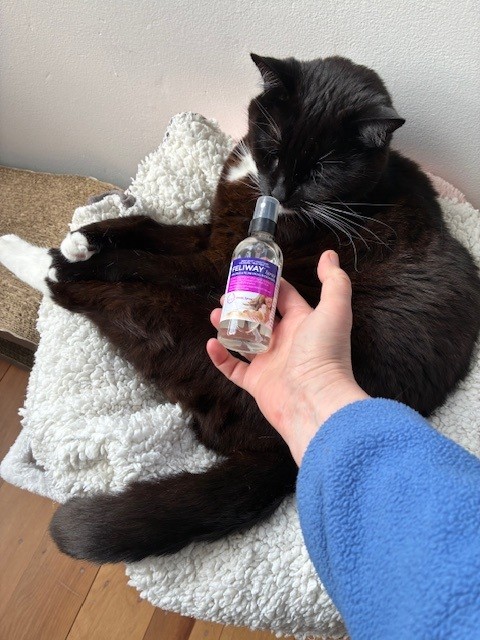
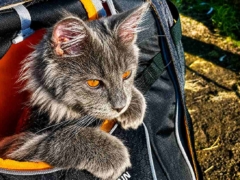
Synthetic pheromone diffusers or sprays, such as Feliway, may help reduce stress and promote a calmer environment for your cat. Melina Grin / Cats.com
- Identify triggers: Begin by identifying the specific sounds that make your cat anxious. Common causes include the sounds of banging doors, vacuum cleaners, blenders, doorbells, fireworks, garbage trucks, yelling and storms.
- Determine the threshold: Find the volume level at which your cat begins to show fear, such as freezing, hiding, trembling, or panting.
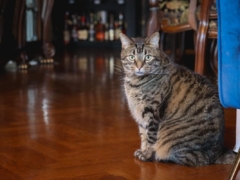
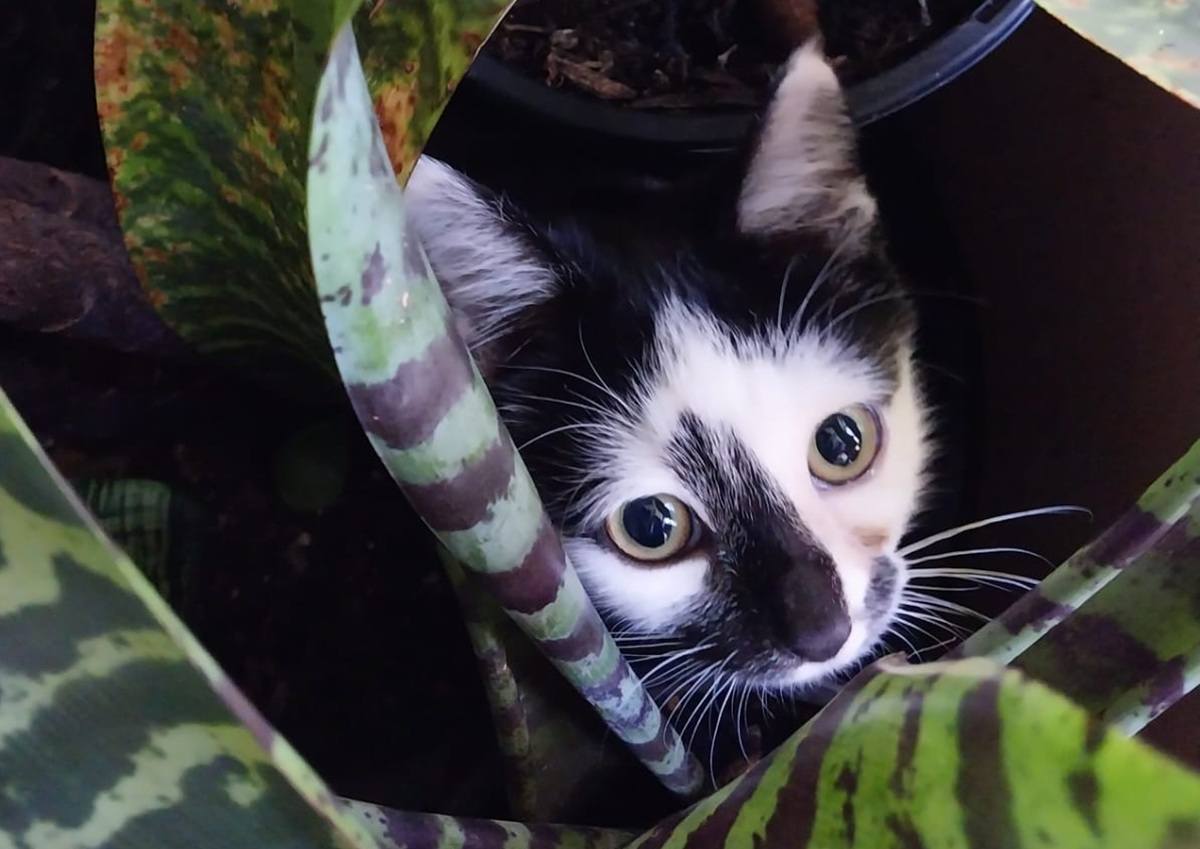
- Create a safe space: Provide your cat with quiet, safe, and easily accessible areas to hide, such as under the couch or bed, on high cat trees, in a tipi or inside a cardboard box.
- Utilize calming aids: Consider using synthetic pheromone sprays and diffusers, such as Feliway, to help alleviate overall anxiety in your home.
- High-value treats: Prepare a special treat (like Churu, tuna, or cooked chicken) that you will give only to your cat during training sessions.
The Desensitization Process: Step-By-Step Guide
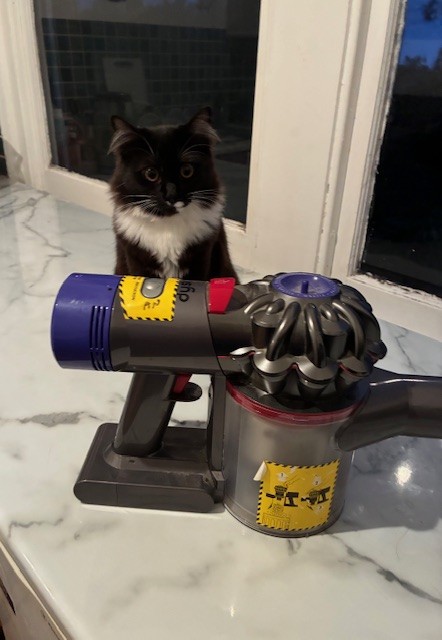
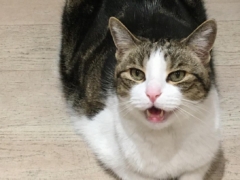
Help kittens get used to a vacuum by gradually introducing it and rewarding calm behavior with treats or praise. Melina Grin / Cats.com
- Start by exposing your feline friend to a sound that creates fear, whether by downloading it from YouTube or recording it yourself. You can also explore this playlist of various sounds that cats encounter in their lives and calm sound.
- Reduce the intensity: Begin by playing the sound at a very low volume. For recorded sounds like fireworks or thunder, keep the volume as low as possible. For physical sources like a vacuum cleaner or a blender, store them in another room when you start practising.
- Muffle the sound: Use pillows or blankets to cover the sound source during your training sessions.
- Pair with positive experiences: While the sound is playing or just before it starts, reward your cat with treats, engage in playtime, brush them if they enjoy it or offer praise. This helps build positive associations with the sound.
- Watch for distress: If your cat shows signs of fear, such as hiding, shaking, or panting, stop the session right away. Lower the volume or increase the distance from the sound source before trying again. If your cat seems fearful, return to earlier steps in the process.
- Gradual progression: Over several weeks to months, gradually increase the volume or move the sound source closer, only if your cat stays calm during the sessions.
- Keep it short: Start with brief, frequent training sessions (about 5-10 minutes) rather than longer, more stressful ones. Aim for 10 minutes, 1-2 times each day, rather than fewer, longer sessions.
Guidelines to Avoid
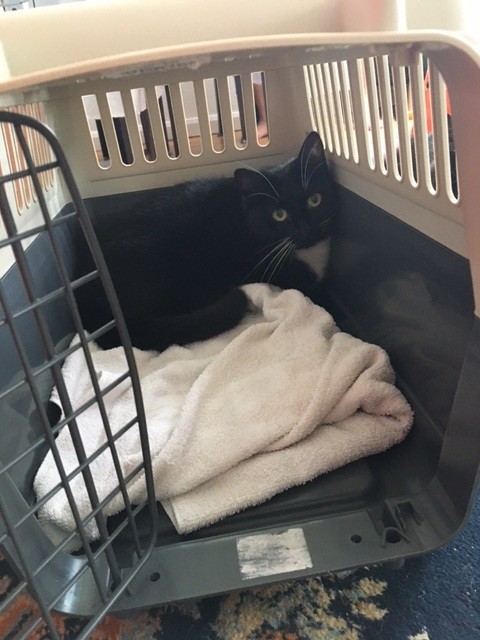
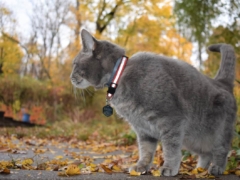
Never force your cat out of a hiding spot, as doing so can increase their fear and stress. Melina Grin / Cats.com
- Avoid punishment: Don’t scold your cat for being scared, as it will only heighten their anxiety.
- Respect your cat: Never forcibly coerce or remove your cat from their hiding spot, as this could exacerbate their fear.
- Limit over-soothing: Refrain from comforting a frightened cat, as this might reinforce their anxiety. Instead, maintain a calm demeanor and offer reassurance only if they come to you.
Important Considerations
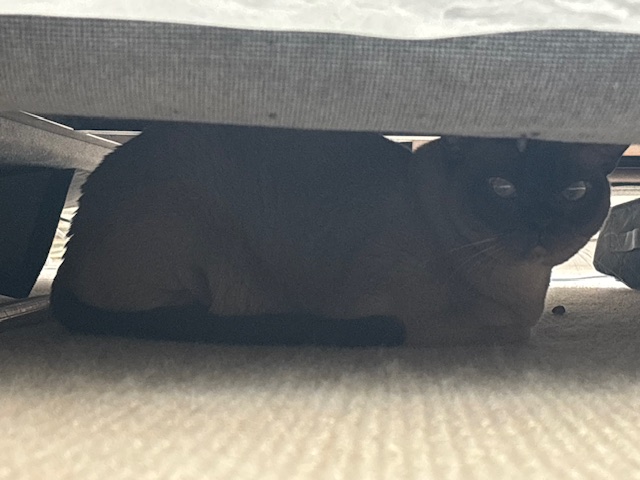
Provide quiet, safe, and easily accessible hiding places, such as under a bed or couch, where your cat can retreat when frightened by loud noises. Melina Grin / Cats.com
- Begin preparation early: Start training a few months before anticipated events, such as storm season or fireworks displays.
- Refrain from “flooding”: Never force an animal to remain in a situation that triggers panic, as this can cause trauma and lasting harm.
- Eliminate frustration: Don’t get frustrated if your cat isn’t compliant with the technique. Stop and try again another day.
The desensitization process requires extreme patience and may take weeks or months, depending on the severity of the fear. If the fear is severe or leads to aggression, please get in touch with your vet or an animal behaviorist for further advice and support.