
 Published Oct 6, 2026


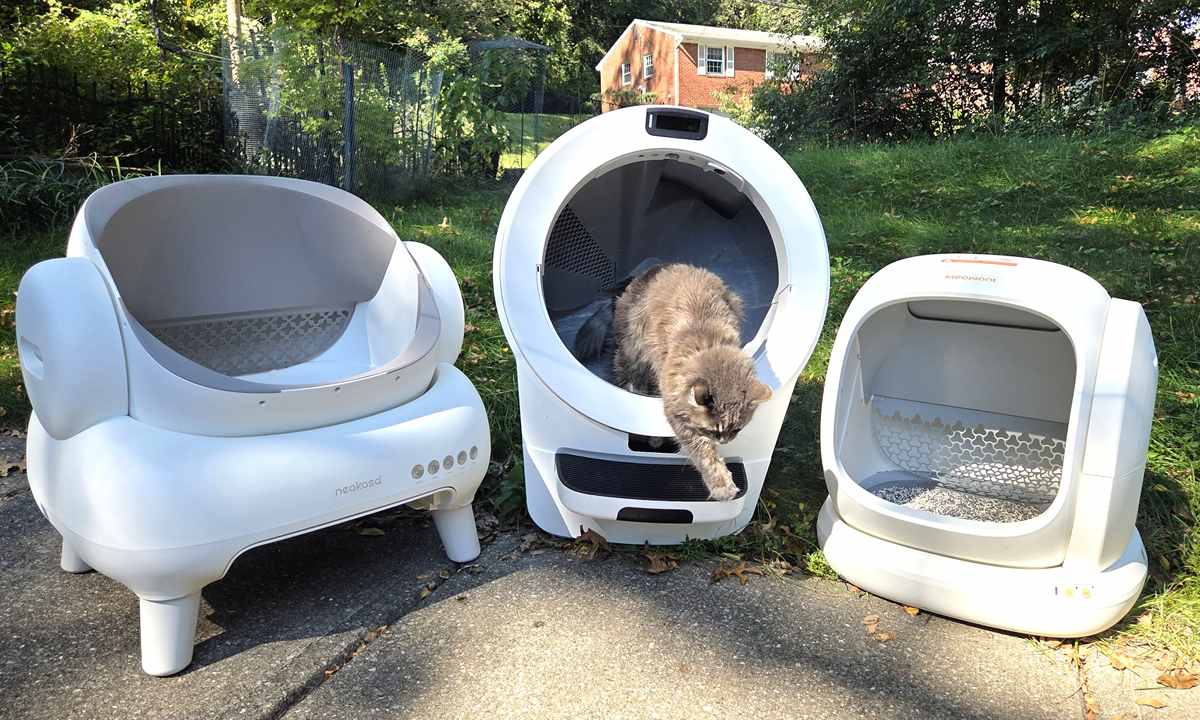
Kate Barrington / Cats.com
Everyone likes having a sanitary place to do their business, but no one likes cleaning the bathroom. The same theory can be applied to your cat’s litter box. While you may not enjoy all the scooping and scraping, cleaning the litter box is a necessary task (especially if you want your cat to reliably do their business in the box instead of elsewhere in your home).
If you’re tired of scooping the litter box yourself or you’re having trouble living up to your cat’s standards for cleanliness, you might be thinking about an upgrade. Self-cleaning litter boxes promise to free cat owners from the hassle of daily scooping, but that convenience comes at a cost.
The ultimate question on many cat owners’ minds is this: are self-cleaning litter boxes worth it? In this guide, we’ll weigh the pros and cons of automatic litter boxes to help you answer the question for yourself.
What Is a Self-Cleaning Litter Box, Anyway?
There’s a lot of hype surrounding automatic litter boxes, especially on social media. But even as you scroll feeds flooded with photos of happy cats loving their new self-cleaning litter boxes, you may find yourself wondering whether it’s just another gimmick.
To answer that question, we need to explore what self-cleaning litter boxes are and how they actually work.
A self-cleaning litter box is a device that automates the process of separating waste from clean cat litter. Instead of scooping clumps out of your cat’s litter box on a daily basis, you simply need to empty the device’s waste compartment when it fills up.
There’s also the matter of keeping the litter level topped up and doing the occasional deep clean, but a self-cleaning litter box essentially saves you from scooping. They’re also designed with an eye to odor control.
How Do They Actually Work?
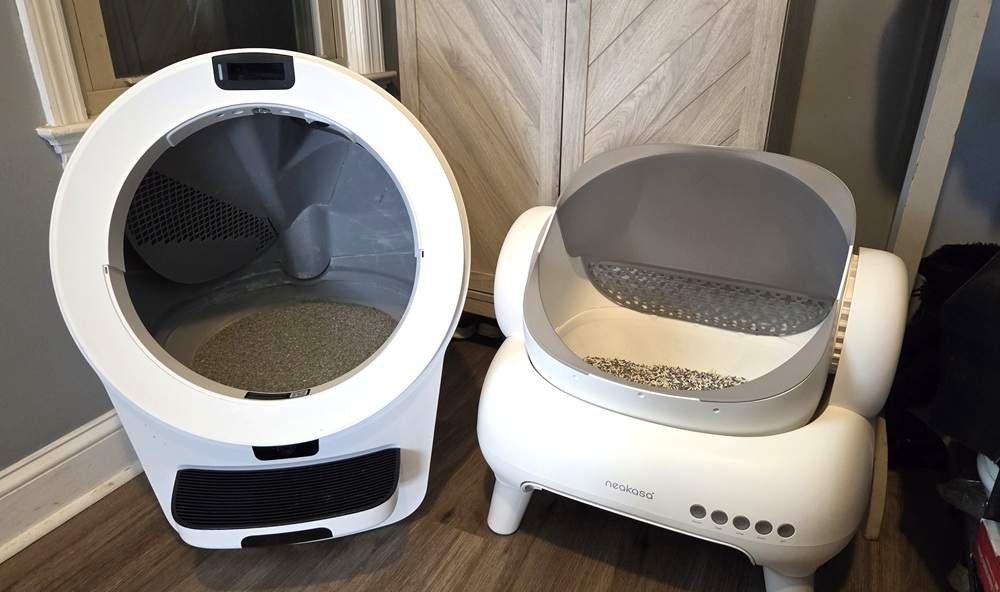
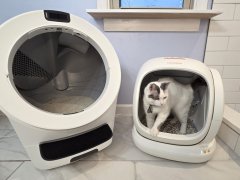
Automatic litter boxes generally use either a rake-style or sifting-globe design, with sifting globes now the more common standard. Kate Barrington / Cats.com
Most automatic litter boxes fall into one of two categories: rake-style or sifting globe. Early automatic litter boxes often fell into the former category, though the latter has become the gold standard.
Rake-style models look similar to standard litter pans. They typically feature an automated rake that sweeps across the litter bed, collecting waste as it goes and depositing it in a hidden compartment. This design doesn’t exclusively rely on clumping cat litter to function properly, and some models (like the PetSafe ScoopFree) are specifically designed to work with crystal cat litter.
Sifting globe models (like the popular Litter-Robot by Whisker) look more similar to an enclosed litter box. These harness the force of gravity inside a rotating globe design, essentially sifting the litter to separate out the waste. When it comes to safety, models that rotate on the X-axis (side to side) have fewer inherent trap risks than models that rotate on the Y-axis (front to back).
Both models utilize some kind of sensor system to detect your cat’s presence in the litter box and automatically initiate a cleaning cycle after they leave. On top of practical convenience, both models help minimize litter box odor by removing waste from the litter bed quickly and keeping it in a closed compartment.
The Practical Benefits of Automatic Litter Boxes
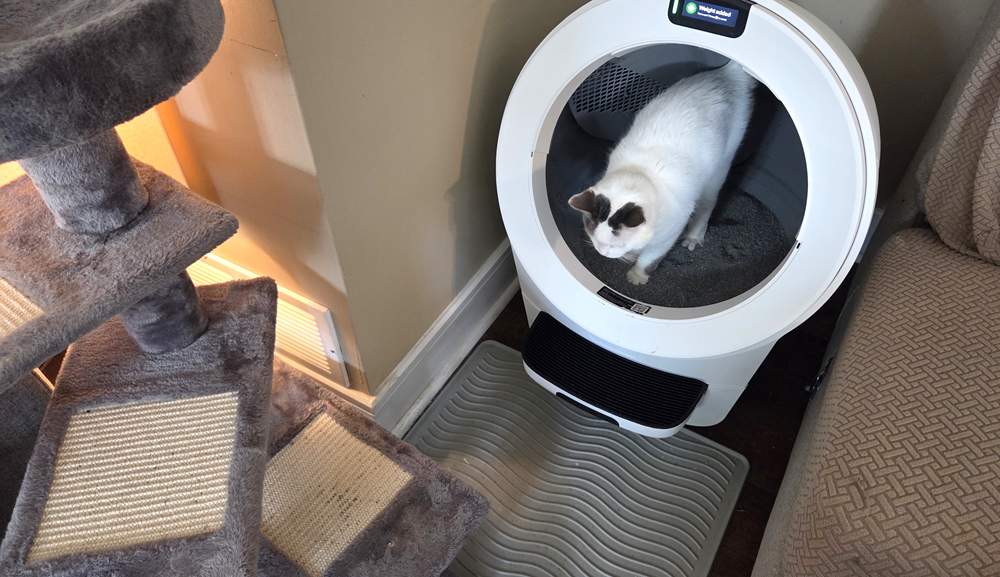
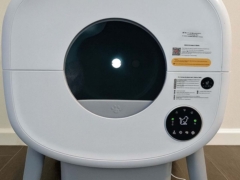
Automatic cleaning helps keep fresh litter ready for your cat while cutting down on daily maintenance. Kate Barrington / Cats.com
Features and functionality vary greatly among the many automatic litter boxes on the modern market, but most models offer a similar set of benefits over traditional litter pans.
Time Savings
Upgrading to an automatic model all but eliminates the task of cleaning the litter box. That means more time to spend bonding with your cat and less time dealing with the messy details of cat care. Plus, your cat’s comfort will no longer be limited by your schedule. They’ll have a fresh bed of litter to enjoy each time they visit the litter box.
You may also spend less time cleaning up the area surrounding an automatic litter box. Models with enclosed or semi-enclosed designs help keep litter in the box where it belongs, and many have litter mats built into the step your cat uses to enter and exit the unit.
Consistency and Convenience
Staying on top of litter box duty can be a challenge, especially when you travel for work or have a schedule that changes from one week to the next. An automatic litter box keeps things nice and clean for your cat, whether you’re at home or away. It can be particularly beneficial in multi-cat households where litter box traffic is high.
How well an automatic litter box works in a multi-cat household depends largely on the size of the waste drawer. You’ll still need to empty it when it fills up, but you might go a whole week with a self-cleaning litter box versus daily trips to the trash can with a standard litter pan.
Odor Control
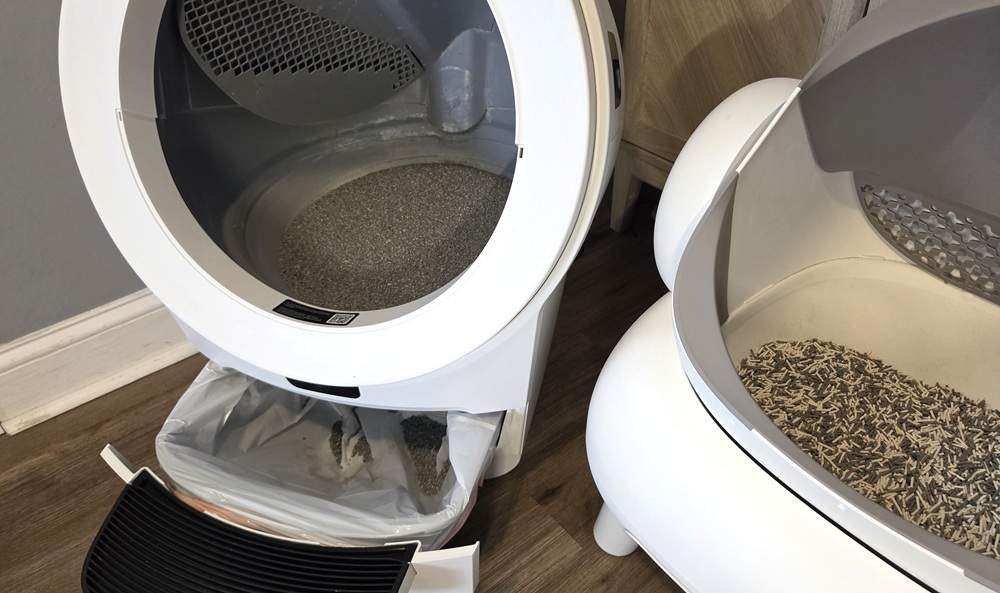
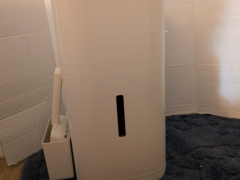
Frequent automatic waste removal helps maintain a cleaner, fresher-smelling litter box. Kate Barrington / Cats.com
Frequent scooping is the key to keeping litter box odor at bay. Sometimes even twice-daily scooping isn’t enough, however, especially if your cat isn’t consistent about covering their waste. With an automatic litter box, you can count on clumps and waste being removed from the litter bed after every use, no matter when or how often your cat visits the litter box.
On top of having a sealed waste compartment to prevent odor from escaping, many automatic litter boxes also incorporate carbon filters to help keep things fresh. Some models even offer UV sterilization to help kill odor-causing bacteria.
Health Monitoring
Outside the self-cleaning benefits, many automatic litter boxes offer health monitoring features as well. App-connected models track litter box usage, for example, and can often differentiate between multiple cats by weight.
Brands like Litter-Robot track your cat’s usage trends over time and can help you identify red flag behaviors. For example, a sudden or significant change in litter box usage can be an early indicator of serious concerns like urinary tract infections (UTIs) or kidney disease. With the free Whisker app, you can view usage data, adjust device settings, and monitor performance metrics all from your smart device.
What Are the Drawbacks?
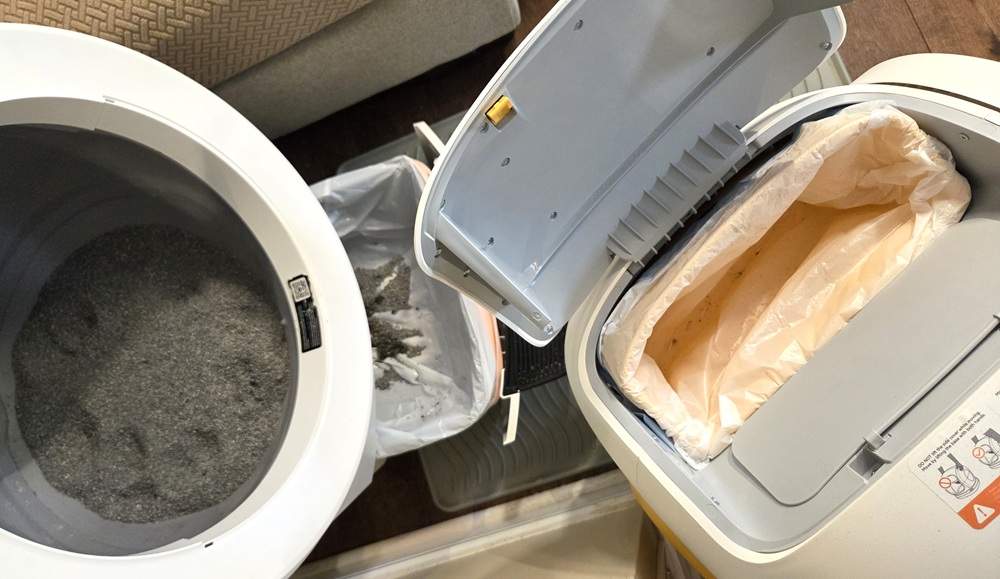
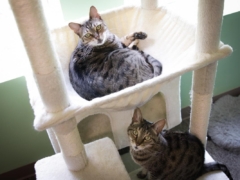
Automatic litter boxes still require regular maintenance, including deep cleaning and emptying the waste compartment. Kate Barrington / Cats.com
A well-designed automatic litter box is more than a trendy piece of pet tech, but there are some significant concerns cat owners should consider before making the investment. Let’s quickly explore some potential drawbacks associated with self-cleaning litter boxes.
- Upfront cost. Self-cleaning units cost significantly more than standard litter boxes, often upwards of $500. If you spring for branded waste liners and replaceable filters, recurring monthly costs can also add up quickly.
- Noise. Cats who startle easily may find the sound and movement of an automatic litter box off-putting. Some cats simply need an adjustment period or a longer delay timer to give them a chance to clear the room before the unit cycles.
- Size and space. Automatic litter boxes tend to take up a lot of floor space, yet some models still offer limited interior room. The dimensions of the litter bed itself may be significantly smaller than the footprint of the device.
- Mobility limitations. Entry height can sometimes be an issue for kittens or senior cats, so it’s important to check unit specifications. Some models (like the Litter-Robot 5) offer accommodations like ramps versus steps to improve accessibility.
- Maintenance. Even automatic litter boxes still need periodic deep cleaning, and you’ll need to empty the waste compartment regularly. Plus, mechanical parts can malfunction and firmware may need occasional updates to maintain reliable performance.
Safety is also a key concern with any type of pet tech, especially something with moving parts. A poorly designed model could cycle while your cat is still inside, putting them at risk for serious injury. It’s worth taking the time to consider more than just the purported benefits an automatic litter box has to offer. Evaluate the safety features inherent to the design and engineering, and assess the company’s history of customer satisfaction while you’re at it.
Is a Self-Cleaning Litter Box Worth It for You?
The right automatic litter box can be a game changer, especially for busy households and multi-cat families. Beyond the practical time-saving benefits, there’s also your cat’s comfort to consider. After all, it’s hard to beat the combination of an always-fresh litter bed and a discreet compartment that keeps smelly waste out of sight.
If you’re interested in minimizing litter box odor and spending less time scooping waste, an automatic litter box could very well be a sound investment.
Speaking of investment, the market for self-cleaning litter boxes is more diverse than ever, but the fact remains that these devices can be pretty pricey. The cost may not outweigh the convenience for some families, and the size could be a challenge if space is already at a premium in your home.
If you’ve decided that a self-cleaning litter box does sound like the right choice for your home, your next step is to narrow down the options. While every situation is unique, there’s one model we recommend more often than any other: the Litter-Robot 5 (or the premium Litter-Robot 5 Pro).
Our Recommendation: Why Litter-Robot Stands Out
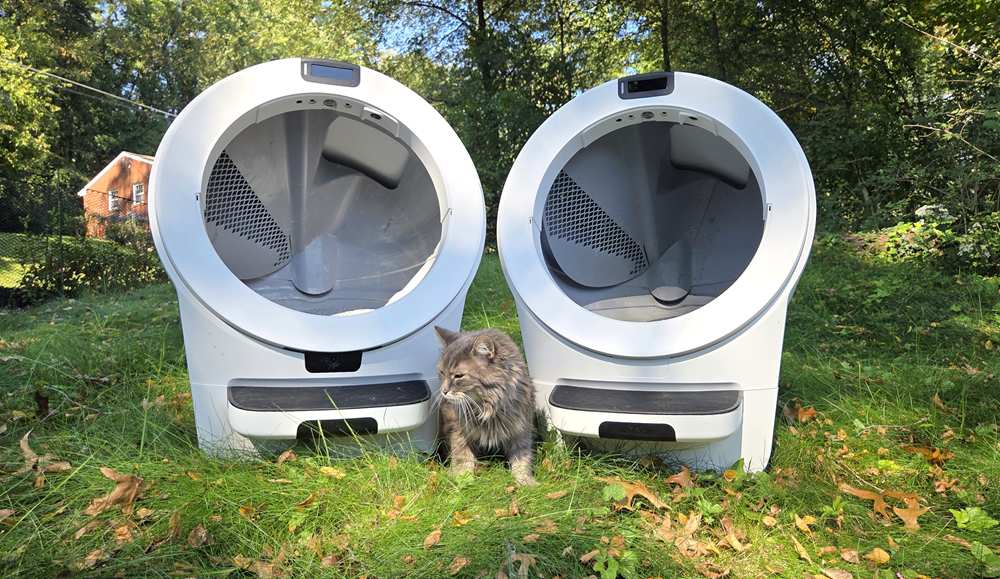
The Litter-Robot 5 combines advanced safety features, reliable performance, and seamless app integration. Kate Barrington / Cats.com
The Litter-Robot 5 balances the hallmark benefits associated with self-cleaning litter boxes while minimizing the drawbacks. Though one of the pricier picks on the market, Litter-Robot is also one of the most heavily tested and highly awarded brands out there. The Litter-Robot 5 stands out for its advanced safety features, reputation for reliability, and seamless app integration.
Here are some of the reasons we recommend this model in particular:
- The built-in sifting mechanism reliably separates clean litter from clumps, helping minimize wasted litter.
- It’s packed to the brim with safety features including motion-detecting laser sensors at the top of the bezel, a weight sensor integrated into the base, built-in pinch guards at the waste bin opening, and an X-axis rotation design.
- Advanced health insights and detailed tracking information in the Whisker app, plus convenient access to system settings and customizable notifications.
- It’s just one of several models in Whisker’s Litter-Robot lineup, which ranges from the fan-favorite Litter-Robot 4 to the ultra-advanced Litter-Robot 5 Pro.
- The cat-friendly design features a wide, step-in opening and a spacious, wipe-clean interior, while the cleaning cycles operate quietly and reliably.
The Litter-Robot might not be the perfect fit for every household, and it’s wise not to rush your decision. To learn more about what the market for automatic litter boxes has to offer, check out our collection of litter box reviews.