Published Nov 15, 2026


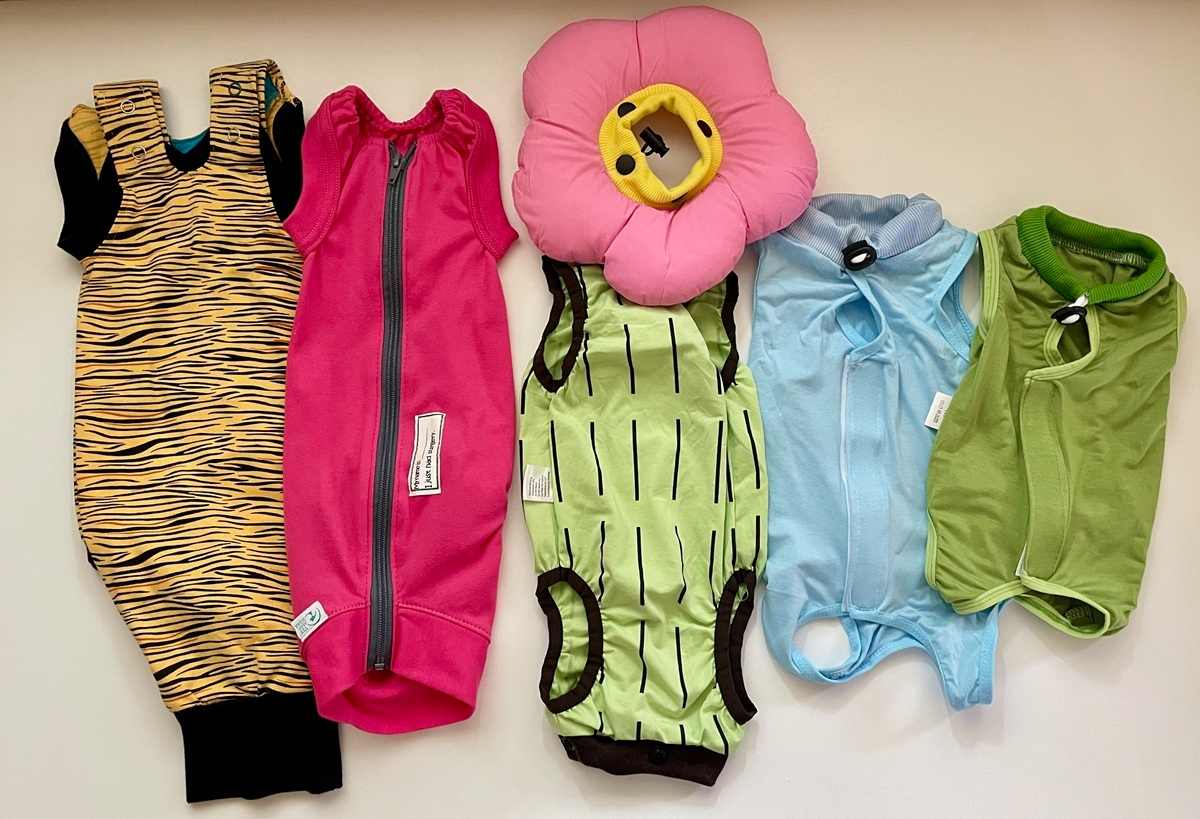
Annie Butler / Cats.com
Essentially an alternative to the dreaded “cone of shame,” a surgical recovery suit is a full-body garment made from soft, breathable fabric that covers your cat’s body, preventing them from licking or biting their surgical stitches. They’re most appropriate for any type of abdominal surgery, and cats seem to be less anxious wearing them than they would be wearing a cone. There are strategically placed holes so your cat can use the litter box with the suit on, and most are machine washable.
A few years ago, I had a bad experience with two foster kittens who had a horrible reaction to the anesthesia from their spay surgery once they woke up—panicking, trying to jump up the walls to escape, and racing around the room. The cones I got from the vet just made things worse, so I ended up making them each a little onesie out of a pair of socks (thank you, YouTube!). Now, I opt for surgical suits, and many vet offices and spay/neuter clinics send their feline patients home already dressed in a surgical suit (although you may have to buy one ahead of time).
At a Glance: Best Cat Surgical Recovery Suits to Buy


We highly recommend looking at the comparison table below, where we highlight the features of each product. You’ll also find more detailed information about each product later in the article.


VetMedWear Recovery Suit
- Easy to put on
- Soft, breathable fabric
- Machine washable


EMUST Cat Surgery Suit
- 100 percent cotton fabric
- Comes with attachable soft cone
- Machine washable


Suitical Recovery Suit
- Snug and comfortable fit
- Soft fabric
- Machine washable


Vila Breathable Recovery Suit
- Simple design
- Easy to put on
- Machine washable
Why Trust Cats.com?
Here at Cats.com, we take testing products seriously. We read product reviews, do research on the companies, and then purchase and test the products ourselves.
Although they weren’t thrilled about it, I tried these five surgical recovery suits on my senior cat and one of my 7-month-old foster kittens and observed how well (or not) they tolerated them, as well as their ease of movement, fabric softness, and comfort.
Does Your Cat Need a Recovery Suit?
Any cat that has abdominal surgery can certainly benefit from a surgical recovery suit, which is generally more comfortable and less stressful than a surgical cone. Recovery suits are ideal for protecting incisions and wounds. They allow your cat to walk, jump, eat, and use the litter box much more naturally than with a cone.
In my experience, surgical recovery suits are definitely worth a try. Cats might find them annoying, but they’re better than a plastic cone – or a trip to the vet to replace stitches.
Chris Vanderhoof, DVM, MPH, a veterinarian with many years of surgical experience with cats, agrees. “The Elizabethan collars (cones) have their place but surgical recovery suits have made a huge difference in post-surgical comfort for cats and reducing stress during their recovery. Not only do they protect the incision from any licking or chewing attempts, but they also keep it clean from litter and other environmental contaminants. They also work well for covering healing wounds and protecting glucose monitors for diabetic cats.”
The 5 Best Cat Surgical Recovery Suits
#1 Overall Best: VetMedWear Recovery Suit
This suit is our top pick because it’s very easy to put on and take off. It features a zipper on the top, so all you do is unzip it, lay it flat, get your cat to put their feet in the leg holes, then pull it up and zip it back up. It also features soft, stretchable leg and neck cuffs.

Annie Butler / Cats.com

Annie Butler / Cats.com

Annie Butler / Cats.com
Made from organic cotton and Lycra, the suit is breathable, hypoallergenic, and specially made to be form-fitting but stretchable. The lightweight fabric is breathable, which helps promote healthy incision healing.
My easygoing senior cat squirmed and protested a little bit as I was putting it on her, but once it was on, she had no trouble moving around in it and seemed comfortable.
What We Liked:
- Very easy to put on and take off
- Soft, breathable fabric
- Machine washable
What We Didn’t Like:
- On the pricey side
#2 Budget Pick: Avont Cat Recovery Suit

If you’re looking for an inexpensive surgical suit, this one is a good choice. Made from lightweight, stretchy cotton, it feels soft against sensitive skin. The material is breathable, so it helps prevent overheating while keeping incisions clean and dry.

Annie Butler / Cats.com

Annie Butler / Cats.com

Annie Butler / Cats.com
The suit features comfortable elastic cuffs, a Velcro closure along the top, and adjustable neck and back hook-and-loop closures for a secure fit.
This suit passed the comfort test with my foster kitten. She put up a bit of a fight while having it put on, but then it didn’t seem to bother her, and she was able to move around easily.
What We Liked:
- Affordable and good quality
- Easy to put on
- Machine washable
What We Didn’t Like:
- While the fabric is good quality, it’s lightweight, so overexuberant cats might create holes
#3 Most Versatile: EMUST Cat Surgery Suit
This cute surgical suit is made of 100% soft cotton fabric, making it breathable and comfortable. There’s a lot of stretch in the fabric, so it’s fitted but not too tight. The Velcro strip on top makes it easy to put on and take off.

Annie Butler / Cats.com

Annie Butler / Cats.com

Annie Butler / Cats.com
If you think your cat might need something more to prevent them from getting at their stitches, this suit comes with an attachable, pillow-like Elizabethan collar with a drawstring and buckles so it can be adjusted.
Putting this one on the foster kitten went well. She seemed comfortable in it and was able to move around. Then I tried the collar, which she only tolerated for a few minutes.
What We Liked:
- Easy to put on
- Comes with attachable Elizabethan collar
- Machine washable
What We Didn’t Like:
- No neck tension string, so cats might be able to wiggle their way out of the suit
#4 Most Comfortable: Suitical Cat Recovery Suit
This popular recovery suit provides a snug and comfy fit. It can be a little tricky because the only opening is at the bottom, where the suit closes with snaps. So, you have to pull the whole thing over your cat’s head, including the turtleneck-type collar. That being said, once the suit is on, it’s snug and comfortable.

Annie Butler / Cats.com

Annie Butler / Cats.com
Annie Butler / Cats.com
It also features a blue lining that makes it easy to detect fluids or bleeding, as well as a pocket that will hold an ice pack or absorbent padding.
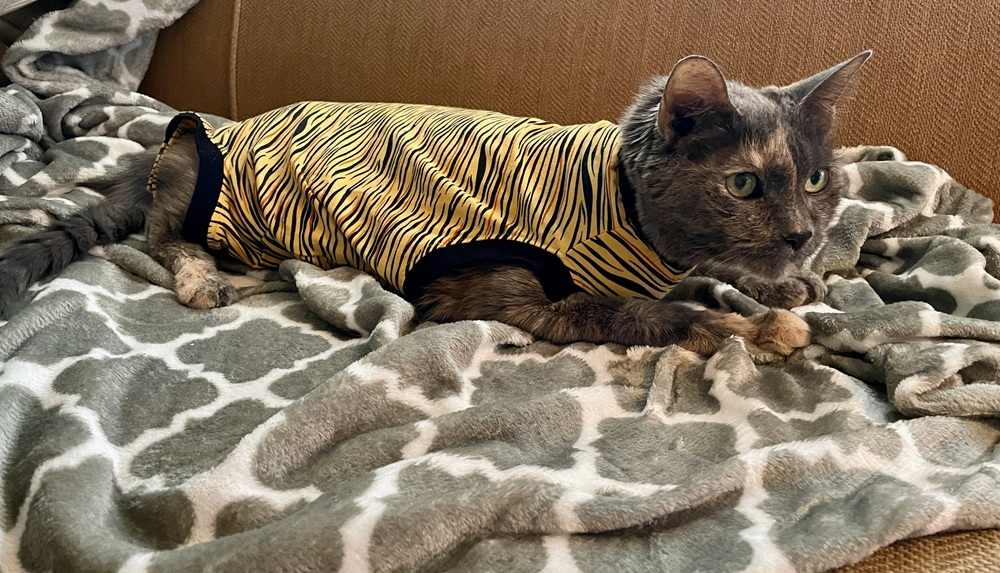
My senior cat was a little nervous getting into this suit, but once it was on, she relaxed and seemed quite comfortable.
What We Liked:
- Snug, comfortable fit
- Includes lining that detects fluids
- Machine washable
What We Didn’t Like:
- A little harder to put on than other surgical suits
#5 Most Basic: Vila Breathable Recovery Suit
If you’re looking for a simple recovery suit, this one is made of soft, breathable cotton with a bit of Spandex for flexibility. The lightweight fabric helps with air circulation while keeping stitches dry.

Annie Butler / Cats.com

Annie Butler / Cats.com

Annie Butler / Cats.com
The suit features comfortable elastic cuffs, a Velcro closure along the top, and adjustable neck and back hook-and-loop closures for a secure fit.
This also passed the comfort test with the foster kitten. Again, she squirmed around as the suit was going on, but then she relaxed and was able to lounge and move around.
What We Liked:
- Simple design
- Soft, stretchy fabric
- Machine washable
What We Didn’t Like:
- Only comes in two sizes
What Makes a Good Recovery Suit?
A good surgical recovery suit should fit like a second skin—not too tight and not too loose. A proper fit helps ensure your cat can’t pick at their incision site and also keeps stitches clean and dry. It should also be constructed so that you can easily check the incision (either by undoing the Velcro or moving one of the leg holes for a quick peek).
It should also be comfortable—a snug fit that doesn’t limit movement, is made from soft materials, and allows the cat to use the litter box.
It’s also helpful if it’s machine washable. Most are, but some need to be air-dried instead of just tossed in the dryer. Some cat owners purchase two surgical suits, so they have one ready while the other is being laundered.
Things You Should Know Ahead of Time
Surgical recovery suits aren’t foolproof. Some cats can actively chew or tear through the material, or even wiggle their way out of the suit completely.
Sizing can sometimes be tricky, especially if you order them online. All of the suits in this review have helpful sizing charts, but along with measuring your cat, you’ll also need to take into account their body shape and amount of hair. Some sizes run large or small, even if you’ve taken your cat’s measurements.
While most surgical suits are put on by the veterinarian just after surgery, you’ll need to wash the suit at some point. And with some cats, putting the suit back on is easier said than done. You might need two people to do it—one to hold the cat and the other to maneuver the cat into the suit.
Surgical suits are made to protect the cat’s incision site, but you’ll need to check the incision regularly to make sure there’s no bleeding and that it’s healing nicely.
Says Dr. Vanderhoof, “It’s very important to check your cat’s incision at least daily by removing just one part of the suit closure to have a look. A small amount of redness or bruising may be present normally but any kind of blood or other discharge shouldn’t be present by the next day. You can take a photo and send it to your vet if you see any concerns.”