
 Last updated Aug 4, 2026


Pete Wedderburn / Cats.com
This article aims to provide a simple, clear explanation of feline hypoglycemia for cat carers. Feline hypoglycemia (also known as low blood sugar) is a condition that can happen in cats for a number of reasons.
Quick Overview: Feline Hypoglycemia
 Other Names: Low Blood Sugar in Cats
 Common Symptoms: Lethargy, disorientation, trouble walking, vomiting, seizures, coma.
 Diagnosis: A blood sugar reading on a glucometer during a low blood sugar crisis is confirmatory. A low value on routine bloodwork may be found incidentally.
 Requires Ongoing Medication: Yes in the case of diabetes and medical management of an insulinoma.
 Vaccine Available: No
 Treatment Options: In the immediate, a complex sugar substitute like Karo syrup or intravenous dextrose. Longterm control depends on the underlying cause.
 Home Remedies: Administering Karo syrup on the tongue/in the mouth or applying it to a paw to force a cat to lick it off can help increase a low blood sugar quickly for a short period. Introducing a high calorie meal may also help to boost for a little longer.
What Is Hypoglycemia?
Normally, a cat’s internal control systems ensure that the blood glucose (blood sugar levels) stay at the correct level, which is between 60 and 150 mg/dl (3.3 – 8.3mmol/l)
Hypoglycemia, by definition, means “low blood glucose”, which means less than <60 mg/dL (<3.3 mmol/L).
(Note: the USA and some other countries tend to use the “mg/dl” way of measuring, while the UK, Europe, and some other countries use the “mmol/L” method.)
“Hypo” is derived from the Greek word for “under” or “below”. It has the opposite meaning to “Hyper” which means “over” or “above”.
- “Gly” means “glucose”
- “Emia” means “in the blood”
- So “hypoglycemia” means “low glucose level in the blood”
In contrast, “hyperglycemia” means “high glucose level in the blood”, as is typically seen in diabetes mellitus.
How Common Is Feline Hypoglycemia?
This is an uncommon problem, only seen in certain, specific conditions.
How Do Cats Get Hypoglycemia?
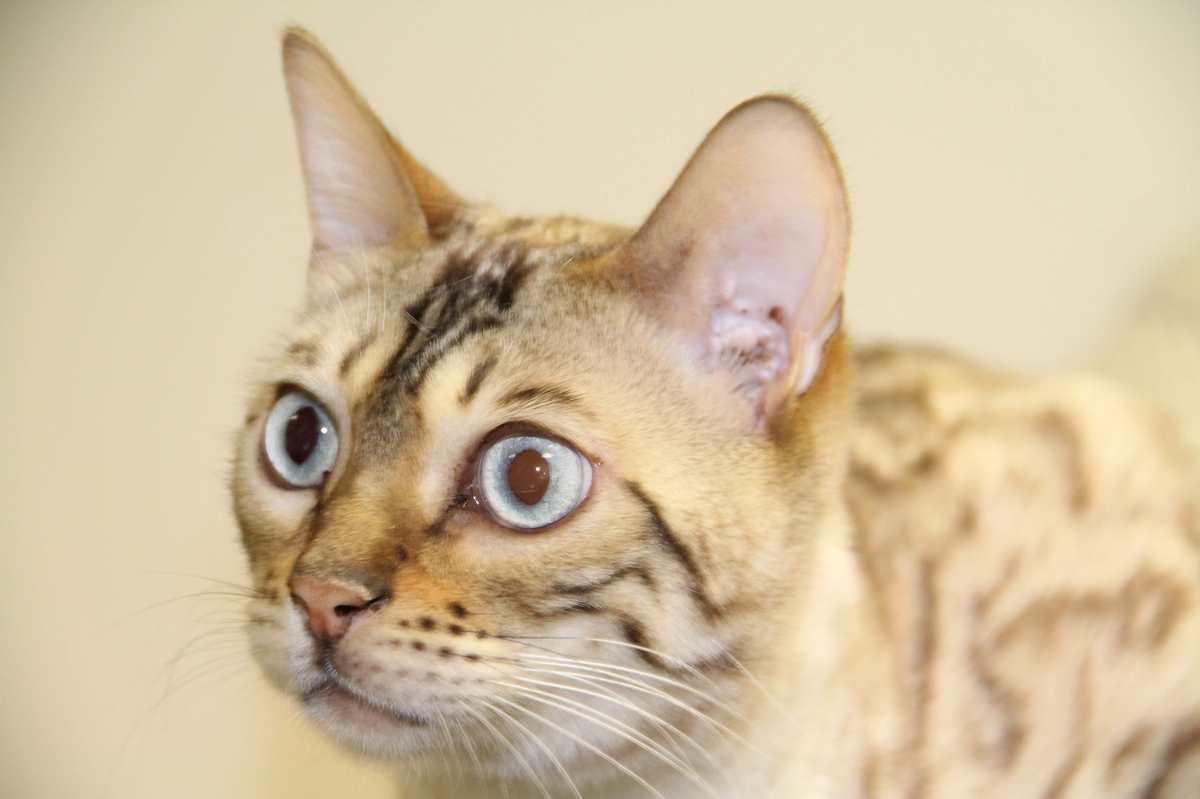
Cats with Feline AIDS exhibit symptoms including lethargy, inappetence, and fever. Pete Wedderburn / Cats.com
Blood glucose levels are normally kept between 60 and 150mg/dl (3.3 – 8.3mmol/l) in the body by a complex interaction of secretion of hormones.
- When a cat eats, as the carbohydrate from the food is absorbed into the bloodstream, the blood glucose starts to rise.
- As the body detects this, the beta cells of the pancreas start to produce more of a hormone called insulin, which lowers the blood glucose back to normal.
- If too much insulin is produced, the blood glucose is pushed down towards 60mg/dl (3.3mmol/l), the body stops producing so much insulin and instead starts to produce hormones that push the blood glucose up.
- The main “upwards” hormone is glucagon, but other hormones such as adrenaline (also known as epinephrine), cortisol, and growth hormone also have this effect.
- It’s through the balance of these “down” hormones (insulin) and “up” hormones (primarily glucagon) that the blood glucose is kept within normal limits.
- When the balance of hormones is upset (e.g. too much insulin, or too little glucagon, adrenaline/epinephrine, cortisol, or growth hormone), then the blood glucose can fall too low, resulting in hypoglycemia.
- Hypoglycemia can also occur if there is a simple shortage of glucose in the body e.g. in young kittens that are not getting enough food and do not have carbohydrate or fat stores in the body to create new glucose.
Causes of Hypoglycemia in Cats
The most common causes are:
- Excessive administration of insulin injection (e.g. Vetsulin) to a cat with feline diabetes
- A tumor of the pancreas (insulinoma)
- Severe intercurrent disease such as sepsis
- General illness, lack of food, and lack of environmental heat in a newly born or very young kitten
- Rarer causes may include Addison’s disease, liver disease, pancreatitis, portosystemic shunts, urinary tract infections, and thyroid disease.
Symptoms of Hypoglycemia in Cats
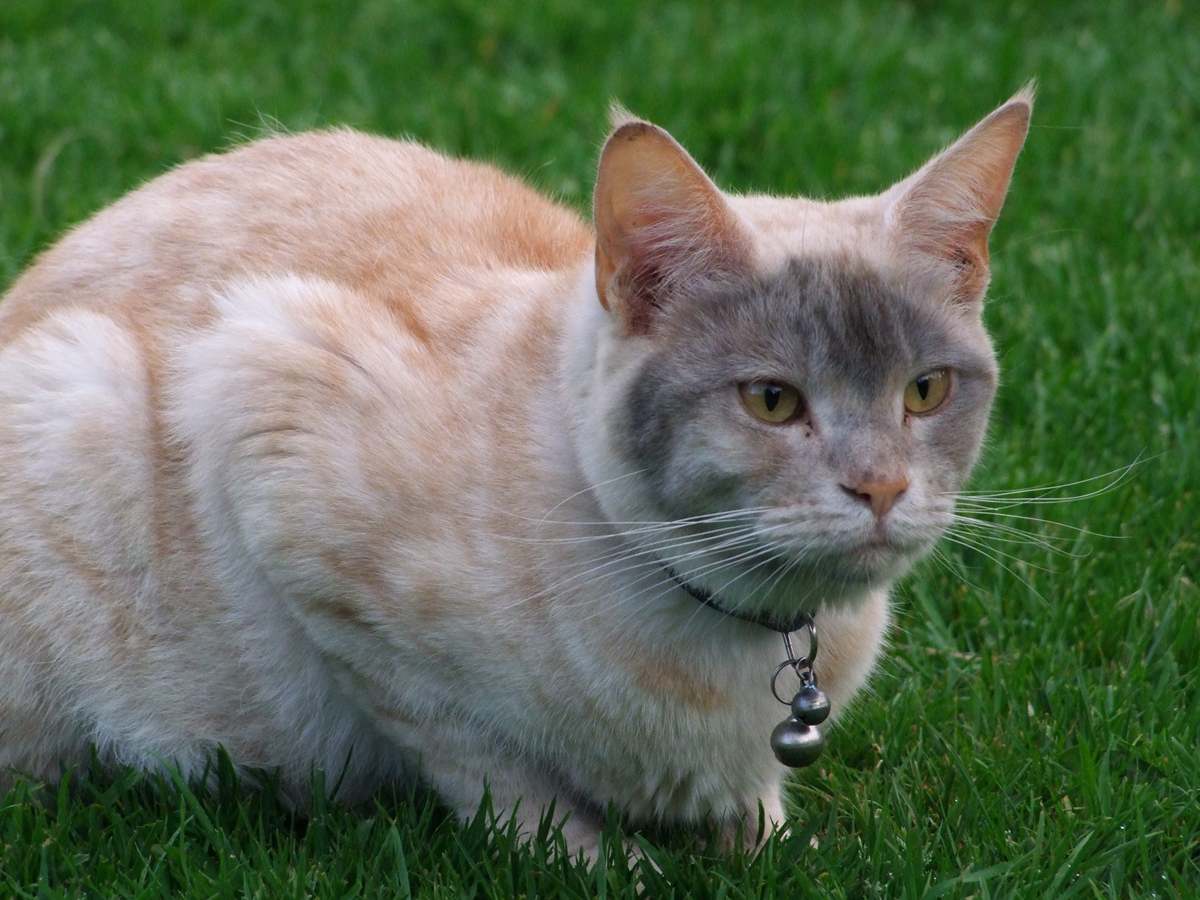
Cats with low blood sugar show varying symptoms depending on the severity of the hypoglycemia. Cats with moderate hypoglycemia may show disorientation and weakness, while severe cases could lead to collapse and loss of consciousness. Pete Wedderburn / Cats.com
Clinical signs associated with hypoglycemia are usually caused by the effect of a shortage of glucose on the brain.
- In mild cases, there may be no outward signs that the blood glucose is low.
- More commonly, signs include weakness, disorientation, ataxia, blindness, dullness or sleepiness, inappetence, vomiting, tachypnea (rapid breathing), and bradycardia (slow heart rate).
- In severe cases, collapse and loss of consciousness, and even death, may follow.
Diagnosis of Feline Hypoglycemia
If your DVM veterinarian suspects that your cat may have hypoglycemia, the following steps may be taken.
1. Detailed History Taking
Your vet will discuss every aspect of your cat’s life and health care. There are other causes of the same types of signs as hypoglycemia, and this history will help to differentiate the various possible causes. As an example, one of the common causes of hypoglycemia is when excessive insulin doses are given by an owner to a diabetic cat, so details of precisely how much insulin has been given is a critically important part of the history.
2. Physical Examination
Your veterinarian will check your cat over carefully, noting any physical signs of illness, ruling out other causes of the signs that are being shown (e.g. heart disease, poisoning, etc).
3. Routine Blood Tests
A simple, rapid blood test to measure blood glucose is the definitive way that the diagnosis of hypoglycemia is confirmed.
It’s likely that your veterinarian may also carry out other blood work, including the usual panel of diagnostic tests, such as hematology (blood count) and biochemistry profiles, to confirm that there is no other underlying cause making your cat ill.
A blood glucose curve may be carried out: this is simply a series of blood glucose readings over up to 12 hours, to gain a full assessment of what is happening to the blood glucose.
In recent years, continuous glucose monitoring (CGM) systems, like the Free Style Libre are becoming more common to use to monitor glucose in cats over a period of several days, owing to their increased use in human diabetics. The Free Style Libre consists of a circular-shaped sensor with a tiny needle that is inserted into the skin. With some adhesives, the sensor can remain on a cat’s skin for up to two weeks, sending readings to a paired app on the owner’s phone. The monitors can be placed with minimum stress to a cat, but often require a knowledgeable veterinary team to assist in proper placement to ensure the sensor remains in place.
The Free Style Libre allows glucose to be monitored without the complication of stress causing spikes in blood sugar and can be used to more accurately map glucose increases and decreases throughout the day.
The only catch with these monitors is that they must be interpreted carefully with veterinary assistance. Studies have shown that these sensors, which read insterstitial glucose within the fluid between skin layers (as opposed to blood glucose in the bloodstream), often read a little lower compared to blood sugar levels. The exception is in cases of extremely low blood sugar (<60mg/dl) in which case the readings on a Free Style Libre may switch to instead overestimating compared to what the blood sugar level is (meaning once the blood sugar drops below 60 mg/dl, the Free Style Libre will read higher than what the blood sugar is).
This is important to know with using these monitors, especially if low blood sugar is suspected. If your cat has a low reading on a Free Style Libre, especially one that reads lower than 60mg/dl, it can be helpful to still check a blood sugar at home if possible using an Alpha Trak or similar device (which is important to know how to use and keep on hand for any diabetic cat), or have your vet check a couple of blood sugar levels and see how closely they match the Free Style Libre’s readings.
Note: after a blood sample has been taken, the blood glucose in the blood sample naturally falls over a period of time, as the glucose in the blood in the sample tube is used up by the blood cells. For this reason, for the level to be accurately measured, it’s important that the sample is processed immediately, or if there is a delay, the serum must be promptly separated from blood cells after the sample has clotted.
4. Specialized Blood Tests
- A specific test for a substance called fructosamine may be carried out as a way of double-checking the longer-term nature of the low blood glucose: the level of this chemical represents the average blood glucose of the preceding two to three weeks. If the serum fructosamine level is less than 62.7 mg/L (350 µmol/L) this confirms longer term hypoglycemia.
- Extra tests such as an ACTH stimulation test or blood insulin measurement may be carried out to investigate the detailed cause of hypoglycemia.
5. Other Tests:
Radiography (x-rays) and ultrasound may be carried out, and biopsies may be suggested if abnormal tissue is found (e.g. an insulin-producing tumor on the pancreas known as an insulinoma). Urinalysis may also be carried out. Your veterinarian will advise you on whether or not such detailed investigations are indicated.
How Much Does It Cost To Treat a Cat With Hypoglycemia?
It is impossible to estimate this cost, as there are so many possible factors going on in the background of individual cases. Some cases of simple hypoglycemia may be managed during an outpatient visit. More serious cases may require hospitalized care. You should ask your veterinarian for a detailed estimate before agreeing to proceed with treatment.
Treatment for Feline Hypoglycemia
Intravenous glucose is typically the best treatment for hypoglycemia. Pete Wedderburn / Cats.com
Intravenous glucose solution (dextrose) is the most effective short term treatment. This is often available at high concentrations (e.g. up to 50%) but it must be diluted to less than 10% if being given intravenously, as higher concentrations can cause irritation to the tissues around the vein, as well as damaging red blood cells in the circulation.
The usual protocol is to give 5 mL/kg body weight as an initial intravenous bolus of 10% glucose or dextrose. After this, a continuous rate infusion (CRI) may be given using 2.5-5% dextrose until the precise cause of hypoglycemia is identified and treated.
In most cases, the signs of hypoglycemia begin to resolve almost immediately after the intravenous injection is given.
If an owner is at home, and the signs of hypoglycemia combined with the history (eg insulin overdose, or a newborn kitten that has become chilled), then corn/karo syrup or honey can be applied directly to the lining of the mouth while the animal is being brought to the vet. Generally, use 1-2 teaspoons, spread over the gums, where it can be absorbed quickly. This is not as effective as intravenous glucose, but it may be lifesaving in some cases.
For cats with more complex causes of hypoglycemia (such as insulinomas), more complex treatments may be needed, including the hormone glucagon. Hypoglycemic episodes are more likely to be recurrent, needing a different approach to other one-off situations.
Once the initial hypoglycemic crisis has been resolved, an accurate diagnosis of the cause needs to be confirmed, and appropriate treatment is then given to remedy this primary problem.
Examples include diabetic cats that need insulin doses adjusted based on blood glucose curves, cats with insulinomas that often require surgery (although medical management is possible in some cases), cats with sepsis require intensive hospital care and intravenous antibiotics, and kittens with hypoglycemia may stabalize after initial treatment simply with the right nutrition, care, and attention.
Monitoring and Prognosis
The level of blood glucose will be monitored closely while intravenous glucose is being given, so that more or less can be given as needed.
The prognosis is good for individuals that respond quickly to emergency therapy, as long as the underlying problem is promptly identified and treated. However, if there is a delay in treatment, permanent brain damage is possible if the period of hypoglycemia is prolonged.
For cases that have more complex underlying conditions (such as insulinoma), the prognosis is less certain, and a detailed discussion with your veterinarian is needed.
Conclusion
Hypoglycemia is a medical emergency that is seen when a cat’s blood glucose falls below the normal level, causing the cat to become sleepy, dull, and staggering, as well as other signs. Emergency treatment is needed to deal with this, so it’s important to make contact with your veterinarian immediately if your cat shows these signs.