 Published Aug 12, 2026


Amy Brown-Towry / Cats.com
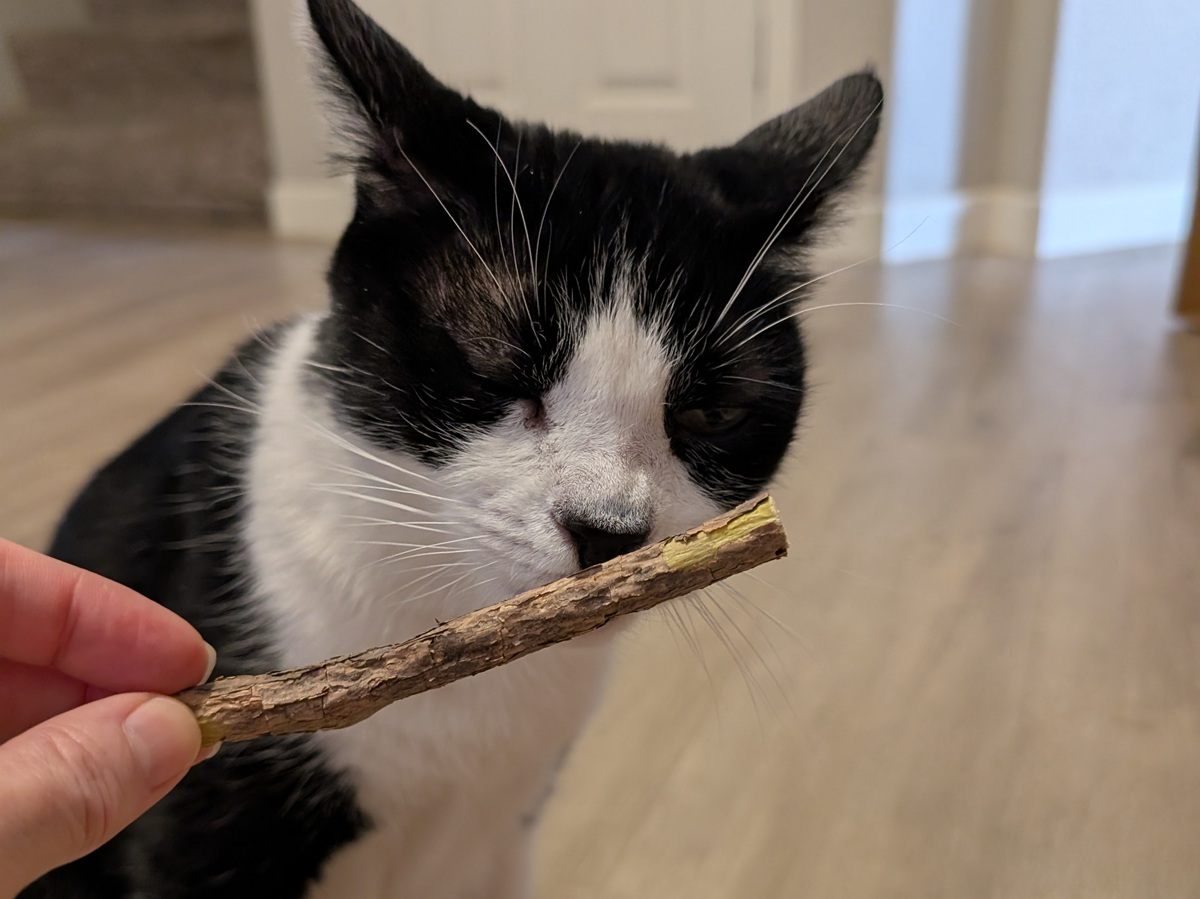
Researchers in Japan are calling this a “Eureka!” discovery that may especially surprise cat parents in North America and Europe: Catnip may not be the most exciting plant to your cat. That honor is more likely to go to the woody Asian plant called silver vine!
A team of researchers from Iwate University and Nagoya University in Japan found that, when given a free-choice to approach either plant, domestic cats responded more reliably to silver vine than to catnip. This result occurred both in outdoor free-roaming cats that had access to both catnip and silver vine plants in a garden, and 22 purebred cats tested in a large indoor environment.
The outdoor cats would rub and roll on fresh silver vine, the way our cats often do with catnip, but they showed little reaction to nearby catnip plants. The indoor cats in the study showed the same reaction. While this may be surprising to American, Canadian and European cat parents, Professor Masao Miyazaki was expecting this result.
“Several years ago, I planted catnip and silver vine seedlings side by side in my garden at home,” Miyazaki explains to Cats.com in an e-mail. “The silver vine was destroyed by cats almost immediately, in fact overnight, whereas the catnip was not damaged and later grew very well.”
Interestingly, this echoes something from long-ago history written in The Gardener’s Dictionary, which was published in 1768. Author Philip Miller wrote that cats were especially fond of catmint, now commonly known as catnip, “when it is withered.” But, Miller wrote, cats typically did not disturb the catmint when many plants grew together.
The book’s observations parallel the results of the modern study, and it touches on a possible reason for the cats’ lack of enthusiasm for catnip plants: The odor of a fresh catnip plant – which hasn’t been dried, like commercial catnip products – may be too strong and release too many active compounds, Miyazaki says.
“The amount and presentation of catnip odor may strongly influence whether cats choose to engage with it,” he says.
“Dried or cut catnip is known to attract cats, but intact, fresh catnip may not release the same attractive odor profile,” Miyazaki says. “It is also possible that the odor of fresh plants is too strong or qualitatively different. This point is also consistent with Miller’s old observation that growing catnip was left unharmed, whereas cut catnip attracted cats.”
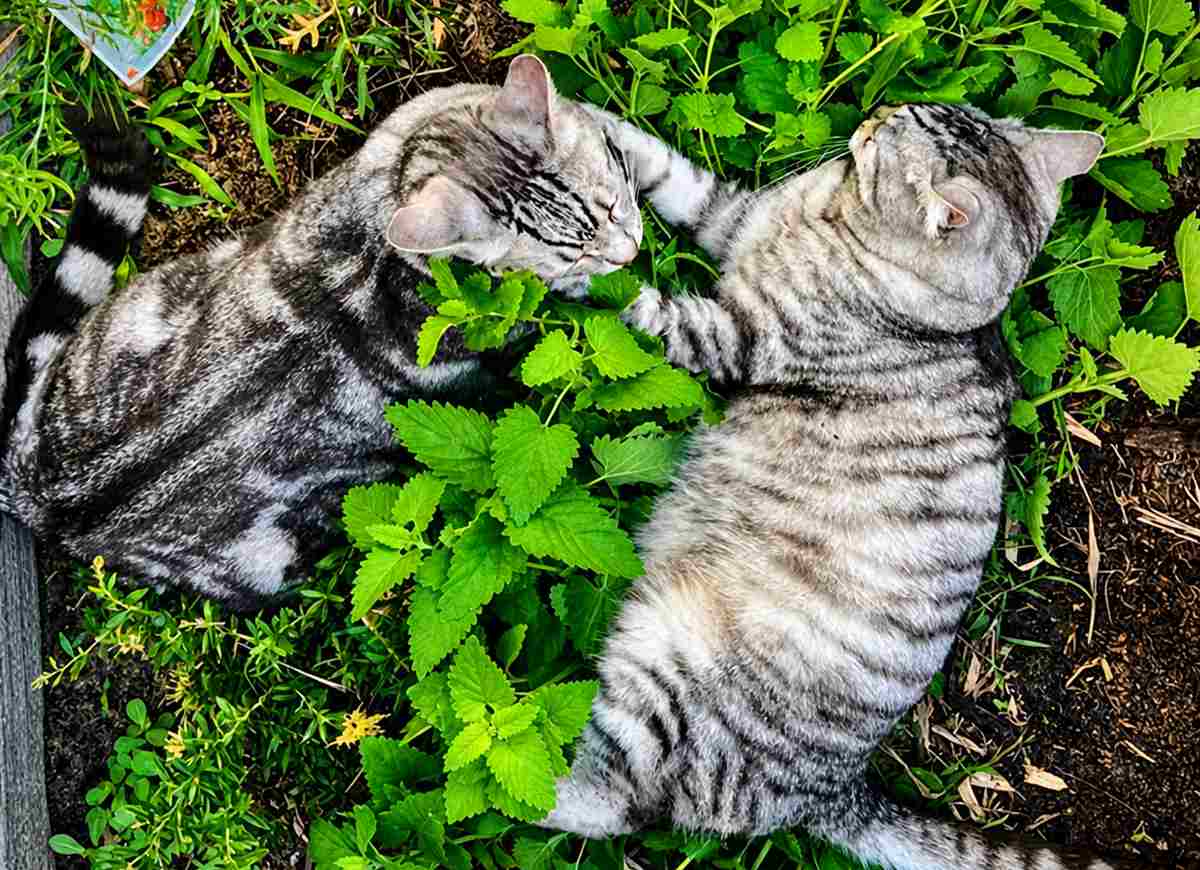
Dried or cut catnip may be more appealing to cats because it releases a stronger or different scent than fresh, intact plants. Melina Grin / Cats.com
In this study, researchers in Morioka, Japan, placed fresh silver vine branches and leaves near living catnip plants in an outdoor garden that free-roaming cats could enter and leave. Over ten nights, researchers recorded six identifiable cats visiting the site. Five of them showed rubbing and rolling behavior toward silver vine, while none showed the same behavior toward either the growing catnip plant or freshly harvested catnip material. Next, the team presented catnip and silver vine extracts in the same outdoor setting, and the cats again showed a stronger tendency to respond to silver vine-derived stimuli.
To test whether this pattern was limited to a small group of local free-roaming cats, the researchers next studied 22 purebred cats – from breeds originating in Europe, the Middle East, and the United States – that were housed at two facilities in Japan. These cats were tested in a large indoor environment where they could move freely, rather than in individual cages. This allowed them to approach, investigate, or ignore the stimuli on their own. When catnip and silver vine extracts were presented simultaneously, 15 cats responded only to the silver vine extract, three responded only to the catnip extract, one responded to both, and three sniffed the papers but did not rub or roll. Overall, cats were significantly more likely to respond to silver vine extract than to catnip extract.
What is silver vine? Called “matatabi” in Japanese, silver vine is actually a type of kiwi that produces fruit, and the plant is native to Eastern Asia. Catnip contains abundant active compounds – namely nepetalactone – that trigger that blissful, excited reaction in many cats. But silver vine contains about 10 active compounds, about 80 percent of which are nepetalactone, Miyazaki says. When cats damage the leaves of silver vine, the chemical profile changes and it becomes much more active for cats, because the release of compounds called matatabilactones increases dramatically. The ratio of nepetalactol to matatabilactones becomes almost 1:1, Miyazaki says, and this mixture has much stronger behavioral influence on cats that lasts longer.
In the study, the free-choice condition was an important element for the cats, Miyazaki says, as opposed to getting one or the other dried plant in toys at home.
“Many cats may respond to both plants when each plant is presented separately,” he says. “By placing catnip and silver vine side by side, we could ask which plant cats actually prefer under the same conditions. The result clearly showed that they preferred silver vine.”
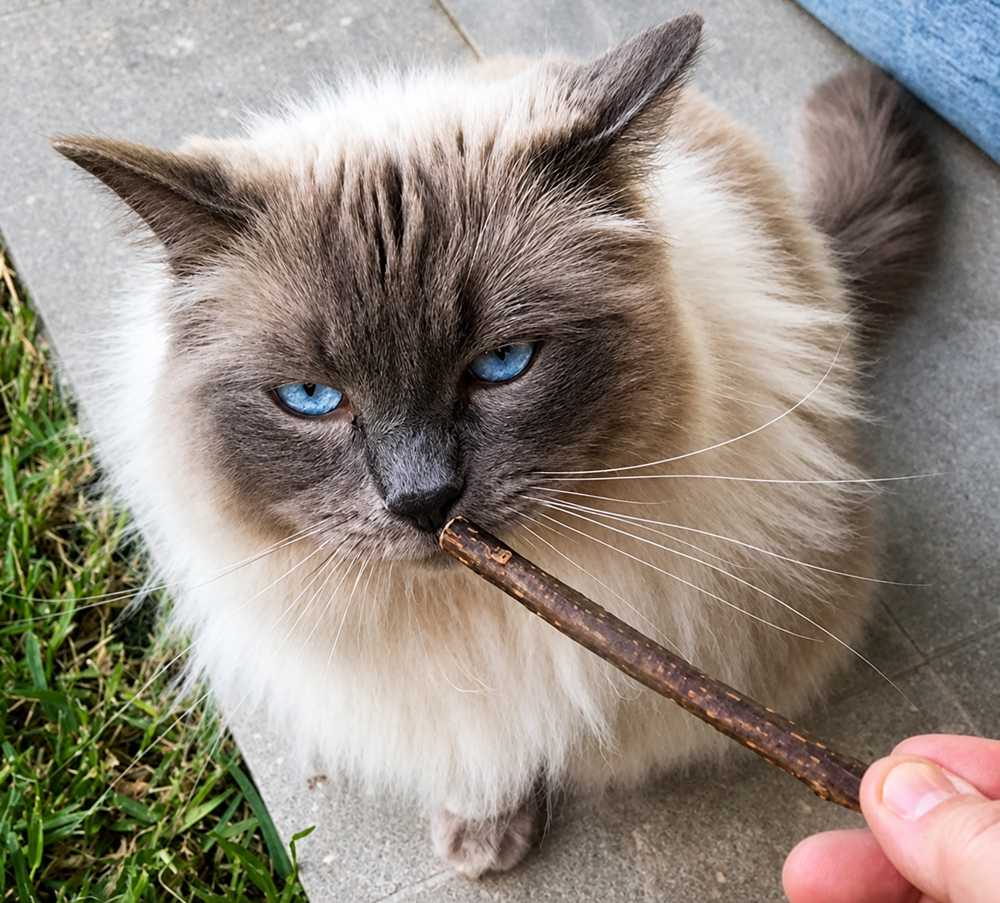
When catnip and silver vine were presented side by side, cats clearly preferred silver vine, suggesting it may be more appealing when the two are directly compared. Melina Grin / Cats.com
Reiko Uenoyama, an assistant professor at Iwate University, stated this in a press release: “Catnip can make cats respond in laboratory tests, but that does not mean cats will choose it in a more natural, free-choice setting. Our study shows that what cats can respond to and what they actually choose are not always the same.”
What is the takeaway message for cat parents from this research? If it helps cat lovers understand their pets a little more, “that is very meaningful to us,” Miyazaki says.
“Cats are extremely familiar animals to people, but there are still many mysteries in their behavior and physiology,” he says. “Our approach is to ask “why?” and to investigate these mysteries out of scientific curiosity.
“Of course,” Miyazaki adds, “the findings may also be useful when catnip or silver vine is used for environmental enrichment, but as a researcher I would be happiest if this study gives people a chance to think about the wonder of nature.”
This study about silver vine and catnip is one of many interesting studies Japanese researchers have done about cats in the past few years. Miyazaki and his team recently conducted a study about why cats suddenly stop eating and later start again. According to the paper published in the journal Physiology & Behavior, your cat may do this because of their sense of smell rather than boredom.
Another recent study from Japan examined another aspect of the cat’s sense of smell: how cats recognize their people by scent. In the study we wrote about in February, researchers found that our cats might be able to distinguish us from strangers by smell alone, even if the cat can’t see us or hear our voices.