

 Last updated Feb 25, 2026




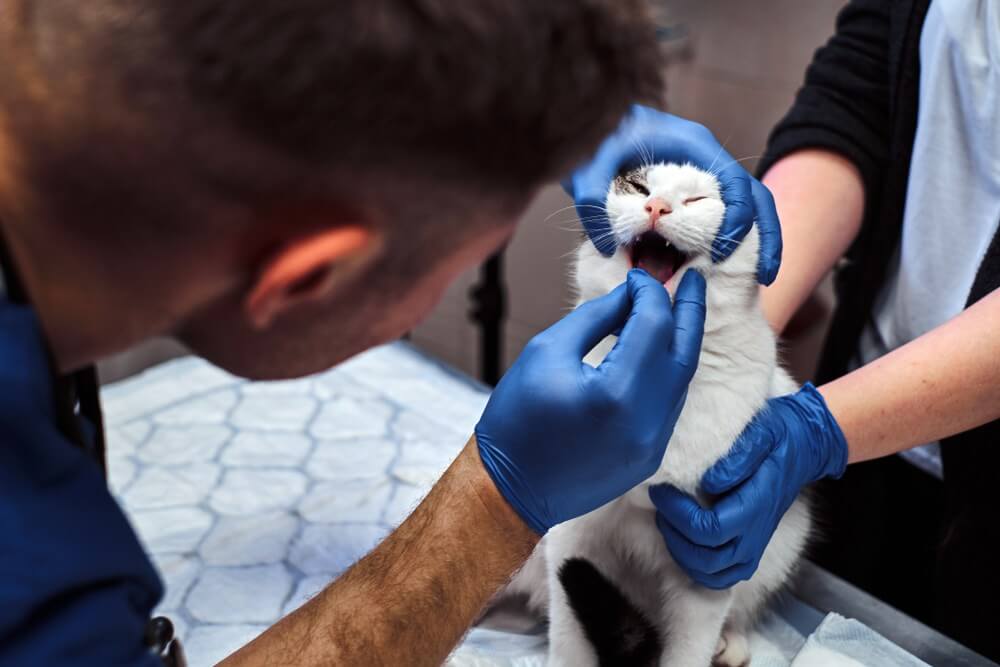
FXQuadro / Shutterstock.com
A broken jaw can be a common injury in cats. This often occurs due to trauma, like if your cat falls from a height or is hit by a car. But it can also be caused by a nasty bone infection or tumor.
If your cat has a broken jaw, you may notice signs such as pain, swelling, or bleeding around the mouth. Sometimes the signs are more subtle, like a reduction in appetite or difficulty eating.
The good news is that most simple jaw fractures recover well with conservative treatment or minor surgery. In cases where there are multiple serious injuries (or an underlying cause such as bone cancer), the prognosis is more guarded. Read on for everything you need to know about broken jaws in cats.
About Broken Jaws in Cats
Your cat’s jaw is involved in eating and drinking and providing support for the face, nose, and airways. So, a broken jaw can be a serious injury.
Like us, your cat has an upper jaw (maxilla) and a lower jaw (mandible), with a joint in the middle (the temperomandibular joint, or TMJ). The upper jaw is part of the skull and forms the roof of your cat’s mouth.
Most jaw fractures in cats affect their lower jaw. The lower jaw consists of a left and right half, joined in the middle by a piece of soft tissue called the mandibular symphysis. The majority of lower jaw fractures (73% in one study of mandibular fractures in cats) are across this symphysis, meaning the left and right sides are no longer firmly attached.
As your cat’s teeth are attached to their jaw, a broken jaw can affect their teeth.
Causes of Broken Jaws in Cats
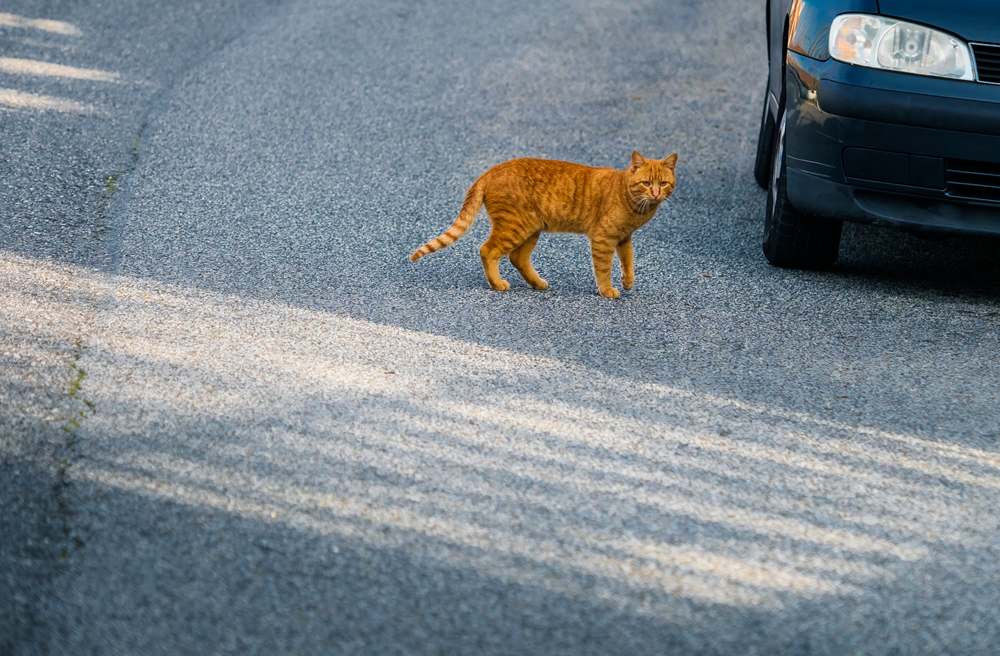
Trauma is the most common cause of broken jaw in cats, with around half of cats having been hit by a car. Oleg Golovnev / Shutterstock
Trauma is the most common cause of broken jaws in cats. A study of 75 mandibular fractures in cats found over half had been hit by a car. But any kind of trauma – such as falling from a height, blunt force to the face, or even a bite from another animal – can cause it.
As well as trauma, other less common causes include:
- Bone infection
- Bone cancer (osteosarcoma)
- Complication from dental treatment
- Severe dental disease
- Hypoparathyroidism (which can cause bone weakness from calcium depletion)
Symptoms of Broken Jaws in Cats
If your cat breaks their jaw, you may notice:
- Pain – especially if trying to eat or drink
- Swelling around the face
- Loss of symmetry or facial deformity
- Bleeding from mouth or nose
- Drooling
- Teeth missing, broken, or at an unusual angle
- Difficulty opening the mouth
- Reluctance to eat and drink
A broken jaw is a serious condition that must be treated quickly. It is also a sign that your cat has suffered trauma and may have other injuries. So, you should seek veterinary attention immediately if you see any of these symptoms.
Complications of Broken Jaws in Cats
Unfortunately, complications are common, with around 1 in 4 cats with a broken jaw suffering some kind of complication. These include:
- Malocclusion of the jaw or teeth
- Infection in the bone (osteomyelitis)
- Poor healing of the fracture site
- Non-healing fracture
- Oronasal fistula (development of an abnormal opening between the mouth and nose)
- Teeth problems
Diagnosis of Broken Jaws in Cats
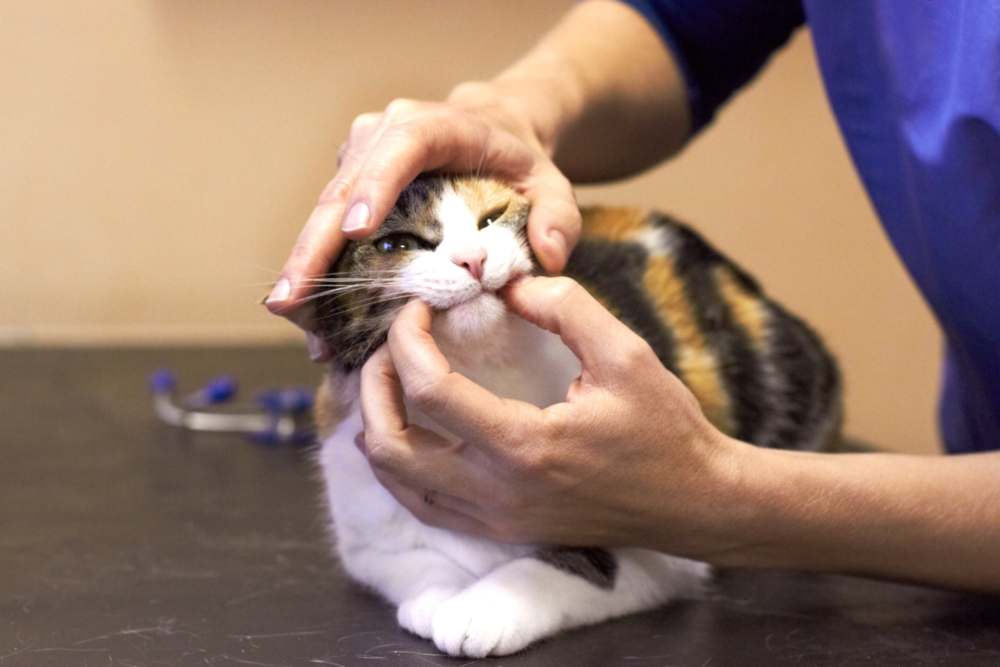
Your veterinarian may suspect a jaw fracture on their physical examination, but they will likely need an x-ray to confirm. PeopleImages.com – Yuri A / Shutterstock
Most jaw fractures are easily diagnosed from the appearance or feel of your cat’s jaw. If your cat has a break across their mandibular symphysis, your veterinarian will feel abnormal movement between the left and right sides of the lower jaw. However, fractures in other parts of the jaw can be harder to diagnose simply by looking.
Fractures are usually confirmed with an x-ray. This allows your veterinarian to assess the full extent of the injury – especially whether tooth roots are affected – and check for other damage. In complex cases, a CT or MRI might be recommended.
If your cat has been in an accident, they may need other tests to check for other injuries. This could include blood tests, ultrasound, or x-rays in other areas of their body.
Your cat may need a jaw biopsy if your veterinarian suspects an infection or tumor is causing their fracture. The biopsy can be sent to a veterinary pathologist for testing and assessment.
Bloodwork is not commonly needed where jaw fractures are concerned. However, if a calcium disorder is suspected that may have led to a jaw fracture due to weakened bone, blood calcium levels will need to be checked.
Parathyroid hormone (PTH) is a hormone responsible for calcium regulation in the body. Sometimes PTH levels also need to be checked if a disorder like hypoparathyroidism is possible.
Treatment of Broken Jaws in Cats
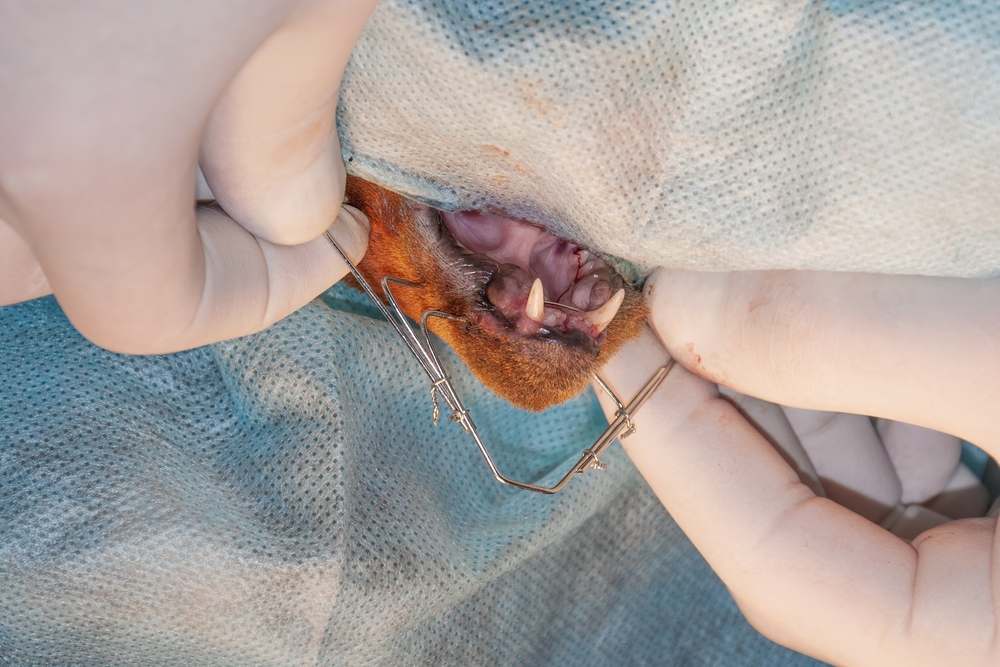
Your cat may need surgery to fix their broken jaw. mojahata / Shutterstock
There are two ways to treat broken jaws in cats, conservative or surgical.
Conservative Treatment
Conservative treatment aims to heal the broken jaw without the need for surgery. This is possible in cats who are comfortable, eating and have stable fractures where the teeth remain aligned. They should be fed soft food for several weeks and given pain medication. Sometimes, your veterinarian may use a tape muzzle to stabilize the jaw while it heals.
This is the most cost effective way to treat a jaw fracture, though it is not always the most appropriate and may not result in the best healing for some types of fractures.
Surgical Treatment
Most jaw fractures will require some form of surgical repair under general anesthesia. This may be as simple as threading a piece of wire around the two halves of the lower jaw, in the case of a mandibular symphysis fracture. Or it could include more invasive surgery, including bone plates and pins, splints, implants, removal of teeth, or even removal of an area of the jaw.
Cats with tumors of the jaw may need extensive surgery to remove the affected piece of bone and reconstruct the face. They may also need additional treatment, such as radiation or chemotherapy.
Surgical treatment costs for a jaw fracture can vary from a few hundred dollars for more simple cases to $4-5000 for more complex surgery or those that require a surgical or dental specialist.
Supportive Care
Whether your cat has conservative or surgical treatment, they will need supportive care to recover. This may include pain medication, anti-inflammatories, and antibiotics. Many cats with broken jaws will need some help eating while the fracture is healing. This is usually done by placing a feeding tube at the time of their surgery. This allows your veterinary team to give nutrition and treatment down the tube, directly into their nose or throat, bypassing their painful mouth, and keeping the surgical site clean.
How to Care for Your Cat with a Broken Jaw
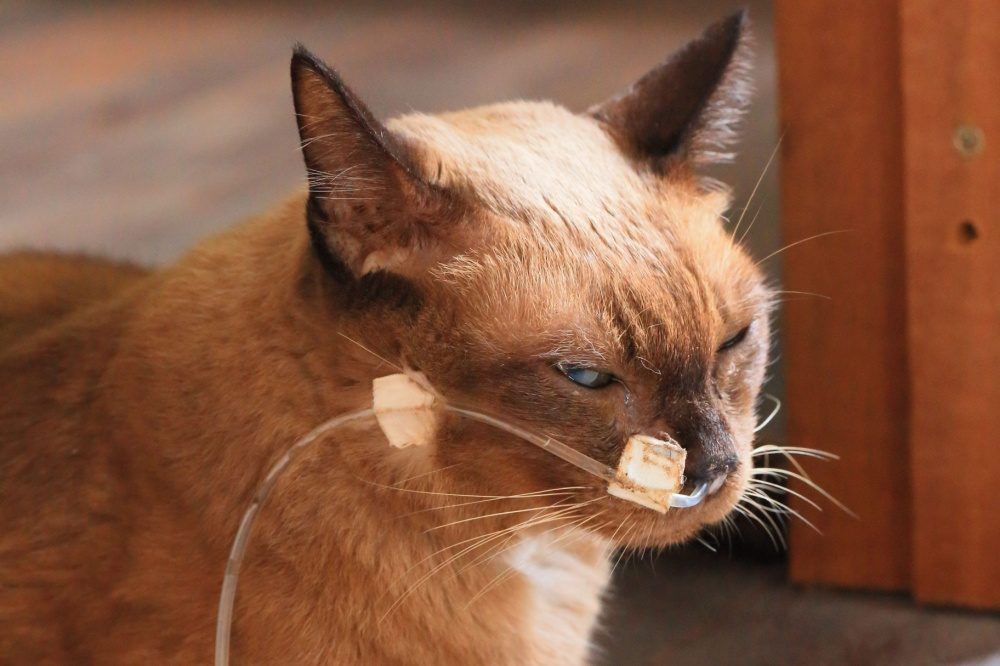
Cats recovering from a broken jaw often need a feeding tube in their nose or throat to help them take food, water, and medication while their mouth is healing. SUJITRA CHAOWDEE / Shutterstock
Cats recovering from a broken jaw often struggle with eating. So, your cat may be sent home with a feeding tube in place. Your veterinary team will make sure you are confident using the tube before they send your cat home. While it may sound daunting, a feeding tube allows you to give food and water into the tube, without your cat needing to use their sore mouth. You can also crush up their medications and put them down the tube – avoiding the need to give them tablets!
So, although a feeding tube may sound extreme, it is a brilliant way to ensure your cat gets everything they need, while their mouth is healing. Most cats tolerate the tube easily, and it can be removed as soon as they are able to eat and drink comfortably, and their surgical wound has healed. This may be in a few days or a few weeks.
Once the feeding tube has been removed (if they have one), your cat will need a soft diet until the fracture is completely healed.
Preventing Broken Jaws in Cats
Most broken jaws in cats happen due to trauma – namely being hit by a car or falling from a height. You can prevent these accidents by restricting their access to roads and great heights by keeping them indoors or having an enclosed outdoor space, like a catio, tent, or playpen. However, cats need to have ample opportunity to exercise and exert their natural behaviors. So, if you do keep your cat indoors you should ensure they have plenty of enrichment activities to keep their mind and body active.
Most jaw fractures are easily diagnosed from the appearance or feel of your cat’s jaw. If your cat has a break across their mandibular symphysis, your veterinarian will feel abnormal movement between the left and right sides of the lower jaw. However, fractures in other parts of the jaw can be harder to diagnose simply by looking and require x-rays to see.
-
Umphlet, R. C., & Johnson, A. L. (1988). Mandibular fractures in the Cat A retrospective study. Veterinary Surgery, 17(6), 333–337. https://doi.org/10.1111/j.1532-950x.1988.tb01028.x
-
Woodbridge, N., & Owen, M. (2013). Feline mandibular fractures. Journal of Feline Medicine and Surgery, 15(3), 211–218. https://doi.org/10.1177/1098612x13477541



i have a cat with a Brocken jaw and i can’t afford the vet bill is anyone that can help find a vet and help with the bills