Published Nov 14, 2026



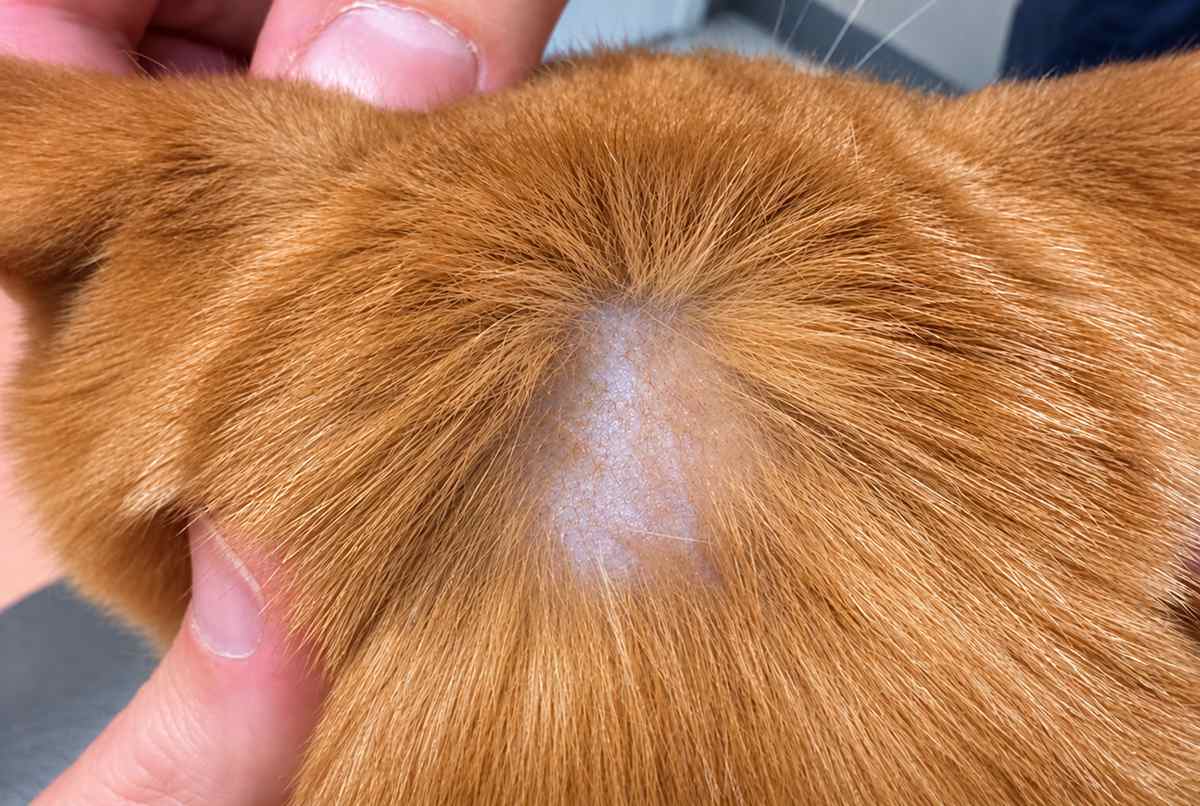
A bacterial skin infection, called pyoderma, often occurs due to another underlying skin problem. Chris Vanderhoof / Cats.com
Pyoderma is the medical term for a skin infection. The prefix “pyo” refers to pus or purulence, and the suffix “derma” refers to the skin.
Quick Overview: Bacterial Skin Infections (Pyoderma) in Cats
 Other Names: Pyoderma
 Common Symptoms: Itching/scratching, excessive licking/grooming an area, hair loss, skin redness, flaking/crusting of the skin
 Requires Ongoing Medication: Sometimes, if an underlying allergy or immune system disease is part of an underlying cause
 Vaccine Available: No
 Treatment Options: Systemic antibiotics, topical wipes, shampoos, and mousses. Some cases also require steroid medication.
 Home Treatment: Skin infections on cats are very rarely contagious to humans, but good hygiene is always advised if your cat has any kind of skin condition. A bacterial skin infection may appear very similar to the fungal infection ringworm, which is more contagious to people. Always finish out a full course of antibiotics prescribed, even if you think a skin infection is resolved. Keep recheck appointments your veterinarian advises. These are very important to determine what, if any, further treatment is needed. Topical therapies like wipes, shampoos, and mousses, can be challenging to utilize for some cats but they can shorten the treatment period and reduce the need for longer courses of oral antibiotics.
Pyoderma is not common in cats, at least when compared to how often we see the condition in dogs. In general, it affects only about 20% of cats. But that’s not to say that skin conditions are rare in cats. Skin conditions in general can actually be quite common in cats but there is a lot of overlap in appearances between pyoderma and other skin conditions.
Pyoderma most often involves bacteria, though sometimes fungal yeast may also be involved. The “infections” are also typically not something a cat has acquired from somewhere else or gotten “infected by” so much as an overgrowth of microorganisms occurs on the skin due to another underlying cause.
There are three different types of pyoderma, classified by how deeply they affect the skin:
- Surface pyoderma: this is where the infection occurs just on the top of the skin layer itself without impacting superficial structures just under the top skin layer, like hair follicles. This may appear as a moist or irritated area of skin.
- Superficial pyoderma: this is where the infection affects the epidermis or hair follicles near the skin’s surface. Small bumps, crusts, and hair loss may occur.
- Deep pyoderma: deep pyoderma affects deeper structures of the dermis, or base layer of the skin. Sometimes this leads to draining sores called furuncles, or it may actually lead to swelling of the skin tissues (cellulitis).
Causes of Pyoderma in Cats
Bacterial skin infections don’t usually occur because a cat has acquired them from somewhere. This is different from other types of skin conditions like fleas or ringworm, where a cat always acquired the source of the problem from the environment or another cat.
Most cases of pyoderma occur when bacteria that normally live on the skin overgrow due to some other underlying factor.
The skin is not often thought of as an organ. However, not only is it an organ, it is also one of the most important. Without skin, our bodies would be constantly beset by allergens, infections, and other trauma caused by our environment and we would never be able to survive.
That’s because the skin provides a barrier between the insides of our bodies and the rest of our environment. Part of this barrier means having healthy populations of microorganisms, like bacteria, living in harmony with our bodies. Just like we need beneficial bacteria in our digestive tracts, we also need them on our skin. These normal populations help to prevent far more dangerous bacteria and other microorganisms from growing.
Anything that disrupts this skin barrier, however, can allow for the normal populations of microorganisms to overgrow, thereby causing a secondary “infection.” Most often these disruptions to the skin barrier are in the form of trauma or inflammation. Here are some common underlying causes:
- Flea bite or flea allergy dermatitis
- Atopic dermatitis
- A wound or abrasion
- Excessive grooming or licking of an area
- Mites (like demodectic, notoedric, or sarcoptic mange)
- Ringworm (dermatophytosis)
Symptoms of Pyoderma in Cats
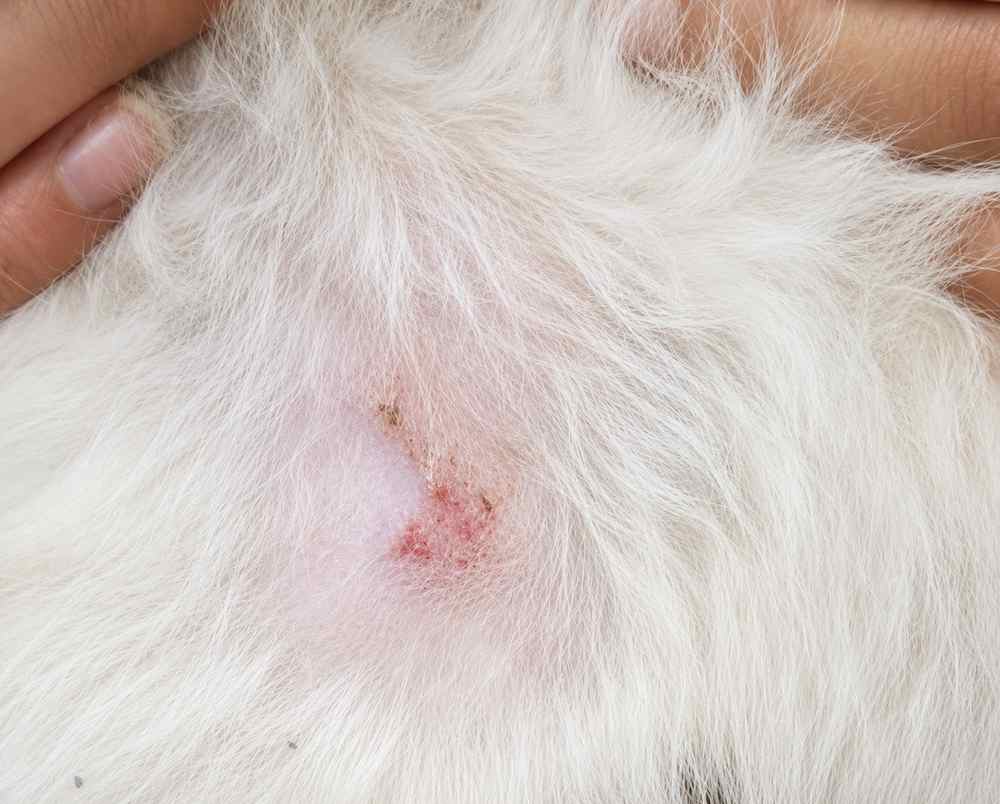
There can be several appearances to a bacterial skin infection. Some include hair loss, red bumps or scabs, and crusts or flakes. Chris Vanderhoof / Cats.com
Pyoderma can have several different appearances. One single appearance may predominate, or there could be a combination of appearances on different areas of the body. It’s always important to remember that these appearances may not be specific for pyoderma and can be seen with other skin conditions too.
- Collarettes: these are flaky-looking rings on the skin. In my own experience, these are seen much more often on dogs than in cats. They can be mistaken for ringworm lesions as they have a circular shape, but are characteristic bacterial lesions.
- Papules: papules are small red bumps on the skin. They often resemble small insect bites, but are instead one appearance of bacterial infection. Even when there are many, they usually occur individually but occasionally they may cause a continuous rash-like appearance.
- Pustules: a pustule is like a papule but has the familiar white head present. In my own experience, these are seen less commonly compared to papules and sometimes with more severe or acute skin infections.
- Fur loss: skin infections often impact hair follicles, and when they occur, hair loss may also occur. Naturally, this is more noticeable on heavily furred areas like the head, neck, back, legs, and tail.
- Red skin: red skin, called erythema, does not always indicate an infection. Sometimes, red skin only means inflammation. But inflamed skin is much more prone to bacterial overgrowth. Pyoderma thus is a common complication seen with allergic skin disease, eosinophilic granuloma complex (EGC) lesions, or wounds like abrasions and scrapes.
- Dandruff: not all dandruff is characteristic of bacterial skin infections. Many cats can have small, light, flaky dandruff from dry skin or poor grooming. But heavier, thicker flakes can be associated with bacterial infection.
- Furunculosis: a furuncle is an inflamed, infected bump usually draining fluid. These are typical of deeper bacterial infections of the hair follicle. This most often occurs in cats on their chin as a complication of bad feline acne.
- Miliary dermatitis: miliary dermatitis describes a pattern of small, crusted, flaky bumps. They resemble papules but are crustier and flakier in appearance. Miliary dermatitis is also commonly seen with signs of hair loss. Miliary dermatitis is not usually a primary appearance for a bacterial skin infection. It is seen often with conditions like flea allergy dermatitis or mosquito bite hypersensitivity. However, secondary bacterial infections often occur along with miliary dermatitis and treating for bacterial infection may be a part of recommended therapy.
Complications of Having Pyoderma
Complications with pyoderma typically happen over time if they are not recognized or treated. They may start in a very small or focal area but spread wider over time if signs are not recognized or proper treatment is not pursued.
In my own experience, this occurs most often when a well-meaning cat parent sees a skin concern and not recognizing it as involving a bacterial infection (and sometimes also understandably trying to avoid a vet visit for a stressed kitty) make use of over-the-counter allergy sprays, supplements, or more “natural” remedies. Sometimes there’s a presumption changing foods may help, adding additional weeks of trialing different diets.
While well-meaning, attempting alternative therapies for extended periods of time when pyoderma is present can lead in turn to longer courses of medication needed to treat the infection.
Another complication can also include multiple strains and types of bacteria being involved. The surface of the skin normally has certain types of bacteria present, like Staphylococcus and Streptococcus species. But the unhealthy skin can also attract other environmental bacteria like E. coli that don’t belong on the skin, sometimes causing more severe and uncommon infection appearances like ulcerations.
Cats prone to bacterial skin infections may be more likely to develop urinary tract infections, especially female cats who develop pyoderma under their tails or skin folds of their hindquarters.
In very rare cases, a bad skin infection may lead to a more systemic infection inside the body.
As we’ll talk about more in the diagnosis and treatment sections, bacterial skin infections, even when caused by the same type of bacteria, are not all created equal. Even the same types of bacteria can have different sensitivities to antibiotics. While most respond to common antibiotic therapies, a few may be resistant to common choices and be more complicated to treat.
Diagnosis of Pyoderma

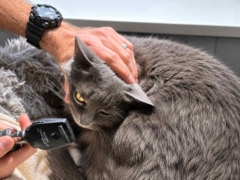
Your veterinarian may use a swab, tape, or a glass slide to collect a sample from your cat’s skin and examine it under a microscope to diagnose a bacterial skin infection. Chris Vanderhoof / Cats.com
Your veterinarian may be able to diagnose a bacterial skin infection based on appearance. Some appearances, combination of appearances, and distribution patterns, paired with your cat’s history information may support treating for pyoderma just based on exam findings.
However, because some appearances of bacterial skin infections can overlap with other conditions, additional testing to further confirm pyoderma may be needed.
Your vet may also wish to perform testing to rule out some other skin conditions that have a similar appearance. This may include a skin scraping for mites or collecting samples for a ringworm (fungal) culture.
While these other tests don’t check for bacteria on the skin, they can help rule out the presence of other complicating conditions or see if a bacterial infection is simply happening secondary to another underlying cause. Getting all of this information early on can help resolve your cat’s skin problem faster.
Skin cytology
A skin cytology consists of collecting samples of crusts, flakes, or moist areas of the skin on a microscope slide, applying special stains to the slide, and examining it under the microscope.
Bacteria will appear as either rod-shaped or circle-shaped. Fungal yeast, also sometimes present, have a “footprint” or “snowman” shape.
Seeing actual bacterial growth at least supports the need for using antibiotics.
Culture and Sensitivity
A bacterial culture involves using a special swab designed for collecting culture samples, swabbing the area of skin in question, and sending it out to a lab.
The culture medium will grow the bacteria present over a couple of days. The lab can also determine the bacteria’s sensitivity to specific antibiotics, which is called sensitivity.
A culture can be used to determine if bacterial growth is present or not, especially if cytology findings are not definitive.
But more importantly, a culture can tell your veterinarian exactly which antibiotic to use to treat the bacterial skin infection. Bacteria can develop resistance to some antibiotics. Cats with recurrent skin infections can benefit from skin cultures to ensure the right antibiotic is used. This can shorten the time period a cat is on antibiotics and protect against bacteria developing further resistance.
Some strains of bacteria are more resistant to antibiotics than others. If your vet is concerned your cat has not responded to a course of antibiotics as expected, a culture may be an important step to see if a resistant bacterial strain is present and what antibiotic it may be sensitive to.
Treatments for Pyoderma in Cats
Convenia is a long-acting injectable antibiotic approved for use in cats. It can treat a couple of bacterial strains that cause skin infections in cats. Chris Vanderhoof/Cats.com
The primary treatment for a bacterial skin infection is antibiotic therapy.
Systemic antibiotics are commonly used in cats. While topical approaches in the form of sprays, wipes, shampoos, and mousses can also be used, cats are less amenable to some of these than dogs. But in cats who, for example, may happen to actually like a bath, a topical shampoo may help resolve a bacterial skin infection that much faster along with a systemic antibiotic.
The choice of systemic antibiotic will be up to your veterinarian to choose. Convenia, an injectable antibiotic given under the skin that lasts for 2-3 weeks, is a common choice. This is especially for cats who are difficult to give oral medication to. Clavamox is an example of one common oral antibiotic choice, though several others may be selected.
The length of treatment time can depend on how widespread the infection is, the bacteria involved, and other conditions that may also be present.
For smaller more focused areas, ten days may be sufficient. For more widespread infections, antibiotic courses lasting 2-3 weeks or sometimes longer are common.
For many skin conditions, your veterinarian will advise a recheck to see how well the condition is responding and if continued antibiotics or other medication is necessary.
For cats who are extremely itchy or have red and inflamed skin with pyoderma, a short course of a steroid like prednisolone may be included as a part of therapy.
Cat Care Tips
- There are a number of things to keep in mind both if you think your cat may have a bacterial skin infection or if your cat is undergoing treatment for one.
- If you think your cat may have a bacterial skin infection, be careful doing internet searches to find images that resemble your cat’s appearance. Many skin conditions can appear very similar. Your vet is the best one to determine what may be happening and what supportive testing can help.
- It’s very tempting to look for over the counter products, home remedies, or change food if you notice a skin problem for your cat. However, if your cat has a skin infection, none of these will resolve the problem. Some over the counter products may help with itching and irritation but signs of pyoderma often continue or worsen. Food allergy can be an underlying cause of skin problems, but an infection must be addressed first.
- Make sure to always finish all antibiotics prescribed. Don’t discontinue antibiotics early because your cat’s skin appears better. Bacterial overgrowth may still be present even if things look a lot better. If you’re uncertain if antibiotics should be continued, reach out to your vet.
- Rechecks for skin conditions are extremely important. These help you and your vet understand if your cat’s skin infection is resolved. If that’s the case and it recurs, this can clue your vet into another predisposing condition (like an allergy condition) that’s causing the recurrence and still needs to be addressed.
- Some cats prone to recurrent skin infections can benefit from topical therapies like shampoo or mousse, if your cat is amenable. Douxo products, including shampoo, mousses, and wipes, are good, reliable products. Their PYO line is intended for reducing bacterial and fungal growth on the skin.
- Regular brushing and grooming can help keep the skin and fur healthy. Cats often do this well on their own, but some do not. If your cat has fur mats or flakes under their fur, this can predispose to pyoderma. Regular brushing can also help you find skin concerns earlier (like patches of fur loss) before it becomes more extensive.
Prevention of Pyoderma in Cats
Skin infections in cats rarely just “happen”, and they are not a contagious condition where a cat “gets” the skin infection from somewhere. Predisposing skin conditions are almost always present.
One of the most common causes of recurrent problems is atopic dermatitis, which is an inflammatory condition involving the immune system’s response to allergens. Even for indoor cats, allergens like dust and storage mites can be a problem. If your cat gets recurrent skin infections, allergy testing may be helpful.
Skin parasites like fleas and mites can be another common cause. Always make sure to utilize flea prevention (many protect against mites as well), especially if your cat has any exposure to the outdoors or a housemate cat that goes outdoors.
Poor grooming can also predispose cats to skin infections. If the fur coat is not turned over well, the skin is not exfoliated and turned over either. Bacterial infection can occur under fur mats if they develop because the underlying skin gets very irritated. Ensuring your cat is grooming well and if not, to regularly brush your kitty, can help to reduce that risk.
For cats that don’t like being brushed and cannot groom themselves well and have a problem with fur matting, body clipping with your vet or a groomer can help the skin breathe and refresh itself.
-
Moriello, K. (2024, September). Pyoderma in Cats (Pet Owner Version). Merck Veterinary Manual Online.
-
Forsythe, P. (2015). Pyoderma, WSAVA World Congress Proceedings, 2015. Veterinary Information Network.
-
Yu, H. W., & Vogelnest, L. J. (2012). Feline superficial pyoderma: a retrospective study of 52 cases (2001–2011). Veterinary Dermatology, 23(5), 448. https://doi.org/10.1111/j.1365-3164.2012.01085.x
-
VIN Dermatology Consultants. (2026, January 21). Pyoderma in Cats. Veterinary Information Network.
-
Douxo. (n.d.). Pyoderma in cats: symptoms, treatment, and more.