
 Published Sep 16, 2026


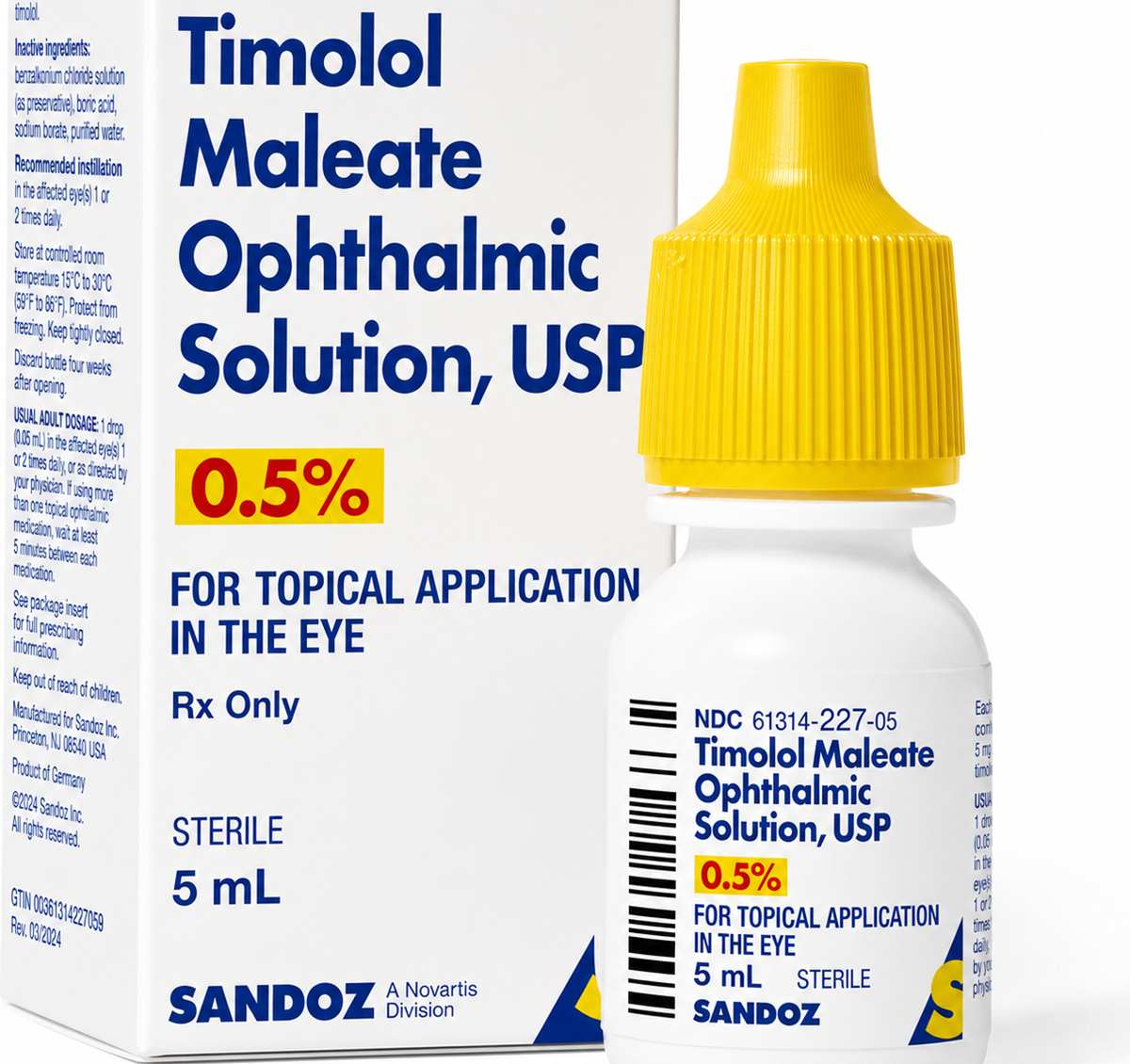
Timolol is one type of eye medication which can be used to reduce high pressure inside the eye. Chewy.com
Timolol is an eye medication used to help reduce abnormally high pressure within the eye. In this article, you’ll learn about how timolol works, when it may be prescribed, some other eye medications that may be used with it, and certain health conditions where timolol should be used carefully.
Timolol for Cats

About Timolol for Cats
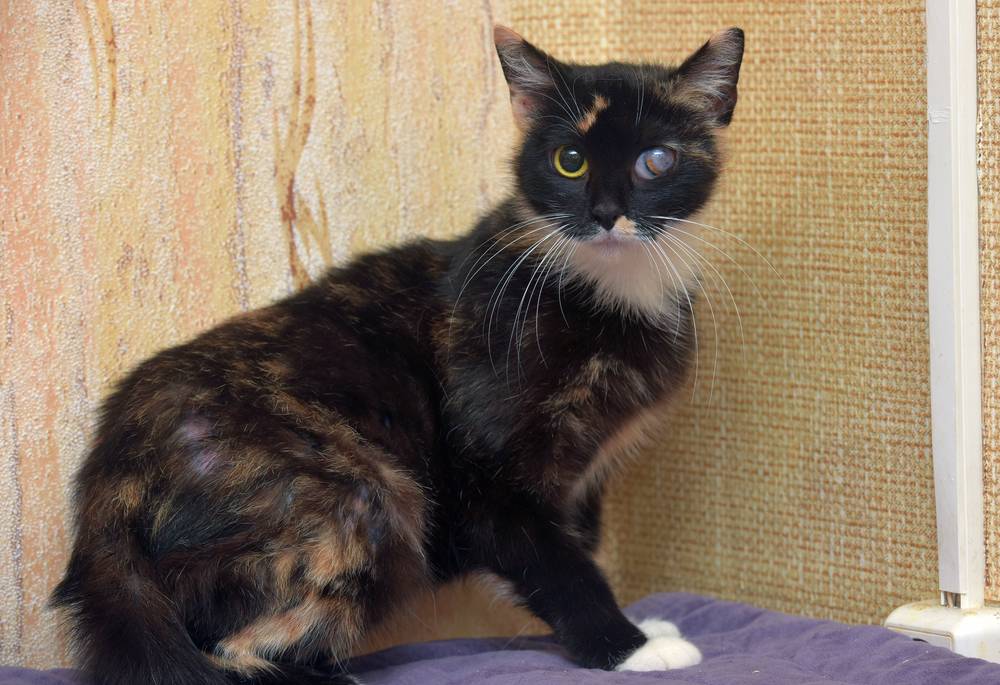
This cat’s right eye has an extremely enlarged pupil absent of its dark “color”, an appearance typical for glaucoma. Anna Krivitskaya / Shutterstock.com
Timolol is a topical ophthalmic solution medication. It is used to help reduce abnormally high pressure within the eye, which is called glaucoma.
The regulation of pressure within the eye is complex and a constantly regulated process by the body. But to simplify it, the fluid inside, which is called aqueous humor, flows through the front and back chambers of the eye. These are called the anterior and posterior chambers. Aqueous humor provides nutrition to structures inside the eye, like the cornea and lens.
Aqueous humor is produced by a structure called the ciliary body, which is located in the posterior chamber near the lens.
After being produced and circulating through the eye, aqueous humor must then drain out somewhere. This occurs through an area called the iridocorneal angle, positioned between the cornea and iris, around the whole circumference of the eye.
Glaucoma, where pressure inside the eye is increased, is fortunately uncommon in cats. Primary genetic factors can be responsible, though not as extensively as seen in dogs. In cats, secondary causes occur more, with uveitis (inflammation in the eye) and tumors being the most common.
No matter the specific cause, glaucoma occurs when a blockage forms, preventing aqueous humor from draining properly. When aqueous humor continues to be produced at a rate higher than it’s able to drain, pressure inside the eye increases.
Glaucoma medications focus on reducing the production of aqueous humor to help bring down pressure within the eye, called intraocular pressure or IOP.
There are a couple medications that can be used to reduce IOP. Carbonic anhydrase inhibitors like dorzolamide, are one type.
Timolol is another. Timolol binds to receptors on the ciliary body, exerting an effect that causes it to produce less aqueous humor.
Timolol is not always used as a first line treatment for glaucoma, but it can be. Depending on the concentration that is used (0.25% vs. 0.5%), IOP may be impacted more or less. One study looking at the 0.5% solution saw a reduction of about 20%. However, reductions of closer to 10% are more commonly seen, as is the use of the 0.25% solution. Choosing to use one percentage or the other can depend on how high the eye pressure is and mitigating the impact of side effects, which will be touched on shortly.
Timolol may be given in combination with dorzolamide with a product called Cosopt. Cosopt contains 0.5% timolol and 2% dorzolamide. If eye pressure does not reduce effectively with either dorzolamide or timolol on their own, changing to this combination product is common. In studies, combining a carbonic anhydrase inhibitor like dorzolamide with timolol resulted in a significant further reduction in IOP.
One advantage to timolol can be the impact it has on the opposite (non-treated) eye. In patients where glaucoma has occurred in one eye and the opposite eye may also be at risk (most often with genetic predisposition), timolol may be considered first. Studies have shown that while timolol exerts its effect primarily in the eye it is applied to, it also has a modest impact on reducing pressure in the other eye as well. In situations where the opposite eye is at risk, this approach may help reduce the risk of a glaucoma crisis occurring in the other eye.
Dosing Information for Cats
It’s extremely important to follow your veterinarian’s instructions when using timolol or a combination eye medication like Cosopt. How often to give them can vary and may change the amount that pressure in the eye is reduced.
Use of these medications must be based on checking eye pressure, which can only be done with your veterinarian or veterinary ophthalmologist. Make sure to always keep these recheck appointments in case adjustments in medication type or frequency is needed.
Timolol is given at one drop in the affected eye every 12 hours.
Only one drop of medication per dose into the affected eye is needed. There is no advantage to administering additional drops at one time.
Because of the type of effect timolol exerts on aqueous humor production, giving this medication more often than every 12 hours will not reduce pressure further. Studies have shown that eye pressure in cats given timolol reduces further over the course of 12 hours with its maximum impact between 6-12 hours. This is different from what is seen in people where the effect is more immediate and dissipates over the course of the day.
How to Administer Timolol to Cats
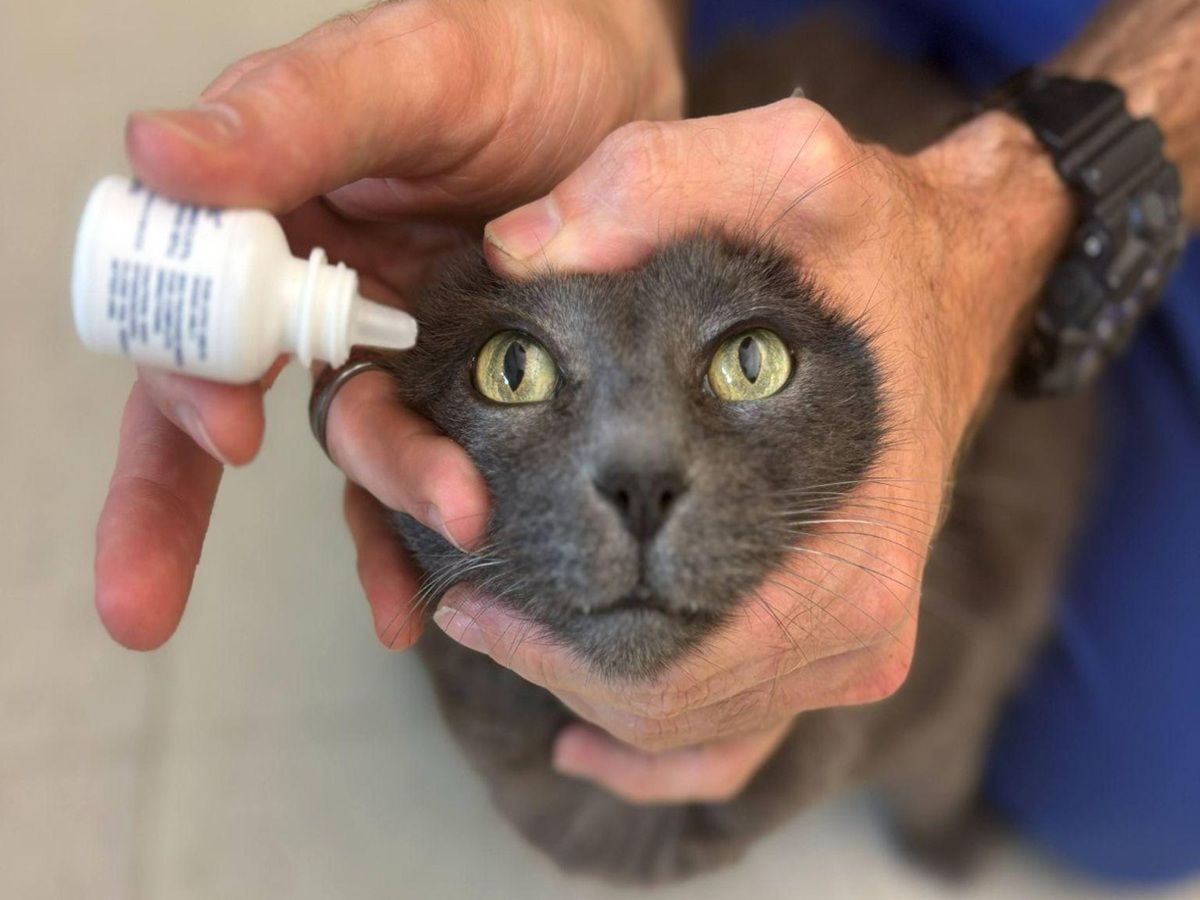
One of the best ways to administer eyedrops to a cat is to position them on the floor between your knees, facing away from you, hold their head with your non-dominant hand, tilt it back, use your thumb and middle finger (of your dominant hand) to open the eye and squeeze the bottle gently with your thumb and index finger of your dominant hand. This prevents your kitty from backing up on you or being scared of something coming directly at their face. You can also add a basic towel wrap if they interfere with their front paws. Chris Vanderhoof / Cats.com
Timolol comes only in a topical eye drop form. Oral/systemic beta blocker medications may have a mild impact on IOP, but not enough to warrant this route as a sole therapy for glaucoma.
With your cat sitting on your lap facing away from you, gently tilt their head up so you can clearly see the eye. An alternative position is to squat in a kneeling position with your kitty positioned between your legs. This position is more effective to keep your cat from backing up on you.
Keeping gentle leverage under the chin, use your thumb to raise the upper lid and your pointer finger to lower the bottom lid. With your other hand, apply the drop to the surface of the eye by gently squeezing the bottle.
Do not let the bottle touch the eye. Allow the liquid to squeeze out of the bottle and land on the eye surface. After applying, your cat will blink immediately. When your cat blinks, this will help to spread out the medication.
Administering an ointment prior to a liquid solution will prevent the liquid solution from reaching the surface of the eye. So make sure if your cat also has any ointment medication, that timolol is administered first. If you do have any other eye medications you’re giving your cat, they can be given around the same time. However, it’s best to wait 5 minutes after applying one medication before applying another.
Administration Tips
- Try to avoid administering eye medication facing your cat. Your cat is more likely to back up away from you.
- Try to apply eye medication when your cat is relaxed.
- Provide your cat with a treat reward or meal after applying eye medication.
- Wrapping your cat in a towel or blanket can help give your cat a sense of security and keep them from moving or swatting your hand away.
- It may also be easier to have someone else help you. Let them hold your cat securely while you gently open the eye and apply the medication.
Side Effects of Timolol for Cats
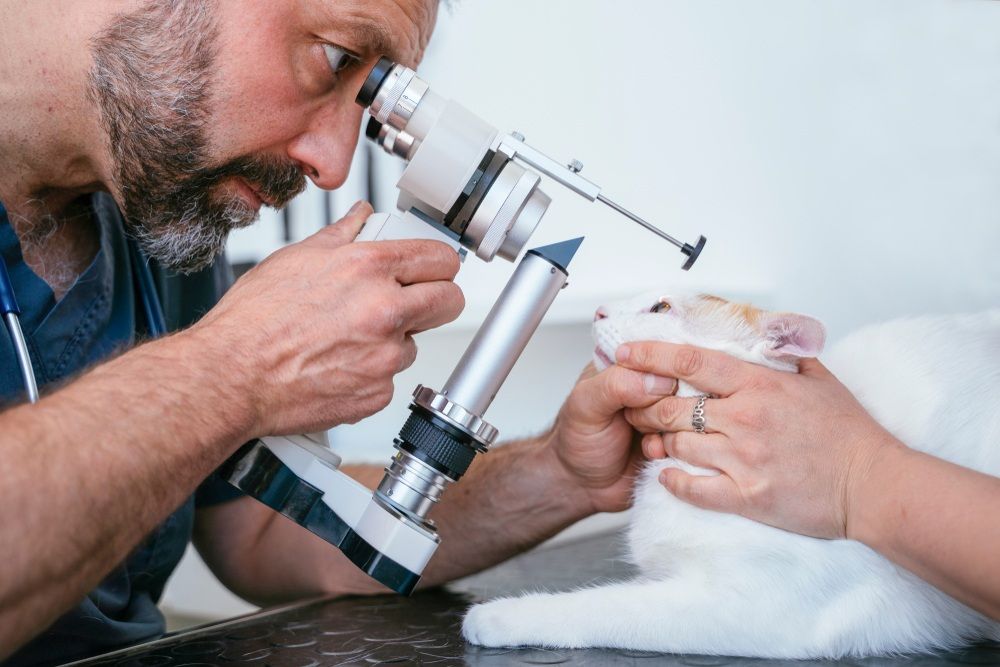
Rechecks with your primary care vet or veterinary ophthalmologist are very important for monitoring eye pressure while your cat is given timolol and for any side effect concerns. Beatriz Vera / Shutterstock.com
One of the most common side effects of timolol is a temporary stinging or irritation upon application to the eye. This effect may be less profound compared to dorzolamide but the effect and tolerance can vary between patients.
If your cat develops eye inflammation or irritation after administration of timolol, it may be helpful to first flush the eye with an artificial tears solution (such as GenTeal tears or Refresh).
Another common but mild effect of timolol can be a narrowing of the pupil after application, which is called miosis.
Topical beta blockers like timolol can be absorbed systemically. Systemic effects of beta blockers can include lowering of heart rate, narrowing of the small airways in the lungs (bronchoconstriction), and lower blood pressure.
Studies have looked at the impact this has on healthy cats and found the impact to be modest and safe.
However, there are conditions where these effects may be a concern. Cats with heart disease, like hypertrophic cardiomyopathy could be impacted by a slower heart rate. Some cats may also be on medications already, like atenolol, designed to slow heart rate for some indications of heart disease.
Cats with hypertension (high blood pressure) who are on medications to reduce systemic blood pressure, may not be good candidates for timolol, which may lower blood pressure even further.
Timolol also may not be a good option in cats with feline asthma. Beta blockers affect the smooth muscle of the small airways of the lungs, causing them to constrict. Feline asthmatics already have a problem with narrow or constricted airways as part of their condition, and causing further narrowing can make their condition worse.
Timolol should also be used carefully in patients where lowering heart rate or blood pressure may make it harder to know if certain other conditions are properly controlled. The main examples are hyperthyroidism and diabetes mellitus, two diseases that are rarely cured but instead require close monitoring and management for even small changes that may require medication therapy adjustments.
In hyperthyroidism, an abnormally elevated heart rate or blood pressure may be one sign that a previously controlled thyroid condition is no longer well-controlled. Timolol’s effects may mask these subtle changes, altering therapy recommendations.
In diabetes mellitus, timolol (and other beta blockers) may mask signs of low blood sugar, impacting decisions made about insulin dosing.
Overdose and Emergencies
It’s very difficult to overdose topical eye medications when used appropriately. One extra eye drop is not going to cause a significant impact. If you’re not sure if a drop went in properly, it’s okay to apply another to feel certain your cat has received the medication.
However, as mentioned, there is no advantage to giving additional drops otherwise on purpose or to give the medication more frequently than indicated.
The greatest risk for an emergency associated with timolol may be when it is used alongside other medications that cause lower heart rate and blood pressure or in cats with concurrent health conditions (like heart disease or asthma) where it must be used very carefully.
If you’re concerned administration of timolol may be related to emergent side effects in your cat, make sure to immediately contact one or more of the following for advice:
- Your veterinarian
- ASPCA Animal Poison Control Center (1-888-426-4435)
- Pet Poison Helpline (1-855-764-7661)
When contacting one of these resources, especially one of the poison consultation lines, it’s very important to convey other health conditions your cat has and other medications they are currently taking.
Potential Drug Interactions With Timolol
The following list represents potential drug interactions with timolol. Unless specifically noted, use together is not necessarily contraindicated but use together should be considered carefully with veterinary guidance.
- Alpha-1-adrenergic antagonists (prazosin): May increase risk for low blood pressure
- Alpha-2-adrenergic agonists (clonidine, dexmedetomidine): May increase risk for low heart rate
- Antiarrhythmics: May increase risk for low heart rate
- Antidiabetic agents (insulin, SGLT2 inhibitors like bexaglifozin or velaglifozin): Timolol may alter blood glucose concentrations and/or mask signs of low blood sugar.
- Beta-adrenergic agonists (atenolol): Timolol may cause additive effects on IOP and increase risk for low blood pressure and low heart rate.
- Calcium channel blockers (diltiazem): May increase risk for low blood pressure and low heart rate.
- CYP2D inhibitors (clomipramine, fluoxetine): May increase systemic timolol concentration and risk for low heart rate.
- Digoxin: May increase risk for low heart rate.
- Sympathomimetics (albuterol): Using both together may counteract the effects of each other.
How to Store Timolol
- Timolol should be stored at room temperature (59 – 77 degrees F) and protected from freezing temperatures and from light.
- Single-dose vials should be used within one month after opening.
- Make sure to discard this medication if you notice a change in color, the solution becomes cloudy, or floating particles are seen.
- Do not mix timolol ophthalmic solution directly with any other eye medications.
-
A Budde, J., & A McCluskey, D. (2023). Timolol, Ophthalmic [Professional app]. In Plumb’s Veterinary Drug Handbook (10th ed.). Wiley Blackwell.
-
Dietrich, U. M., Chandler, M. J., Cooper, T., Vidyashankar, A., & Chen, G. (2007). Effects of topical 2% dorzolamide hydrochloride alone and in combination with 0.5% timolol maleate on intraocular pressure in normal feline eyes. Veterinary Ophthalmology, 10(s1), 95–100. https://doi.org/10.1111/j.1463-5224.2007.00583.x
-
Wilkie, D. A., & Latimer, C. A. (1991). Effects of topical administration of timolol maleate on intraocular pressure and pupil size in cats. American Journal of Veterinary Research, 52(3), 436–440. https://doi.org/10.2460/ajvr.1991.52.03.436
-
Gunther-Harrington, C., Ontiveros, E., Hodge, T., Visser, L., & Stern, J. (2016). Effects of 0.5% timolol maleate ophthalmic solution on heart rate and selected echocardiographic indices in apparently healthy cats. Journal of Veterinary Internal Medicine, 30(3), 733–740. https://doi.org/10.1111/jvim.13931
-
Slenter, I. J. M., Djajadiningrat‐Laanen, S. C., Elders, D. J., De Gee, R., Koele, L. E., Vermeer, L. W., & Boevé, M. H. (2019). The effects of topical dorzolamide 2% and brinzolamide 1%, either alone or combined with timolol 0.5%, on intraocular pressure, pupil diameter, and heart rate in healthy cats. Veterinary Ophthalmology, 23(1), 16–24. https://doi.org/10.1111/vop.12679