

 Last updated Jul 21, 2026


Pete Wedderburn / Cats.com
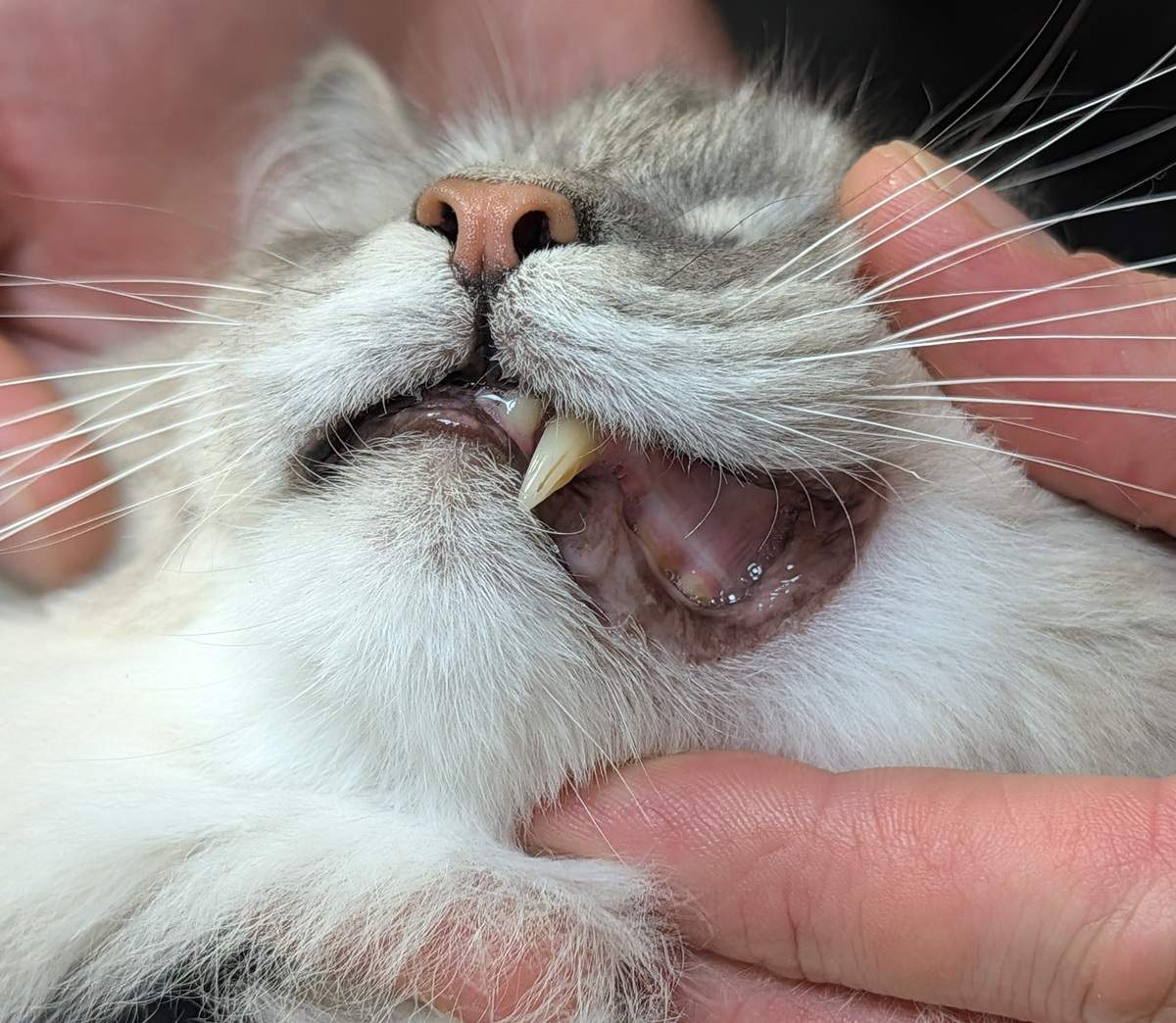
Gingivitis in cats is defined as “inflammation of the cat’s gums”. The term “gingiva” means “gums” which are the pink mucous membrane covering the bones of the upper and lower jaws, surrounding the cat’s teeth.
Quick Overview: Feline Gingivitis
 Urgency: Low to moderate
 Requires Vet Visit: Yes
 May be Linked to: Tartar/plaque build-up, soft/canned food diets, bacterial infection, autoimmune disease, Feline leukemia virus (FeLV), Feline immunodeficiency virus (FIV), feline calicivirus, feline herpesvirus, cancer.
 Treatment Options: Treatment depends on the underlying cause. Mild gingivitis caused by dental disease can be temporarily alleviated a dental cleaning procedure. Full mouth extraction of teeth may be required in severe cases. Anti-inflammatory, pain, and antibiotic medications may also be used.
The postfix “itis” means “inflammation”, which is the redness, soreness, swelling, heat and loss of function which is the body’s reaction to an insult of any kind. So with gingivitis, gums become red, sore, swollen, heated and they lose their normal function.
Other terminology is sometimes used to describe inflammation of the lining of a cat’s mouth.
- Gum disease is a very broad term, simply meaning that the gums are not healthy.
- Faucitis means inflammation of the oral mucosa behind the teeth in the back of the oral cavity.
- Stomatitis means inflammation of the lining of the mouth and lips.
- Gingivo-stomatitis means inflammation of the gums and the lining of the mouth and lips.
- Pharyngitis means inflammation of the pharynx, which is the area at the back of the mouth.
These terms all refer to the same broad concept: inflammation of some or all of the mucous membranes lining the oral cavity and surrounding the teeth, causing discomfort to the cat.
There are two other important, related terms:
- Periodontal disease or periodontitis is the general term for disease of the structures around the teeth.
- Dental disease is the term used to describe disease of the teeth, which often accompanies gingivitis
Causes of Gingivitis in Cats
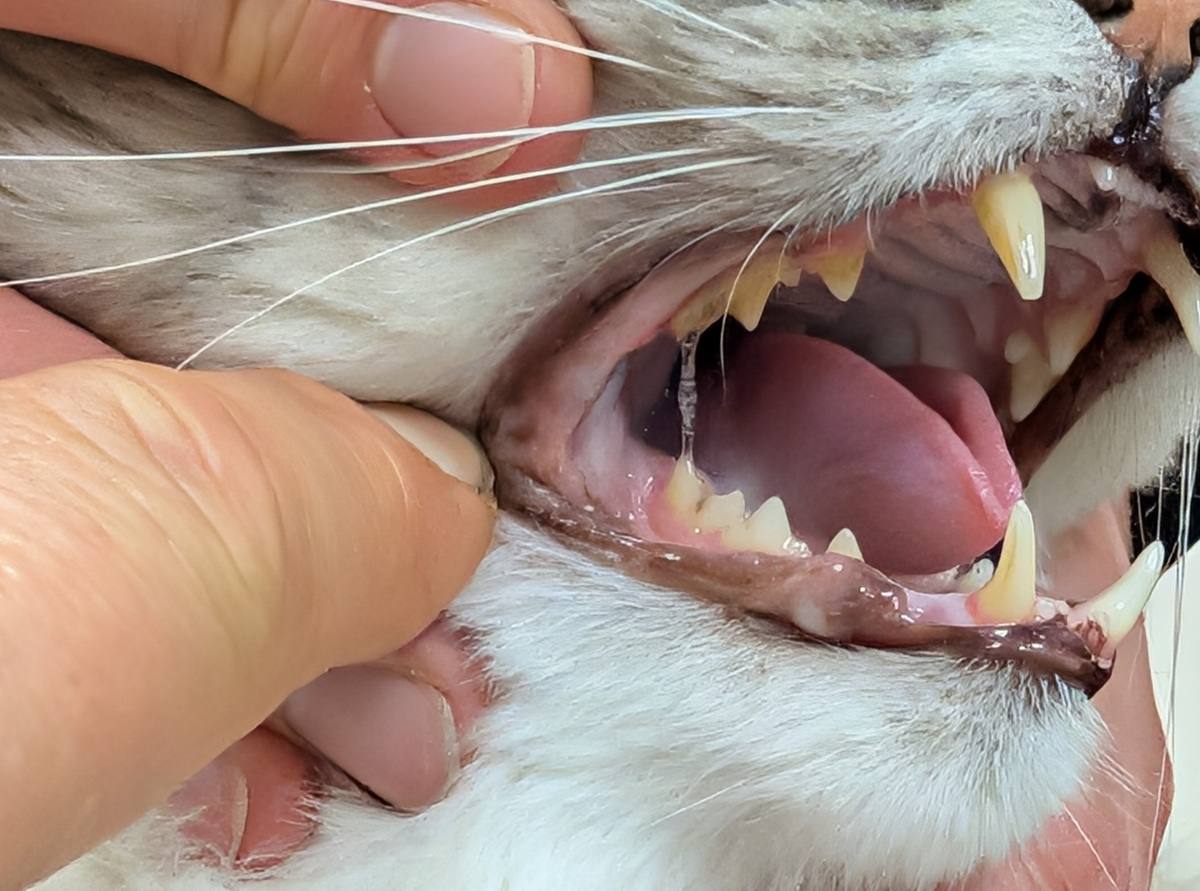
Gingivitis develops in stages and is characterized by inflammation of the gingiva (gums). Pete Wedderburn / Cats.com
The lining of the oral cavity encounters a wide variety of challenges, including irritant substances and potential allergens (e.g in the food), bacteria as well as physically abrasive substances when a cat eats.
Normally, the immune system is able to counter such challenges, maintaining the gums and the lining of the oral cavity in a healthy state. However sometimes, for a variety of reasons, one of two outcomes may happen.
- An inadequate immune response may allow a pathogen to proliferate, causing inflammation
- An over-active immune response may cause inflammation to develop in response to an otherwise innocuous challenge.
The underlying cause of feline gingivitis is often not precisely established, but common causes include the following.
- Bacterial Infections. Pathogenic bacteria are often found in the mouths of cats with gingivitis: these may be a primary cause, or the bacteria may be a secondary complication, aggravating a milder form of gingivitis that is initiated by some other primary cause.
- Viral Infections. Feline calicivirus (FCV) is a common cause of gingivitis in cats, and Feline herpesvirus (FHV)) is also sometimes implicated. Two other viruses, feline leukemia virus (FeLV) and feline immunodeficiency virus (FIV) may also be involved, but their role is not clear, and their impact may be linked more to the fact that they affect the cat’s immune system rather than being involved directly in causing inflammation of the gingival tissues.
- Immune disease. Inflammation of the lining of the oral cavity sometimes can be a type of immune-mediated or autoimmune disease i.e. an over-reaction of the immune system to normal challenges such as the bacteria and toxins that are found in the build-up of plaque on the teeth (plaque is the sticky semi-liquid film of dissolved food and mucus that gathers on teeth after eating). If the plaque is left in place, it becomes mineralized, leading to tartar or calculus formation. This is a solid, brown, substance that accumulates, acting as a wider surface area for more plaque to gather on, allowing even more bacteria and toxins to accumulate, aggravating the problem. Poor dental hygiene is a significant predisposing cause of gingivitis.
- Other specific causes. Inflammation of the lining of the mouth can be caused by a number of other issues, including direct physical irritation (eating irritant materials or some plants), metabolic problems leading to systemic disease (e.g. kidney failure with azotemia), and immune system failure (e.g. caused by inherited disease in some pedigree breeds of cats such as Persians and Abyssinians), or caused by systemic issues such as diabetes, cancer or chemotherapy).
Symptoms of Gingivitis in Cats
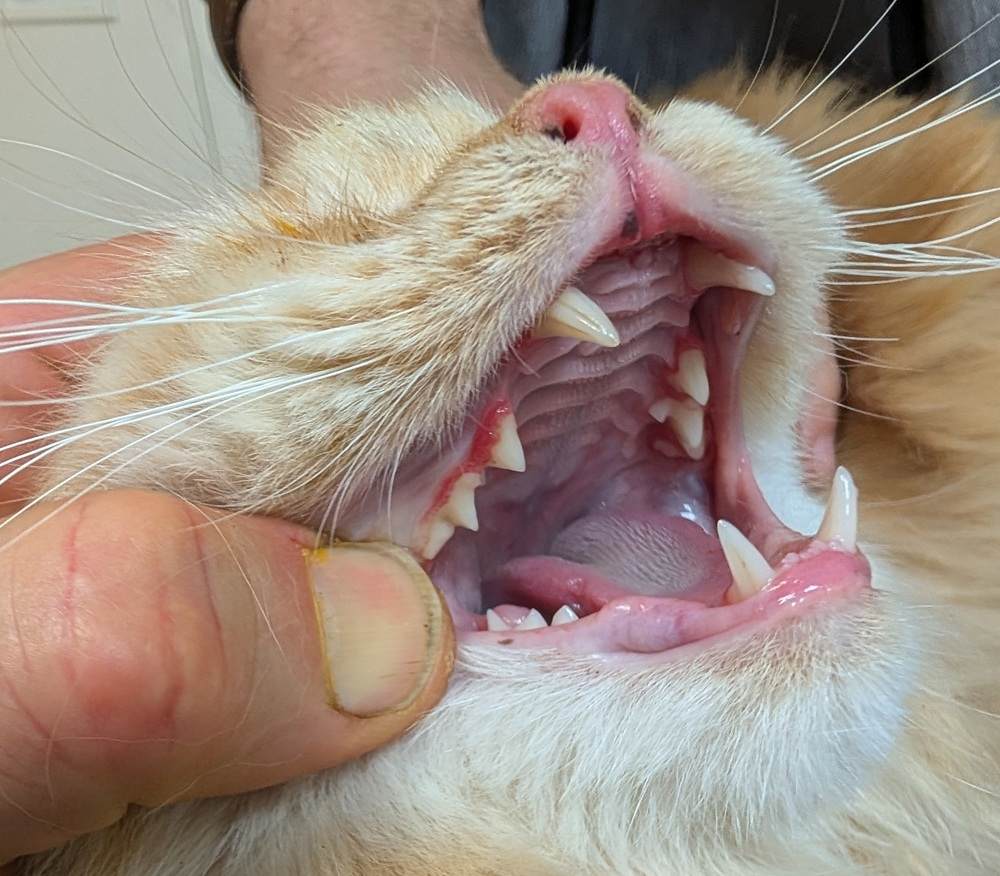
Signs of gingivitis in cats include bad breath, difficulty eating, mouth pain, and poor grooming. Pete Wedderburn / Cats.com
Many cats with mild gingivitis may show no outward signs of discomfort. Although the gums are mildly red and swollen, cats can still eat, drink, groom, and play normally. While this does not support a problem not being present, many cases of gingivitis are not urgent with time available to address the condition.
But while many cats may manage okay with gingivitis, gingivitis can develop to a severity that does cause illness and impact a cat’s health.
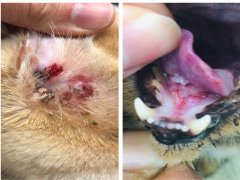
Clinical signs of more severe gingivitis include halitosis (bad breath), difficulty eating (dysphagia), pawing at the mouth, reduced appetite, drooling, bleeding from the mouth, oral pain (e.g. when the mouth is examined), weight loss, and a generally dishevelled appearance (a cat with bad enough gingivitis may suffer discomfort when grooming themselves, leading to an unkempt, poorly maintained coat). The submandibular lymph nodes may be also be enlarged (lymphadenopathy).
The problem is most often seen in mature or middle aged cats, but in some breeds (such as Maine Coon, Siamese, Persian and Abyssinian cats) feline juvenile gingivitis may be seen in cats less than three years of age.
How To Treat Gingivitis in Cats
A veterinarian should always be consulted if a cat has gingivitis. Efforts should be made to diagnose the cause of the individual cat’s problem. Only once this has been established can appropriate treatment be organized.
Diagnostic tests may include x-rays to evaluate the health of the teeth, and in particular to assess tooth roots and to identify resorptive lesions on teeth which indicates that they need to be extracted. Dental problems like this are often linked to gingivitis.
The following is a list of potential treatments for gingivitis. The treatment(s) chosen depend on the severity and underlying cause of gingivitis. The treatments listed are not all appropriate to use for all cases and deciding on their use is up to a veterinarian’s discretion.
- A professional dental intervention under general anaesthesia is often needed, allowing the removal of tartar and plaque, and dental cleaning including polishing of the tooth surfaces. Follow-up home dental care is essential.
- Extraction of the permanent teeth, and sometimes even full mouth extractions, even including the canine teeth can be the only way to resolve severe cases. This often seems overly radical to cat carers, but the inflammation of the gums is often focussed at the gum line, which is the junction between the teeth and the gums, relating to the plaque build up on the surface of the teeth. If the teeth are removed, the plaque is permanently removed, and the gingivitis often resolves completely. This is typically reserved only for cases where significant gingivitis has developed causing chronic pain and quality of life concerns.
- Antibiotics may be indicated to resolve any active pathological bacterial component to the problem: common choices include clindamycin, amoxycillin, doxycycline or metronidazole, but your vet will select the most appropriate choice for your cat, and these are not indicated for every case.
- Corticosteroids are sometimes used to alleviate the inflammation, especially if the immune system may be involved: again, they are not always indicated, and this is a decision for your vet.
- Nonsteroidal anti-inflammatory drugs (NSAID’s) are sometimes used for their anti-inflammatory, pain relieving effect
- Immune-modulating medication such as cyclosporine may be used in some cases where the immune system is a continuous of recurrent gingivitis.
- Omega-interferon given orally or by injection may help to modify the immune response.
- CO2 laser therapy may sometimes be used for specific cases.
- Bovine lactoferrin, applied to the gums, may reduce the ability of bacterial pathogens to cause disease in the mouth
- Gold salts, given as intramuscular injections, may help to modulate an over active immune system.
- Stem cell therapy may be used in some cases.
The cost to treat gingivitis depends on the severity of the problem, the underlying cause, and the type of treatment that’s needed. You should ask your veterinarian for an estimate at the start of the course of treatment. Costs could range from a few hundred dollars for a mild case to several thousand of dollars for a complex case that requires multiple dental extractions and prolonged medical treatment.
How To Prevent Gingivitis in Cats
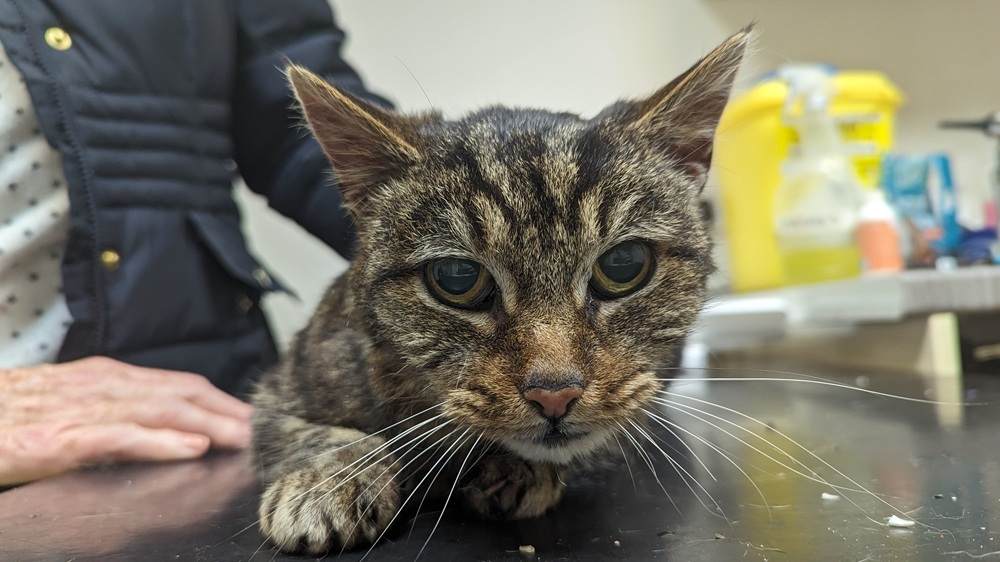
Complete dental examination and cleaning is an essential part of treatment for gingivitis in cats. Pete Wedderburn / Cats.com
A high quality, hypoallergenic diet (with high quality proteins from a low number of sources) may help to reduce the exposure of the oral cavity to irritants and allergenic substances. Supplementation with omega 3 and omega 6 fatty acids may decrease the inflammatory response.
Topical oral hygiene products that reduce plaque accumulation (e.g. chlorhexidine, or a range of others) may also help. A good dental home care regime (e.g. brushing with a toothbrush and toothpaste, and/or regular use of dental treats that carry the VOHC seal of approval) is also likely to help.



I’ve tried all of them, trust me – this state of Texas was California, my cat would’ve been taken care of, because I’m on fixed income. 99% of these vets are more concerned is money or there corporate is and that’s really sad – then there’s those non-profit groups that’s supposed to help and they are even more expensive – what a joke – I don’t want my furbaby to die and feel like a bab pet parent – At least they are on really awesome food and wet food – they shots are no problem – it’s the dental thing that sucks here in San Antonio Texas…
My 14 year old Feline, just been diagnosed with Stomachtitis and needs treatment and I am on low retirement SSI fixed and need help to get him treatment asap – His vet has helped me with pain medication, but that’s all, because I can’t afford to go back to see her – she with a large corporation
Hi Cherie and I am sorry to hear about this issue. Unfortunately, it is expensive to carry out gold standard treatment of gingivitis, as outlined in the article. The best way forwards is to ask around your area to find out if there are vets who are more affordable, and then to arrange a one-off consultation with that vet. You would use this opportunity to outline your budgetary challenges, and ask them to give you the best possible care on the available funds. This is unlikely to be the ideal answer, but it will hopefully be enough to ensure that your cat, at least, remains pain free and reasonably comfortable.
I get that. I did rescues for many years. After I retired, my income was pathetic. I took some cats into a place that said that they would do spay and neuter services free for me. One of the cats who I had for several months, they wanted to euthanize because he had stomatitis. I refused. He had no problem eating and was a very happy cat. I lost him a few months ago, but I had him for quite awhile…maybe 13 or 14 years and I got him as an adult. He was so laid back…just a sweet boy. I could not afford treatments. He got very ill awhile back and I took him in twice and got antibiotics. It only helped him for a few days each time. My youngest son offered to take him in and pay for it because he didn’t want him put down. But, the vet said that he had a tumor and was very ill and in pain. So, we had to let go. It is so difficult to treat animals when you are low income. So many vets now are more about money than saving animals. There are some countries who have vets who actually go out and look for animals that need help. My neighbor is 82 and has a cat who came into her home and ran up the steps and had 5 kittens. It is cold in Iowa, so she is keeping them in. I had a mama cat in my yard who I tried to catch to keep them in my garage until I could get them into a rescue. It spoofed her and she won’t come near me or the kittens. So, I have the 3 kittens in my basement and am feeding them with a syringe. I am 72. There are 10 other kittens in our yards and a few adults. We are diligently trying to get help with TNR and adoptions, but we are not getting help…I am so sorry for you. I truly understand how difficult it is. God bless you!