

 Last updated Jul 22, 2026


Pete Wedderburn / Cats.com
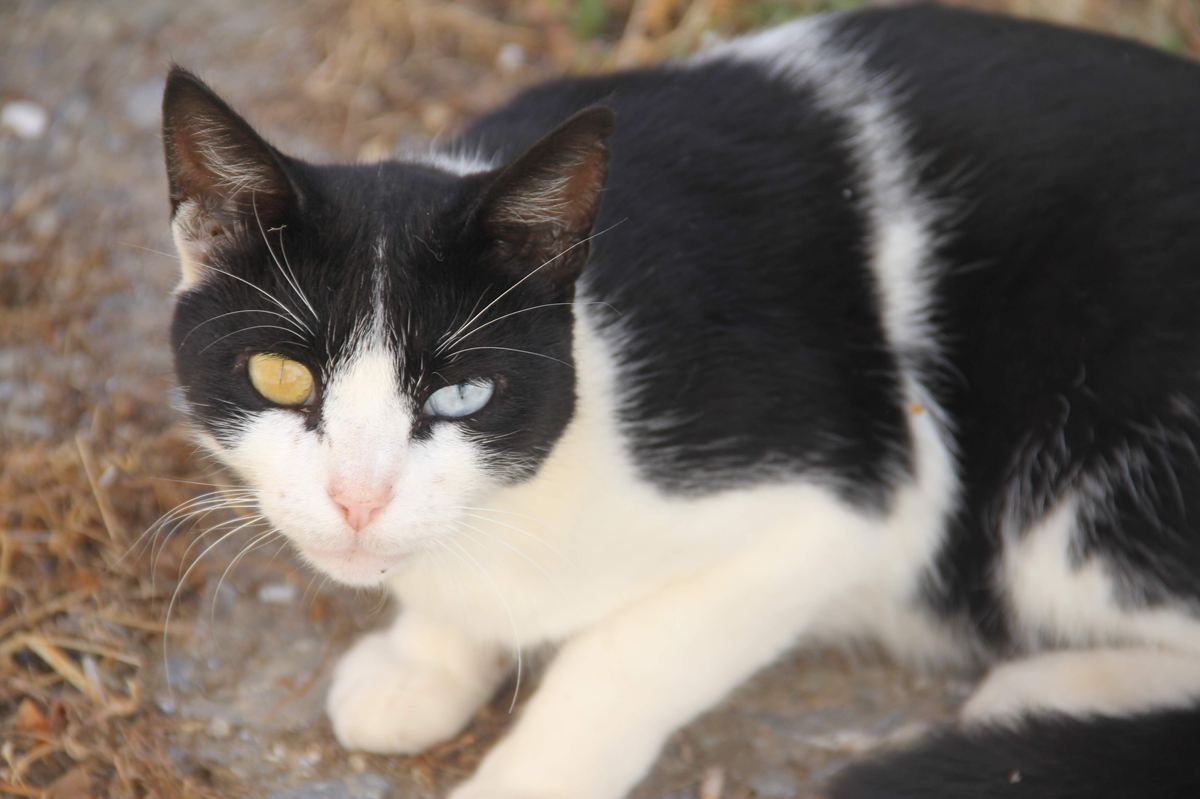
This article aims to explain the details of heterochromia in cats. Heterochromia is the term that is used to describe the anatomical variant when each of a cat’s eyes is a different color from the other. Affected cats are also known as odd-eyed cats or cats with odd eyes.
Different eye colors give cats a distinctive look. Whether they are domestic cats or pedigree animals, they are particularly popular on pic-sharing sites like Reddit or Instagram.
What, Precisely, Does Heterochromia Mean?
Heterochromia means that the irises of each eye is a different color. In most examples, one eye is blue, and the other is green, yellow, or brown. Sansa the Polydactyl cat is a perfect example of this.
How Do Cats Get Heterochromia?
The odd-eyed coloring is caused by the genetic make-up of an individual cat, caused by the combination of genes that influence the pigments all over a cat’s body.
Technically, it happens in two situations:
- When the dominant white gene is present (this dominates all the other color genes, making a cat completely white)
- When the white spotting gene is present (this is the gene responsible for two-colored cats including black and white tuxedo cats)
If either of these genes are present, they prevent pigment (melanin granules) from reaching one eye during the cat’s early development. This means that one eye remains the blue color of young kittens’ eyes, while the other eye is a variable color (green, brown or yellow).
Heterochromia very rarely occurs in cats that lack one of these two genes.
So if a cat has a white coat, or if any white fur is present, it is more likely that a cat will have heterochromia.
What Is the Iris in a Cat’s Eye, Anyway?
When you look at a cat’s eyes, the iris is the colored part of the eye: the pupil is the black area in the middle of the eye, which in reality is the hole in the center of the iris which allows light to reach the back of the eye.
The pupil changes in size depending on ambient light levels, as a reflex response by the eye.
- As light gets dimmer, the iris relaxes, making the pupil bigger, to maximize the amount of light reaching the back of the eye. The iris appears smaller, as a narrow colored rim around the large, black, dilated pupil. This makes it more difficult to see the color of the eye.
- As light gets brighter, the iris contracts, making the pupil appear smaller and slit-like, to reduce the amount of light reaching the back of the eye. The full colour of the eye is easily seen, with just a narrow vertical slit of black pupil at the center.
So it’s easier to see the color of a cat’s irises in brighter light conditions, when the pupil is at its smallest.
How Rare Is Heterochromia in Cats?
Heterochromia is rare in humans (there are some famous cases, including David Bowie), but it’s relatively common in animals, including cats, dogs, horses, cattle, rabbits and ferrets.
What Are the Different Types of Heterochromia?
There are two types of heterochromia:
- Complete heterochromia or “heterochromia irides” (“different colored irises” in Latin) describes when a cat has eyes that are two different colors (e.g. one blue eye, one green eye). This is the classical version of heterochromia that people normally think of when the term is used.
- Partial heterochromia/sectoral heterochromia or “heterochromia iridis”/ “heterochromia iridum” (“single different colored iris” in Latin): The iris of one eye has more than one color, e.g. patches that are orange and blue in one eye.
Why Does Complete Heterochromia Always Mean That There Is One Blue Eye?
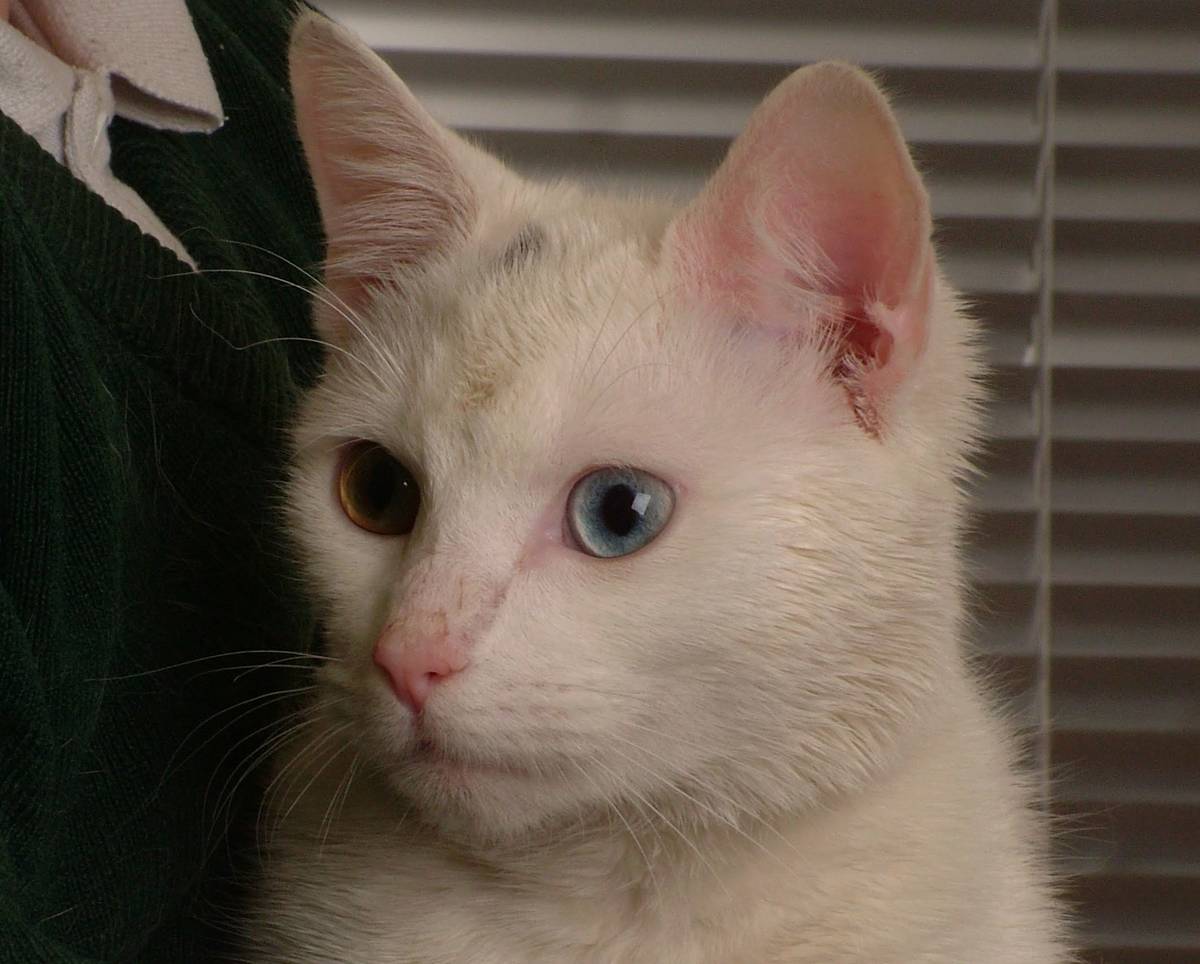
Eye color depends on pigment: green, brown, or yellow indicate pigment is present, while blue eyes indicate a lack of pigment. Pete Wedderburn / Cats.com
The key point is this: if pigment is present in the eye, colors like green, brown and yellow are seen. If there is no pigment in the eye, the color of the eye is blue. So blue means “no pigment is present”.
Could Heterochromia Indicate That Something Worrying Is Going On?
No. Heterochromia is just an incidental finding in cats and it doesn’t mean there’s anything to worry about at all. In humans, if an infant has heterochromia, it’s recommended that an ophthalmologist examines the child, to confirm the appearance of heterochromia and to look for any underlying causes.
In most cases, as in cats, there’s nothing to worry about. But there are some rare human diseases that can cause this, which is why it’s important to take this seriously in humans.
Are Some Cat Breeds More Likely to Have Heterochromia?
As a condition with a genetic cause, it is no surprise that heterochromia is more common in certain breeds, because, by definition, each cat breed has its own specific and unique collection of genes.
In general, heterochromia is more common in cat breeds that often produce white cats.
Specific breeds with a higher incidence include:
- Persian
- Siamese
- British Shorthair
- Sphynx
- Cornish Rex
- Devon Rex
- Turkish Van
- Turkish Angora
- Munchkin
- Japanese Bobtail
- Khao Manee
Heterochromia is extremely rare in black cats, but more common in black and white tuxedo cats.
How Does Age Impact Eye Color?
Most kittens have pale blue eyes when their eyes open at 10 – 14 days of age, and over the next 4 – 8 weeks, the eye color changes to the permanent color that the cat will retain for their adult lives.
Most cats have eyes that are greenish-yellow to light-orange (or even a “gold eye”), meaning that they have relatively low pigment (melanin) content. It is rarer for cats to have higher levels of pigment in their eyes, and if this happens, brown or dark orange eyes are seen.
Heterochromia is a developmental condition that depends on a cat’s genes, so this cannot develop in an older animal. However there are some rare eye conditions where inflammation of the iris (uveitis) can lead to pigment changes in an eye. In such cases, a veterinary ophthalmologist should be consulted for a detailed analysis of what is going on, and treatment may be indicated in some cases.
Diagnosis of Heterochromia
A simple physical examination of your cat’s eyes is enough to identify complete heterochromia. If your cat has partial or sectoral heterochromia, you can see this yourself too, but a veterinarian will be able to give you more information about it.
Examination of the eye using illumination and magnification (e.g. using an ophthalmoscope) allows a veterinarian to see more detail of the iris, including visualizing the pigmentation more clearly.
Deafness in Cats With Heterochromia
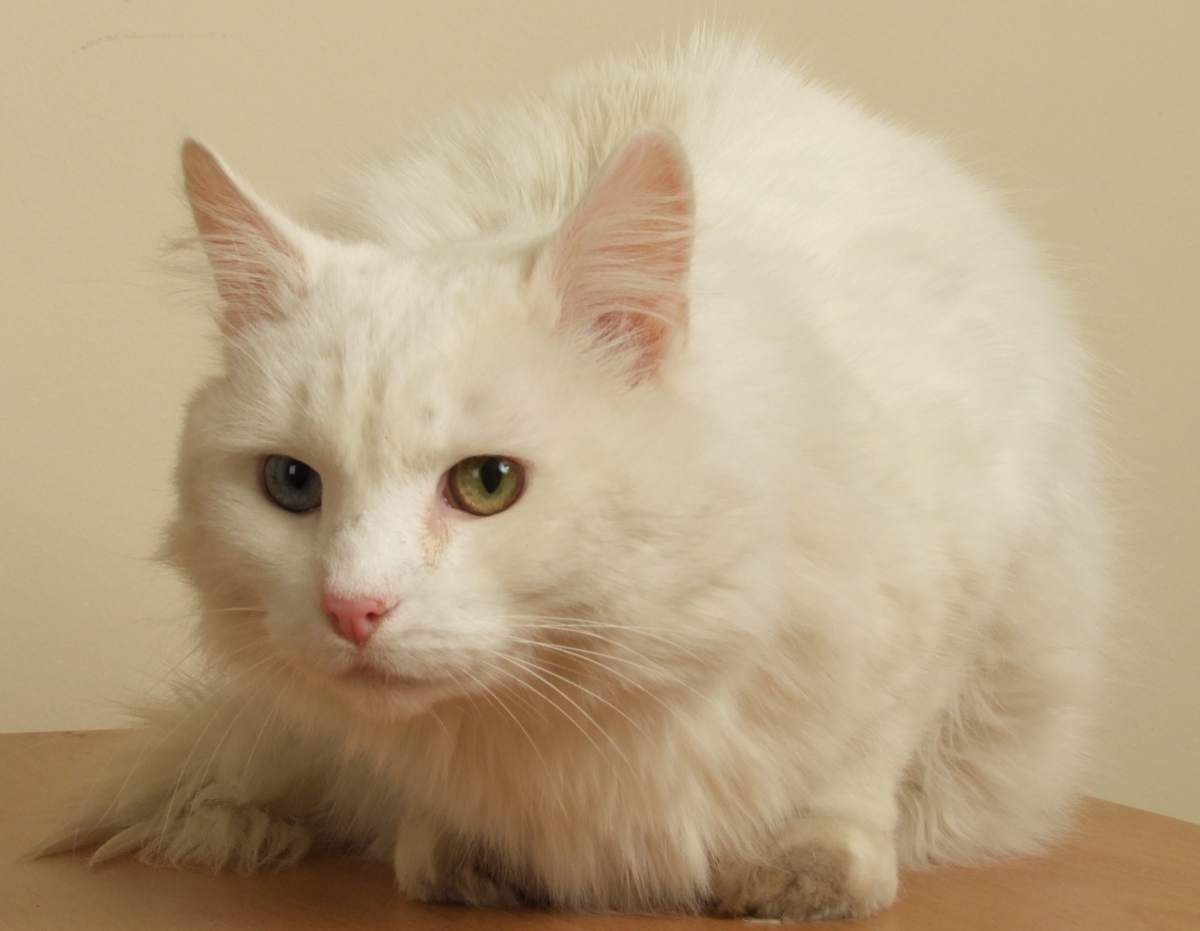
Contrary to popular belief, heterochromia in cats doesn’t cause deafness in one ear. That said, white cats with blue eyes are more likely to be born deaf. Pete Wedderburn / Cats.com
There is an untrue myth that all odd-eyed cats are born with deafness in one ear. In fact, about two-thirds of odd-eyed cats have normal hearing.
It is true that white cats with blue eyes have a higher incidence of genetic deafness, because the cells in the inner ear that enable hearing are, in fact, specialized pigment cells. So if there are no pigment cells in the body (as is the case with white cats with two blue eyes), the cat is always completely deaf.
If a white kitten has only one blue eye, or green, yellow or brown eyes, the incidence of deafness is much lower, as this indicates that there are some pigment cells in the body.
Conclusion
Heterochromia, or different colored eyes, is a common and interesting but harmless anomaly in cats, caused by their genetic make-up and linked to pigment production in the body.


I have kitten white fluffy with one blue eye and one brown y is this
Thanks for this article
If I have a female with copper eyes colour, but her dad has odd eyes, could she possibly have kittens with odd eyes?
Would she need to be crossed with a male with odd eyes for this to happen or can the male be blue or copper eyes and still could happen?
Basically, I would love to have a litter with odd eyes, my girl’s dad was odd eyes, but she is copper eyes. So wonder what I have to do to achieve kittens with odd eyes or at least to increase the possibilities. My boy has blue eyes.
Thanks in advance
This is a tricky area: we do not fully understand the precise genes behind eye colour, and so even breeding to a cat with odd eyes may not create kittens with odd eyes. There are probably multiple genes involved, so it is quite hit and miss. Also, importantly, there is a link between blue eyes (no pigment) and deafness. So if you manage to produce cats with more blue colored eyes, there is a risk you may also be producing deaf kittens, which is not good.
Rather than focussing on the cosmetic aspect of eye colour, it would be better to focus on creating the healthiest possible kittens, including ACVO exams (eye examinations to make sure the eyes are healthy) and BAER testing (to rule out deafness) before breeding from two adult cats.
David Bowie had a condition known as anisocoria not heterochromia.
Thank you for this correction! You are correct, of course – he had anisocoria, which effectively meant that the pupils in his eyes were of different sizes. This made his irises appear to be of different colours which resembled heterochromia, which has led many people (including myself) to mistakenly believe that he had this condition.